Caffeine Strips: Do Dissolvable Energy Strips Actually Work?
Caffeine Strips: Do Dissolvable Energy Strips Actually Work?
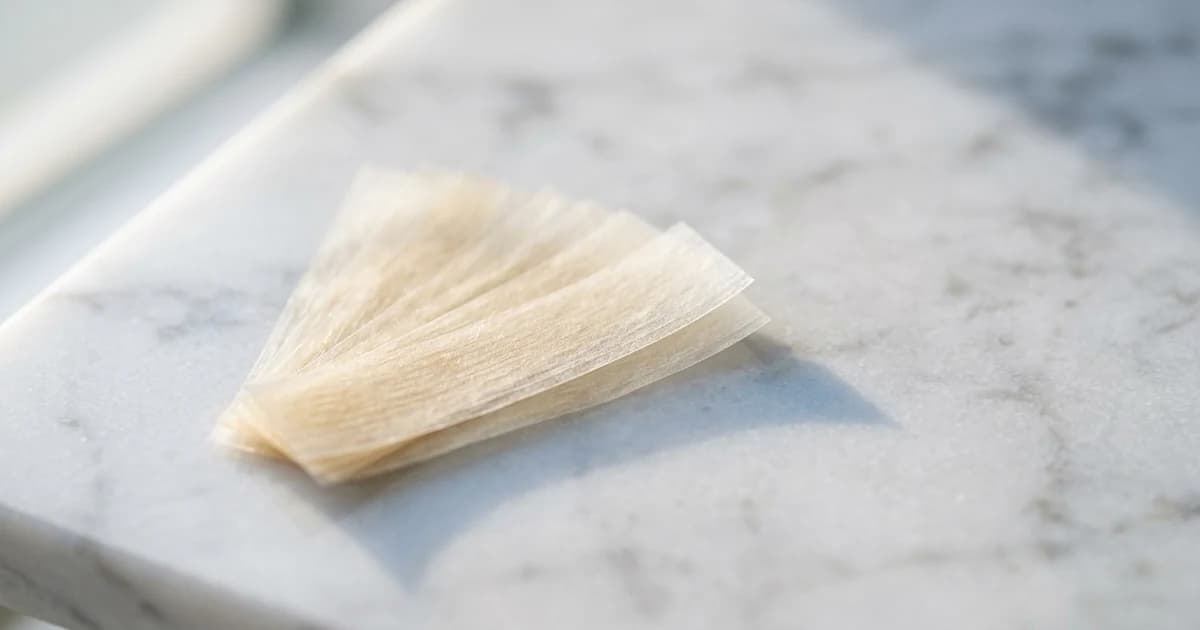
Caffeine strips are thin, dissolvable films you place on your tongue to deliver caffeine through the oral mucosa rather than your gut. They work. Caffeine is caffeine regardless of format, and buccal absorption can be faster than swallowing a pill. But the four biggest strip brands, 5TRIP, Strype, NuStrips, and MindStrips, differ wildly in actual per-strip dose, and one of them buries the real number behind a two-strip serving size.
Here is every brand on the same table, measured per individual strip.
Caffeine Strips Compared: 5TRIP, Strype, NuStrips, MindStrips
| Brand | Caffeine per strip | Other actives per strip | Strips per pack | Approx. price per strip | Brand onset claim |
|---|---|---|---|---|---|
| 5TRIP | 50 mg | 50 mg L-theanine, 1 mcg B12 | 30 | ~$0.83 | "Seconds" |
| Strype (ODiSTRYPE) | 40 mg (marketed as 80 mg "per serving" of 2 strips) | None listed | 12 | ~$0.83 | "Seconds" |
| NuStrips | 50 mg | 30 mg L-theanine, 6 mcg B12 | 30 | ~$1.00 | "30 seconds" to dissolve |
| MindStrips | 80 mg | L-theanine (exact mg undisclosed) | 30 (label says 20 servings)* | Unverified | "60 seconds" |
| Roon (pouch, not strip) | 80 mg | 60 mg L-theanine, 25 mg methylliberine, 5 mg theacrine | 15 | From $0.61 | 5-10 min; lasts 6-8 hr |
*MindStrips' product page states "30 strips per pack" in the header but lists "Servings per pack: 20" in the nutrition panel. That discrepancy is unresolved as of this writing.
The biggest takeaway from this table: if you pick up a pack of Strype expecting 80 mg of caffeine per strip, you are getting half that. The Amazon listing and brand packaging both say "80mg per serving," but the brand's own site confirms each strip is 40 mg and a serving is defined as two strips. That is not illegal, but it is the kind of labeling that earns skepticism.
How Dissolvable Caffeine Strips Work
A dissolvable caffeine strip dissolves on the tongue or inner cheek, where caffeine absorbs through the buccal and sublingual mucosa. This bypasses the stomach and enters the bloodstream more directly, which is why mucosal caffeine formats tend to reach peak plasma levels sooner than swallowed capsules.
The best available data comes from a 2002 pharmacokinetic study by Kamimori et al. on caffeine chewing gum. That study found peak plasma concentration at 44 to 80 minutes for gum vs. 84 to 120 minutes for a swallowed capsule. Faster, yes. But "faster" meant 44 minutes at best, not 60 seconds.
No strip brand has published independent PK data showing blood levels over time for its specific product. The "works in seconds" claims refer to how fast the film dissolves, not how quickly caffeine reaches functional concentrations. Dissolving is not absorbing. For more on how mucosal caffeine absorption works, we wrote a deeper breakdown.
5TRIP: What Is Actually in It
5TRIP is the brand that kicked off the TikTok-fueled caffeine strip trend. Each star-shaped strip contains 50 mg caffeine from green coffee bean extract, 50 mg L-theanine from green tea, and 1 mcg vitamin B12. The 1:1 caffeine-to-theanine ratio is solid. A 2008 study by Owen et al. found that the caffeine and L-theanine combination improved both speed and accuracy on attention-switching tasks compared to either alone.
At roughly $0.83 per strip for a 30-count pack, 5TRIP offers a reasonable cost for 50 mg of caffeine. The format is genuinely pocket-friendly. But 50 mg is roughly half a cup of coffee, so if you need more than a light lift, you are using two strips and doubling your cost to ~$1.66 for 100 mg.
Strype: The mg-Per-Serving Confusion
Strype (also sold on Amazon as ODiSTRYPE) deserves its own section because of the serving-size issue. The headline on every listing reads "80mg per serving." The fine print: a serving is two strips. Each individual Strype strip contains 40 mg of caffeine, making it the lowest-dosed strip in this comparison.
Strype also contains no L-theanine and no B12. It is a caffeinated breath mint. The NuStrips comparison page (a competitor, so consider the source) claims that Strype uses Yellow 5 and Blue 1 artificial colors alongside sucralose; we have not independently confirmed this from Strype's ingredient panel.
At 12 strips per pack for roughly $10, the per-strip cost is about $0.83 for just 40 mg. On a per-milligram basis, Strype is the most expensive option on this table.
NuStrips and MindStrips
NuStrips positions itself as the premium option. Each strip delivers 50 mg caffeine, 30 mg L-theanine, and 6 mcg vitamin B12 (250% DV). At roughly $29.99 for 30 strips, the per-strip cost is about $1.00. NuStrips publishes its per-strip doses clearly, which should be a baseline expectation but stands out given how others handle labeling.
MindStrips is the highest-dosed strip at 80 mg caffeine per strip, paired with L-theanine, though the exact L-theanine dose is not disclosed on the product page. The brand claims the strip "works in 60 seconds." The product page also has a discrepancy: the header says 30 strips per pack, while the nutrition label lists 20 servings. Whether that means 20 strips or 20 one-and-a-half-strip servings is unclear. We could not confirm the current price from the brand's site.
For both brands, the same caveat applies: neither publishes third-party pharmacokinetic data for their specific strip. The caffeine in them will work. The speed claims are unverified.
Do Caffeine Strips Actually Work in 60 Seconds?
The strip dissolves in under a minute. The caffeine does not fully absorb in under a minute. Those are two different events, and every strip brand conflates them.
When a thin film dissolves on your tongue, some caffeine begins absorbing through the buccal mucosa immediately. But a significant portion gets swallowed with saliva and follows the standard digestive route. Even caffeine gum, which maintains mucosal contact for far longer than a strip, showed peak levels at 44 to 80 minutes in the Kamimori study.
You will likely feel something within 10 to 15 minutes. That is faster than a pill. But "works in 60 seconds" is a dissolution claim dressed up as an onset claim. For a breakdown of buccal vs. digestive caffeine absorption, see our full guide.
Caffeine Strips vs. Sublingual Pouches
Dissolvable caffeine strips and sublingual caffeine pouches both use the oral mucosa, but the delivery window differs.
A strip dissolves in 30 to 60 seconds. Once it is gone, mucosal contact is over. Whatever was not absorbed buccally gets swallowed. A sublingual pouch stays parked under the lip for 15 to 30 minutes, maintaining continuous mucosal contact. That sustained exposure means a higher proportion of the dose can absorb through the mucosa rather than the gut.
Strips are faster to use but shorter in mucosal contact time. Pouches extend the absorption window. If your priority is convenience and a quick hit, a strip works. If you want a longer-lasting effect, a format that stays in the mouth has an advantage. For real onset data on pouches, we measured it.
Choosing the Right Caffeine Strip
Dissolvable caffeine strips are a real delivery format, not a gimmick. Caffeine absorbed through the oral mucosa reaches the bloodstream faster than a swallowed pill, and the strip format is legitimately portable. The category's weaknesses are poor labeling transparency (Strype's two-strip serving size, MindStrips' conflicting pack counts) and unverified onset claims that confuse dissolving speed with absorption speed. Read the nutrition panel, count the milligrams per strip, and ignore any claim about "working in seconds" unless the brand shows you blood-level data.
Frequently Asked Questions
Are caffeine strips safe?
Caffeine strips deliver the same compound as coffee and energy drinks, just in a different format. The FDA considers up to 400 mg of caffeine per day not generally associated with negative effects in healthy adults. At 40 to 80 mg per strip, that is 5 to 10 strips before hitting the ceiling. Anyone with caffeine sensitivity, who is pregnant or breastfeeding, or taking medication should talk to a clinician first.
How many caffeine strips can you take a day?
That depends on the per-strip dose and your total caffeine intake from all sources. At 50 mg per strip (5TRIP, NuStrips), eight strips per day would put you at 400 mg, the FDA's general ceiling for healthy adults. Factor in any coffee, tea, or other caffeinated products you consume alongside strips.
What is the best caffeine strip brand?
It depends on your dose preference. 5TRIP offers a reasonable value at roughly $0.83 per 50 mg strip with a 1:1 caffeine-to-theanine ratio. NuStrips publishes its doses clearly and adds more B12. MindStrips delivers the highest per-strip dose at 80 mg. Strype is the weakest option: lowest dose per strip, no supporting actives, and confusing labeling.
Do caffeine strips work faster than coffee?
Probably somewhat faster, based on the pharmacokinetics of mucosal caffeine delivery. The Kamimori et al. study on caffeine gum showed faster time-to-peak compared to swallowed formats. But no strip brand has published blood-level data for its specific product, so "how much faster" is still an estimate.
Are caffeine strips better than energy drinks?
Strips avoid the sugar, carbonation, and large fluid volume of most energy drinks. They are far more portable. The caffeine itself works the same way. If you want 200 mg, though, you need four 50 mg strips, and that gets expensive.
Can you use caffeine strips while fasting?
Most caffeine strips are zero sugar and zero calories, so they should not break a caloric fast. Check the label of your specific brand, since formulations vary.
How long do caffeine strips last?
About the same as any other caffeine source at the same dose: 3 to 5 hours for 50 to 80 mg. Caffeine's half-life in most adults is roughly 5 hours. A strip changes the delivery speed, not the molecule.
If You Want Mucosal Delivery That Lasts Longer Than a Minute
The caffeine strip category solves one problem well: portability. But a strip dissolves in under 60 seconds, and then mucosal contact is over. Whatever caffeine was not absorbed buccally is swallowed and follows the slower digestive route.
Roon takes a different approach. It is a sublingual pouch, not a strip, designed to stay parked under the lip for sustained mucosal contact. Each pouch delivers 80 mg caffeine, 60 mg L-theanine, 25 mg methylliberine (Dynamine), and 5 mg theacrine (TeaCrine). The methylliberine is there for a specific pharmacokinetic reason: in a randomized, double-blind crossover PK study, co-administration of methylliberine with caffeine cut caffeine's oral clearance from 41.9 to 17.1 L/hr, extending its half-life. That study used 100 mg methylliberine and 150 mg caffeine, roughly 4x and 1.9x what Roon delivers, so the magnitude of the effect at Roon's doses has not been independently confirmed. The directional mechanism is the same, and users report a felt window of 6 to 8 hours from a single pouch.
The trade-off: a pouch takes 5 to 10 minutes, not 30 seconds. And because the extended half-life is real, you should stop at least 8 hours before bed. Roon is not a strip, and it is not pretending to be instant. It starts from $0.61 per pouch on the 12-tin subscription, or $1.00 per pouch for a one-time 4-tin order. If what you want is fast, pocket-sized caffeine and nothing else, a strip is fine. If you want the dose to actually last, a format that stays in your mouth has a structural advantage.
Related from Roon
- How mucosal caffeine absorption works
- Buccal vs. digestive absorption, explained
- Every caffeine format side by side
- Caffeine gum explained
Written by Roon Team