Coffee Benefits and Caffeine: Which Ones Caffeine Explains
Coffee Benefits and Caffeine: Which Ones Caffeine Explains
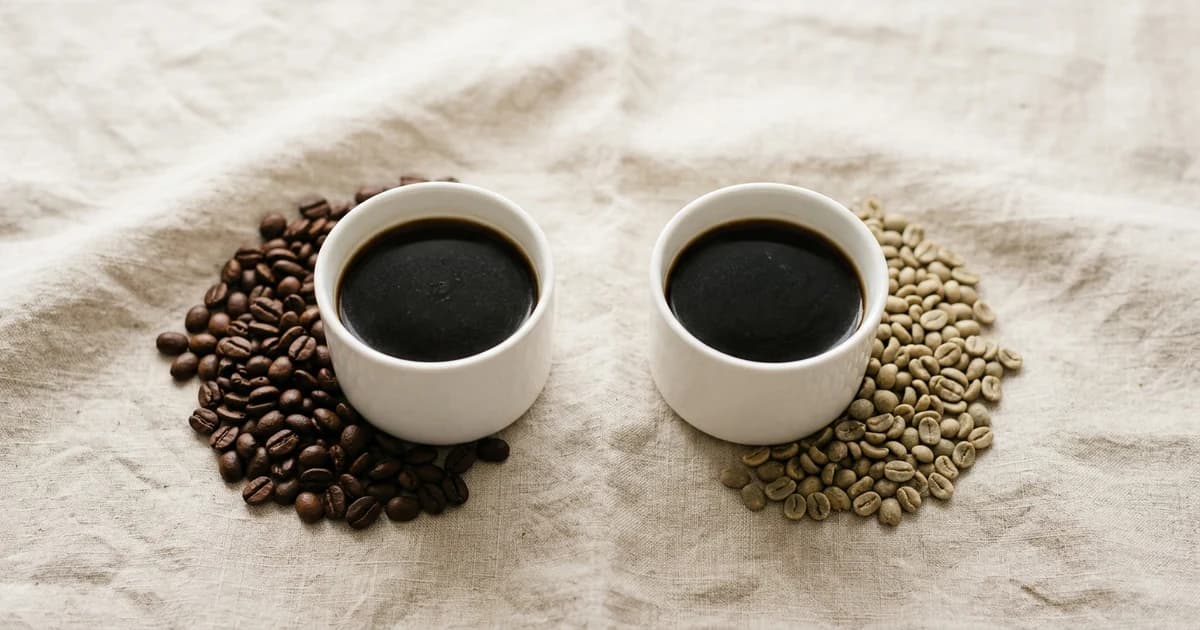
Which coffee benefits come from caffeine, and which come from the bean itself? The associations between coffee and lower rates of liver disease, type 2 diabetes and all-cause mortality hold for decaf too, which points to coffee's other compounds: chlorogenic acids, quinic acid, diterpenes, melanoidins. The dementia association held only for caffeinated coffee and tea, and Parkinson's disease tracks blood caffeine metabolites. All of this is observational. Caffeine does own the short-term effects: alertness, a blood pressure bump, and lost sleep.
Key Takeaways
- Liver disease, type 2 diabetes and mortality associations persist in decaf drinkers, meaning caffeine is probably not the active agent for those outcomes.
- The dementia link (HR 0.82 for top vs. bottom quartile of caffeinated coffee) did not appear for decaf. Parkinson's risk tracked plasma caffeine, paraxanthine and theophylline.
- Cholesterol-raising diterpenes come from the coffee bean, not from caffeine; filtered brewing removes most of them.
- If you get caffeine from a non-coffee source, assume you get the caffeine effects (alertness, exercise performance, blood pressure rise, sleep cost) and none of the coffee-compound effects.
How Scientists Separate Caffeine From Coffee
Researchers use three tools to pull these apart. The decaf comparison: if decaf drinkers show the same association as caffeinated drinkers in a large cohort, caffeine is unlikely to be the driver. Blood metabolite measurement: instead of relying on diet surveys, researchers measure caffeine, paraxanthine and theophylline directly in plasma, as the Zhao 2024 Parkinson's study did with 351 matched case-control pairs. And Mendelian randomization (MR): genetic variants near the CYP1A2 and AHR genes that change caffeine metabolism speed are assigned at conception, making them less prone to confounding than a standard cohort study. MR points toward cause more strongly, but it is still not a randomized trial.
None of these tools is perfect. The decaf comparison relies on self-report. MR assumes the genes affect health only through caffeine. The strongest conclusions come from all three pointing the same direction.
Coffee Benefits vs. Caffeine: The Scorecard
This table summarizes the strongest primary study for each outcome, whether the association held for decaf drinkers, and whether caffeine appears to be the likely driver.
| Outcome | Best primary study | Finding | Decaf too? | Caffeine the likely driver? |
|---|---|---|---|---|
| Chronic liver disease | Kennedy 2021, BMC Public Health, n=494,585, prospective cohort, 10.7 y | CLD HR 0.79; death from CLD HR 0.51 | Yes, similar for all types including decaf | No |
| Liver cirrhosis and HCC | Kim 2026, Clin Gastroenterol Hepatol, n=354,957, prospective cohort, 13 y | 5+ cups/day: cirrhosis HR 0.68, HCC HR 0.53 | Yes, similar for caffeinated and decaf | No |
| Gut microbiome | Manghi 2024, Nature Microbiology, n=22,867 plus 54,198 validation | Coffee linked to Lawsonibacter asaccharolyticus (AUC 0.89); quinic acid the likely mediator | Not reported | Unlikely (quinic acid is not caffeine) |
| Type 2 diabetes | Ding 2014, Diabetes Care, 28 studies, n=1,109,272 | Per cup/day RR: caffeinated 0.91, decaf 0.94 (P for difference = 0.17) | Yes | No |
| Type 2 diabetes (MR) | Larsson 2023, BMJ Medicine, MR using CYP1A2/AHR variants | T2D OR 0.81; ~43% mediated by lower BMI | N/A (genetic caffeine level) | Genetic evidence points to caffeine |
| All-cause mortality | Loftfield 2018, JAMA Intern Med, n=498,134, 10 y | 2-3 cups/day HR 0.88; similar regardless of genetic caffeine-metabolism speed | Yes, similar for decaf | No |
| All-cause mortality (by type) | Chieng 2022, Eur J Prev Cardiol, n=449,563, 12.5 y | 2-3 cups/day: decaf HR 0.86, ground HR 0.73, instant HR 0.89 | Yes | No |
| Dementia | Wang 2026, JAMA, n=131,821, up to 43 y, 11,033 cases | Caffeinated coffee HR 0.82 (top vs. bottom quartile); tea similar | No, decaf not associated | Yes |
| Parkinson's disease | Zhao 2024, Neurology, n=184,024 cohort; 351+351 case-control | Coffee HR 0.63; plasma caffeine OR 0.80, paraxanthine OR 0.82, theophylline OR 0.78 | Not tested separately | Yes (tracks caffeine metabolites) |
| Arrhythmia | Kim 2021, JAMA Intern Med, n=386,258, 4.5 y | Each cup HR 0.97; MR found no caffeine-arrhythmia link | Mixed (see text) | Unclear |
| Acute blood pressure | Mesas 2011, Am J Clin Nutr, meta-analysis | +8.1/+5.7 mmHg within 1 hour (hypertensive); no long-term rise with habitual coffee | N/A | Yes |
| Sleep loss | Gardiner 2023, Sleep Med Rev, 24 studies | Reduced total sleep, sleep efficiency and deep sleep | N/A | Yes |
| Exercise performance | Guest 2021, ISSN position stand | Ergogenic at 3-6 mg/kg for strength, endurance, attention | N/A | Yes |
Caffeine from a pill, drink or pouch carries the caffeine column only.
Is Decaf Coffee Healthy? Where Decaf Matches Regular
If you are wondering whether decaf retains coffee's health associations, the answer for several major outcomes is yes.
Liver disease. Kennedy 2021 (n=494,585) found decaffeinated, instant and ground coffee all showed similar associations with lower chronic liver disease risk. Kim 2026 (n=354,957) confirmed it: associations with lower cirrhosis and HCC risk were similar for caffeinated and decaffeinated coffee.
Type 2 diabetes. The Ding 2014 meta-analysis (28 studies, 1,109,272 participants) found per-cup RR 0.91 for caffeinated and 0.94 for decaf, with no statistically significant difference (P = 0.17). A separate MR study by Larsson 2023 found genetic evidence that higher plasma caffeine was linked to lower T2D risk (OR 0.81), about 43% mediated through lower BMI. Caffeine itself may matter through a separate pathway, but the observational coffee data say decaf also carries an association.
All-cause mortality. Loftfield 2018 (n=498,134) found similar mortality associations for decaf regardless of genetic caffeine-metabolism score. Chieng 2022 (n=449,563) found decaf at 2 to 3 cups per day had an all-cause mortality HR of 0.86.
Gut microbiome. Manghi 2024 (22,867 participants, validated in 54,198) linked coffee to the gut species Lawsonibacter asaccharolyticus (AUC 0.89) and traced the mechanism to quinic acid, a non-caffeine compound. The study did not report a separate decaf comparison.
The pattern: for liver, diabetes and mortality, the active compounds are likely something other than caffeine.
Where Caffeine Seems to Matter
Two major outcomes track caffeine rather than coffee.
Dementia. The Wang 2026 JAMA study followed 131,821 participants for up to 43 years (11,033 dementia cases). Highest vs. lowest quartile of caffeinated coffee: HR 0.82 (141 vs. 330 cases per 100,000 person-years). Tea showed a similar association. Decaffeinated coffee was not associated with lower dementia risk. The strongest link appeared at about 2 to 3 cups of coffee or 1 to 2 cups of tea per day. Observational, not proof of cause.
Parkinson's disease. Zhao 2024 (n=184,024) found highest coffee consumption linked to a Parkinson's HR of 0.63. In a nested case-control analysis (351 pairs), higher prediagnostic plasma caffeine (OR 0.80), paraxanthine (OR 0.82) and theophylline (OR 0.78) were each inversely associated with Parkinson's risk. Blood caffeine metabolites, not just self-reported coffee, tracked the outcome. Still observational.
For both conditions, anyone managing a diagnosis should talk to their clinician rather than adjusting caffeine intake based on epidemiology.
The Mixed Cases: Heart Rhythm and Coffee Timing
Not every outcome falls cleanly into "caffeine" or "not caffeine."
Arrhythmia. Kim 2021 (n=386,258) found each additional daily cup associated with a 3% lower arrhythmia risk (HR 0.97). But MR analysis found no link between genetic caffeine metabolism and arrhythmia, suggesting caffeine may not be the mechanism. Chieng 2022 added a twist: ground and instant coffee were linked to less arrhythmia, but decaf was not. The picture is genuinely mixed.
Timing. A 2025 European Heart Journal study (n=40,725, median 9.8 years) found morning-only coffee drinkers (36% of the sample) had lower all-cause mortality (HR 0.84) and cardiovascular mortality (HR 0.69) vs. non-drinkers, adjusted for caffeinated and decaf amounts and sleep hours. All-day drinkers (14%) showed no lower risk. This may reflect a sleep or circadian pattern rather than a direct effect of when you drink your coffee.
The Downsides: Which Are Caffeine and Which Are Coffee
Caffeine: blood pressure. A meta-analysis by Mesas 2011 found 200 to 300 mg of caffeine raised systolic BP by 8.1 mmHg and diastolic by 5.7 mmHg within an hour in hypertensive individuals, lasting 3 hours or more. Habitual coffee drinking over weeks did not raise blood pressure, and seven cohort studies found no higher cardiovascular risk. The acute spike is caffeine; the long-term picture is more reassuring.
Caffeine: sleep. Gardiner 2023 (24 studies) found caffeine reduced total sleep time, reduced sleep efficiency, and cut deep sleep. Any caffeine source carries this cost.
Coffee, not caffeine: cholesterol. The cholesterol-raising compounds in coffee are diterpenes (cafestol and kahweol), found in bean oil, not in caffeine. Orrje 2025 measured cafestol levels and found paper-filtered coffee contained far less than workplace brewing machines or boiled coffee. Paper filtering removes most diterpenes.
Added sugar and fat. Zhou 2025 (NHANES, n=46,222) found the mortality association restricted to black coffee and coffee with low added sugar and saturated fat. Load your cup with cream and sugar and the association disappears.
What This Means for Your Cup
If you switch to decaf for sleep, anxiety or pregnancy, the liver, diabetes and mortality associations appear to travel with you. What you lose is the caffeine column: alertness, exercise performance, the blood pressure bump, the sleep cost, and the dementia association that appeared only with caffeinated coffee and tea in the Wang 2026 data.
If you get caffeine from a non-coffee source, you get the caffeine column and not the coffee-compound column. The liver, diabetes and mortality links should not be assumed to carry over.
Filtered coffee beats unfiltered for cholesterol. Black beats sweetened for the mortality data. Morning beats all-day in one timing study, though that needs replication. Anyone managing liver disease, diabetes, Parkinson's or heart rhythm problems should talk to their clinician before making changes based on observational data.
Conclusion: Half the Benefits Are in the Bean, Not the Buzz
The scorecard splits roughly down the middle. Coffee's links to lower liver disease, type 2 diabetes and all-cause mortality hold up in decaf, pointing to non-caffeine compounds in the bean. The dementia and Parkinson's associations track caffeine and its metabolites. Arrhythmia remains genuinely unclear. And the downsides split too: the blood pressure spike and the lost sleep are caffeine; the cholesterol bump is diterpenes. Knowing which column an outcome belongs to matters for anyone choosing between decaf, filtered, caffeinated or a non-coffee caffeine source.
Frequently Asked Questions
Does decaf coffee have the same health benefits as regular?
For liver disease, type 2 diabetes and all-cause mortality, decaf shows similar observational associations as caffeinated coffee. The dementia association in the Wang 2026 JAMA study did not appear for decaf, and the Parkinson's data track blood caffeine metabolites. So decaf carries most, but not all, of coffee's observed links. Remember, decaf still contains a small amount of caffeine.
Is it the caffeine in coffee that is good for you?
For several of the biggest associations, no. Liver, diabetes and mortality links persist in decaf. Caffeine does appear to drive the dementia and Parkinson's associations, plus acute alertness, exercise performance, the blood pressure spike and sleep disruption. The answer depends on which outcome you care about.
Is decaf coffee good for your liver?
Two large UK Biobank studies (Kennedy 2021, n=494,585; Kim 2026, n=354,957) both found that decaffeinated coffee showed similar associations with lower chronic liver disease, cirrhosis and liver-related mortality as caffeinated coffee. This is observational evidence, not a treatment recommendation. Anyone with liver disease should consult their clinician.
Does caffeine lower dementia risk?
The Wang 2026 JAMA study found that higher caffeinated coffee intake was associated with lower dementia risk (HR 0.82), while decaf was not. Tea, which also contains caffeine, showed a similar association. This points to caffeine as a relevant factor, but the study is observational. It followed participants for up to 43 years with 11,033 dementia cases, which makes it one of the largest studies on the question.
Is coffee good for type 2 diabetes?
Observational data consistently link coffee to lower type 2 diabetes risk. The Ding 2014 meta-analysis found six cups per day vs. none associated with a 33% lower risk. Both caffeinated (RR 0.91 per cup) and decaf (RR 0.94 per cup) showed associations. Mendelian randomization also found genetic evidence linking higher plasma caffeine to lower T2D risk (OR 0.81).
Do caffeine pills or energy drinks have coffee's health benefits?
They have caffeine's effects: alertness, exercise performance gains, the acute blood pressure rise and the sleep cost. They do not contain coffee's polyphenols, chlorogenic acids, quinic acid or diterpenes, so the liver, diabetes and mortality associations observed in coffee studies should not be assumed to apply. The dementia association was observed with caffeinated coffee and tea, not with isolated caffeine.
What a Caffeine-Only Source Does and Does Not Give You
Roon is a caffeine pouch with 80 mg caffeine, L-theanine, methylliberine and theacrine. It contains none of coffee's polyphenols, chlorogenic acids, quinic acid or diterpenes, so it belongs in the caffeine column only. None of the liver, diabetes, mortality or dementia associations above should be assumed to apply.
The caffeine rules on this page apply the same way: the blood pressure bump, the sleep cost, and the FDA's 400 mg daily guidance for most healthy adults. Talk to your clinician if you are managing any condition discussed here.
Related from Roon
- Is Coffee Good for You? What the Longevity and Brain-Health Data Actually Show
- How Much Caffeine Is in Decaf Coffee?
- Caffeine and Deep Sleep: What the Research Shows
- Caffeine Pills vs. Coffee vs. Pouches
Written by Roon Team