How Fast Do Caffeine Pouches Work? Buccal vs Digestive Absorption, Explained
How Fast Do Caffeine Pouches Work? Buccal vs Digestive Absorption, Explained
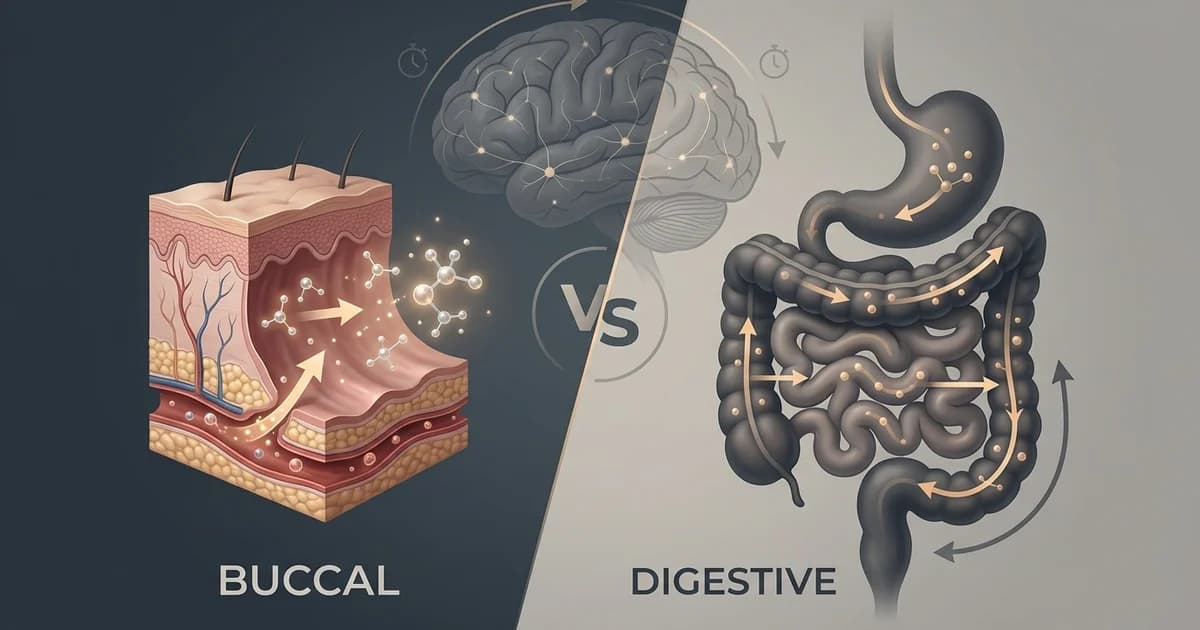
How fast do caffeine pouches work? A sublingual pouch that releases its actives under the tongue and against the cheek can begin to take effect in roughly 5 to 15 minutes, because those actives cross the oral mucosa straight into your bloodstream and skip the slow trip through your stomach and liver. Swallowed caffeine, by contrast, usually takes 30 to 45 minutes to reach meaningful plasma levels. The difference is not marketing. It is the route the molecule takes to your blood.
That gap matters most when timing is the whole game: the ten minutes before a meeting, a drive, or a lift.
This article is for informational purposes only and is not medical advice. If you have health concerns, are pregnant or breastfeeding, or are trying to cut down on caffeine or quit nicotine, talk to a healthcare provider.
Key Takeaways
- Route decides speed. Buccal and sublingual absorption send actives directly into the blood through the mouth's lining, while swallowed caffeine has to be digested first.
- Onset window: sublingual or buccal delivery can start working in about 5 to 15 minutes; swallowed caffeine typically peaks at 30 to 45 minutes.
- First-pass liver metabolism is the main reason swallowed compounds are slower and sometimes less available to the bloodstream.
- Sublingual and buccal are not identical. Sublingual means under the tongue; buccal means against the cheek and gum. Both bypass the gut, with slightly different absorption profiles.
- Roon is a zero-nicotine sublingual focus pouch (80 mg caffeine, 60 mg L-theanine, 25 mg methylliberine, 5 mg theacrine) built around a 5 to 10 minute onset and a 6 to 8 hour window.
Why the Mouth Is Faster Than the Stomach
The lining of your mouth is one of the most direct entry points to your bloodstream you have. The tissue under your tongue and inside your cheeks is thin, permeable, and packed with blood vessels, so small molecules placed there can diffuse across the membrane and into circulation within minutes. A 2019 review in Frontiers in Pharmacology describes the oral mucosa as a route that allows rapid absorption directly into systemic circulation while avoiding the digestive tract.
Swallow that same compound and the path gets longer. It moves through the stomach and small intestine, gets absorbed there, then runs through the liver before it ever reaches the rest of your body. That liver step is first-pass metabolism, and it is the bottleneck.
Sublingual and buccal delivery sidestep that bottleneck entirely. The molecule enters the blood before the liver gets a vote.
How Fast Do Caffeine Pouches Work Compared to Coffee or Pills?
A sublingual or buccal caffeine pouch can start working in about 5 to 15 minutes, while swallowed caffeine generally takes 30 to 45 minutes to reach effective blood levels. Caffeine itself is nearly fully absorbed no matter how you take it, but absorption speed depends on the route. According to the NCBI pharmacology reference on caffeine, orally consumed caffeine is rapidly and almost completely absorbed, with peak plasma concentrations typically reached within 15 to 120 minutes after oral ingestion, often around 45 minutes depending on gastric emptying and what you ate beforehand.
The practical takeaway is simple. If you swallow a caffeine pill or drink coffee, you wait half an hour or more for the climb. If you hold actives against the mucosa, part of the dose is already in circulation while a swallowed dose would still be sitting in your stomach.
Here is the route-by-route picture.
| Delivery route | Onset | Bypasses first-pass liver? | Relative bioavailability | Example formats |
|---|---|---|---|---|
| Sublingual (under the tongue) | ~5 to 15 min | Yes | Often higher for compatible molecules | Focus pouches, sublingual tablets, drops |
| Buccal (against cheek/gum) | ~5 to 20 min | Yes | Often higher; sustained release possible | Buccal films, gums, some pouches |
| Oral / digestive (swallowed) | ~30 to 45 min | No | High for caffeine, reduced for many other actives | Coffee, energy drinks, caffeine pills, capsules |
| Roon sublingual pouch | ~5 to 10 min | Yes | Direct mucosal delivery of the stack | Zero-nicotine pouch: 80 mg caffeine, 60 mg L-theanine, 25 mg methylliberine, 5 mg theacrine |
Sublingual vs Buccal: They Are Not the Same Thing
Sublingual and buccal both deliver actives through the mouth, but they use different tissue and behave differently. Sublingual means placing a product under the tongue, where the membrane is thin and the blood supply is heavy, which tends to produce the fastest onset. Buccal means parking it between the cheek and gum, where the tissue is slightly thicker and a product can sit and release over a longer stretch.
The StatPearls reference on medication routes notes that sublingual and buccal administration allow a drug to enter systemic circulation directly through the oral mucosa, bypassing the gastrointestinal tract and hepatic first-pass metabolism.
For a focus pouch, the distinction is less about a hard line and more about where you place it and how long it stays. A pouch tucked under the lip works the mucosa on both surfaces. The mechanism is the same: cross the lining, hit the blood, skip the gut.
Why Timing Is the Real Reason to Care
Speed only matters because attention is scheduled. You do not need focus in some abstract sense. You need it at 9:55 for a 10:00 call, in the parking lot before a client meeting, or in the last ten minutes before you warm up.
That is the case for a fast route. A 30 to 45 minute onset means you have to plan your caffeine the way you plan a commute, with a buffer you often do not have. A 5 to 15 minute onset lets you dose closer to the moment you actually need to be sharp.
Three situations where this is the difference between prepared and scrambling:
- Pre-meeting. You found out about the call ten minutes ago. A swallowed dose is still climbing when you are already talking.
- Pre-workout. You want the lift, not a 40 minute wait that pushes your whole session back.
- Pre-drive. A long highway stretch starts now, not after digestion.
What Actually Goes Into the Speed
Onset is not only about the route. It is about the molecules and the format working with that route.
Caffeine is the engine. L-theanine, an amino acid found in tea, is the part that smooths the edges; the British Journal of Nutrition crossover study reported that an L-theanine and caffeine combination improved measures of selective attention in sleep-deprived young adults. Pairing the two is one of the better-studied ways to support steady focus rather than a spike.
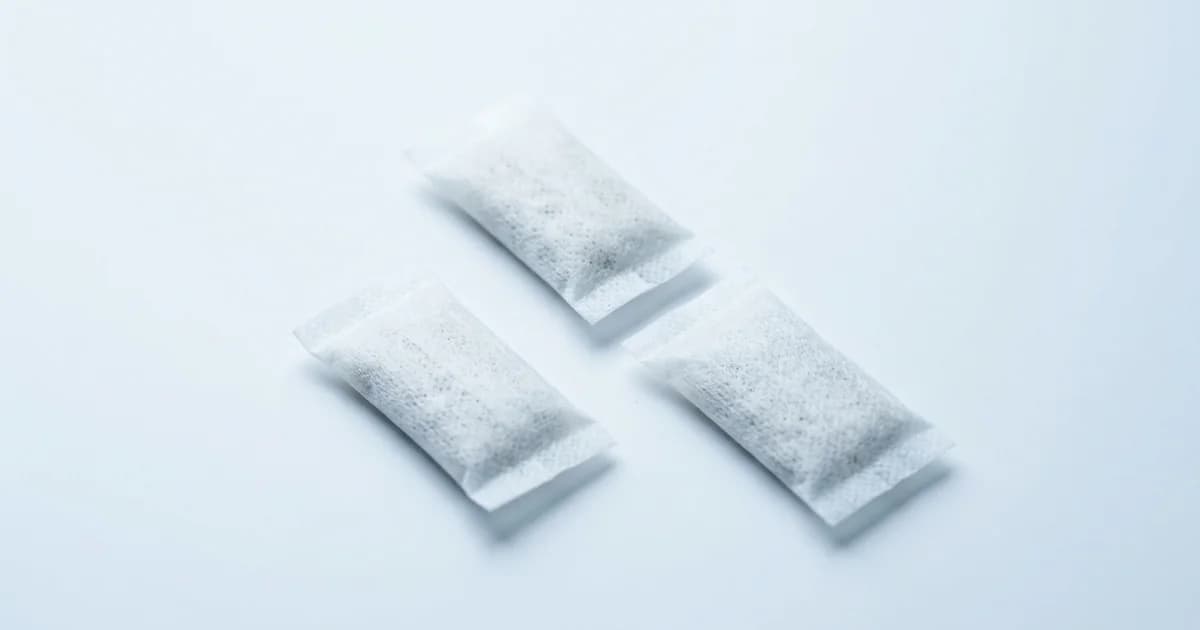
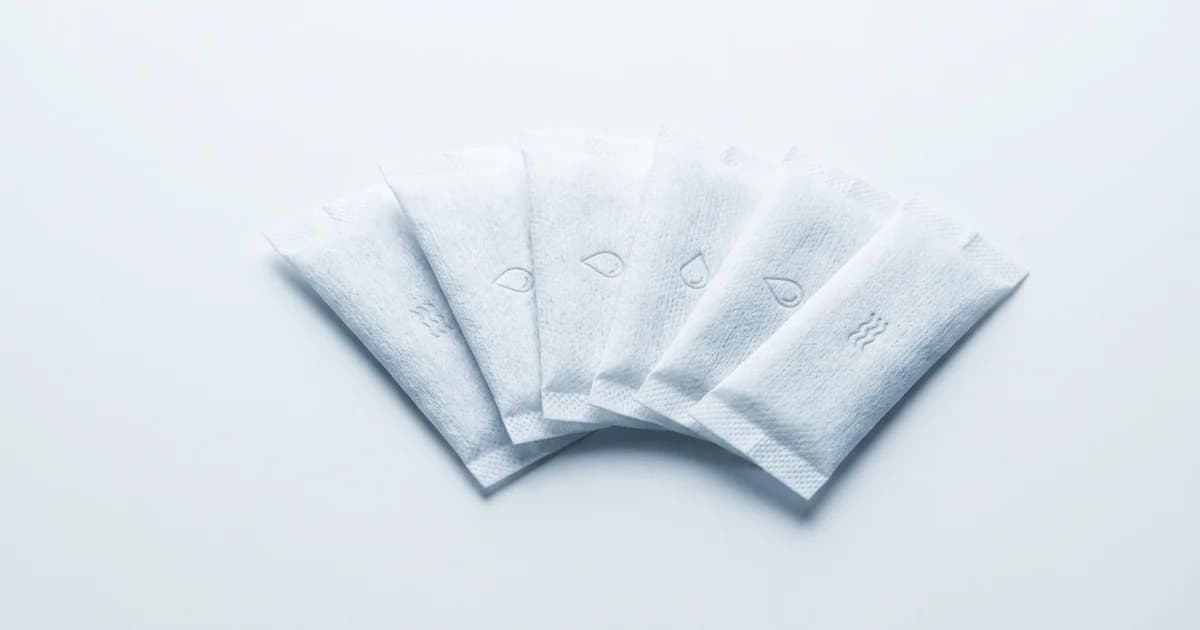
Format matters too. A pouch holds the actives in contact with the mucosa long enough for them to absorb, which is why a well-made sublingual product behaves differently from simply swishing a drink.
Conclusion: The Route Is the Variable
If you want to understand how fast a focus product hits, stop reading the dose and start reading the route. Two products with identical caffeine numbers can feel ten or thirty minutes apart depending on whether the actives go through your mouth or through your gut. Sublingual and buccal delivery move compounds into the blood through the oral mucosa, skipping the liver's first-pass step, which is why the onset window shrinks from a half hour to a handful of minutes.
Digestive absorption is not worse. It is slower and less precise on timing. When the moment is fixed and close, the faster route wins, and that is a question of biology, not branding.
Frequently Asked Questions
How fast do caffeine pouches work?
A sublingual or buccal caffeine pouch can begin to take effect in roughly 5 to 15 minutes, because the actives cross the lining of your mouth directly into the bloodstream and skip digestion. Swallowed caffeine, by comparison, usually takes 30 to 45 minutes to reach effective blood levels. The exact timing depends on the formula, the format, and how long you keep the pouch in place against the mucosa.
What is first-pass metabolism, and why does it slow things down?
First-pass metabolism is the step where a swallowed compound passes through the liver before reaching the rest of your body. The liver can break down a portion of the dose on that first pass, which both delays the effect and can lower how much actually reaches circulation. Sublingual and buccal routes avoid this by entering the blood through the mouth's lining first.
What is the difference between sublingual and buccal absorption?
Sublingual means placing a product under the tongue, where the tissue is thin and well supplied with blood, usually producing the fastest onset. Buccal means placing it between the cheek and gum, where the tissue is slightly thicker and release can be more sustained. Both routes deliver actives directly into systemic circulation and bypass the digestive tract and the liver's first-pass step.
Is caffeine in a pouch stronger than caffeine in coffee?
Not inherently. Caffeine is nearly fully absorbed whether you swallow it or take it through the mouth. The difference is speed and timing, not total strength. A pouch can feel faster because part of the dose enters the blood within minutes through the mucosa, while swallowed caffeine has to be digested before it climbs to its peak, which NBK223808 places anywhere from 15 to 120 minutes after oral ingestion, often around 45 minutes.
When should I use a focus pouch for the best timing?
Use it close to the moment you need to be sharp, since the onset window is short. For a meeting, a drive, or a workout, taking a sublingual pouch about 10 minutes ahead lines up the effect with the task. This is the main advantage over swallowed caffeine, which needs a longer buffer because it has to clear digestion first.
Do nicotine and caffeine pouches work the same way?
They share the delivery mechanism, not the contents. Both use the oral mucosa to send their active into the bloodstream quickly while bypassing the gut. The difference is what is inside. A zero-nicotine focus pouch delivers caffeine and supporting compounds for attention, with no nicotine and no dependence on it.
Where a Sublingual Pouch Wins the Clock
This whole article comes down to one variable: the route. If your problem is that your focus needs to arrive on a schedule, a Roon sublingual pouch is built for exactly that constraint. It is a zero-nicotine focus pouch that releases its stack through the oral mucosa, with a 5 to 10 minute onset and a 6 to 8 hour window designed to avoid the spike-and-crash pattern of a fast coffee.
Each pouch carries a deliberate four-part formula: 80 mg caffeine for the engine, 60 mg L-theanine to keep the edge smooth, plus 25 mg methylliberine and 5 mg theacrine. You tuck one under your lip about ten minutes before the thing you need to be sharp for.
Roon is not a medication, not a nicotine product, and not a substitute for sleep or a real meal. It is a focus tool that uses the faster route on purpose. If timing is your bottleneck, Roon is worth a place in the rotation.
By Roon Team