Caffeine Patch vs Focus Pouch: What the Science Says
Roon Team
Caffeine Patch vs. Focus Pouch: What the Skin-Absorption Science Says
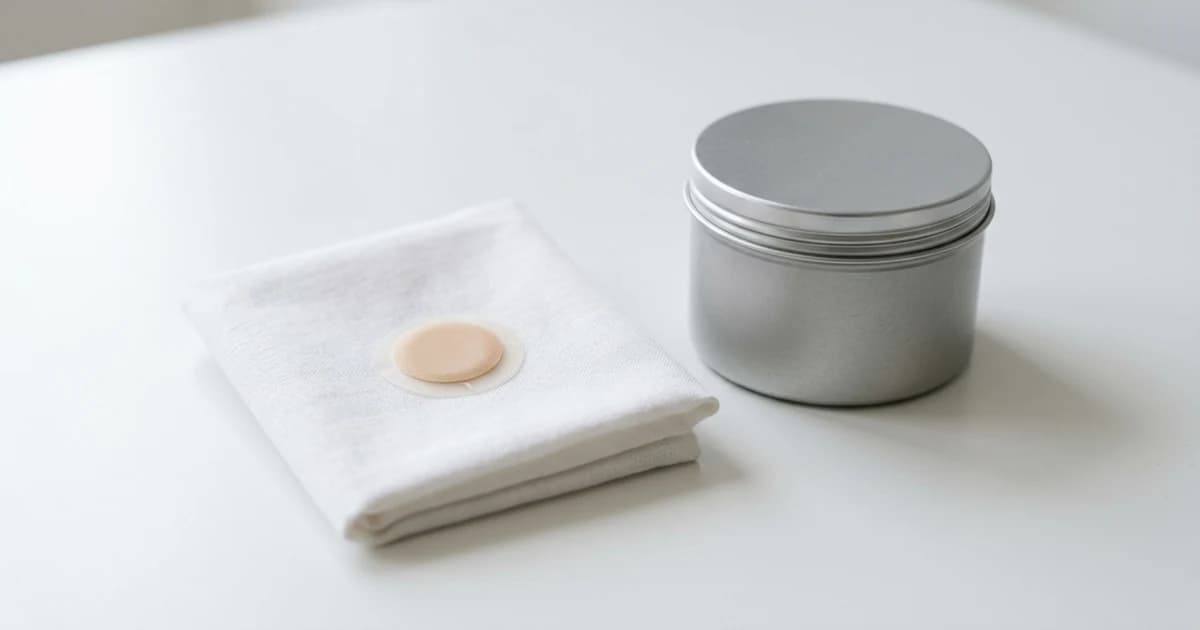
Caffeine patches promise a slow, hands-free drip of energy through your skin. Caffeine pouches deliver the same molecule through the lining of your mouth. The difference is pharmacokinetics: caffeine has a logP of roughly -0.1, making it hydrophilic and poorly suited for passive absorption through the lipid-rich stratum corneum (International Journal of Pharmaceutics, 2023). Oral and buccal caffeine achieves roughly 99% bioavailability. That gap matters for every dollar you spend.
Key Takeaways
- Caffeine's chemistry fights transdermal delivery. A logP of -0.1 falls well outside the 1 to 4 range associated with efficient skin penetration, which is why most commercial patches disclose just 10 to 30 mg of caffeine per patch.
- Oral/buccal caffeine reaches the bloodstream faster and more completely. Bioavailability is approximately 99% when swallowed and 64 to 90%+ through the buccal mucosa, per a 2017 crossover PK study.
- No FDA-approved caffeine patch exists. All patches on the market are sold as wellness or dietary products, not as FDA-cleared drug-delivery devices.
- The two formats solve different problems. Patches appeal to people who want low-level, background-hum caffeine over many hours. Pouches serve people who need noticeable alertness within minutes.
Why Is It So Hard to Push Caffeine Through Skin?
The stratum corneum, your skin's outermost barrier, is a lipid-rich wall. Molecules that cross it efficiently tend to be small, moderately lipophilic (logP 1 to 4), and uncharged. Caffeine fails that test with a logP of approximately -0.1 (International Journal of Pharmaceutics, 2023).
Some caffeine does cross the skin. A 1977 in vivo study found peak local absorption about 100 minutes after application, but systemic concentrations were far below what diffusion models predicted. That is why academic labs have turned to dissolving microneedles that physically puncture the stratum corneum (Journal of Controlled Release, 2017). If passive diffusion worked well for caffeine, you would not need to punch microscopic holes in the skin to deliver it.
How Does Buccal/Oral Caffeine Delivery Compare?
Swallowed caffeine reaches approximately 99% bioavailability. Buccal delivery (through the mouth lining, as with gum or pouches) offers a different advantage: speed. A 2017 randomized crossover study comparing caffeinated chewing gum to a caffeinated beverage found comparable time-to-peak plasma concentrations, with buccal bioavailability in the 64 to 90%+ range. The mouth's mucosal lining is thin, well-vascularized, and far more permeable to hydrophilic compounds than the stratum corneum.
The practical result: a pouch placed against your gum delivers caffeine to your bloodstream in roughly 5 to 15 minutes. A patch requires 45 to 90 minutes to approach steady state, and how much of the labeled dose actually reaches circulation remains an open question.
What Do Real Caffeine Patches Actually Contain?
Most established patch brands disclose doses well below a standard cup of coffee (roughly 95 mg). Here is what the major brands list on their own packaging and product pages:
- The Good Patch "B12 Awake" (thegoodpatch.com): 15 mg caffeine + green tea + B12. Wear time: 8 to 12 hours. Sold at Target, Amazon, Kroger.
- The Patch Brand "Energy Patch" (thepatchbrand.com): 10 mg caffeine + taurine, glucuronolactone, B-vitamins.
- Kind Patches "Energy Extra Strong" (kindpatches.com): 12 mg caffeine per Kind Patches' own site, but a Walmart listing for what appears to be the same SKU states 30 mg. A genuine cross-listing inconsistency; both numbers presented as-is.
- VIE Patch (Amazon): 75 mg caffeine, 30-patch pack. Highest disclosed dose among consumer patches reviewed.
- The Friendly Patch (Amazon): caffeine + guarana, dose not disclosed.
FlowBlend, a pouch brand, published a March 2026 article claiming "most caffeine patches... contain around 50 to 200mg of caffeine per patch." That is higher than what the brands above disclose on their own sites. FlowBlend sells pouches, not patches, so the framing warrants scrutiny.
Caffeine Patch vs. Focus Pouch: Side-by-Side Comparison
| Feature | Caffeine Patch (typical) | Focus Pouch (Roon) |
|---|---|---|
| Delivery mechanism | Transdermal (passive diffusion through skin) | Buccal/oral (absorbed through mouth lining, then swallowed) |
| Caffeine per unit | 10 to 75 mg (varies by brand) | 80 mg |
| Other active ingredients | B-vitamins, green tea extract, taurine (varies) | 60 mg L-theanine, 25 mg methylliberine (Dynamine), 5 mg theacrine (TeaCrine) |
| Onset | 45 to 90+ minutes to steady state | 5 to 10 minutes |
| Duration | 4 to 12 hours (labeled wear time) | 6 to 8 hours |
| Bioavailability | Unknown for most brands; caffeine's logP of -0.1 limits passive skin penetration | ~99% (oral caffeine); 64 to 90%+ (buccal) |
| FDA status | No FDA-approved caffeine patch exists; sold as wellness/dietary products | Dietary supplement (not FDA-evaluated for drug claims) |
| Format | Adhesive skin patch | Zero-nicotine oral pouch, Cool Mint |
| Price | ~$0.50 to $1.50 per patch depending on brand and pack size | $1.00/pouch one-time; $0.61/pouch on subscription |
| Typical use case | Low-level, background energy over many hours | Noticeable alertness and focus with defined onset |
Neither format is objectively "better." A patch delivering 15 mg slowly over 8 hours solves a different problem than a pouch delivering 80 mg in 5 to 10 minutes.
Who Should Actually Consider a Caffeine Patch?
Patches make sense if you want a low, barely perceptible trickle of caffeine over many hours and do not need to feel a noticeable onset. Long-haul flights, all-day conferences, or situations where you cannot put something in your mouth are reasonable use cases.
The trade-off: you accept an uncertain delivery profile. No patch brand publishes third-party PK data showing how much labeled caffeine reaches circulation. Nectr, a competing pouch brand, published a comparison article in April 2026 acknowledging patches "score better for steady-state tasks" while pouches "score higher in subjective alertness because of the rapid onset." That framing is roughly fair.
Who Should Choose a Caffeine Pouch Instead?
If you need your caffeine to register as felt alertness within minutes, a pouch is the better delivery vehicle. The buccal mucosa is thin, well-supplied with blood vessels, and handles hydrophilic molecules like caffeine without the stratum corneum getting in the way. You also get dosing precision: you know how much went in, and you know roughly when it arrives.
The trade-off: pouches require you to actually put something in your mouth. It is not invisible the way a patch under your sleeve is.
What About the "Per-Milligram Cost" Argument?
Nectr's comparison article claimed that "per mg of caffeine, pouches are roughly 3 to 5x cheaper" than patches. The math checks out. A Good Patch B12 Awake 4-pack retails for around $12, roughly $0.20 per milligram of labeled caffeine. A Roon pouch on subscription costs $0.61 for 80 mg (plus three other active ingredients), roughly $0.008 per milligram.
Cost-per-milligram only matters if the milligrams reach your bloodstream. A patch listing 15 mg but delivering an uncertain fraction transdermally is not directly comparable to a pouch delivering 80 mg at ~99% oral bioavailability. The effective cost gap is wider than label math suggests.
The Bioavailability Problem No Patch Brand Talks About
No major caffeine-patch brand has published third-party PK data showing what fraction of the labeled dose reaches systemic circulation. Oral caffeine bioavailability is settled at ~99%. Buccal delivery sits at 64 to 90%+. For transdermal caffeine via passive diffusion, the chemistry (logP of -0.1) predicts poor efficiency, and no consumer-product data closes the question. That does not make patches fraudulent, but the gap should give informed buyers pause.
Patches and Pouches Are Not the Same as "Calm vs. Focus"
A common mistake in the "energy format" conversation is lumping all alternative delivery methods together. Caffeine patches and caffeine pouches both deliver the same stimulant (caffeine, an adenosine receptor antagonist). They are different delivery vehicles for the same mechanism.
This is distinct from choosing between, say, a kava product (which acts on GABA receptors for calming effects) and a caffeine product. Those solve fundamentally different problems. The patch vs. pouch question is narrower: given that you want caffeine, which format gets it into your bloodstream more efficiently?
Making the Science Work for Your Schedule
Oral and buccal routes deliver caffeine faster, more completely, and more predictably than transdermal patches. This is not a close call in the research literature. Caffeine's hydrophilic chemistry and the skin's lipophilic barrier create a mismatch that no consumer patch has solved with published PK data.
The patch format still has appeal for people who want ultra-low-dose, passive caffeine delivery and accept the uncertainty. "Less efficient" does not mean "useless." It means you should calibrate expectations to the chemistry, not to the marketing copy.
Frequently Asked Questions
Do caffeine patches actually work?
Caffeine patches deliver some caffeine through the skin, but the amount reaching your bloodstream is uncertain. Caffeine's logP of -0.1 makes it poorly suited for passive transdermal absorption. No major consumer patch brand has published third-party pharmacokinetic data showing systemic caffeine levels after application. Subjective effects may reflect a real but small delivered dose, placebo response, or both.
How much caffeine is in a typical patch?
Most established patch brands disclose 10 to 30 mg per patch. The Good Patch B12 Awake contains 15 mg. The Patch Brand Energy contains 10 mg. VIE Patch is an outlier at 75 mg. These doses are all well below a standard cup of coffee's roughly 95 mg, which reflects the delivery limitations of transdermal caffeine.
Is there an FDA-approved caffeine patch?
No. As of 2026, no FDA-approved transdermal caffeine patch exists. All caffeine patches on the market are sold as dietary supplements or wellness products. They have not undergone the clinical PK testing required for FDA drug-delivery device approval.
How fast do caffeine pouches work compared to patches?
Caffeine pouches typically produce effects within 5 to 15 minutes via buccal absorption. Patches require 45 to 90+ minutes to approach steady-state delivery. The mouth's mucosal lining is thin and well-vascularized; the skin's stratum corneum is a lipid barrier that resists hydrophilic molecules like caffeine.
Are caffeine pouches cheaper than caffeine patches?
On a per-milligram basis, yes. Nectr estimated pouches are roughly 3 to 5x cheaper per mg. Factor in bioavailability differences (oral ~99% vs. unknown transdermal efficiency) and the effective cost gap widens further.
Can I wear a caffeine patch while sleeping?
Most brands recommend daytime wear only (8 to 12 hours). Caffeine blocks adenosine receptors, so wearing a patch overnight could interfere with sleep even if the delivered dose is low.
Why do researchers use microneedles for caffeine skin delivery?
Because passive diffusion of caffeine through intact skin is inefficient. Dissolving microneedles physically puncture the stratum corneum, bypassing the lipid barrier (Journal of Controlled Release, 2017). The fact that researchers resort to physically puncturing the skin tells you something about the limits of simple adhesive patches.
Do caffeine patches have side effects?
Potential side effects include skin irritation at the application site (redness, itching) and standard caffeine-related effects like restlessness or increased heart rate. Because the delivered dose is likely low, severe caffeine side effects are less common with patches than with high-dose oral caffeine. Adhesive allergies can cause local reactions unrelated to caffeine itself.
When You Want the Caffeine to Actually Arrive
If you are choosing a caffeine format for reliable onset and near-complete bioavailability, the mouth wins over the skin by a wide margin.
Roon is built around that principle. Each pouch delivers 80 mg caffeine, 60 mg L-theanine, 25 mg methylliberine (Dynamine), and 5 mg theacrine (TeaCrine) through a zero-nicotine sublingual format. The caffeine dose is modest (one small coffee), but methylliberine slows caffeine's oral clearance: a randomized crossover PK study (n=12) found co-administration cut clearance from 41.9 to 17.1 L/hr and extended half-life from 7.2 to 15 hours, with no increase in peak concentration. Same peak, longer tail. That is why the felt window is 6 to 8 hours from a dose smaller than most energy drinks.
The trade-off: a longer half-life means you should stop at least 8 hours before bed. Roon still contains 80 mg of caffeine, which produces tolerance like any caffeine source. It is not a substitute for sleep, medical treatment, or the decision to reduce your overall caffeine intake. But if the job is sustained, predictable focus from a format that actually gets caffeine into your bloodstream, the science favors the mouth over the skin.
Written by Roon Team