The Best Nootropic Pouches in 2026: A Head-to-Head Comparison
Roon Team
The Best Nootropic Pouches in 2026: A Head-to-Head Comparison
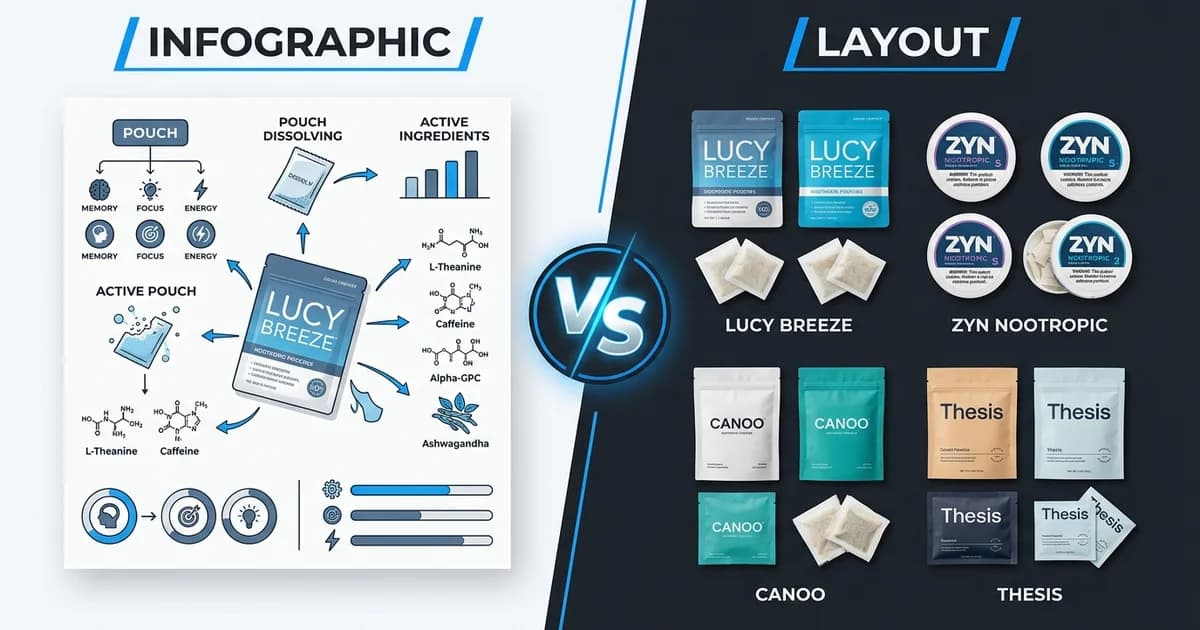
Which nootropic pouches actually work in 2026? We tested and compared 9 brands on ingredient depth, caffeine dose, sustained-release compounds, and cost per pouch. The short answer: most are caffeine delivery systems with B vitamins on the label. Only a few contain real nootropic stacks, and just one combines caffeine, L-theanine, theacrine, and methylliberine for a full methylxanthine curve. Below is every product ranked, with exact milligrams and prices.
Key Takeaways:
- Caffeine doses across the top nootropic pouches range from 0 mg (Ultra's paraxanthine model) to 200 mg (Wip), a spread that matters because sublingual absorption hits the bloodstream faster than coffee or energy drinks.
- Only 4 of the 9 brands include a true nootropic compound beyond caffeine and B vitamins, a pattern consistent across nicotine-free pouches for focus.
- Price per pouch runs from $0.22 (Grinds) to $1.00 (Roon one-time), though Roon drops to $0.61 on subscription.
- No product other than Roon stacks caffeine with L-theanine, theacrine, and methylliberine for a sustained nootropic curve.
Nootropic Pouches Comparison: The 2026 Table
Before the individual breakdowns, here is the full comparison. Every cell uses verified numbers from brand websites, Amazon listings, or third-party reviews. "Best for" verdicts reflect each product's honest strength.
| Rank | Brand | Best For | Caffeine (mg) | Key Nootropics | Sustained-Release Compounds | Price / Pouch | Pouches / Can |
|---|---|---|---|---|---|---|---|
| 1 | Dialed In | Broadest nootropic stack | Undisclosed (green tea + guarana) | Citicoline, NALT, L-Theanine, Theobromine | Theobromine, Guarana (mild) | ~$0.33-$0.47 | 15-20 |
| 2 | Ultra | Caffeine-free stimulation | 0 (100 mg paraxanthine) | Alpha GPC, L-Theanine, Ginseng | None | ~$0.47-$0.60 | 15 |
| 3 | Roon | Longest clean-focus window (6-8 hrs) | 80 | 60 mg L-Theanine, 25 mg Dynamine, 5 mg TeaCrine | Methylliberine + Theacrine | $1.00 ($0.61 sub) | 15 |
| 4 | Nectr | Citicoline-focused cognition | 50 (Energy) / 30 (Focus) | Cognizin Citicoline (62.5 mg in Focus) | None | ~$0.50 | 16 |
| 5 | NZE | Clean-label, caffeine-free option | 50 (Energy) / 0 (Focus) | Alpha GPC, L-Tyrosine, L-Theanine | None | ~$0.47 | 15 |
| 6 | Mojo | Adaptogens + low caffeine | 50 | L-Theanine, Ginseng, Yerba Mate, Rhodiola, Eleuthero | None | ~$0.37 | 15 |
| 7 | Wip | Raw caffeine output | 100 or 200 | L-Theanine (undisclosed dose) | None | ~$0.40 | 15 |
| 8 | Grinds | Budget caffeine, widest retail | 80 | None | None | ~$0.22 | 18 |
| 9 | Berserker | Pre-workout intensity | 150+ | None | None | ~$0.40 | 15 |
 RoonOne pouch RoonOne pouch | 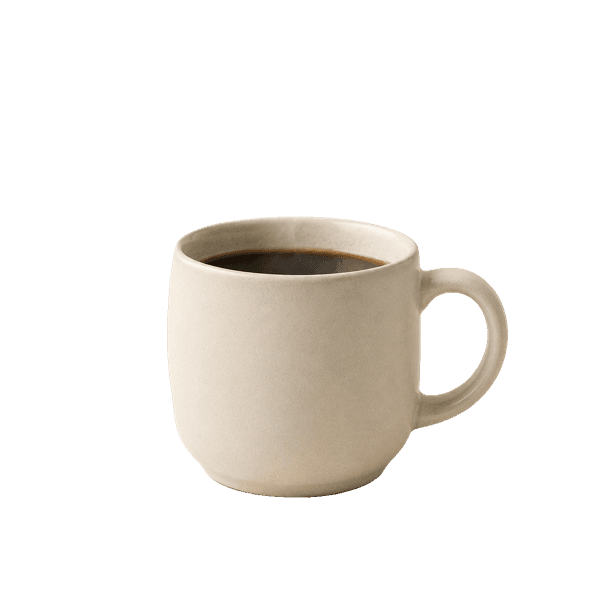 Coffee8 fl oz Coffee8 fl oz | 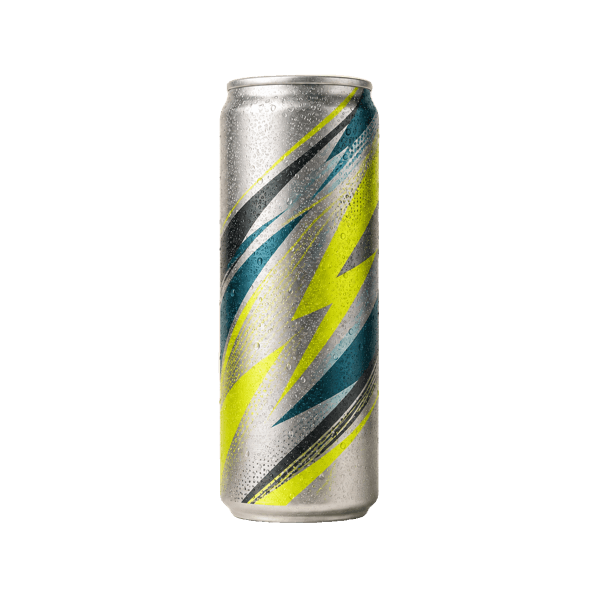 Energy drink8.4 fl oz can Energy drink8.4 fl oz can | 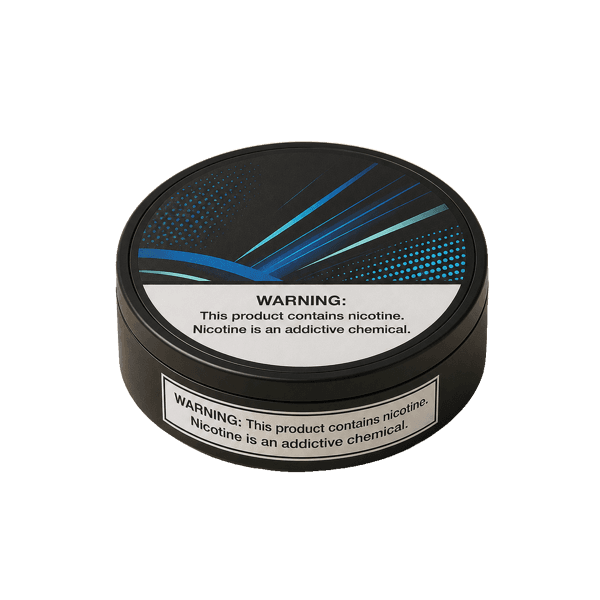 Nicotine pouchOne pouch Nicotine pouchOne pouch |  Other pouchesNon-nicotine Other pouchesNon-nicotine | |
|---|---|---|---|---|---|
| CaffeineCaffeine | 80 mg | ~95 mg | 200–300 mg | 0 mg | 100–200 mg |
| SynergistsSynergists (L-theanine, Dynamine®, TeaCrine®) | Yes | No | No | No | No |
| Fast onsetFast onset (5 to 10 min) | Yes | No | Sometimes | Yes | Yes |
| Lasts 6-8hLasts 6 to 8 hours | Yes | No | No | No | No |
| No crashNo crash or jitters | Yes | No | No | Sometimes | Sometimes |
| No nicotineNo nicotine | Yes | Yes | Yes | No | Yes |
| No sugarNo sugar | Yes | Yes | No | Yes | Yes |
How Did We Evaluate the Best Nootropic Pouches?
Each product was scored on five criteria: ingredient transparency (full dose disclosure vs. proprietary blends), nootropic depth beyond caffeine, caffeine dose and source, presence of sustained-release compounds, and cost per pouch. These are the same criteria used in our full buyer's guide.
- Ingredient transparency: Does the label show exact milligrams, or hide behind a "proprietary blend"?
- Nootropic depth: Anything beyond caffeine and B vitamins?
- Caffeine dose and source: How much, and from what?
- Sustained-release compounds: Does the formula include theacrine, methylliberine, or theobromine to extend the energy curve?
- Price per pouch: What are you paying per serving?
#1: Dialed In Pouches. Best for Broadest Nootropic Stack
Dialed In has the widest nootropic formula of any pouch on this list, covering acetylcholine, dopamine, and GABA pathways in a single serving. It earns the top spot for ingredient breadth, though it lacks full dose transparency.
Dialed In includes caffeine from green tea and guarana, citicoline, N-Acetyl L-Tyrosine, L-Theanine, and theobromine. According to Dialed In's product page, the formula is "designed for clean, sustained energy" from natural sources. Theobromine adds a mild, longer-lasting stimulant effect with a different receptor profile than caffeine.
What works: Citicoline supports phosphatidylcholine production in neuronal membranes. L-Tyrosine is a dopamine precursor that performs best under stress. L-Theanine smooths the caffeine response. Theobromine provides a gentler, longer stimulant tail. That is four distinct cognitive pathways in one pouch, which is why Dialed In ranks well in any serious nootropic pouches comparison. Price is competitive at roughly $0.33-$0.47 per pouch.
What doesn't: The exact caffeine milligrams are not prominently disclosed. Guarana is roughly 40% caffeine by weight, so the true stimulant load is higher than whatever the green tea base provides. The formula also lacks theacrine or methylliberine, the two xanthine derivatives with the strongest evidence for extending stimulant duration without tolerance buildup.
#2: Ultra Pouches. Best for Caffeine-Free Stimulation
Ultra is the only major pouch built around paraxanthine instead of caffeine, which makes it the best option for people who want stimulation without caffeine's side-effect profile. It does not belong in a simple caffeine pouches comparison because it skips caffeine entirely.
Ultra uses 100 mg of enfinity (paraxanthine) per pouch, upgraded from 75 mg in January 2026. Paraxanthine is caffeine's primary active metabolite; roughly 84% of ingested caffeine converts to paraxanthine in the liver. Ultra's thesis: deliver what the brain actually wants from caffeine, without the compound the liver has to process first. The remaining ingredients are L-Theanine, Alpha GPC, Panax Ginseng, Vitamin B6, and Vitamin B12.
What works: Paraxanthine is a genuinely distinct stimulant. It avoids the jitter and tolerance patterns tied to caffeine's secondary metabolites (theobromine and theophylline). Alpha GPC and L-Theanine add real nootropic value. Ultra pouches have strong brand momentum, with over a million cans sold since launching in May 2025. Price runs roughly $0.47-$0.60 per pouch depending on the pack size.
What doesn't: If you respond well to caffeine specifically, paraxanthine will feel different, and some users report a subtler onset. There are no sustained-release compounds (no theacrine, no methylliberine) to extend the duration. The long-term safety data on isolated paraxanthine supplementation is still accumulating; it is a newer ingredient compared to caffeine's centuries of human use.
#3: Roon. Best for Longest Clean-Focus Window (6-8 Hours)
Roon is the only pouch on this list that stacks all three methylxanthines (caffeine, methylliberine, theacrine) with L-theanine. That combination produces a 6-to-8-hour focus window, longer than any other product here, though it comes at the highest per-pouch price.
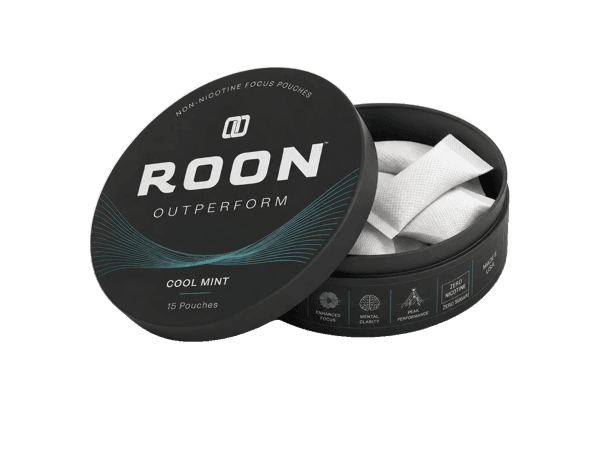
Roon contains 80 mg caffeine, 60 mg L-theanine, 25 mg methylliberine (Dynamine), and 5 mg theacrine (TeaCrine) per pouch. Zero nicotine, zero tobacco. Cool Mint flavor, 15 pouches per tin. Onset runs 5 to 10 minutes via sublingual delivery.
What works: The pharmacokinetic logic is straightforward. Caffeine provides onset. Methylliberine extends the peak: a 2023 study in Nutrients found that methylliberine improved subjective energy, concentration, and motivation at 3 hours post-dose. Theacrine carries the tail: a human interaction study (PMID: 28875060) confirmed that theacrine and caffeine do not interfere with each other's pharmacokinetics, meaning the combination extends the curve without competing for the same metabolic pathways. L-Theanine at 60 mg keeps the caffeine smooth. A 2008 study (PMID: 18641209) showed the caffeine-plus-L-theanine combination improved hit rate and target discriminability compared to placebo or either compound alone.
What doesn't: The honest limitation is price. At $1.00 per pouch one-time ($14.99 per tin in a 4-tin bundle), Roon is the most expensive product on this list. The subscription price drops to $0.61 per pouch ($9.16 per tin), which is competitive, but the one-time cost is still a barrier for trial. The single-flavor lineup (Cool Mint) is also narrower than competitors offering 5+ flavors. And the formula is a focused four-ingredient stack; it does not include citicoline, Alpha GPC, or adaptogens.
#4: Nectr Pouches. Best for Citicoline-Focused Cognition
Nectr's Focus line is the best option if citicoline is your priority nootropic. The 62.5 mg of Cognizin per Focus pouch is a branded, clinically studied form of citicoline with strong evidence for attention and working memory support.
Nectr offers two lines: Energy pouches with 50 mg caffeine and Focus pouches with 30 mg caffeine plus 62.5 mg Cognizin citicoline. According to Nectr's product page, the Focus line targets "sustained mental clarity and flow state." Both lines are nicotine-free and sugar-free.
What works: Citicoline is one of the better-studied nootropic compounds. Cognizin specifically has clinical data supporting improvements in attention and psychomotor speed. The moderate caffeine dose (30-50 mg) is sensible for sublingual delivery. Nectr earns a spot in any list of the best nootropic pouches for the citicoline inclusion alone.
What doesn't: The nootropic stack beyond citicoline is thin. There is no L-Theanine to smooth the caffeine, no adaptogens, and no sustained-release stimulants. You get one strong cognitive compound plus a low caffeine dose. The energy curve is shorter than products with methylxanthine stacking. Price is roughly $0.50 per pouch, mid-range for the category.
#5: NZE Pouches. Best for Clean-Label and Caffeine-Free Options
NZE is the strongest choice if clean labeling and a caffeine-free line matter to you. The Energy pouches use 50 mg caffeine with Alpha GPC, L-Tyrosine, and L-Theanine. The Focus line drops caffeine entirely, useful for evening use or caffeine-sensitive users.
NZE sweetens with Stevia and Xylitol (no sucralose, no artificial sweeteners). The caffeinated Energy line covers three cognitive pathways: Alpha GPC for acetylcholine, L-Tyrosine for dopamine under stress, and L-Theanine for GABA-mediated calm focus.
What works: Ingredient selection is clean and well-chosen. Alpha GPC is a strong choline source. The caffeine-free Focus option is genuinely useful, since most competitors force you to choose between focus and energy. No artificial sweeteners is a real differentiator for ingredient-conscious buyers.
What doesn't: At $0.47 per pouch ($34.99 per 5-pack of 75 pouches), you are paying a premium for a relatively simple three-compound nootropic stack. There are no adaptogens and no sustained-release stimulants. The 50 mg caffeine dose is mild; users who want a stronger push will need to double up.
#6: Mojo Pouches. Best for Adaptogens Plus Low Caffeine
Mojo has the most extensive adaptogen lineup in the pouch space. If stress resilience and long-term adaptogenic support matter more to you than raw stimulant power, Mojo is the pick.
Mojo contains 50 mg caffeine from green tea, L-Theanine, N-Acetyl-L-Tyrosine, Panax Ginseng Root Extract, Yerba Mate Extract, Eleuthero Root Extract, Rhodiola Extract, and B vitamins (B3, B6, B12). According to Mojo's FAQ page, the caffeine is derived from green tea. Price is roughly $0.37 per pouch in 5-can packs.
What works: Rhodiola, Eleuthero, and Ginseng are all well-studied adaptogens with legitimate research for stress resilience and cognitive performance. L-Theanine plus caffeine is a proven combination for attention. The price point is one of the lowest per pouch in the category. Mojo pouches appear in most conversations about the best nootropic pouches for good reason.
What doesn't: Mojo does not disclose individual ingredient doses on standard labeling. You cannot tell whether you are getting a clinical dose of Rhodiola (typically 200-600 mg in studies) or a token amount. The caffeine quantity (50 mg) is confirmed on their site, but the rest is a proprietary blend. No sustained-release stimulant compounds.
#7: Wip Pouches. Best for Raw Caffeine Output
Wip is the highest-caffeine pouch on the market. If you want maximum stimulant power per pouch and nothing else, this is the product.
Wip comes in 100 mg and 200 mg caffeine options sourced from non-GMO green coffee beans. The rest of the formula: B Vitamins (Niacin, B6, B12), Chromium, and L-Theanine at an undisclosed dose. According to Cyclone Pods' review, Wip's retail price is $5.99 per can (~$0.40 per pouch). 15 pouches per can.
What works: The caffeine is clearly dosed, the sourcing is clean, and the B vitamin complex supports basic energy metabolism. If raw energy output is the goal, Wip pouches deliver the most stimulant per dollar on this list.
What doesn't: Wip is a caffeine delivery vehicle, not a nootropic stack. No citicoline, no Alpha GPC, no adaptogens, no sustained-release compounds. The L-Theanine dose is not disclosed; clinical studies typically use 100-200 mg alongside caffeine, and without disclosure, you cannot evaluate whether Wip's L-Theanine is functional or decorative. The 200 mg dose is aggressive for sublingual delivery, meaning faster absorption and a sharper crash than the same dose from coffee. Research on caffeine and cognitive performance shows diminishing returns above roughly 100 mg when the goal is focus rather than physical performance.
#8: Grinds Pouches. Best for Budget Caffeine and Widest Retail
Grinds is the original coffee pouch, now delivering 80 mg caffeine per pouch. For budget-conscious users who want a simple caffeine hit with wide retail availability, Grinds is the cheapest option at roughly $0.22 per pouch.
Grinds pouches are made from actual coffee grounds, 18 per can, with B vitamins. Originally designed as a tobacco alternative for baseball players, Grinds has the broadest retail footprint of any pouch brand.
What works: Simple and unpretentious. 80 mg of caffeine from real coffee in pouch form at the lowest price on this list. Brand recognition and retail availability are unmatched.
What doesn't: Zero nootropic ingredients. No L-Theanine, no choline sources, no adaptogens, no sustained-release compounds. Grinds is a coffee pouch, not a nootropic pouch. If cognitive performance beyond basic alertness is your goal, this is not the product.
#9: Berserker Pouches. Best for Pre-Workout Intensity
Berserker is a pre-workout in pouch form. The 150 mg+ caffeine dose is designed for gym-goers who want to feel wired before a heavy session. It does not pretend to be a cognitive product.
Berserker pouches contain high-dose caffeine, taurine, and B vitamins. The caffeine is clearly labeled, and the marketing is honest about the product's purpose.
What works: If you want a pre-workout hit without mixing powder, Berserker delivers. The high caffeine is frontloaded for fast physical arousal.
What doesn't: Nootropic depth is zero. High-dose caffeine delivered sublingually hits fast and hard, which means a sharper crash. There is no L-Theanine to manage the anxiety that 150 mg+ of rapid-absorption caffeine produces, and no sustained-release compounds. Berserker belongs in a pre-workout comparison, not a nootropic pouches comparison.
What Is Missing from Most Nootropic Pouches in 2026?
After pulling apart nine products, a clear pattern emerges. The nootropic pouch market has four structural gaps.
Gap 1: Most pouches are just caffeine. Wip pouches, Grinds, and Berserker are caffeine delivery systems with B vitamins. B vitamins support energy metabolism, but they do not improve focus, memory, or sustained cognitive performance. Calling these "nootropic" pouches is generous.
Gap 2: The ones with real nootropics still lack sustained-release compounds. Nectr has citicoline. NZE has Alpha GPC. Mojo has adaptogens. Dialed In comes closest with theobromine and guarana's slower-release caffeine. But none include theacrine or methylliberine, the two xanthine derivatives with the strongest evidence for extending stimulant duration without building tolerance. A double-blind study (PMID: 28875060) confirmed that theacrine activates dopamine and adenosine receptors similarly to caffeine, with a longer half-life and no demonstrated tolerance buildup. Methylliberine works on overlapping pathways but with faster onset, creating a bridge between caffeine's quick hit and theacrine's sustained tail.
Gap 3: Caffeine dosing is all over the map. This nootropic pouches comparison reveals a range from 0 mg (Ultra) to 200 mg (Wip). For a sublingual product where absorption bypasses the GI tract, a 200 mg dose is aggressive. A 2021 systematic review in Cureus found that the caffeine-plus-L-theanine combination improved composite cognition scores, with most positive results clustering in the 40-100 mg caffeine range when paired with L-theanine. Going higher does not improve focus; it increases anxiety and jitter risk.
Gap 4: Nobody else stacks the full methylxanthine family. Caffeine, theacrine, and methylliberine are all methylxanthines. They act on overlapping but distinct receptor pathways. Combined, they produce a longer, smoother energy curve than any single compound alone. Caffeine provides onset. Methylliberine extends the peak. Theacrine carries the tail. A clinical trial (NCT06048640) is currently investigating Dynamine (methylliberine) specifically for sustained-energy indices, reflecting growing scientific interest in this stacking approach.
The Honest Verdict on Nootropic Pouches in 2026
The pouch market has matured. Products like Dialed In and Ultra prove that real nootropic formulation is possible in this format. Nectr's citicoline focus and NZE's clean-label approach serve specific audiences well. Mojo delivers adaptogens at a low price point.
The category's blind spot remains duration. Most pouches give you a 1-to-3-hour window and then drop off, because caffeine alone, delivered sublingually, peaks fast and fades fast. The products that address this (Dialed In with theobromine, Roon with the full methylxanthine stack) represent where the category is heading: longer curves, fewer crashes, and less tolerance buildup over time.
Your pick depends on your priority. Best nootropic breadth: Dialed In. Best caffeine-free option: Ultra. Best value: Mojo or Grinds. Longest focus window: Roon. Best citicoline source: Nectr. There is no single winner because there is no single use case.
Related from Roon
- Best Nootropic Pouches: Buyer's Guide
- Ultra Pouches Review (2026)
- Mojo Energy Pouches Review
- Roon vs. Nectr Pouches
- Roon vs. Wip Pouches
- Wip Energy Pouches Review
- Nootropic Stack Guide: All-Day Cognitive Endurance
- Theacrine: Benefits, Half-Life, and How It Compares to Caffeine
- Best Energy Pouches for Gaming
Frequently Asked Questions
What are nootropic pouches?
Nootropic pouches are small, tobacco-free, nicotine-free oral pouches that deliver cognitive-support compounds through the mucous membranes under your lip. Unlike caffeine pouches that contain only caffeine and B vitamins, true nootropic pouches include ingredients like L-theanine, citicoline, Alpha GPC, or methylxanthine stacks designed to support focus, memory, or sustained energy. Sublingual delivery bypasses the digestive system, so onset is typically 5 to 15 minutes.
Which nootropic pouch has the most caffeine?
Wip holds that title at 200 mg per pouch in its high-strength option. That is equivalent to roughly two cups of coffee, delivered sublingually for faster absorption. For context, most research on caffeine and cognitive performance finds optimal focus effects in the 40-100 mg range when combined with L-theanine. Higher doses increase physical energy but also raise anxiety and jitter risk.
Are nootropic pouches safe?
The individual ingredients in most nootropic pouches (caffeine, L-theanine, B vitamins, citicoline, Alpha GPC) are generally recognized as safe at the doses used. Caffeine carries well-documented risks above roughly 400 mg per day, including insomnia and elevated heart rate. If you are pregnant, nursing, or taking prescription medication, consult a healthcare provider before using any caffeinated product.
Do nootropic pouches build tolerance like caffeine?
Caffeine-only pouches build tolerance the same way coffee does; your adenosine receptors upregulate within 1-2 weeks of daily use. Products containing theacrine show a different pattern. A study in the Journal of the International Society of Sports Nutrition (PMID: 28875060) found no evidence of habituation to theacrine over the study period, suggesting it works through a pathway less prone to tolerance than caffeine alone.
How long do nootropic pouches last?
Duration varies by formula. Caffeine-only pouches (Wip, Grinds, Berserker) typically produce a 1-to-3-hour window before the crash. Products with theobromine (Dialed In) extend that modestly. Roon claims a 6-to-8-hour window based on its methylliberine and theacrine stack. Ultra's paraxanthine-based formula has a different pharmacokinetic profile than caffeine, with users reporting a smoother but generally shorter-duration effect.
What is the cheapest nootropic pouch?
Grinds at roughly $0.22 per pouch, though Grinds contains caffeine and B vitamins only, with no nootropic compounds. Among pouches with actual nootropic ingredients, Mojo is the cheapest at about $0.37 per pouch. Roon is the most expensive at $1.00 one-time but drops to $0.61 on subscription.
What is the difference between paraxanthine and caffeine in pouches?
Paraxanthine is caffeine's primary active metabolite. When you drink coffee, your liver converts about 84% of the caffeine into paraxanthine. Ultra delivers paraxanthine directly, skipping the liver conversion step and avoiding caffeine's secondary metabolites (theobromine and theophylline), which have longer half-lives and contribute to side effects. The trade-off: paraxanthine is a newer supplemental ingredient with less long-term safety data than caffeine.
Can I use nootropic pouches to quit nicotine?
Nootropic pouches mimic the oral ritual of nicotine pouches (tuck under the lip, leave for 15-30 minutes), which makes them useful as a behavioral replacement. They do not contain nicotine and will not address nicotine withdrawal symptoms directly. Several brands, including Roon, Nectr, and Ultra, position themselves partly as nicotine-free alternatives for people transitioning away from Zyn or other nicotine pouches.
Why a $1.00 Pouch Outlasts a $5 Coffee
The comparison above comes down to one question: how long does a single dose actually work? Most caffeine pouches and coffees give you 3 to 4 hours before the curve drops. Roon's felt window is 6 to 8 hours, and the reason is specific.
Dynamine (methylliberine, 25mg) slows caffeine's clearance. In a human pharmacokinetic study, co-administering methylliberine with 150mg caffeine reduced oral clearance from 41.9 to 17.1 L/hr and extended caffeine's half-life from 7.2 to 15 hours, with no increase in peak concentration. Same peak, longer tail. That is the mechanism behind the duration, and it is why 80mg of caffeine in a Roon pouch does not need to be a large dose. L-theanine (60mg) smooths the response. Theacrine (5mg) resists tolerance buildup. The caffeine is just the base. The other three compounds reshape its curve.
A 15-hour half-life is not 15 hours of felt energy. Half-life measures clearance, not perception. But the trade-off is real: do not take Roon within 8 hours of bedtime.
Roon is not the cheapest option. It contains no adaptogens, no mushroom extracts, no paraxanthine. It is a focused four-ingredient, zero-nicotine stack that does one thing well: duration. At $0.61/pouch on subscription, the price buys you a longer window, not a stronger hit.
Written by Roon Team