Theacrine: Benefits, Half-Life, and How It Compares to Caffeine
Roon Team
Theacrine (TeaCrine): Benefits, Half-Life, and How It Compares to Caffeine
Short answer: Theacrine is a purine alkaloid structurally similar to caffeine, found naturally in kucha tea and cupuaçu fruit. Its half-life runs 16 to 26 hours (Gardiner et al., 2024) versus caffeine's 3 to 6. An eight-week trial in 60 healthy adults found zero tolerance buildup at daily doses up to 300 mg. Caffeine raises theacrine's blood levels while theacrine leaves caffeine's pharmacokinetics unchanged, which is why the two are paired rather than swapped. Roon uses this pairing directly: each zero-nicotine sublingual pouch carries 80 mg caffeine, 60 mg L-theanine, 25 mg methylliberine (Dynamine), and 5 mg theacrine (TeaCrine).
Your morning coffee works until it doesn't. You drink more, feel less, and eventually need two cups just to match what one used to do. That's caffeine tolerance, and it's not a willpower problem. It's pharmacology. Theacrine (also sold as the patented extract TeaCrine) is a compound that works through similar brain pathways as caffeine but sidesteps the tolerance problem entirely.
This article covers what theacrine is, how it acts on adenosine and dopamine receptors, what the clinical data show about its benefits and safety, and why it keeps appearing in performance supplements alongside caffeine rather than replacing it.
Key Takeaways:
- Theacrine is a purine alkaloid structurally similar to caffeine, found naturally in kucha tea and cupuaçu fruit.
- It has a half-life of roughly 16 to 26 hours, far longer than caffeine's 3 to 6 hours.
- An eight-week randomized, double-blind trial (n = 60) found no evidence of tolerance buildup at daily doses up to 300 mg.
- A 2025 study in 20 tactical personnel found that combining lower-dose caffeine with theacrine matched or beat higher-dose caffeine alone for cognitive performance.
- Roon's sublingual pouch includes 5 mg of theacrine (TeaCrine) alongside 80 mg caffeine, 60 mg L-theanine, and 25 mg methylliberine (Dynamine).
How Does Theacrine Compare to Caffeine at a Glance?
Theacrine lasts longer, doesn't build tolerance, and works through both adenosine and dopamine pathways instead of adenosine alone. Caffeine hits faster and is cheaper. The two perform best together: caffeine boosts theacrine's absorption without theacrine amplifying caffeine.
| Property | Caffeine | Theacrine (TeaCrine) | Source |
|---|---|---|---|
| Half-life | 3–6 hours | 16–26 hours | Gardiner et al., 2024 |
| Onset | 15–45 minutes | ~60 minutes | Clinical consensus |
| Tolerance buildup | 1–2 weeks of daily use | None observed over 8 weeks (n = 60) | Taylor et al., 2016 |
| Primary pathways | Adenosine receptor blockade | Adenosine + dopamine modulation | Feduccia et al., 2012 |
| Natural sources | Coffee, tea, cacao | Kucha tea, cupuaçu | n/a |
| Interaction | Increases theacrine bioavailability | Does not alter caffeine PK | He et al., 2017 |
What Is Theacrine, Exactly?
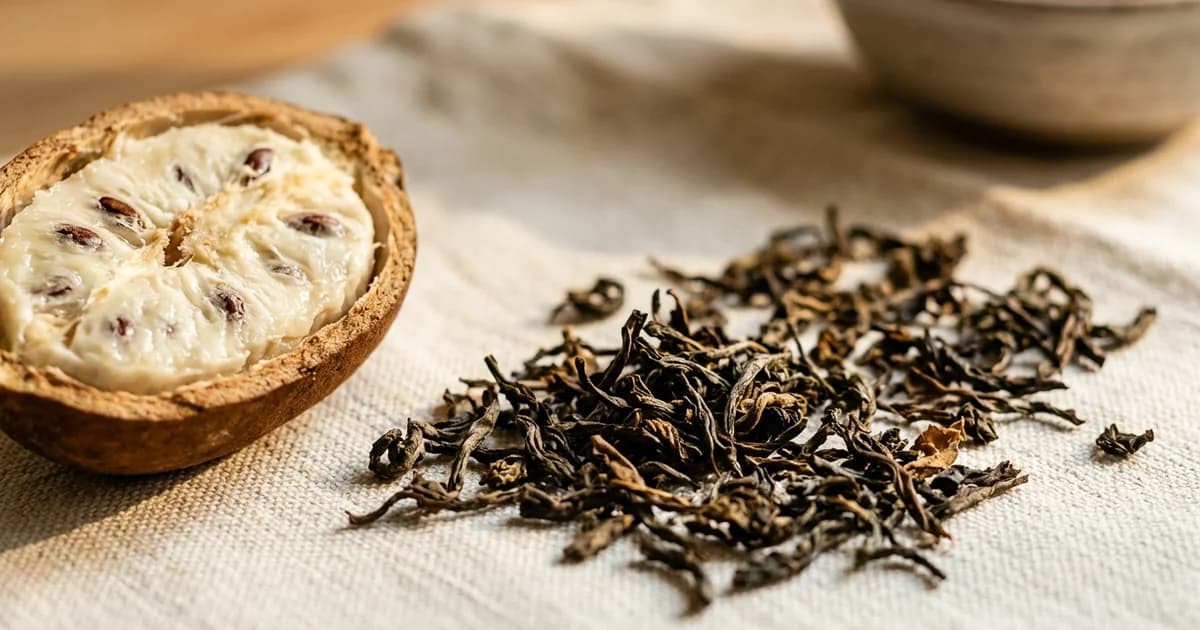
Theacrine (1,3,7,9-tetramethyluric acid) is a purine alkaloid. Look at its molecular structure next to caffeine's and they're close cousins. Plants actually synthesize theacrine from caffeine inside the leaves of kucha tea (Camellia assamica var. kucha) and cupuaçu (Theobroma grandiflorum).
You'll also see it sold under the brand name TeaCrine, a patented, standardized extract used in supplements and clinical research. The two terms refer to the same active molecule. "Teacrine" without the capital C is just the informal version of the brand name.
So why has a compound from an obscure Chinese tea attracted attention from pharmacologists? Because of what theacrine does once it enters your body. Like caffeine, theacrine's behavioral effects involve adenosine receptors. But theacrine also engages dopamine signaling in the nucleus accumbens, and it does so without producing the tolerance pattern that makes caffeine lose punch over time.
How Does Theacrine Work in the Brain?
Theacrine acts on both adenosine and dopamine receptors, a dual-pathway mechanism that explains its stimulant properties and its resistance to tolerance. Caffeine works almost entirely through adenosine blockade. Theacrine adds a dopaminergic component that changes how the brain adapts to repeated exposure.
Caffeine as a nootropic works primarily by blocking adenosine receptors. Adenosine is the molecule that accumulates while you're awake and makes you feel sleepy. Caffeine sits in those receptors like a placeholder, preventing the drowsiness signal from getting through.
Theacrine plays a similar game, but with a twist. A study by Feduccia et al. (2012) in Pharmacology Biochemistry and Behavior demonstrated that theacrine enhanced locomotor activity in a dose-dependent manner when infused into the nucleus accumbens. Both D1 and D2 dopamine receptor antagonists reduced theacrine-stimulated activity, confirming that theacrine's stimulant properties involve the dopaminergic system alongside the adenosinergic one. Theacrine did not induce locomotor sensitization or tolerance after chronic exposure.
That last finding is the headline. Caffeine triggers tolerance because your brain grows new adenosine receptors to compensate for the ones being blocked. Over time, you need more caffeine to achieve the same effect. The dual-pathway mechanism (adenosine plus dopamine) appears to be part of why theacrine doesn't produce the same compensatory receptor upregulation.
Does Theacrine Build Tolerance Like Caffeine Does?
No. An eight-week, randomized, double-blind clinical trial found zero tolerance buildup in 60 healthy adults taking up to 300 mg of theacrine (TeaCrine) daily. This is theacrine's most distinctive advantage over caffeine.
The study, led by Taylor et al. (2016) and published in the Journal of the International Society of Sports Nutrition, tracked safety markers and subjective energy/focus ratings across the full eight weeks. Energy and focus ratings held steady rather than fading. The researchers reported no tachyphylaxis, the rapid tolerance development that is common with most stimulants. Blood pressure, heart rate, ECG indicators, and blood safety markers stayed within normal ranges.
Compare that to caffeine, where most regular users develop measurable tolerance within one to two weeks of consistent daily intake. Your brain upregulates adenosine receptors to compensate, and the same dose stops producing the same effect. This is the core reason people keep increasing their coffee intake over time, and the core reason theacrine is a useful co-ingredient.
Can Theacrine Plus Caffeine Outperform Caffeine Alone?
Yes. Two controlled trials in tactical personnel show that combining theacrine with lower-dose caffeine matches or beats higher caffeine doses for cognitive performance, with fewer cardiovascular side effects.
A 2025 study by Lints et al. published in the Journal of the International Society of Sports Nutrition tested a caffeine-theacrine combination (CTC) against caffeine alone in 20 tactically trained participants performing under physically fatiguing conditions. The CTC group matched caffeine-only for cognitive-behavioral performance and showed additional cognitive benefits beyond what caffeine delivered on its own.
That's a practical finding for anyone who relies on caffeine but doesn't love the side effects of higher doses. You can use less total caffeine, add theacrine, and get the same or better cognitive output.
For professionals, students, or anyone researching nootropics for energy to sustain mentally demanding work, this combination approach offers a way to maintain focus without simply piling on more caffeine every few hours.
What About Blood Pressure and Heart Rate?
A separate 2022 double-blind, placebo-controlled trial by Cintineo et al. tested a combination of 150 mg caffeine, 100 mg methylliberine, and 50 mg theacrine (CMT) against 300 mg of caffeine alone in 48 tactical personnel. The CMT combination matched pure caffeine for vigilance and reaction speed while producing less unfavorable hemodynamic changes. If you get elevated blood pressure or a racing heart from high caffeine intake, this matters.
What Is Theacrine's Half-Life, and Why Does It Matter?
Theacrine's half-life is 16 to 26 hours, based on human pharmacokinetic data (Gardiner et al., 2024). That is roughly 4 to 7 times longer than caffeine's typical 3 to 6 hour half-life, and it fundamentally changes how the compound behaves in your body.
Caffeine's 3-to-6-hour half-life means if you drink a coffee containing 200 mg of caffeine at 8 AM, roughly 100 mg is still circulating by noon, and most of it clears by evening.
Theacrine operates on a completely different timescale. A pharmacokinetic study by He et al. (2017) tracked blood levels over 24 hours in 8 healthy adults using a randomized, double-blind, 4-arm crossover design. Caffeine co-administration increased theacrine's maximum plasma concentration (Cmax) and area under the curve (AUC) without altering its half-life. Theacrine had no impact on caffeine or paraxanthine pharmacokinetics. That one-way interaction, caffeine boosts theacrine absorption but not the reverse, is why the two are designed to be paired.
The long half-life is a double-edged sword. On one hand, it provides a slow, sustained presence rather than caffeine's sharp spike-and-crash curve. On the other hand, the compound lingers. A 2024 study in Scientific Reports found that theacrine at both low (100 mg) and high (400 mg) doses didn't meaningfully disrupt sleep, though the 400 mg dose showed small, non-significant effects on sleep efficiency (d = -0.22) and wake-after-sleep-onset. This is one reason why theacrine works best at lower doses when combined with other compounds rather than as a standalone high-dose stimulant.
Theacrine vs Caffeine: When Should You Use Each?
Theacrine and caffeine are not interchangeable. Caffeine is faster, cheaper, and better for acute physical performance. Theacrine is longer-lasting, tolerance-resistant, and smoother. The combination outperforms either alone.
Caffeine excels at:
- Rapid onset alertness (you feel it within 15 to 45 minutes)
- Acute physical performance enhancement
- Widespread availability and low cost
Theacrine excels at:
- Sustained duration without the crash
- Resistance to tolerance buildup across 8+ weeks of daily use
- Smoother subjective experience (less jitteriness and anxiety)
The real story is what happens when you combine them. Caffeine potentiates theacrine, increasing its Cmax and AUC (He et al., 2017). But theacrine does not potentiate caffeine. This is a one-way interaction: caffeine makes theacrine more bioavailable without theacrine amplifying caffeine's effects.
That asymmetry is useful. It means you can pair a moderate dose of caffeine with theacrine and get enhanced theacrine absorption while keeping caffeine's contribution predictable and controlled.
Think of it this way: caffeine is the ignition, and theacrine is the fuel that keeps the engine running long after the initial spark. They aren't competing. They're doing different jobs on different timelines.
What Are the Side Effects and Safety Risks of Theacrine?
Theacrine has a clean safety record in human trials. Daily intake of up to 300 mg across eight weeks produced no adverse effects on blood pressure, heart rate, ECG, or blood safety markers in 60 healthy adults (Taylor et al., 2016).
A few things to keep in mind:
- Dose-dependent behavior: WebMD notes that at low doses, theacrine can cause mild drowsiness, while at higher doses it acts as a stimulant. This biphasic response is worth knowing if you're experimenting with dosing.
- Pregnancy and breastfeeding: There isn't enough research to establish safety during pregnancy or breastfeeding. The standard recommendation is to avoid it.
- Sedative interactions: Theacrine acts on adenosine receptors and could interact with CNS depressant medications. If you're on sedatives or sleep aids, consult your doctor before adding theacrine to your routine.
At the doses found in most supplements (5 to 200 mg), theacrine side effects are rare and mild. The compound doesn't carry the anxiety, heart palpitations, or sleep disruption risks that high-dose caffeine does.
What Is the Right Theacrine Dose?
For most people, 25 to 125 mg of theacrine paired with caffeine is the evidence-supported range. As a standalone, up to 300 mg daily has been tested safely. There is no FDA-established recommended daily allowance.
Here are the clinical guardrails:
- Safety ceiling: Up to 300 mg daily for eight weeks showed no adverse effects in the Taylor et al. (2016) trial.
- Cognitive benefits: The 2025 tactical personnel study (Lints et al.) used theacrine in combination with lower-dose caffeine, confirming that you don't need large amounts when it's part of a stack.
- Sweet spot for supplements: Most evidence-based formulations use theacrine in the 25 to 125 mg range, paired with caffeine and other complementary compounds.
The pattern in the research is clear: theacrine works best as part of a team, not as a solo act. Its long half-life and tolerance resistance make it an ideal supporting compound to caffeine's fast-acting lead. This is why it features in approaches designed for all-day cognitive endurance stacking.
One more thing about dosing: because caffeine increases theacrine's bioavailability, you need less theacrine when pairing the two than you would taking theacrine alone. Well-designed stacks use relatively modest theacrine doses for this reason. Roon, for example, uses just 5 mg of TeaCrine per pouch, relying on the caffeine co-administration to amplify its effect.
Here is how theacrine actually shows up across common formats, from isolated capsules to multi-ingredient stacks:
| Format (per serving) | Caffeine | Theacrine | Other actives | Nicotine |
|---|---|---|---|---|
| Brewed coffee (8 oz) | ~95 mg | 0 mg | None | 0 mg |
| Standalone theacrine capsule | 0 mg | 100–300 mg | None | 0 mg |
| Typical caffeine + theacrine pre-workout | 150–300 mg | 25–100 mg | Varies by brand | 0 mg |
| Roon sublingual pouch | 80 mg | 5 mg (TeaCrine) | 60 mg L-theanine, 25 mg Dynamine | 0 mg |
The Compound That Doesn't Fade
Theacrine solves a specific problem: stimulant tolerance. It acts through both adenosine and dopamine pathways, carries a half-life of 16 to 26 hours, and shows no habituation across eight weeks of daily use at doses up to 300 mg. It isn't a caffeine replacement; it's a caffeine complement. When the two are combined, caffeine amplifies theacrine's absorption in a one-way pharmacokinetic interaction that makes the pairing more effective than either compound alone.
The research also shows the combination matches or beats higher caffeine doses for cognitive performance while producing fewer cardiovascular side effects. For anyone who has hit the ceiling of what coffee alone can do, that's the data point that matters most.
Frequently Asked Questions
Is theacrine the same as caffeine?
No. Theacrine (1,3,7,9-tetramethyluric acid) is a separate purine alkaloid. Plants actually build it from caffeine. The two share a stimulant effect because both act on adenosine receptors, but theacrine also engages dopamine pathways and clears far more slowly. In human trials, theacrine produces no tolerance buildup, which is why the two compounds are combined rather than treated as interchangeable.
What is theacrine's half-life?
Roughly 16 to 26 hours, based on human pharmacokinetic data (Gardiner et al., 2024), compared with about 3 to 6 hours for caffeine. A crossover study by He et al. (2017) found that adding caffeine raised theacrine's peak concentration and total exposure without changing its half-life. That long tail is why theacrine feels like a slow, steady presence rather than a sharp spike.
Does theacrine cause tolerance like caffeine?
No measurable tolerance appears in the available human data. An eight-week trial in 60 healthy adults taking up to 300 mg daily found no habituation, with energy and focus ratings holding steady rather than fading. Caffeine, by contrast, produces noticeable tolerance within one to two weeks of daily use.
Can you take theacrine and caffeine together?
Yes, and the combination is the point. A human crossover study found that caffeine increases theacrine's bioavailability, raising its peak blood level and total exposure, while theacrine left caffeine's pharmacokinetics unchanged. A modest amount of each can do the work of a larger caffeine dose alone.
How much theacrine is in a Roon pouch?
Each Roon sublingual pouch contains 5 mg of theacrine (standardized as TeaCrine at 40%), alongside 80 mg of caffeine, 60 mg of L-theanine, and 25 mg of methylliberine (Dynamine), with zero nicotine. The dose is intentionally small. Because caffeine raises theacrine absorption, a stack does not need the 100 to 300 mg amounts used in standalone studies.
Will theacrine keep me awake at night?
At low stack doses, the sleep impact is usually minimal, but timing matters because theacrine clears slowly. A 2024 study found that theacrine at 100 mg and 400 mg did not meaningfully disrupt sleep, though the higher dose showed small, non-significant effects on sleep efficiency. Given the long half-life, earlier dosing is the sensible approach.
Is theacrine safe long-term?
The longest published human trial ran eight weeks at up to 300 mg daily with no adverse effects on cardiac function, blood pressure, or blood safety markers in 60 adults. Data beyond eight weeks is not yet available. At the low doses used in multi-ingredient stacks (5 to 50 mg), the safety margin is wide.
What is the difference between theacrine and TeaCrine?
They're the same molecule. TeaCrine is the patented, standardized form of theacrine used in clinical research and commercial supplements. The branding exists to guarantee a consistent concentration (typically 40% theacrine by weight) across batches.
Why Theacrine Works Better as a Supporting Actor
Theacrine does not build tolerance the way caffeine does. That is its real value. But its slow onset and extremely long half-life make it a poor lead stimulant. In Roon, theacrine plays a specific supporting role at just 5mg, alongside the compound that actually reshapes caffeine's duration curve.
That compound is methylliberine (Dynamine, 25mg). In a human pharmacokinetic study, co-administering methylliberine with 150mg caffeine cut caffeine's oral clearance from 41.9 to 17.1 L/hr and extended its half-life from 7.2 to 15 hours, with no increase in peak concentration. Same peak, longer tail. A longer half-life is not the same as 15 hours of felt energy, but it is why Roon's usable focus window runs 6 to 8 hours instead of coffee's 3 to 4. That extended duration is what the price buys.
The trade-off is real: stop at least 8 hours before bed. Roon contains no adaptogens, no mushroom extracts, no paraxanthine, and at $1.00/pouch ($0.61 subscribed) it is not the cheapest option. It is 80mg caffeine, 60mg L-theanine, 25mg methylliberine, and 5mg theacrine in a sublingual pouch that hits in 5 to 10 minutes. Zero nicotine. No tolerance spiral. Pick up a tin and feel the difference duration makes.
Written by Roon Team