Why "Smooth Energy" Is What People Actually Want
Roon Team
Why "Smooth Energy" Is What People Actually Want (Not More Caffeine)
Smooth energy without jitters is not a vague feeling or marketing language. It is a specific, measurable consumer demand backed by large-scale survey data and clinical meta-analyses. More than half of energy drink consumers have already experienced the downside of the dose-first approach: racing heart, broken sleep, jittery hands. The fix is not more milligrams. It is a better delivery curve.
Key Takeaways
- The jitters problem is enormous. A Canadian survey found 55.4% of energy drink consumers reported at least one adverse effect, including fast heartbeat, difficulty sleeping, or headaches.
- Caffeine demand is not going away. The 2024 IFIC Spotlight Survey found 88% of Americans consume caffeine, and 8 in 10 of those consume it daily.
- "Smooth" describes a real pharmacological profile: moderate dose, buffered by ingredients that reshape the absorption curve instead of spiking it.
- Duration beats peak. What most people want from caffeine is not a stronger hit but a longer, calmer window of focus.
This article is about the pattern, not the chemistry. For the exact ratio and mechanism behind pairing caffeine with L-theanine, see our caffeine and L-theanine guide. What follows is why so many people are walking away from their current stimulant sources, and what the data says they are walking toward.
How Big Is the Jitters-and-Crash Problem?
Bigger than most people assume. The U.S. energy drink market was estimated at $25 billion in 2024 and is growing at roughly 7% per year. That is a lot of stimulant. And a striking share of consumers are paying for it in side effects.
A survey of 2,055 Canadian youth and young adults found that 55.4% of energy drink consumers reported at least one adverse event. The most common: fast heartbeat (24.7%), difficulty sleeping (24.1%), and headaches (18.3%).
A 2021 systematic review and meta-analysis (32 studies, 96,549 individuals) sharpened those numbers. Energy drink consumption raised the odds of insomnia by roughly fivefold (OR 5.02) and jitteriness or restlessness by roughly 3.5 times (OR 3.52) compared to controls. Among adults specifically, 29.8% reported jitteriness, restlessness, or shaking hands as a frequent adverse event.
Meanwhile, the 2024 IFIC Spotlight Survey found that 88% of Americans consume caffeine and 8 in 10 of those do so daily. This is not a fringe group with a fringe complaint. It is the majority of a massive, daily-use population.
Why Do Energy Drinks and Pre-Workouts Feel So Jittery?
The jitters are a predictable pharmacological outcome, not a personal weakness. Three factors drive it.
Dose. A 16 oz Monster contains 160 mg of caffeine. A Bang packs 300 mg. Pre-workout supplements typically range from 150 to 350 mg per serving. A standard coffee is around 95 mg.
Speed. Liquid caffeine hits your bloodstream fast. No protein, no fat, no fiber to slow gastric emptying. The result is a steep plasma spike your cardiovascular system responds to with elevated heart rate and the subjective experience of jitteriness.
No buffering. Most energy drinks deliver caffeine plus sugar, taurine, and B vitamins, but nothing that modulates caffeine's interaction with adenosine receptors. You get the full unfiltered spike, then the full crash.
| Source | Caffeine per Serving | Buffering Ingredients | Typical Felt Duration | Jitter Risk |
|---|---|---|---|---|
| Brewed coffee (8 oz) | ~95 mg | None | 3 to 4 hours | Moderate |
| Red Bull (8.4 oz) | 80 mg | Taurine, B vitamins | 2 to 3 hours | Low to moderate |
| Monster (16 oz) | 160 mg | Taurine, B vitamins | 3 to 4 hours | Moderate to high |
| Bang (16 oz) | 300 mg | None standard | 3 to 5 hours | High |
| Pre-workout (avg) | 150 to 350 mg | Varies widely | 2 to 4 hours | Moderate to high |
| Roon pouch | 80 mg | L-theanine, methylliberine, theacrine | 6 to 8 hours | Low |
The products that cause the most complaints share two traits: high dose and no pharmacological buffer.
What Does "Smooth Energy" Actually Mean?
"Smooth" describes three measurable things happening at once.
A lower peak. Eighty milligrams of caffeine produces a much smaller plasma spike than 200+ mg. Smaller spike, less sympathetic overdrive, less racing heart.
A longer tail. The average caffeine half-life in healthy adults is approximately 5 hours. A 300 mg dose keeps circulating at high levels long enough to wreck sleep, while 80 mg clears faster on its own. But when 80 mg is paired with methylliberine, you extend the useful felt window without raising the peak. A randomized crossover PK study (n=12) found that methylliberine co-administration cut caffeine's oral clearance from 41.9 to 17.1 L/hr and extended its half-life from 7.2 to 15 hours, with no increase in peak concentration.
A buffered subjective experience. L-theanine promotes alpha brain wave activity, the pattern associated with calm focus. EEG studies confirm this. Paired with caffeine, L-theanine does not reduce the alertness benefit; it smooths the anxious edge. Focus without the fidgeting.
So "jitter-free energy" is not a slogan. It is what happens when you keep the dose moderate, extend the curve, and buffer the receptor response.
A Practical Protocol for Switching to Smoother Caffeine
If you want to move away from jittery stimulant sources, here is a straightforward approach.
1. Audit your caffeine load. Write down every source and its approximate milligram count. The IFIC survey found only 6% of respondents could correctly identify the safe daily caffeine amount (400 mg per the FDA), and 46% admitted they were "not sure."
2. Identify the peak-and-crash sources. Rank by jitter risk. The worst offenders are almost always high-dose pre-workouts (200+ mg in a single bolus), large energy drinks consumed fast, and triple espresso shots on an empty stomach.
3. Replace the worst offender first. Do not overhaul everything at once. Swap the single worst source for something with a lower dose and a buffering ingredient. This could be a caffeine-and-L-theanine supplement, a clean energy pouch, or a smaller coffee paired with food.
4. Evaluate duration, not intensity. The right question after switching is not "did I feel a rush?" but "how long did I stay focused, and did I crash?" A product delivering 6 to 8 hours of steady alertness from 80 mg gives you more productive time than 300 mg followed by a wall.
5. Track sleep quality. The meta-analysis found a fivefold increase in insomnia odds from energy drink consumption. If your sleep improves after switching, that single change will do more for your daytime energy than any supplement.
The Limits of the Evidence
The survey and meta-analysis data are strong on the "jitters and insomnia are widespread" question. But self-reported side effects carry the usual limitations: recall bias, no dose standardization, and confounders like mixing energy drinks with alcohol.
The methylliberine PK study is real and well-designed, but the sample was 12 people. It establishes a clear pharmacokinetic mechanism; it does not prove every user will experience identical duration extension.
And caffeine, regardless of delivery format, still produces tolerance. If you consume it daily, you will need the same dose to avoid withdrawal. Theacrine specifically does not appear to build tolerance the way caffeine does: an eight-week safety trial found no evidence of habituation in healthy adults taking it daily. But a product containing 80 mg of caffeine behaves like caffeine on the tolerance front. That distinction matters and should not be blurred.
The Demand Is for a Better Curve, Not a Bigger Dose
The data tells a consistent story. The vast majority of adults consume caffeine daily. A large share experience side effects from the way they consume it, not from the molecule itself. What people search for when they type "smooth energy without jitters" or "energy without the crash" is not a caffeine-free life. It is the same alertness on a curve they can live with: lower peak, longer duration, no crash, better sleep.
The fix is not abstinence. It is pharmacology applied with more thought than "put 300 mg in a can."
Frequently Asked Questions
What causes caffeine jitters?
Jitters result from a rapid spike in blood caffeine concentration that overstimulates the sympathetic nervous system. High-dose sources (energy drinks with 160 to 300 mg, pre-workouts with 200+ mg) consumed as liquid on an empty stomach produce the steepest spikes. Lower doses combined with buffering compounds like L-theanine create a flatter curve and less sympathetic activation.
How much caffeine per serving is too much?
The FDA considers 400 mg per day safe for healthy adults, but per-serving experience matters more. A single 300 mg bolus feels very different from three 100 mg doses across a day. Most people who report jitters consume 150 mg or more in one sitting. Keeping individual servings under 100 mg and spacing them at least 4 hours apart reduces jitter risk.
Does L-theanine actually reduce caffeine jitters?
Yes. L-theanine promotes alpha brain wave activity associated with relaxed focus. EEG studies confirm that when taken alongside caffeine, alertness persists while the anxious edge is attenuated. It does not extend caffeine's duration; it smooths the subjective response during the active window.
What is the difference between "clean energy" and regular energy?
"Clean energy" typically refers to lower-dose caffeine paired with buffering ingredients, free of excessive sugar, and designed for a longer, flatter curve. There is no regulated definition, so read the label. Key markers: moderate caffeine (under 100 mg), the presence of L-theanine or similar compounds, and transparent dosing.
Can you build tolerance to smooth energy products?
If the product contains caffeine, yes. Caffeine tolerance develops within days of daily use regardless of format. What changes with a well-designed stack is the subjective quality of each dose (less jittery, longer-lasting), not the underlying tolerance mechanism. Theacrine does not appear to build tolerance the way caffeine does, but it cannot eliminate caffeine's own tolerance profile.
How long does smooth energy last compared to coffee?
A standard cup of coffee (~95 mg, no buffering) typically provides a felt energy window of 3 to 4 hours. Products pairing moderate caffeine with clearance-extending compounds like methylliberine can stretch that window to 6 to 8 hours. The difference is not a bigger peak; it is a slower decline.
80 mg, Extended: What a Better Caffeine Curve Actually Looks Like
Everything above points to the same conclusion: the jitters-and-crash cycle is a dosing and formulation problem, not a caffeine problem. Roon was built around that distinction.
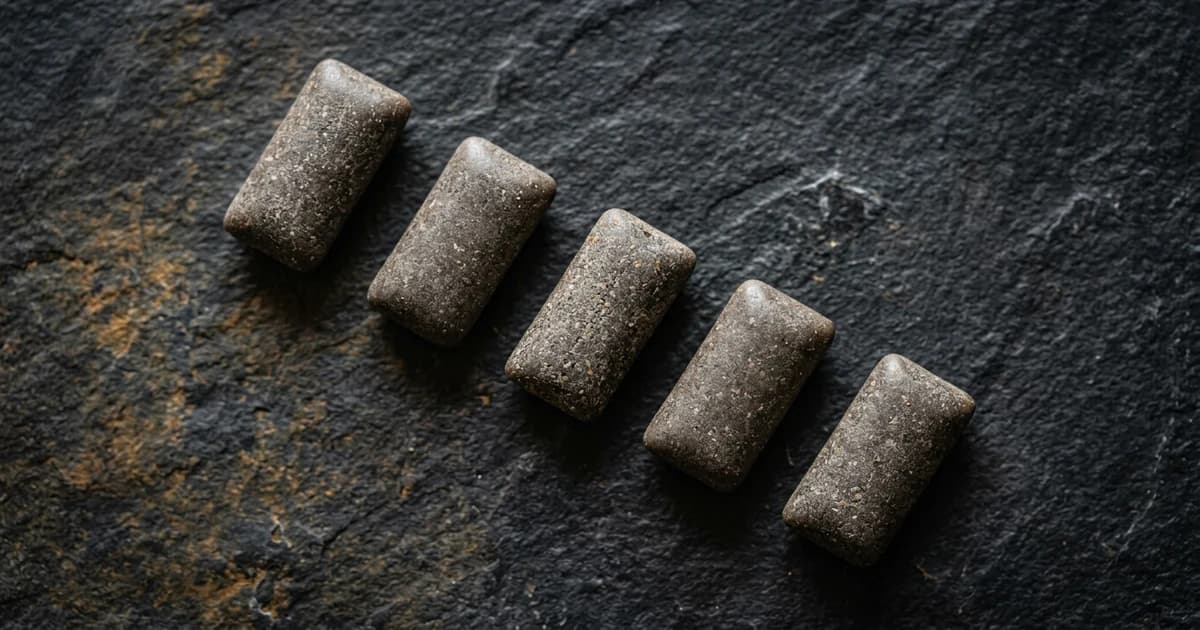
Each pouch delivers 80 mg caffeine (roughly a small coffee), 60 mg L-theanine to smooth the subjective response, 25 mg methylliberine (Dynamine) to slow caffeine clearance and extend the felt window to 6 to 8 hours, and 5 mg theacrine (TeaCrine), which does not build tolerance the way caffeine does. The format is a zero-nicotine sublingual pouch, Cool Mint, with onset in 5 to 10 minutes. A 4-tin bundle is $15.00 per tin one-time ($1.00 per pouch), or as low as $9.16 per tin on subscription ($0.61 per pouch).
Roon is not a substitute for sleep, and it is not appropriate for anyone who needs to avoid caffeine entirely. The extended half-life means you should stop at least 8 hours before bed. But if you are one of the 55% who have already felt the downside of the spike-and-crash model, and you want something that works with your biology instead of against it, try Roon.
Written by Roon Team