The "Academic Weapon" Finals Routine
Roon Team
The "Academic Weapon" Finals Routine: What the Meme Actually Gets Right
An academic weapon is a student who treats scholastic performance like a competitive sport. The meme keeps going viral for a reason: the behaviors it glorifies (front-row attendance, consistent prep, showing up rested and ready) are exactly what learning science says actually works. The joke is that there is no joke. The routine the academic weapon meme describes beats cramming on every metric that matters for finals.
Key Takeaways
- The "academic weapon" meme is an established, recurring exam-season identity on TikTok, first defined on Urban Dictionary in 2016 and driven to viral scale by creator Brad Kraut (@name_is_brad) in September 2022.
- Distributed (spaced) practice outperforms cramming by a meaningful margin: a 2025 classroom meta-analysis found an effect size of d = 0.54 favoring spacing over massed study.
- Sleep is not optional padding. A 2023 Carnegie Mellon study found every hour of sleep lost below eight was linked to a 0.07-point drop in cumulative GPA.
- Your energy strategy for finals week needs to last all week, not just one all-nighter.
Where Did the "Academic Weapon" Meme Come From?
The phrase has deeper roots than most people realize. It was first defined on Urban Dictionary on September 21, 2016, years before mainstream social media picked it up. The meme exploded in September 2022 when creator Bradley Kraut (@name_is_brad) started posting TikToks about being a "lethal academic weapon." His most-viewed video, front row of a 700-person lecture, passed 6 million views. According to Know Your Meme, the original sound inspired over 7,000 TikTok videos by October 6, 2022.
The trend resurfaces every exam season. Thousands of posts tagged #academicweapon appear each December and May, mixing ironic self-deprecation with aspirational study content. The meme endures because it packages something real inside the humor.
Does Spaced Practice Really Beat Cramming for Finals?
Yes, and the gap is not small. A 2025 meta-analysis by Mawson and Kang in Behavioral Sciences reviewed 22 classroom studies (over 3,000 participants) and found a medium effect size of d = 0.54 (95% CI [0.31, 0.77]) favoring distributed practice over massed practice. The average student using spaced review outperformed roughly 71% of students who crammed the same material in one block.
This is the first thing the academic weapon meme gets right. The archetype is someone who has been reviewing all semester, not someone pulling a heroic 14-hour session the night before. Front-loading prep so that finals week becomes a polish instead of a panic is the highest-return behavior you can adopt.
- Two weeks out: Identify every topic on every final. Build a review schedule that hits each topic at least three separate times before the exam.
- One week out: Shift from re-reading to active recall: flashcards, practice problems, self-testing.
- Finals week itself: Each morning, do one 30-minute targeted review of the day's exam material. You are reinforcing, not learning from scratch.
How Much Does Sleep Actually Affect Exam Performance?
More than most students want to admit. A 2023 study published in PNAS, led by Carnegie Mellon researchers, tracked first-year college students using Fitbit data and found they averaged just 6.5 hours per night. Each hour lost corresponded to a 0.07-point decrease in end-of-term GPA, and students sleeping under six hours saw a pronounced decline.
Memory consolidation happens during sleep. Cut that process short and the study session partially evaporates. The academic weapon archetype captures this: it is not someone grinding until 4 AM, but someone who finishes studying at a reasonable hour, sets an alarm, and walks into the exam rested.
The practical rule: protect a non-negotiable 7-hour sleep window. If your exam is at 8 AM, you are in bed by midnight and your last caffeine was before 4 PM.
What Does a Real "Academic Weapon" Finals Week Schedule Look Like?
A concrete daily structure for a five-day finals stretch. Adjust the times to your exam schedule, but keep the bones intact.
| Time Block | Activity | Why It Matters |
|---|---|---|
| 7:00 AM | Wake, hydrate, real meal | Blood glucose and hydration affect working memory |
| 7:30 AM | 30 min targeted review (active recall) | Reinforcement, not re-reading |
| 8:00 AM - 12:00 PM | Exam or deep study block | Peak cortisol window; use it |
| 12:00 PM | Lunch, 30-45 min away from notes | Mental reset after 4 continuous hours |
| 12:45 PM | Moderate caffeine + L-theanine if needed | 80-100 mg caffeine; skip if you had morning caffeine |
| 1:00 - 5:00 PM | Afternoon study or second exam | Sustained focus window |
| 5:00 PM | Caffeine cutoff | Half-life is ~5-6 hours; later intake risks sleep |
| 6:00 PM | Dinner, movement, non-academic time | Even a 20-minute walk helps |
| 8:00 - 10:00 PM | Light review only (flashcards) | Low-stakes retrieval before sleep consolidation |
| 11:00 PM | Sleep | Protecting the 7+ hour window |
This schedule is boring on purpose. No 2 AM revelation. No dramatic montage. Just a student who sleeps, reviews, takes the exam, and repeats. That is the real academic weapon move.
Why Does Your Energy Plan Fall Apart by Day 3?
Because most students escalate instead of sustaining. One coffee Monday, two Tuesday, an energy drink Wednesday, two energy drinks Thursday. By Friday you are jittery, sleep-deprived, and running on cortisol.
The problem is not caffeine; it is dose escalation combined with sleep debt. Each night of shortened sleep increases your adenosine load, so you reach for more caffeine, which pushes your sleep window later, which raises tomorrow's adenosine load. The loop collapses by midweek.
The academic weapon approach to energy is the opposite of escalation:
- Fix the dose and hold it. 80 to 150 mg of caffeine is a reasonable range for most adults. Take the same amount at the same time each day.
- Hard cutoff. At least 8 hours before bedtime.
- Pair caffeine with L-theanine. A systematic review in Nutritional Neuroscience found the combination improved attention outcomes compared to caffeine alone, with L-theanine smoothing the jitteriness that pure caffeine can produce.
- No new stimulants midweek. If your plan requires a new product by Wednesday, the plan was broken on Monday.
How to Become an Academic Weapon (Without the Burnout)
Strip away the irony and the meme's core behaviors are specific and backed by data:
- Spaced review over cramming (d = 0.54 advantage in classroom settings).
- Sleep protection (every hour below eight costs ~0.07 GPA points).
- Consistent energy management instead of dose escalation.
- Active recall over passive re-reading.
It is not about working more hours. It is about making the hours you already spend stick. For more on how caffeine and L-theanine work together, see the science behind pairing the two. If your problem is staying alert during long lectures before finals arrive, staying awake while studying without the crash covers that use case.
The Exam-Season Identity That Keeps Coming Back
The "academic weapon" is not a productivity hack. It is an identity meme that accidentally encodes real learning science: space your practice, protect your sleep, manage your energy like a five-day campaign instead of a one-night siege. The students who treat finals as a system rather than a survival test walk out the other side with their GPA and their health intact. The meme is a joke. The routine it describes is not.
Frequently Asked Questions
What does "academic weapon" mean?
Academic weapon is internet slang for a student who excels scholastically and owns it. The term was first defined on Urban Dictionary in September 2016 and went viral on TikTok in late 2022, driven by creator Brad Kraut. It is used both sincerely and ironically during finals season to describe someone who shows up prepared and treats studying like a competitive pursuit.
Is cramming the night before a final ever effective?
It can produce short-term recall for the next morning, but retention drops fast. A 2025 meta-analysis found spaced practice outperformed massed practice with an effect size of d = 0.54. If you only have one night, focus on active recall (practice tests, not re-reading), but know that spaced review across multiple days produces better results.
How much sleep do I need during finals week?
Aim for at least seven hours per night. Research from Carnegie Mellon found college students averaged 6.5 hours, and every hour lost below eight corresponded to a 0.07-point GPA decrease. Below six hours, the performance decline became steep. Sleep is when your brain consolidates what you studied; cutting it short undermines the session itself.
How much caffeine is safe during finals?
The FDA considers up to 400 mg per day generally safe for healthy adults, but "safe" and "optimal" differ. For a full finals week, a moderate, consistent dose (80 to 150 mg per session) with a hard cutoff 8 hours before bed works better than escalating doses. Pairing caffeine with L-theanine can smooth the jitteriness.
Does L-theanine actually help with focus?
Yes. L-theanine is an amino acid found in tea that promotes alpha-wave brain activity associated with calm alertness. A systematic review found that the caffeine and L-theanine combination improved attention outcomes compared to caffeine alone. The effect is not sedation; it is a reduction in the anxious edge that high caffeine doses produce.
How do I stop relying on energy drinks during finals?
The issue is dose escalation: you need more each day because you slept less each night. Break the cycle by fixing your caffeine dose, setting a hard daily cutoff, and protecting your sleep window. A single moderate caffeine source, taken at the same time each day, outperforms an escalating stack of energy drinks over a five-day stretch.
Is the "academic weapon" trend still active?
Yes. The hashtag #academicweapon resurfaces on TikTok every finals season with thousands of new posts each December and May. The format has evolved from Brad Kraut's original front-row videos into a broader identity meme, now a recurring seasonal fixture.
What is the best study technique for finals?
Active recall (self-testing through practice problems, flashcards, or past exams) consistently outperforms passive re-reading. Combine it with spaced practice and adequate sleep for memory consolidation. The students who look like academic weapons usually use this combination, whether they know the science behind it or not.
The 5-Day Focus Plan That Outlasts a Single All-Nighter
Finals week is a multi-day campaign, and the tools that win campaigns are consistency and pacing, not one-shot intensity. A large coffee or a 200+ mg energy drink spikes you for two to three hours, then drops you into a crash that either kills the study session or pushes you to double the dose tomorrow.
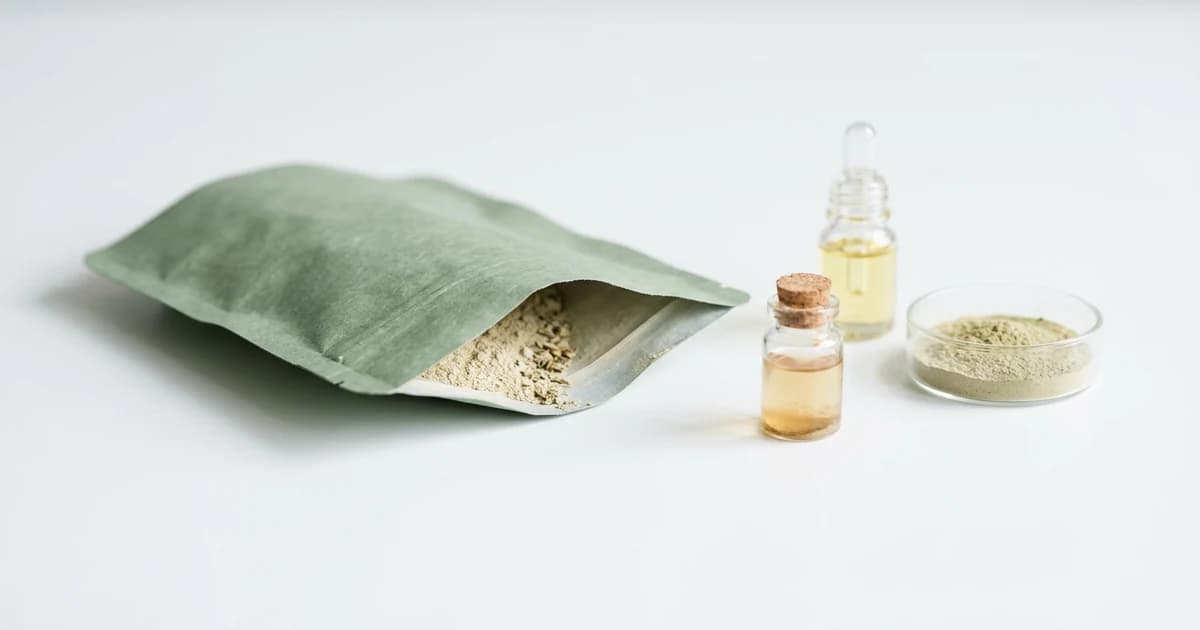
Roon was designed for that problem. Each pouch contains 80 mg caffeine, 60 mg L-theanine, 25 mg methylliberine (Dynamine), and 5 mg theacrine (TeaCrine). Methylliberine slows caffeine's clearance: a randomized crossover PK study (n = 12) found co-administration cut oral clearance from 41.9 to 17.1 L/hr and extended half-life from 7.2 to 15 hours, with no increase in peak concentration. Same peak, longer tail. That is why the felt window is 6 to 8 hours instead of coffee's 3 to 4, and why 80 mg is enough. A longer half-life also means respecting the cutoff: stop at least 8 hours before bed.
One pouch at 8 AM can carry you through a morning exam and an afternoon study block without a second dose or the escalation cycle that wrecks your sleep by Thursday. At $0.61 per pouch on subscription, it costs less than a daily coffee run. But Roon is not a substitute for the prep work, the spaced review, or the seven hours of sleep that make study sessions stick. It is the energy layer that keeps the rest of your system from falling apart on day 3.
Try Roon for your next finals stretch.
Written by Roon Team