Why Do Energy Drinks Make Me Tired? Sugar Crash, Adenosine Rebound, and the ADHD Paradox

Why Do Energy Drinks Make Me Tired? Sugar Crash, Adenosine Rebound, and the ADHD Paradox
You cracked a can for energy and got the opposite. You are not imagining it. Energy drinks make some people tired through four real mechanisms: a sugar crash (in sweetened cans), adenosine rebound from a large single caffeine dose, underlying sleep debt that caffeine was only masking, and, for some people with ADHD, the stimulant paradox. Each pathway has different biology, and more than one can hit you at the same time.
Key Takeaways
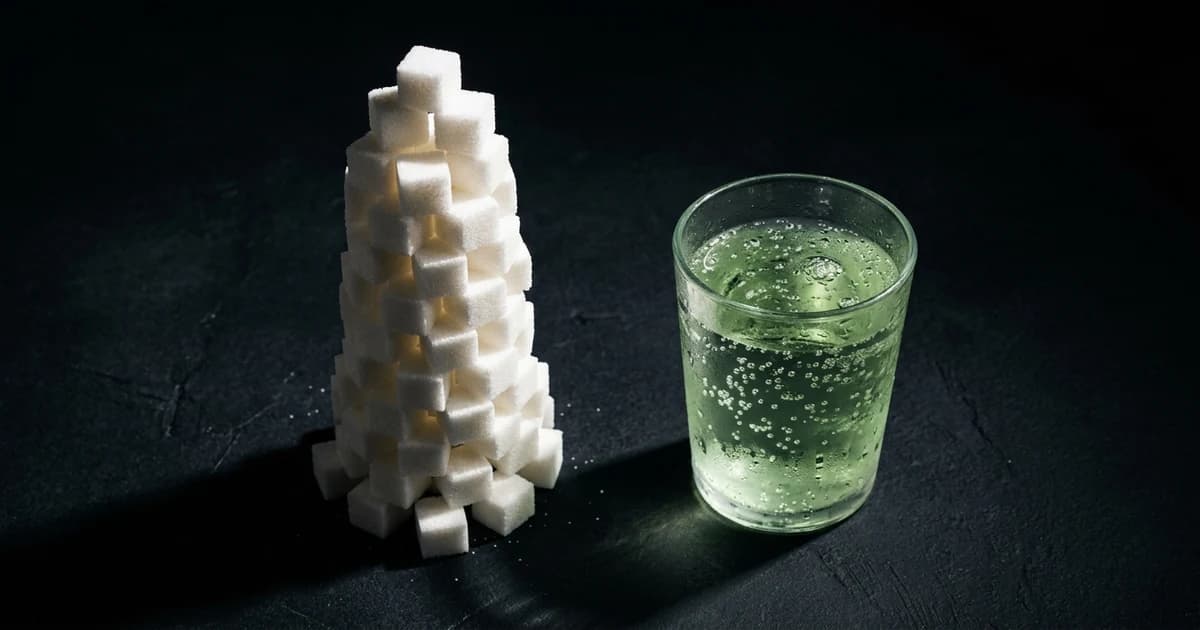
- A 16 oz sugared energy drink can dump 54 g of sugar into your bloodstream, triggering a reactive blood-sugar dip that reads as fatigue.
- Caffeine blocks adenosine receptors but does not clear adenosine itself. When a large dose wears off, accumulated adenosine floods back harder than baseline.
- Caffeine does not erase sleep debt. It hides it. Once the drug clears, you feel every hour you owe.
- Some people with ADHD report that caffeine produces a calming or sedating effect. The mechanism is not fully settled, but it is well-documented.
What Is Actually Happening: Four Routes to Post-Can Fatigue
| Route | Applies to | Timing after drinking | Primary mechanism |
|---|---|---|---|
| Sugar crash | Sugared cans only | 1.5 to 3 hours | Insulin overshoot drops blood glucose below baseline |
| Adenosine rebound | All caffeinated cans | 3 to 6 hours (varies by half-life) | Blocked receptors clear; accumulated adenosine binds unopposed |
| Masked sleep debt | Anyone under-slept | Immediately after caffeine wears off | Caffeine hid the pressure, did not reduce it |
| ADHD stimulant paradox | Some people with ADHD | Within 30 to 60 minutes | Dopamine boost may normalize an under-stimulated prefrontal cortex, producing calm instead of arousal |
Most explainers pick one cause. If you are tired after energy drinks consistently, you likely have at least two stacking.
The Sugar-Crash Route
A 16 oz Monster Energy Original contains 54 g of sugar and 160 mg of caffeine (nutrition data). The American Heart Association caps added sugar at 25 g/day for women and 36 g for men. One can blows past the full daily limit.
That much liquid sugar spikes blood glucose fast. Your pancreas responds with a burst of insulin, and on a bolus this large, insulin often overshoots. Blood sugar drops below where it started, a phenomenon called reactive hypoglycemia: brain fog, fatigue, irritability. If you drink sugar-free versions and still feel sleepy, this is not your culprit. (More on the glucose side: blood sugar and brain function.)
The Adenosine Rebound Route
This one hits even with zero-sugar cans, because it is purely about caffeine dose.
Caffeine blocks adenosine receptors in the brain. Adenosine accumulates throughout the day and signals sleepiness; caffeine occupies those receptors so you do not feel it. But adenosine keeps building behind the blockade.
A typical energy drink delivers 160 to 300 mg in one hit (which cans hit hardest). Caffeine is 99% absorbed within 45 minutes, peaking in 15 to 120 minutes. That creates a tall spike, a tall blockade wall, and a steep cliff when clearance kicks in. When the blockade drops, accumulated adenosine floods open receptors. With chronic intake, the brain also upregulates adenosine receptors, creating even more docking sites. The rebound can feel worse than the original tiredness. (Full timeline: the crash in detail.)
Caffeine's mean half-life is about 5 hours, but the range spans 1.5 to 9.5 hours depending on CYP1A2 genetics, smoking, and oral contraceptive use. Slow metabolizers may not feel the crash until 6 to 8 hours later.
Dehydration: Real, but Overstated
Caffeine has a mild diuretic effect, but a meta-analysis found a small but statistically significant diuretic effect at rest, which became non-significant during exercise. Separate research suggests habitual consumers show a blunted diuretic response at moderate doses (Killer et al., 2014). Dehydration is not the primary driver here; the adenosine rebound and sugar crash explain far more.
Why Do Energy Drinks Make ADHD People Sleepy?
This question shows up constantly, and the answer requires some care.
The stimulant paradox in ADHD is a documented phenomenon. Stimulant medications are the first-line ADHD treatment because they have a calming, focus-enhancing effect in many people with the condition. One hypothesis: the ADHD brain may have lower baseline dopamine signaling, and stimulants bring prefrontal cortex activity up to a functional range rather than past it. A 2022 mouse-model study in Scientific Reports found evidence that cortical dopamine, not serotonin, may drive the paradoxical calming effect of psychostimulants.
Caffeine is weaker than prescription stimulants but does raise dopamine modestly. Some people with ADHD report that caffeine makes them calm, drowsy, or ready to nap.
Two caveats. First, this is not a diagnostic tool. Feeling sleepy after an energy drink does not mean you have ADHD. Second, the caffeine-specific research is limited. The paradox is well-studied with prescription medications; extending it to caffeine involves extrapolation. Self-reports are numerous and consistent, but no controlled trial has established this as a universal ADHD group effect.
If you suspect ADHD is behind your caffeine response, talk to a clinician. More on the overlap: caffeine and L-theanine in ADHD and the coffee version of this paradox.
Are You Just Sleep-Deprived Underneath the Caffeine?
Caffeine does not create energy. It blocks the signal that tells you to rest. Sleep pressure, measured by adenosine accumulation, keeps building whether you feel it or not. Sleep five hours and drink a 200 mg energy drink, and you will feel alert for a while. Then the caffeine clears and you feel every minute of the deficit at once.
Caffeine Sensitivity and CYP1A2 Genetics
The liver enzyme CYP1A2 handles most of caffeine's breakdown. Genetic variants create fast and slow metabolizers: under 3 hours versus 9 or more. Slow metabolizers get a longer blockade, a larger adenosine buildup, and a harder rebound. Oral contraceptives, pregnancy, and certain medications can also slow CYP1A2. If energy drinks consistently wreck you hours later, your genetics may be the answer.
What Actually Helps
Sugar crash? Switch to zero-sugar cans or non-liquid caffeine sources. Remove the glucose spike entirely.
Adenosine rebound? Split your caffeine into smaller, spaced doses. An 80 mg dose twice over four hours produces less of a spike-and-crash pattern than 200 mg at once. Pairing caffeine with L-theanine can also blunt the overshoot; a 2010 study found the combination improved focus during demanding cognitive tasks.
Sleep debt? Sleep more. No supplement fixes this.
ADHD paradox? Talk to a doctor. Caffeine is not a substitute for proper evaluation or treatment.
Conclusion
Energy drinks are not broken. They are blunt instruments. A can delivers a large caffeine dose, often with a large sugar dose, all at once. The tiredness afterward is your body's predictable response: glucose rebound, adenosine rebound, unmasked sleep debt, or a neurochemistry that responds to stimulants with calm. Understanding which route applies to you is the difference between switching brands and actually solving the problem.
Frequently Asked Questions
Why do energy drinks make me tired instead of awake?
The most common causes are adenosine rebound (accumulated adenosine floods receptors when caffeine clears), a sugar crash from high-sugar cans, underlying sleep debt the caffeine was masking, or the ADHD stimulant paradox. More than one factor often stacks at once.
Why do energy drinks have the opposite effect on me?
If caffeine consistently calms you, the two main explanations are ADHD-related stimulant response (dopamine normalization produces calm) and heavy caffeine tolerance with receptor upregulation. Genetic CYP1A2 variation can also shift the timing so the crash arrives faster than expected.
Why does caffeine make me sleepy if I have ADHD?
Some people with ADHD experience a paradoxical calming response to stimulants, including caffeine. The leading hypothesis is that stimulants raise dopamine in an under-stimulated prefrontal cortex, producing calm rather than arousal. This is well-documented with prescription stimulants; the evidence for caffeine specifically is more limited but consistent with self-reports.
Does the sugar in energy drinks cause the crash?
It can. A 16 oz Monster Original delivers 54 g of sugar, exceeding the AHA's full daily limit. This can trigger an insulin overshoot and blood-sugar dip within 1.5 to 3 hours. Zero-sugar cans eliminate this pathway but do not prevent adenosine rebound.
How long does caffeine last?
The average half-life is about 5 hours, but individual range spans 1.5 to 9.5 hours depending on CYP1A2 genetics, smoking, oral contraceptive use, and other factors. Perceived alertness fades before full clearance because adenosine pressure builds as plasma caffeine drops.
Can I build tolerance to energy drinks?
Yes. Chronic caffeine use leads to adenosine receptor upregulation, meaning the same dose blocks a smaller percentage of receptors over time. Less benefit, stronger rebound. This applies to every caffeine source.
Is it better to drink smaller amounts of caffeine?
For most people, yes. Smaller doses (e.g., 80 mg) produce a flatter plasma curve, less dramatic adenosine blockade, and a gentler offset. You trade the initial spike for steadier coverage with less rebound.
Does dehydration from energy drinks cause tiredness?
Caffeine has a mild diuretic effect, but it is minimal at moderate doses and largely disappears in habitual consumers. The adenosine rebound and sugar crash explain far more of the post-can fatigue than fluid loss.
- Why Does Coffee Make Me Sleepy?
- Why Coffee Makes You Crash in the Afternoon: The Adenosine Rebound Explained
- Healthiest Energy Drinks, Ranked
- Which Energy Drink Has the Most Caffeine?
Written by Roon Team