Is Monster Bad for You? What Is in the Can
Roon Team
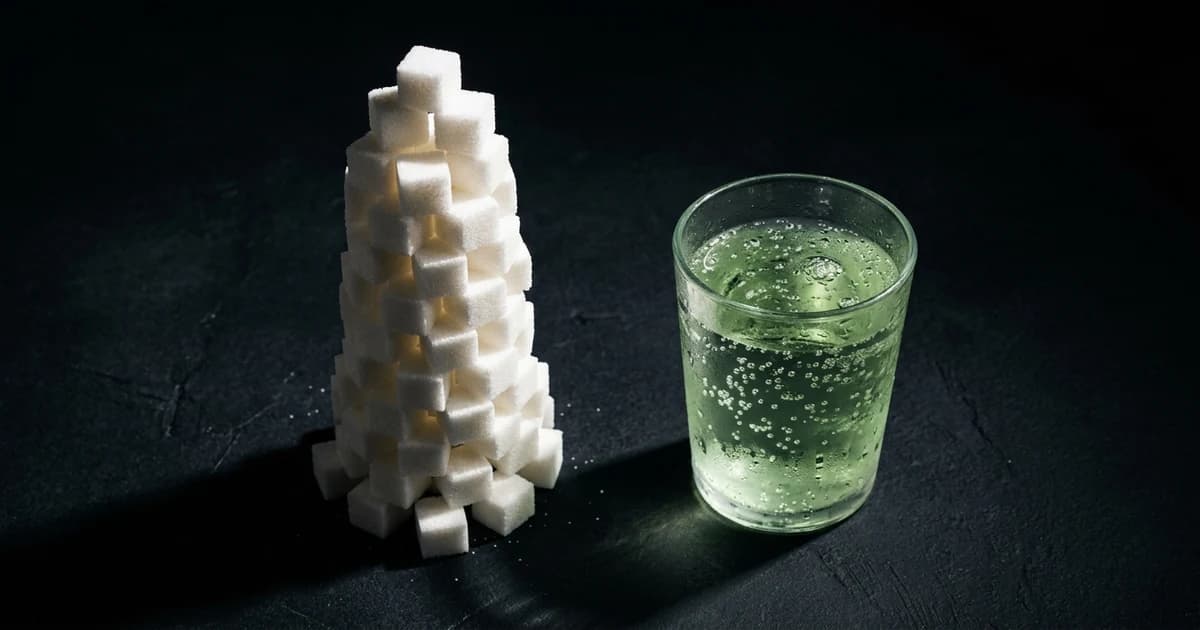
Is Monster Bad for You? What Is in the Can
Is Monster bad for you? One 16 oz can of original Monster Energy is not dangerous for most healthy adults, but it is not good for you either. It contains 160 mg of caffeine, well under the FDA's 400 mg daily figure, and 54 g of added sugar, which is 108% of the daily value in a single can. The sugar is the problem. The caffeine becomes one only at two or three cans.
Key Takeaways
- The caffeine in one Monster (160 mg) is 40% of the FDA's daily figure for adults. Moderate by itself.
- The added sugar (54 g) exceeds 100% of the FDA daily value and 150% to 216% of the AHA's stricter limits. That is the real issue.
- Monster Zero Sugar and Ultra remove the sugar but keep the caffeine. The trade-off shifts to sweeteners and your total daily caffeine budget.
- Niacin (vitamin B3) in Monster sits above the NIH's tolerable upper level at about 40 mg per can. One can is a minor overshoot; three is not minor.
What Is in a Can of Monster Energy?
Below is the Nutrition Facts panel from the original 16 oz Monster Energy (green can), checked against the manufacturer's label sheet in September 2026. Labels change; read your can.
| Line item | Amount per 16 fl oz can | Published limit | % of limit |
|---|---|---|---|
| Calories | 210 | 2,000 (general reference) | 11% |
| Caffeine (from all sources) | 160 mg | 400 mg (FDA, adults) | 40% |
| Added sugar | 54 g | 50 g (FDA DV) | 108% |
| Added sugar vs. AHA (men) | 54 g | 36 g | 150% |
| Added sugar vs. AHA (women) | 54 g | 25 g | 216% |
| Sodium | 370 mg | 2,300 mg (FDA DV) | 16% |
| Niacin (B3, as niacinamide) | ~40 mg (250% DV) | 35 mg (NIH UL) | ~114% |
| Vitamin B6 | ~4.1 mg (240% DV) | 100 mg (NIH UL) | 4% |
| Vitamin B12 | ~12 mcg (500% DV) | No established UL | N/A |
| Riboflavin (B2) | ~3.4 mg (260% DV) | No established UL | N/A |
| Taurine, ginseng, L-carnitine, guarana, inositol, glucuronolactone | Not disclosed | Varies | Unknown |
B-vitamin milligrams are computed from %DV using FDA daily reference values. The "energy blend" ingredients (taurine, panax ginseng extract, L-carnitine L-tartrate, guarana extract, D-glucuronolactone, inositol) appear in the ingredient list but without individual amounts.
Is the Caffeine in Monster a Lot?
At 160 mg per 16 oz can (10 mg per fl oz), Monster sits in the middle of the caffeine spectrum. You could drink 2.5 cans before hitting the FDA's 400 mg figure.
| Beverage | Serving | Caffeine |
|---|---|---|
| Monster Energy (original) | 16 fl oz | 160 mg |
| Monster Zero Sugar | 16 fl oz | 160 mg |
| Monster Zero Ultra | 16 fl oz | ~140 mg |
| Java Monster (Killer Brew) | 15 fl oz | 300 mg |
| Brewed coffee | 8 fl oz | ~95 mg (USDA) |
| Brewed coffee | 12 fl oz | ~143 to ~180 mg (extrapolated from USDA 8 oz data) |
| Cola | 12 fl oz | 23 to 83 mg |
One can is comparable to a large cup of drip coffee. The problems start at two or three cans. For every flavor, see caffeine in every Monster can and flavor line. For the daily limit math, see the 400 mg math for energy drinks.
The Sugar Is the Real Issue
One original Monster has 54 g of added sugar, 108% of the FDA's daily value (50 g). Against the American Heart Association's stricter recommendations, that 54 g is 150% of the men's daily cap (36 g) and 216% of the women's (25 g). Two cans a day: 108 g before you eat anything else.
Malik et al. (2019), published in Circulation, followed 80,647 women and 37,716 men over decades. Those who drank two or more sugar-sweetened beverages per day had a 31% higher risk of early cardiovascular death and an elevated risk of death from any cause, compared with those who drank fewer than one per month. This was observational, not a controlled trial, and included sodas and fruit drinks, not just energy drinks. But the driver is the sugar load, and Monster's 54 g is a heavy one.
Is Monster Zero Sugar or Ultra Bad for You?
Monster Zero Sugar has 0 g of sugar and 160 mg of caffeine. Zero Ultra has about 140 mg of caffeine, 10 calories, and also 0 g of sugar. Both are sweetened with sucralose. Zero Ultra also contains erythritol and acesulfame potassium. (The original lists sucralose too, alongside its 54 g of sugar.)
Non-nutritive sweeteners remain actively debated. For what trials show, see what trials show about sucralose and blood sugar. What matters here: Zero Sugar and Ultra remove the biggest problem on the label. No sugar calories, no sugar spike, and the caffeine is still moderate at one can per day.
Taurine, Ginseng, Carnitine, and the Energy Blend
Monster lists taurine, panax ginseng extract, L-carnitine L-tartrate, guarana extract, D-glucuronolactone, and inositol. It does not disclose how much of each is in a can.
Taurine gets the most attention (no, it does not come from bulls). A 2008 risk assessment by Shao and Hathcock, published in Regulatory Toxicology and Pharmacology, set an observed safe level of 3 g per day for supplemental taurine based on published human trials. The authors were affiliated with the Council for Responsible Nutrition, a supplement industry trade group. Without knowing Monster's taurine per can, you cannot calculate how close you are to that figure.
Guarana extract is an additional caffeine source, but Monster's label says "caffeine from all sources: 160 mg per can," so guarana's contribution is already counted. The remaining ingredients (ginseng, L-carnitine, inositol, glucuronolactone) appear at undisclosed amounts with no strong evidence for acute cognitive effects at typical energy drink doses.
The B Vitamins: Niacin at 250% DV
Most B vitamins are water-soluble and your body excretes the excess. Niacin is the exception. At 250% DV, one Monster delivers about 40 mg, which exceeds the NIH tolerable upper level of 35 mg for adults. That limit was set based on flushing caused by nicotinic acid.
Monster uses niacinamide, which is far less prone to flushing. One can's ~5 mg overshoot is unlikely to cause symptoms. Three cans would deliver about 120 mg, more than 3x the UL, where niacinamide itself can cause GI effects. For more, see what B vitamins do.
What Energy Drinks Do to Heart Rate and Blood Pressure
A 2019 randomized, double-masked, crossover study by Shah et al. (n=34, Journal of the American Heart Association) had healthy adults aged 18 to 40 drink 32 oz of a commercial energy drink (304 to 320 mg caffeine) or placebo within 60 minutes. That is two cans' worth, consumed fast.
At 4 hours, the energy drink groups showed QTc intervals 6 to 7.7 ms longer than placebo and blood pressure 4 to 5 mm Hg higher. The lead author noted the changes could not be attributed to caffeine alone. The brands were not named. Do not read this as "one Monster gives you a heart problem." Read it as: heavy, rapid consumption of energy drinks produces measurable cardiovascular changes, and we do not fully understand why.
Who Should Skip Monster
Monster's own label says it plainly: "Not recommended for children, people sensitive to caffeine, pregnant women or women who are nursing." The FDA states that medical experts advise against energy drinks for children and teens. ACOG recommends pregnant individuals stay under 200 mg of caffeine per day, and one Monster is already 80% of that.
If you are pregnant, nursing, under 18, taking medication, or managing a heart condition, talk to your clinician before drinking Monster or any caffeinated energy drink.
Is One Monster a Day Bad for You?
It depends on which Monster and how often.
- Occasional original (green can): The caffeine is moderate. The sugar is a lot for one sitting, but an occasional can will not ruin your health.
- Daily original: 54 g of added sugar every day adds up to 378 g per week. The Malik 2019 data showed elevated mortality risk at one sugar-sweetened beverage per day.
- Daily Zero Sugar or Ultra: The sugar problem disappears. 140 to 160 mg of caffeine is fine for most adults if it is your main source. You still have room for a morning coffee before 400 mg.
- Two or more daily: 300+ mg of caffeine from Monster alone, plus niacin well over the UL. Change something.
For daily limits by brand, see how long an energy drink lasts and healthiest energy drinks by label.
The Label Tells the Story
Monster is not poison. It is also not health food. The caffeine in one can is moderate. The sugar in the original is the part that earns the concern, hitting 108% of the daily value before lunch. Zero Sugar and Ultra fix that specific problem.
The honest answer: it depends on which Monster, how many, and how often. Read the label. Do the math.
Frequently Asked Questions
Is Monster worse than coffee?
Caffeine is similar: 160 mg per Monster vs. roughly 143 to 180 mg per 12 oz of drip coffee (extrapolated from USDA 8 oz data). The difference is 54 g of added sugar and 210 calories in the original. Black coffee has essentially zero of both. Zero Sugar Monster narrows that gap but still contains sucralose and a B-vitamin load that coffee does not. For a deeper comparison, see energy drink vs coffee.
Is Monster worse than Red Bull?
The original Red Bull (8.4 oz) has 80 mg caffeine and 27 g sugar. Monster (16 oz) has 160 mg and 54 g, almost exactly double because the can is almost double the size. Per ounce, they are similar. For a full breakdown, see is Red Bull bad for you.
How many Monsters can you drink in a day?
The caffeine math allows 2.5 original Monsters (400 mg / 160 mg). But two cans also means 108 g of sugar and ~80 mg of niacin (over 2x the NIH upper level). One is the practical ceiling. See the 400 mg math for energy drinks.
Is Monster bad for your heart?
The Shah 2019 study found measurable QTc and blood pressure changes after 32 oz (two cans) consumed in an hour. One can at a normal pace has not been shown to produce the same effect. If you have a heart condition, consult your clinician before any energy drink.
Is Monster bad for your kidneys?
No Monster-specific evidence links moderate consumption to kidney damage. The sugar load could contribute to metabolic issues over time, and hydration matters with any caffeinated drink. "Monster ruins your kidneys" is not supported by current data.
Can a 16-year-old drink Monster?
Monster's own label says it is not recommended for children. The FDA advises that medical experts recommend against energy drinks for children and teens due to caffeine and sugar levels. There is no federal age restriction on purchasing energy drinks in the U.S., but most pediatric guidelines discourage it.
The Same Lift Without 54 Grams of Sugar
People reach for a second Monster because the first one wore off. A 160 mg caffeine spike from a liquid hits fast and fades in 3 to 4 hours. The sugar crash accelerates the drop.
Roon is a zero-nicotine oral pouch built to extend the caffeine instead of stacking more. Each pouch delivers 80 mg of caffeine (half a Monster) with 60 mg of L-theanine, 25 mg of methylliberine (Dynamine), and 5 mg of theacrine (TeaCrine). In a randomized, double-blind, crossover PK study (n=12), methylliberine co-administered with caffeine cut oral clearance from 41.9 to 17.1 L/hr and extended half-life from 7.2 to 15 hours, with no increase in peak concentration (study). That study used 100 mg methylliberine and 150 mg caffeine (roughly 4x and 1.9x Roon's doses), so the magnitude at Roon's levels is directionally similar but not identical. Roon's felt window is 6 to 8 hours, not 15. Because a longer half-life means slower clearance, stop at least 8 hours before bed.
Roon is zero sugar, zero calories, and does contain sucralose, same as Monster. It is not a health food or a diet aid. Subscriptions start at $9.16 per tin (15 pouches), with a 30-day money-back guarantee on your first order. Try Roon if what you want from the can is the focus, not the 210 calories.
Related from Roon
- How Much Caffeine Is in Monster? Every Can and Flavor
- How Many Energy Drinks a Day Is Too Many?
- Energy Drink vs. Coffee: Which Is Better?
- Healthiest Energy Drinks, Ranked by Label
Written by Roon Team