Why Energy Drinks Make You Crash (Sugar, Caffeine, and the 3-Hour Timeline)
Roon Team
Why Energy Drinks Make You Crash (Sugar, Caffeine, and the 3-Hour Timeline)
An energy drink crash is the fatigue, brain fog, and irritability that hits roughly two to three hours after you finish a can. Two separate mechanisms cause it, and most people only know about one. If your can has sugar (Monster, Rockstar, Red Bull), you get a reactive blood-sugar crash and a caffeine-adenosine rebound. If your can is sugar-free (Celsius, Bang, Reign), you skip the glucose drop but still get the caffeine rebound. Either way, you end up more tired than before you drank it.
Key Takeaways
- A sugary energy drink triggers two crashes: a blood-sugar drop (from insulin overshoot) and a caffeine-adenosine rebound. A sugar-free can still triggers the second.
- Caffeine hits peak plasma concentration in about 30 to 60 minutes. The "crash window" opens around 90 to 180 minutes post-sip, when adenosine floods receptors that caffeine just vacated.
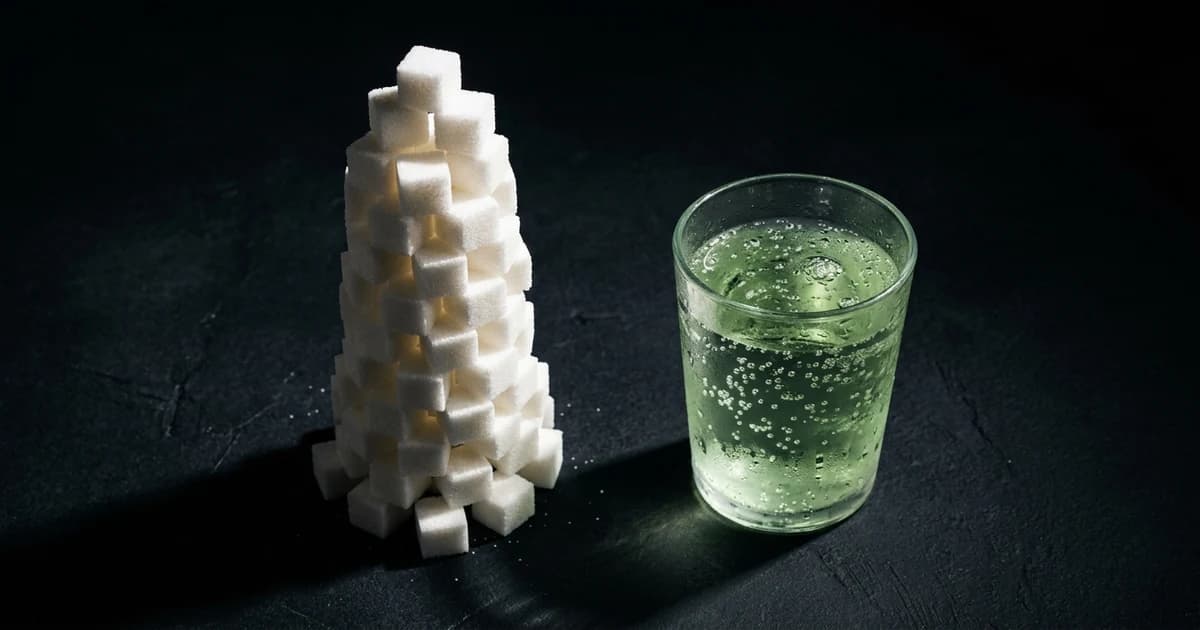
- One 16 oz Monster (54 g sugar) or Rockstar (63 g sugar) exceeds the American Heart Association's full-day added sugar limit in a single can.
- Chasing the crash with a second can compounds the problem. L-theanine, hydration, and protein are better tools.
What Is Actually in the Can
Not all cans crash you the same way. The difference starts on the nutrition label.
| Can (serving size) | Caffeine | Sugar | Calories | Source |
|---|---|---|---|---|
| Monster Original (16 oz) | 160 mg | 54 g | 210 | monsterenergy.com |
| Rockstar Original (16 oz) | 160 mg | 63 g | 260 | rockstarenergy.com |
| Red Bull Original (8.4 oz) | 80 mg | 27 g | 110 | redbull.com |
| Celsius Original (12 oz) | 200 mg | 0 g | 10 | celsius.com |
The sugar cans dump 27 to 63 grams of fast-absorbing carbohydrate into your bloodstream alongside the caffeine. The AHA's daily limit is 36 g for men and 25 g for women. One Monster blows past both. Zero-sugar cans skip the glucose hit but bring even more caffeine (Celsius: 200 mg versus Monster's 160 mg), which matters for the second crash.
The Sugar Crash, Explained
Fifty-four grams of liquid sugar absorbs fast because there is no fiber or protein to slow it. Blood glucose spikes. Your pancreas responds with a surge of insulin to clear it. The problem: insulin frequently overshoots. This is the reactive hypoglycemia mechanism, a rapid rise followed by a drop that can leave blood sugar lower than where it started.
The result: brain fog, irritability, the sudden need to sit down. It typically hits one to three hours after the sugar load, faster on an empty stomach. For more on how glucose swings affect cognition, see glucose swing and brain fog.
The Caffeine Crash, Explained
This one happens even if your can has zero sugar. Caffeine works by blocking adenosine receptors in the brain. Adenosine is the molecule your neurons accumulate over waking hours as a fatigue signal. Caffeine does not stop adenosine from building up. It just blocks the receptor so you do not feel it.
When caffeine begins to clear, adenosine floods those now-unblocked receptors all at once. The fatigue rebound feels worse than baseline because adenosine has been quietly stacking the whole time you felt alert.
Chronic caffeine use makes this worse. According to StatPearls (NCBI), regular caffeine intake upregulates adenosine receptors, meaning your brain builds more docking sites. More receptors, harder rebound. This is also why the afternoon-worse feedback loop exists. For the full receptor-level walkthrough, see adenosine rebound explained fully.
The 3-Hour Energy Drink Crash Timeline
Here is what happens after a 16 oz Monster (160 mg caffeine, 54 g sugar). Caffeine reaches peak plasma concentration in roughly 30 to 60 minutes; liquid sugar absorbs even faster.
| Time after first sip | What is happening | How you feel |
|---|---|---|
| 0 to 15 min | Caffeine absorbing, blood glucose rising rapidly | First wave of alertness; sugar high beginning |
| 15 to 45 min | Caffeine approaching peak plasma levels; insulin release begins | Peak energy, sharpest focus, "wired" feeling |
| 45 to 90 min | Caffeine at or just past peak; blood glucose dropping as insulin overshoots | Energy feels stable, but the floor is already falling |
| 90 to 180 min | Caffeine clearing from receptors; adenosine flooding in; blood sugar potentially below baseline | The crash: fatigue, brain fog, irritability, craving for another can |
| 3+ hours | Adenosine rebound in full effect; sugar long gone | "Worse than before I drank it" feeling |
The exact timing shifts based on individual caffeine metabolism. Mean half-life in healthy adults is about 5 hours, with a range of 1.5 to 9.5 hours depending on genetics, smoking status, and medication use. For more on what makes your number different, see why half-life varies 5-fold.
Why a Sugar-Free Can Still Crashes You
"I switched to Celsius and I still crash at 2 PM." Caffeine's adenosine rebound has nothing to do with sugar.
A 12 oz Celsius carries 200 mg of caffeine, 25% more than Monster and two and a half times a Red Bull. More caffeine means a bigger adenosine dam, which means a harder break when it clears. Dropping sugar removes one crash. It does not touch the other. For a longer breakdown, see zero-sugar can still has caffeine crash.
How Long Does an Energy Drink Crash Last?
It depends on which crash you are talking about.
The sugar crash tends to resolve within 30 to 90 minutes as blood glucose stabilizes, especially if you eat something with protein or fiber.
The caffeine crash lasts longer because it tracks caffeine's half-life. With a mean half-life of about 5 hours, a 160 mg dose still has ~80 mg circulating at the 5-hour mark. Adenosine rebound can drag out across an entire afternoon.
Fixing it with another late-afternoon can adds a sleep tax. Drake et al. (2013) found that 400 mg of caffeine taken six hours before bed cut total sleep time by about 41 minutes versus placebo. Poor sleep raises next-day adenosine, setting up tomorrow's crash before it starts.
What Actually Softens an Energy Drink Crash
Reaching for another can is the intuitive fix and the worst one. Here is what the evidence supports instead:
Eat protein or fiber before (or with) the can. Slowing gastric emptying reduces the speed of both sugar absorption and caffeine uptake. A handful of almonds will not eliminate the crash, but it lowers the spike, which lowers the drop.
Hydrate. Caffeine is a mild diuretic. Water will not neutralize the adenosine rebound, but it removes one layer of fatigue you can control.
Pair caffeine with L-theanine. L-theanine, an amino acid in tea, promotes alpha brain wave activity. A 2008 study (Haskell et al.) found that L-theanine combined with caffeine improved accuracy on attention-switching tasks and modulated aspects of mood. It does not block the adenosine rebound, but it smooths the ride so the drop is less jarring.
Stop earlier in the day. Cut off caffeine at least eight hours before bed. Protecting sleep is the single most effective move against next-day crashes.
The Crash Is Built into the Can
Energy drinks are not broken. They are doing exactly what their formulas are designed to do: deliver a fast, high-dose spike you feel within minutes. The crash is the pharmacological cost of that speed. Sugar cans charge you twice (glucose drop plus adenosine rebound). Sugar-free cans charge you once, but often with a higher caffeine dose that makes the single crash heavier. The way to change the crash is to change what you consume, how much, and how fast it gets there.
Frequently Asked Questions
Why do energy drinks make you crash?
Two mechanisms stack. Sugary cans trigger reactive hypoglycemia (insulin overshoots after the glucose spike) plus a caffeine-adenosine rebound (adenosine floods receptors once caffeine clears). Sugar-free cans skip the first but still produce the second. The rebound is why you feel more tired than before you drank it.
How long does an energy drink crash last?
The sugar portion usually resolves within 30 to 90 minutes. The caffeine rebound can stretch across several hours, depending on your individual half-life (average 5 hours, range 1.5 to 9.5). Drinking another can delays but does not prevent the eventual crash.
Is the energy drink crash different from a coffee crash?
The caffeine mechanism is identical: adenosine rebound. The difference is dose and speed. A 16 oz Monster delivers 160 mg and a 12 oz Celsius delivers 200 mg, often consumed in 10 to 15 minutes. Coffee is typically sipped over 20 to 40 minutes. Faster intake means a steeper spike and a sharper drop.
Do sugar-free energy drinks still cause a crash?
Yes. The caffeine-adenosine rebound occurs regardless of sugar content. Sugar-free cans like Celsius and Bang remove the blood-sugar crash but not the caffeine crash, and they often carry higher caffeine doses (200 to 300 mg per can), which can make the rebound more pronounced.
Can you prevent an energy drink crash entirely?
You can reduce it, not eliminate it. Protein or fiber slows absorption. L-theanine smooths the response curve. Hydration helps. But as long as caffeine is blocking adenosine receptors, some rebound will follow when it clears. That is how the molecule works.
What is energy drink withdrawal vs. a single-can crash?
A single-can crash is the acute rebound from one dose wearing off, typically peaking two to three hours after consumption. Energy drink withdrawal is a broader syndrome from abruptly stopping regular use: headache, fatigue, irritability, and difficulty concentrating that can begin 12 to 24 hours after the last dose and last up to nine days.
Does drinking water help with an energy drink crash?
It helps with the overlap between dehydration and crash symptoms (headache, fatigue, poor concentration) but does not reverse the adenosine rebound. Think of it as removing one layer of tiredness, not canceling the crash.
A Smoother Curve Instead of a Harder Spike
The core problem with most energy drinks is not caffeine itself. It is the dose, the speed, and the absence of anything to shape the response curve. A 200 mg caffeine bomb with nothing alongside it gives you a tall spike and a steep fall.
Roon is a zero-sugar, zero-calorie caffeine pouch with 80 mg of caffeine, 60 mg of L-theanine, 25 mg of methylliberine (Dynamine), and 5 mg of theacrine (TeaCrine). It contains sucralose and artificial flavoring.
If you are looking for a lower-caffeine alternative to a full-size energy drink, Roon is one option. Tins start at $9.16 for a 12-tin subscription ($0.61 per pouch).
Related from Roon
- The Caffeine Crash Cycle: Why More Coffee Makes the Afternoon Worse
- Why Coffee Makes You Crash in the Afternoon: The Adenosine Rebound Explained
- Blood Sugar and Brain Function
- Caffeine Half-Life Factors
Written by Roon Team