Best Mushroom Nootropics: Evidence, Doses, and Safety (2026)
Roon Team
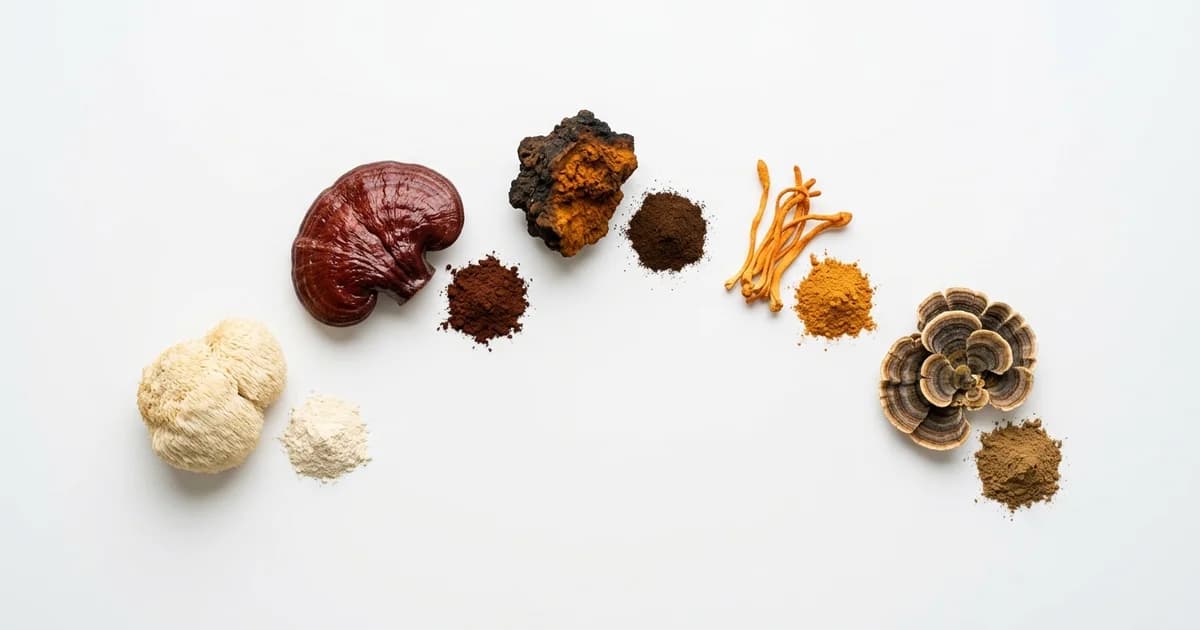
The Best Mushroom Nootropics in 2026
Functional mushrooms are no longer a niche health-store curiosity. The best mushroom nootropics now sit alongside caffeine and creatine as serious tools for cognitive performance, backed by a growing body of clinical research and a global market projected to hit $13.2 billion in 2026.
But "mushroom nootropic" is a broad label. Some species sharpen focus. Others reduce stress or protect neurons over the long haul. And a disturbing number of products on shelves contain mostly grain filler with trace amounts of actual mushroom.
This guide breaks down the best mushroom nootropics worth your money in 2026, what the science actually says about each one, and how to avoid wasting cash on glorified rice powder.
Key Takeaways
- Lion's Mane has the strongest clinical evidence for cognitive improvement among all mushroom nootropics.
- Cordyceps supports energy and oxygen utilization, with indirect benefits for mental performance.
- Reishi is the go-to for stress and sleep, not raw brainpower.
- Chaga is a long-term brain protector, not an acute performance booster.
- Always choose fruiting body extracts over mycelium-on-grain products when shopping for the best mushroom nootropics.
Are Nootropic Mushrooms Actually Backed by Human Clinical Trials?
Partly, and much less than the category's marketing implies. Not one of the six mushrooms below has a large, replicated, placebo-controlled trial showing cognitive benefit in healthy adults. The largest healthy-adult cognitive trial of any of them enrolled 41 people. Two of the six, chaga and turkey tail, have no human cognitive data at all. Where good trials do exist, several of the best-controlled ones came back null.
Here is what the human literature actually contains, species by species.
| Mushroom | Best human evidence | Population | What it found | Honest grade |
|---|---|---|---|---|
| Lion's Mane | Mori 2009, n=30, 3 g/day, 16 weeks | Diagnosed mild cognitive impairment, ages 50 to 80 | Higher dementia-scale scores than placebo at weeks 8, 12, 16. Scores fell significantly again 4 weeks after stopping. | Small RCTs, mixed and partly null |
| Lion's Mane | Surendran 2025, n=18, single 3 g dose | Healthy adults 18 to 35 | Primary outcome null. No effect on the cognitive composite or mood composite. | Null primary outcome |
| Reishi | Jafari 2025 meta-analysis, 17 RCTs, 971 people | Mostly clinical populations | All outcomes graded very low certainty. 16 of 17 studies rated poor quality. | Multiple RCTs, pooled result essentially null |
| Cordyceps | Chen 2010, n=15 completers, 3 g/day Cs-4, 12 weeks | Healthy adults 50 to 75 | Metabolic and ventilatory thresholds improved. VO2max unchanged. | Small RCTs, directly conflicting |
| Cordyceps | Parcell 2004, n=22, 3 g/day, 5 weeks | Trained male cyclists | Fully null. No change in aerobic capacity or time-trial performance. | Null |
| Chaga | None | Not applicable | Memorial Sloan Kettering states no human clinical trials have been conducted. | Preclinical and animal only |
| Turkey Tail | Cochrane 2022, 7 RCTs, 1,569 people | Colorectal cancer patients on chemotherapy | Low-certainty evidence of a small 5-year survival benefit for prescription-grade PSK. | Oncology adjuvant only, no cognitive data |
| Maitake | Deng 2009, n=34, dose escalation | Breast cancer survivors | Immune effects were bidirectional and non-monotonic. | Small, mostly uncontrolled clinical trials |
Three findings deserve to be stated plainly, because they are the ones the category tends to skip.
First, the most-cited lion's mane result is weaker than its reputation. Mori 2009 enrolled 30 people, all with diagnosed mild cognitive impairment rather than healthy cognition, the lead author was affiliated with a mushroom company, and the benefit reversed within four weeks of stopping. It is a real result. It is not evidence that a healthy 28-year-old will think more clearly.
Second, a 2025 systematic review of lion's mane could not perform a meta-analysis at all. The authors state the reason directly: incomplete and unclear reporting across the included studies, including missing separate first-period data in crossover trials and inconsistent statistical values. When the trials cannot be pooled, the honest description is "promising and under-studied," not "clinically proven."
Third, reishi is the most-studied of the six and the pooled result is close to nothing. Two Cochrane reviews, one on cancer and one on cardiovascular risk factors, plus a 2025 GRADE meta-analysis of 17 RCTs, all decline to endorse meaningful benefit. The 2025 analysis rated every single outcome very low certainty. There is no human cognitive trial of reishi that we could locate, so "reishi for focus" is an extrapolation rather than a finding.
None of this means these mushrooms do nothing. It means the honest position in 2026 is that the evidence is early, the trials are small, and the strongest claims in this category are running well ahead of the data.
1. Lion's Mane: The Best Mushroom Nootropic for Focus and Memory
If you only take one mushroom for your brain, this is the one. Lion's Mane consistently tops lists of the best mushroom nootropics for good reason.
Lion's Mane (Hericium erinaceus) contains two classes of bioactive compounds found almost nowhere else in nature: hericenones and erinacines. These compounds stimulate the production of nerve growth factor (NGF), a protein that promotes the growth, maintenance, and survival of neurons. Research published in PubMed confirmed that hericenones and erinacines isolated from Lion's Mane can induce NGF synthesis, which is essential for maintaining the brain's cholinergic system.
That's the mechanism. Here's what it looks like in humans.
A 2023 double-blind, placebo-controlled pilot study from Northumbria University tested 1.8g of Lion's Mane daily in healthy young adults (ages 18-45) over 28 days. The study used a computerized cognitive assessment system and found that the mushroom showed promise in improving cognitive function and mood, even in people who weren't cognitively impaired. That last part matters. Most earlier Lion's Mane research focused on older adults with existing decline, which is why this study strengthened Lion's Mane's position among the best mushroom nootropics.
A separate 2025 study published in Frontiers in Nutrition examined acute effects of a standardized Lion's Mane extract on cognition and mood in healthy younger adults. The researchers noted that preclinical studies have demonstrated Lion's Mane's bioactive compounds can promote NGF synthesis and potentially support neuroplasticity.
How to Dose Lion's Mane
Clinical trials have tested up to 3 grams per day derived from the fruiting body, according to the Alzheimer's Drug Discovery Foundation. Most effective studies use between 1.5g and 3g daily. Start at 1g and work up.
| Factor | Recommendation |
|---|---|
| Daily dose | 1,000–3,000 mg |
| Form | Fruiting body extract (not mycelium-on-grain) |
| Standardization | Look for beta-glucan content ≥ 20% |
| Timing | Morning, with food |
2. Cordyceps: The Energy Mushroom With Cognitive Upside
Cordyceps (Cordyceps militaris) earns its spot among the best mushroom nootropics primarily through its energy-boosting properties. It may help increase the body's production of adenosine triphosphate (ATP), the molecule that delivers energy to every cell in your body, including your neurons.
A 2024 study covered by Healthline found that young adults given 1 gram of Cordyceps before high-intensity exercise showed less muscle damage and faster cell repair compared to placebo. The cognitive angle? Your brain consumes roughly 20% of your body's total energy. Anything that improves cellular energy production has downstream effects on mental performance, which is why Cordyceps belongs on any list of the best mushroom nootropics.
Research published in the Journal of Traditional and Complementary Medicine (2025) has also explored Cordyceps as an adjunct for mood-related conditions, though this research is still early.
Best Use Case for Cordyceps
Cordyceps isn't a "sit down and focus" nootropic like Lion's Mane. It's better suited for days when you need sustained physical and mental energy: long shifts, travel days, or training sessions where you need your brain and body firing together.
| Factor | Recommendation |
|---|---|
| Daily dose | 1,000–3,000 mg |
| Form | Cordyceps militaris fruiting body extract |
| Key compound | Cordycepin (look for standardized content) |
| Timing | Morning or pre-workout |
3. Reishi: The Calming Counterbalance
Reishi (Ganoderma lucidum) won't make you sharper in the way Lion's Mane does. It works on a different axis entirely: stress regulation and sleep quality. Still, it earns a place among the best mushroom nootropics because of how powerfully sleep affects cognition.
A study cited by Om Mushroom Superfood, published in the Journal of Ethnopharmacology, found that Reishi increased total sleep time and non-rapid eye movement sleep in test subjects. Separate research noted that fatigue was reduced and well-being improved after eight weeks of Reishi supplementation.
Why does this belong on a list of the best mushroom nootropics? Because sleep is the single most powerful cognitive enhancer that exists. A brain running on five hours of fragmented sleep will underperform regardless of what supplements you stack on top of it. Reishi doesn't boost cognition directly. It removes one of the biggest barriers to it.
Best Use Case for Reishi
Take it in the evening. Pair it with your wind-down routine. If stress or poor sleep is dragging your daytime performance down, Reishi addresses the root cause rather than masking it with stimulants.
| Factor | Recommendation |
|---|---|
| Daily dose | 1,000–3,000 mg |
| Form | Dual-extracted (hot water + alcohol) fruiting body |
| Key compounds | Triterpenes, beta-glucans |
| Timing | Evening, 1–2 hours before bed |
4. Chaga: The Long-Game Antioxidant
Chaga (Inonotus obliquus) grows on birch trees in cold climates and looks like a chunk of burnt charcoal. It's not glamorous. But it has one of the highest ORAC values (a measure of antioxidant capacity) among all mushrooms, according to Medichecks.
Why does antioxidant capacity matter for your brain? Oxidative stress damages neurons over time and is a known contributor to cognitive decline. A preclinical study published in PubMed found that Chaga extract improved learning and memory in mice by reducing oxidative stress in the brain and supporting acetylcholine, the neurotransmitter most closely tied to memory formation.
The Memorial Sloan Kettering Cancer Center lists Chaga's preclinical effects as including cognition-enhancing and antioxidant properties, alongside anti-inflammatory and immunomodulating activity.
The honest caveat: Chaga's cognitive benefits in humans haven't been tested in large clinical trials yet. Among the best mushroom nootropics, Chaga is a long-term investment in brain health, not something you'll feel after a single dose.
Chaga is also one of the few mushrooms on this list with a documented safety signal worth knowing before you take it daily. It is exceptionally high in oxalates, and Memorial Sloan Kettering notes a reported case of oxalate nephropathy, a form of kidney injury, following long-term chaga use. If you have reduced kidney function, a history of kidney stones, or you take medication that affects the kidneys, talk to your doctor before using chaga at all. This is not a reason to panic about a single cup of chaga tea, but it is a real consideration for the daily, long-term use this section otherwise describes.
5. Turkey Tail and Maitake: The Supporting Cast
A few other mushrooms deserve a mention, even if they don't headline a best mushroom nootropics stack or rank among the top brain nootropic options for direct cognitive performance.
Turkey Tail (Trametes versicolor) is one of the most studied medicinal mushrooms for immune function. A healthy immune system reduces systemic inflammation, which indirectly supports brain health. It's not a cognitive enhancer, but it's a solid addition to a broader wellness protocol.
Maitake (Grifola frondosa) has shown early promise for blood sugar regulation and immune support. Stable blood sugar means fewer energy crashes, which means more consistent mental performance throughout the day.
Neither of these replaces Lion's Mane or Cordyceps for direct cognitive benefits. Think of them as the supporting cast in a well-rounded mushroom stack.
What Dose of Each Nootropic Mushroom Was Used in Human Studies?
The doses used in published human trials are mostly in the 1 to 3 gram per day range for lion's mane, reishi and cordyceps, and they ran for 4 to 16 weeks rather than days. Two of the six have no established dose at all. This table lists what was actually administered in the trials, not what manufacturers recommend.
| Mushroom | Dose tested | Duration | Form tested | Trial |
|---|---|---|---|---|
| Lion's Mane | 3.0 g/day | 16 weeks | Dried fruiting-body powder | Mori 2009 |
| Lion's Mane | 1.8 g/day | 28 days | Fruiting body | Docherty 2023 |
| Lion's Mane | Single 3 g dose | Acute, 90 min | 10:1 fruiting-body extract | Surendran 2025 |
| Reishi | 3 g/day | 16 weeks | Ganoderma lucidum | Klupp 2016 |
| Cordyceps (Cs-4) | ~3 g/day | 12 weeks | Fermented mycelial product | Chen 2010 |
| Cordyceps (Cs-4) | 3 g/day | 5 weeks | Fermented mycelial product | Parcell 2004 |
| Cordyceps militaris | 2.85 mg cordycepin/day | 8 weeks | Fermented beverage | Ontawong 2024 |
| Chaga | No clinically tested dose exists | Not applicable | Not applicable | MSKCC |
| Turkey Tail | Prescription-grade PSK, dose not verified here | Varies | PSK, not retail supplement | Cochrane 2022 |
| Maitake | 6 mg/kg/day extract | 12 weeks | Liquid polysaccharide extract | Wesa 2015 |
Four caveats matter more than the numbers themselves.
The trials that found anything ran for weeks or months, not for a single morning. The one acute healthy-adult lion's mane study, Surendran 2025, gave a single 3 gram dose and found no effect on its primary cognitive outcome at 90 minutes. If you are expecting a mushroom capsule to change your afternoon, that expectation is not supported by the trial that specifically tested it.
Maitake's doses are per kilogram of body weight, and they are of a liquid polysaccharide extract rather than powder. Do not convert those numbers casually into grams of a capsule product. They are not the same thing.
Cordyceps is the messiest label in the category. The material used in the human exercise trials is Cs-4, a standardised fermentation product grown from a mycelial strain, not wild caterpillar fungus and not a fruiting body. A bottle labelled "Cordyceps sinensis" almost never contains wild Ophiocordyceps sinensis. It usually contains either a fermented mycelial biomass of the Cs-4 type or Cordyceps militaris, which is a different species entirely and the usual source of cordycepin. The 3 g/day exercise evidence applies to Cs-4 specifically and does not automatically transfer.
Chaga's only human dose data comes from harm reports rather than efficacy trials, which is covered in the next section.
How to Spot a Low-Quality Mushroom Nootropic
The mushroom supplement market has a transparency problem. Even the best mushroom nootropics can be undermined by poor manufacturing. Here's what to watch for:
- "Mycelium on grain" or "myceliated grain": This means the product is mostly rice or oat substrate with some mycelium mixed in. North Spore notes that fruiting body extracts offer a more concentrated form of bioactive mushroom compounds compared to mycelium-on-grain products.
- No beta-glucan content listed: If the label doesn't tell you the beta-glucan percentage, the manufacturer probably doesn't want you to know.
- Proprietary blends: If you can't see the dose of each mushroom, you can't verify you're getting an effective amount.
- No third-party testing: Look for COA (Certificate of Analysis) availability from an independent lab.
Quality control separates the best mushroom nootropics from expensive placebos. Always verify what you're buying.
Fruiting Body vs Mycelium on Grain: What Actually Differs?
The fruiting body is the mushroom itself. Mycelium on grain is the root-like network grown on a grain substrate, and in most products the grain is not separated out before the whole mass is dried and powdered. The practical difference is that a mycelium-on-grain powder contains starch from the grain, so a given weight of it is not comparable to the same weight of fruiting body. What the evidence does not currently support is any specific percentage claim about how much.
This is worth being careful about, because the numbers that circulate on this topic are frequently attributed to a source that does not contain them.
What is genuinely established is the analytical method. McCleary and Draga (2016), published in the Journal of AOAC International, validated a method for measuring beta-glucan in mushroom and mycelial products. The method measures total glucan by acid hydrolysis, measures alpha-glucan separately after glucoamylase treatment, and obtains beta-glucan by difference. Because alpha-glucan is starch and glycogen, the method can in principle detect grain carryover in a mycelium product. That follows directly from what it measures.
What is not established, and what you will see stated confidently all over this category, is a specific figure such as "mycelium products contain only 1 to 5 percent beta-glucan and 60 to 70 percent starch." Those percentages are widely attributed to the McCleary and Draga paper. They are not in it. The sources that publish them are mushroom supplement companies, which is exactly the kind of source a health claim should not rest on. We could not locate a peer-reviewed analysis of commercial mycelium-on-grain products reporting those figures, so we are not going to repeat them.
| Question | What the evidence supports |
|---|---|
| Is fruiting body different from mycelium on grain? | Yes. Different tissue, and mycelium-on-grain products include the grain substrate. |
| Can the difference be measured? | Yes. A validated AOAC method separates beta-glucan from alpha-glucan (starch). See McCleary and Draga 2016. |
| Is there a peer-reviewed figure for how much starch commercial mycelium products contain? | Not that we could find. The commonly quoted percentages trace to supplement sellers, not to published analysis. |
| Which form did the trials use? | Lion's mane trials used fruiting-body powder or extract. The cordyceps exercise trials used Cs-4, which is a fermented mycelial product. |
That last row complicates the simple "fruiting body good, mycelium bad" rule that this category likes. The cordyceps evidence that people cite most, Chen 2010, used a fermented mycelial product rather than a fruiting body. So mycelium is not automatically worthless. The specific criticism is about undisclosed grain substrate inflating the weight of a powder, not about mycelium as a tissue type.
The practical version: prefer products that state the species, state the part used, and state a measured beta-glucan percentage. If a label gives you a milligram figure and nothing else, you cannot tell what you are buying, and no amount of packaging design changes that.
The Best Mushroom Nootropics, Ranked
| Mushroom | Primary Cognitive Benefit | Strength of Evidence | Best For |
|---|---|---|---|
| Lion's Mane | Focus, memory, NGF production | Moderate (small human trials) | Daily cognitive performance |
| Cordyceps | Energy, oxygen utilization | Moderate (small human trials) | Physical + mental endurance |
| Reishi | Sleep, stress reduction | Moderate (human trials) | Evening recovery, sleep quality |
| Chaga | Neuroprotection, antioxidant | Early (preclinical) | Long-term brain health |
| Turkey Tail | Immune support | Strong (for immunity) | General wellness support |
How Long Do Nootropic Mushrooms Take to Work?
Weeks, if they work at all, and not minutes. Every human trial that reported a positive cognitive or performance result ran for 8 to 16 weeks of daily dosing. The one study that specifically tested whether a single dose does anything acutely in healthy adults, Surendran 2025, found no effect on its primary cognitive outcome 90 minutes after a 3 gram dose. Functional mushrooms are not an on-demand tool, and any product promising same-hour focus from a mushroom is describing something no trial has demonstrated.
| Time frame | What the trials actually show |
|---|---|
| Single dose, same day | The one acute healthy-adult lion's mane trial had a null primary outcome. Surendran 2025 |
| 4 weeks | 1.8 g/day lion's mane produced only a non-significant trend on subjective stress, p = 0.051. Docherty 2023 |
| 8 to 16 weeks | Where positive results exist, this is the window. Mori's dementia-scale gains appeared at weeks 8, 12 and 16. Mori 2009 |
| After stopping | Benefit was not durable. Scores decreased significantly 4 weeks after discontinuation. Mori 2009 |
That last row is the one most worth internalising before you spend money. In the single most-cited positive trial in this entire category, the effect faded once people stopped taking it. Whatever these mushrooms are doing, the evidence does not describe a permanent upgrade. It describes something you would have to keep taking, indefinitely, for an effect that has not been replicated in a large trial of healthy people.
This is also where the honest comparison to fast-acting nootropics sits. Compounds like caffeine and L-theanine work on a completely different timescale, within minutes to an hour, through a completely different mechanism. Roon is in that second category: a nicotine-free sublingual pouch with caffeine, L-theanine, methylliberine and theacrine, 15 pouches per tin. To be clear about what it is not, Roon contains no mushrooms of any kind, so it is not a lion's mane product and it is not a substitute for whatever long-term effects the mushroom literature may eventually establish. It is a different tool for a different job, and the two are not interchangeable in either direction. Roon is also sweetened with sucralose, which is worth knowing if you avoid artificial sweeteners.
If you want to try functional mushrooms, the realistic expectation to set is a daily habit maintained for at least two to three months, a product that discloses species, part and beta-glucan content, and a clear-eyed understanding that the human evidence for cognitive benefit in healthy adults is currently thin. That is not a reason to avoid them. It is a reason not to expect the results the packaging implies.
Beyond the Best Mushroom Nootropics: Building a Complete Stack
The best mushroom nootropics are effective, but they work best as one layer in a broader cognitive support system. Lion's Mane promotes neuroplasticity over weeks. Cordyceps supports cellular energy. Reishi helps you sleep.
What none of them do particularly well is deliver acute, on-demand focus when you need to perform right now.
That's where a different class of nootropics comes in: compounds like caffeine, L-theanine, theacrine, and methylliberine that work within minutes, not weeks. These ingredients promote alertness and sustained attention without the jittery overcorrection of coffee or the tolerance buildup of high-dose stimulants.
Roon combines all four of those compounds in a single sublingual pouch. No pills, no brewing, no measuring powder. Just 80mg of caffeine paired with L-theanine, theacrine, and methylliberine for 6-8 hours of clean, sustained focus.
The best mushroom nootropics build the foundation. Roon's nootropic pouches are the on-demand layer you put on top. The nootropic stack, simplified.
What Are the Side Effects and Drug Interactions of Nootropic Mushrooms?
The main documented risks are kidney injury from chaga, rare liver injury from reishi, and a bleeding-risk signal across four of the six species. Chaga is the clearest concern: it has no human efficacy trials and multiple biopsy-confirmed cases of oxalate nephropathy, including one that progressed to irreversible end-stage renal disease. Anyone taking an anticoagulant, a diabetes medication, or an immunosuppressant should talk to a clinician before adding any of these.
| Mushroom | Documented signal | Source | Who should be most careful |
|---|---|---|---|
| Chaga | Oxalate nephropathy, biopsy confirmed. One case reached end-stage renal disease. | J Korean Med Sci 2020, Medicine 2022 | Kidney disease, kidney stones, high-dose vitamin C |
| Chaga | Platelet aggregation inhibited in an animal model. MSKCC states it may increase bleeding risk. | MSKCC | Warfarin, DOACs, antiplatelets |
| Reishi | Rare clinically apparent liver injury. NIH LiverTox likelihood score D. Includes one fatal fulminant hepatitis case. | LiverTox, Wanmuang 2007 | Existing liver disease, alcohol use |
| Reishi | May increase bleeding risk and prolong INR, PT and APTT. Can counteract immunosuppressants. | MSKCC | Anticoagulants, transplant patients |
| Cordyceps | Inhibits platelet aggregation in laboratory work. One case report of excessive bleeding after tooth extraction. | MSKCC | Anticoagulants, upcoming surgery or dental work |
| Maitake | A case report of interaction with warfarin causing INR elevation. May add to blood-glucose-lowering drugs. | MSKCC | Warfarin, insulin, oral antidiabetics |
| Lion's Mane | One case of acute respiratory distress syndrome with a strongly positive lymphocyte reaction test to the extract. Rash, nausea and abdominal discomfort reported in trials. | Intern Med 2003, MSKCC | Known mushroom allergy |
| Turkey Tail | No specific herb-drug interactions listed. Dark stools and nail darkening reported rarely. | MSKCC | Discuss with an oncology team if on chemotherapy |
The chaga case reports are worth reading in detail rather than skimming, because the exposures were not exotic. In the 2020 Korean case, a 49-year-old man took chaga powder twice daily for four years and then five times daily for a further year, and ended up on dialysis with biopsy-confirmed oxalate crystal deposits that dialysis did not reverse. The authors measured the chaga sample at 14.2 grams of oxalate per 100 grams, which is roughly 14% oxalate by weight. In the 2022 case, a 69-year-old man took 10 to 15 grams a day alongside 500 mg of vitamin C for three months and developed acute kidney injury needing dialysis and steroids. Vitamin C is metabolised to oxalate, so that combination compounds the load.
On reishi and the liver, proportion matters in both directions. NIH's LiverTox assigns a likelihood score of D, meaning a possible but rare cause of clinically apparent liver injury, and it is candid that several published cases were poorly documented and did not exclude other causes. Its own conclusion is that given how widely reishi is used worldwide, liver injury from it "must be extremely rare." That is the honest framing: a real signal, a small absolute risk, and a reason to stop and get liver enzymes checked if fatigue, dark urine or jaundice appear rather than a reason for panic.
Two mushrooms come out of this comparatively clean on the liver. LiverTox rates both lion's mane and cordyceps at likelihood score E, an unlikely cause of clinically apparent liver injury, with no published cases attributed to either.
The cross-cutting pattern is easy to miss when you read about these one at a time. Four of the six carry a bleeding or anticoagulant caution, and three carry an additive blood-glucose-lowering caution. Stacking several of them in one blend, which is exactly what most "mushroom complex" products do, stacks those cautions too. This is general information rather than medical advice, and it is not a substitute for asking the person who manages your prescriptions.