Second Wind Meaning: Why You Get a Burst of Energy at Night
Second Wind Meaning: Why You Get a Burst of Energy at Night
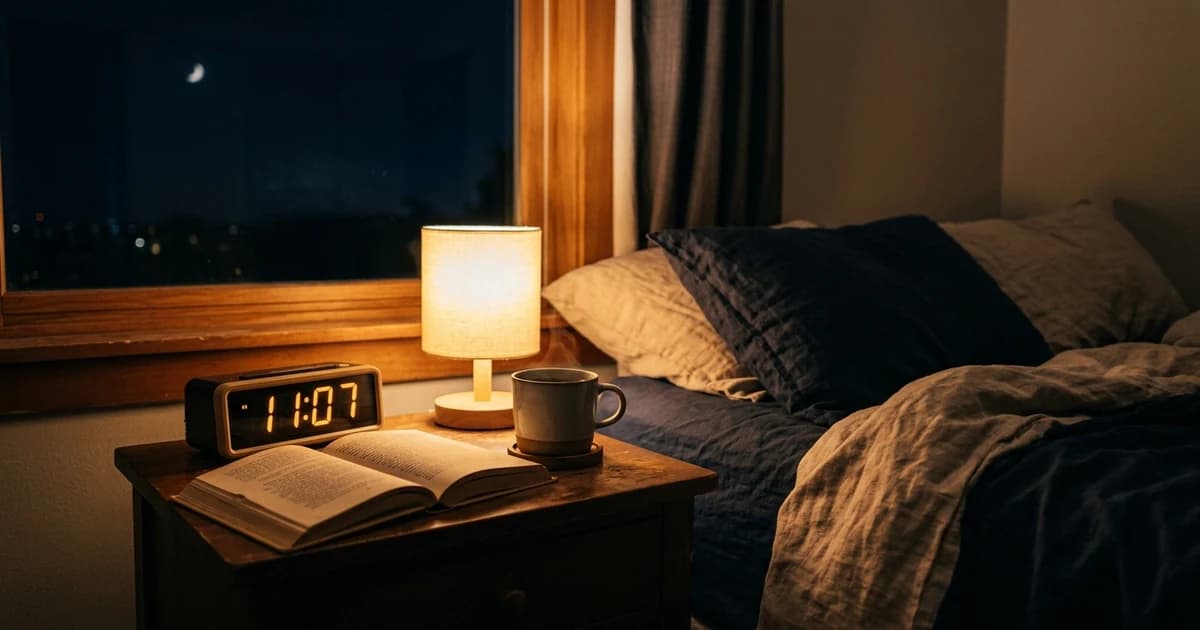
The second wind meaning in sleep science is straightforward: it is the burst of alertness that hits in the two to three hours before your body starts producing melatonin. You were exhausted at 8 pm and somehow wired at 11 pm. This is not a malfunction. It is a circadian signal called the wake maintenance zone, and it exists to keep you conscious against a full day of accumulated sleep pressure. It is normal, it passes, and it is not evidence you are rested.
Key Takeaways
- The "second wind" is the wake maintenance zone, a roughly three-hour circadian window just before melatonin onset, first described in Lavie's 1986 ultra-short sleep protocol.
- A 2018 constant-routine study found that during this window, cognitive performance improved but subjective sleepiness did not drop. You are not less tired. You are temporarily more capable.
- The circadian signal fires on schedule even after 37.5 hours without sleep, which is why all-nighters have a second evening peak.
- Three things get confused under the label "second wind": the normal wake maintenance zone, a genuinely delayed body clock, and revenge bedtime procrastination. Different causes, different fixes.
What Is a Second Wind, and When Does It Hit?
The second wind meaning, in sleep science, refers to a period of increased alertness that arrives late in the evening, typically somewhere between about 9 pm and midnight. The timing is anchored not to the clock but to your own dim-light melatonin onset (DLMO), the moment your brain begins secreting melatonin under low-light conditions. The wake maintenance zone occupies the roughly three hours before that moment.
Sleep researchers also call it the forbidden zone for sleep. The name comes from Peretz Lavie's 1986 study, in which adult men cycled through an ultra-short protocol of 7 minutes of darkness alternating with 13 minutes of light across 36 hours. Whether told to try to sleep or to resist it, they could not fall asleep easily in the two to three hours before their habitual bedtime. Sleep propensity then increased abruptly around the time melatonin began to rise.
| Feature | Wake Maintenance Zone |
|---|---|
| Duration | ~3 hours before melatonin onset |
| Typical timing | 9 pm to midnight (varies by person) |
| First described | Lavie, 1986 |
| Lab confirmation | de Zeeuw et al., 2018 (n=12, 40-hour constant routine) |
| Subjective sleepiness during the zone | Not significantly reduced |
| Cognitive effect | Improved response inhibition (evening 1), improved sustained attention (evening 2) |
| Ends when | Melatonin onset; sleep propensity rises abruptly |
Two Systems Pulling in Opposite Directions
Your drive to sleep builds across the day through a molecule called adenosine. The longer you are awake, the more adenosine accumulates and the heavier the pressure to sleep. By evening, that pressure is high.
But your circadian system, the internal clock that tracks roughly 24-hour cycles, runs a separate process. It generates an alerting signal that peaks in the late evening, right when sleep pressure is at its strongest. The brain's wake-promoting circuitry pushes back against the accumulating pressure, holding you conscious through the final hours of your day.
The second wind is what that tug of war feels like from the inside. The circadian signal wins for a few hours, then melatonin rises, the signal fades, and sleep pressure takes over. This is the two-process model of sleep regulation, first formalized by Borbély and refined over four decades.
You Are Not Less Sleepy. You Are Temporarily More Capable.
This is the most useful finding on this page, and the one that reframes what a second wind actually is.
In 2018, de Zeeuw and colleagues kept 12 healthy young men awake for 40 continuous hours in dim light, testing cognitive performance and sleepiness every hour. Two wake maintenance zones appeared: WMZ1 between about 10.5 and 13.5 hours awake, and WMZ2 between about 34.5 and 37.5 hours awake, each defined as the three-hour window before melatonin onset, which in this group occurred on average at 21:17.
The results split in a way that matters:
- Cognitive performance improved. Response inhibition got better during WMZ1. Sustained attention got better during WMZ2. The effect was, if anything, stronger the second time around, deep into sleep deprivation.
- Subjective sleepiness did not significantly decrease during either zone.
- EEG signatures of sleepiness dropped, confirming the circadian signal was doing real neurological work, not just changing mood.
Participants were not less tired. They were temporarily sharper. This is why the second wind is a trap. It feels like the fog lifted just enough to start something, and then the fog returns an hour later with the bill.
A caveat: this was 12 young men in a laboratory. The timings are specific to that group's average melatonin onset, not a universal clock time.
Why It Still Hits After 24 Hours Awake
The 2018 study found a second wake maintenance zone between about 34.5 and 37.5 hours of continuous wakefulness. The circadian alerting signal fires on its roughly 24-hour schedule regardless of how much sleep pressure has built up. Your clock does not check whether you slept.
This is why an all-nighter has a predictable shape. The worst hours are early morning, when the circadian signal bottoms out and sleep pressure is enormous. Then evening rolls around again, the alerting signal peaks, and you get a second wind you did not earn. It passes.
Three Things People Call a "Second Wind" That Are Not the Same Problem
1. The wake maintenance zone (normal, passes on its own)
The test: You feel alert for two to three hours in the late evening, then the alertness dissolves and you fall asleep without much trouble. It happens most nights at roughly the same time.
The fix: Do not start anything absorbing during the window. It closes on its own.
2. A delayed body clock
The test: You are genuinely alert until 1 or 2 am, and if left to your own schedule (weekends, vacations), you sleep late and wake late and feel fine. Your whole system has drifted later, not just the alertness window.
The fix: Move the wake time earlier, get bright light in the morning, and shift the whole rhythm forward. A 2026 survey of 2,355 adults found that evening chronotype was positively associated with morning sleep inertia. Evening chronotypes are known from other research to carry a later-shifted circadian system. If this sounds like you, understanding your chronotype is the starting point.
3. Revenge bedtime procrastination
The test: You are tired. You know you are tired. You stay up anyway because the evening is the only time that belongs to you. The alertness is not circadian; it is voluntary delay driven by a sense of lost autonomy during the day.
The fix: The problem is the daytime schedule, not the evening. Reclaiming even 30 minutes of personal time earlier in the day often removes the impulse.
What to Do When the Second Wind Hits Tonight
The window closes on its own. Your only job is to not give it something to latch onto.
- Do not start a new episode, project, or conversation. The wake maintenance zone does not add energy. It adds capability. Anything engaging will hold you past the window's natural end.
- Dim the lights. Bright light in the evening can delay melatonin onset, which shifts the whole zone later. It does not create the second wind, but it moves it.
- Accept it. Lying in bed frustrated that you are awake at 10:30 pm is worse than sitting quietly with a dull book. The zone lasts about three hours and then gives way.
How to Stop Having It Every Night
You cannot eliminate the wake maintenance zone. But you can shift its timing so it stops colliding with the hours you want to be asleep.
- Hold your wake time constant, even on weekends. The wake time is the anchor that pulls everything else earlier, including melatonin onset and the alertness window before it. Getting up at the same time each day is the single strongest lever.
- Get bright light in the morning. Sunlight in the first hour after waking advances the circadian clock, shifting melatonin onset and the wake maintenance zone earlier.
- Keep caffeine in the earlier part of the day. Caffeine blocks adenosine, one half of the system that eventually overpowers the circadian signal. Late caffeine delays the resolution of the wake maintenance zone and can push melatonin onset later.
- Give the evening a boring hour. Reduced stimulation before your target bedtime lets the circadian signal fade without interference.
A short night after a late second wind costs you the next morning. Sleep inertia is worse after insufficient sleep, and no amount of second-wind alertness the night before compensates for it.
What a Second Wind Does Not Mean
It is not evidence you need less sleep. The de Zeeuw data showed improved performance with no reduction in subjective sleepiness. The body kept the bill. Feeling better on less sleep is a related phenomenon, but the conclusion is the same: the alertness is temporary and the sleep debt is real.
It is not proof you are a night person by nature. Evening chronotypes do tend to have a later-shifted wake maintenance zone, but the zone itself is universal across chronotypes. Everyone has one.
Pushing through it does not make it go away. The circadian signal runs on a clock, not a battery. It returns tomorrow at the same time.
Conclusion
The second wind is a circadian alerting signal, not a second chance at productivity. The wake maintenance zone fires in the roughly three hours before melatonin onset, temporarily sharpening cognitive performance while doing nothing to reduce the sleep pressure underneath. Whether you are dealing with the normal nightly zone, a delayed body clock, or revenge bedtime procrastination, the first step is the same: identify which one you are looking at, because the fixes are different. The zone itself is universal and unavoidable, but its timing is movable with consistent wake times, morning light, and earlier caffeine.
Frequently Asked Questions
What does getting a second wind mean?
A second wind is a burst of alertness in the late evening, typically in the two to three hours before your body begins producing melatonin. Sleep scientists call this window the wake maintenance zone. It is a normal circadian signal that holds you awake against accumulated sleep pressure, not a sign you have recovered energy.
Why do I get a second wind at night?
Your circadian system generates an alerting signal that peaks in the late evening, opposing the sleep pressure that has built across the day. This is the wake maintenance zone, first identified by Lavie in 1986. It exists to hold you awake through the end of your day. Once melatonin begins to rise, the signal fades and sleepiness takes over.
What is the wake maintenance zone?
The wake maintenance zone, also called the forbidden zone for sleep, is a circadian window of roughly three hours before dim-light melatonin onset. During it, falling asleep is unusually difficult even under heavy sleep deprivation. A 2018 study found that the zone improved cognitive performance while subjective sleepiness stayed the same.
Why am I not tired after being awake for 24 hours?
The circadian alerting signal fires on its roughly 24-hour schedule regardless of how long you have been awake. In the de Zeeuw et al. study, a second wake maintenance zone appeared between about 34.5 and 37.5 hours of continuous wakefulness. Your clock does not check whether you slept. The alertness is temporary and does not mean you have recovered.
Does a second wind mean I need less sleep?
No. The 2018 lab data showed that cognitive performance improved during the wake maintenance zone, but subjective sleepiness did not decrease. The second wind is a circadian signal, not a measure of how much sleep your body requires. Treating it as evidence of extra capacity is how most people lose an hour of sleep they cannot get back.
How do I stop getting a second wind before bed?
You cannot eliminate the wake maintenance zone, but you can shift its timing earlier. Hold a consistent wake time, get bright light in the morning, keep caffeine to earlier hours, and reduce stimulation in the evening. These cues advance your circadian clock, moving melatonin onset and the preceding alertness window to a time that no longer collides with when you want to sleep.
Keep Your Daytime Energy on Your Terms
Roon is a nicotine-free caffeine pouch with zero sugar, designed for clean, sustained alertness earlier in the day so the evening stays yours.
Put the Alertness Where the Clock Wants It
The wake maintenance zone fires whether you need it or not. The problem is not that your body generates alertness; it is that the alertness arrives at 10 p.m. instead of 2 p.m. Roon is designed to front-load that energy into the hours where it serves you. A sublingual pouch delivers 80 mg caffeine, 60 mg L-theanine, 25 mg methylliberine (Dynamine), and 5 mg theacrine (TeaCrine). Dynamine slows caffeine's clearance, extending the useful window to 6 to 8 hours from a single pouch. The mechanism: a randomized double-blind crossover PK study (n=12) found methylliberine cut oral clearance from 41.9 to 17.1 L/hr and extended half-life from 7.2 to 15 hours, though that study used 100 mg methylliberine and 150 mg caffeine (roughly 4x the methylliberine and 1.9x the caffeine Roon carries), so the effect is directionally the same and the study did not measure Roon. That longer tail is exactly why the 8-hour-before-bed cutoff is not optional.
Roon is not a substitute for fixing the circadian misalignment that causes late-night second winds. Morning light, a locked wake time, and evening stimulus reduction do the real work. But if your afternoons are dragging and your evenings are wired, anchoring your caffeine to a predictable daytime window helps keep the schedule honest. Zero sugar, from $9.16 per tin. Try Roon before noon and let your circadian clock handle the evening.
Written by Roon Team