Where Does Nicotine Come From? Tobacco, Labs and Tomatoes
Where Does Nicotine Come From? Tobacco, Labs and Tomatoes
Where does nicotine come from? It is an alkaloid made by the tobacco plant. It forms in the roots, moves to the leaves, and accounts for about 1.5% of commercial tobacco by weight. Most nicotine in pouches, gum, and patches is extracted from those leaves. A smaller share is now synthesized in a lab from non-tobacco chemicals. Tomatoes, potatoes, and eggplant carry only trace amounts, thousands of times less than a single pouch. Both sources produce the same addictive molecule.
Nicotine Starts in the Tobacco Plant's Roots
Tobacco plants synthesize nicotine only in root tissue. The molecule translocates to the aerial parts via the xylem (Shitan et al., 2015), accumulating in leaves as a defense against insects. When researchers silenced nicotine production in wild tobacco, those plants lost 3-fold more leaf area to herbivores (Steppuhn et al., PLoS Biology, 2004).
Nicotine makes up about 95% of the total alkaloid content in commercial cigarette tobacco (Benowitz et al., 2009). The FDA calls it "a highly addictive chemical compound present in a tobacco plant." The harm from smoking comes mostly from the thousands of other chemicals in tobacco smoke, but nicotine is what sustains the habit.
How Is Nicotine Extracted from Tobacco?
Tobacco leaf is made alkaline so nicotine converts to free-base form, which is volatile enough to be drawn off by steam distillation or solvent extraction, then purified. Tested preparations of both tobacco-derived and synthetic nicotine meet USP pharmaceutical-grade purity (Berman, Zettler & Jordt, WHO Technical Report, 2023). The purified product is the same nicotine molecule regardless of starting material.
What Is Synthetic Nicotine?
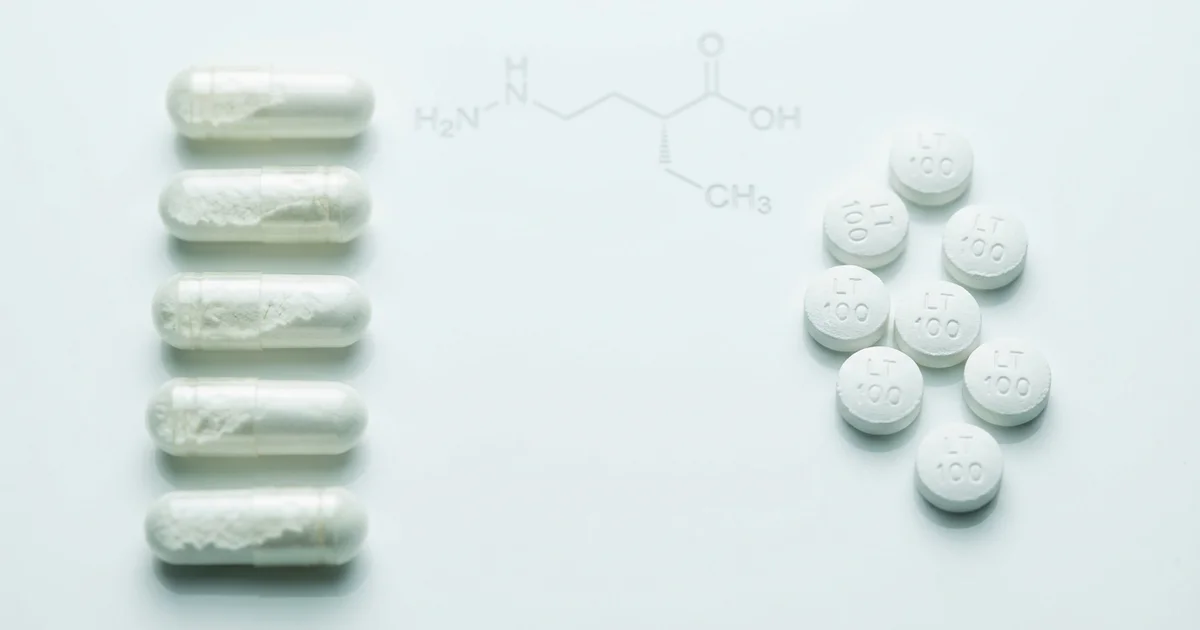
Synthetic nicotine is the same molecule built in a lab from non-tobacco starting chemicals. One commercial route, used by Next Generation Labs, reacts ethyl nicotinate with N-vinyl-2-pyrrolidinone to form myosmine, then converts that intermediate to nornicotine, then methylates it to nicotine (Berman et al., WHO, 2023). This yields racemic nicotine: a 50/50 mix of S- and R-nicotine. Another maker, Zanoprima, uses an enzymatic step to produce pure S-nicotine instead.
The S/R ratio matters. Tobacco nicotine is greater than 99% S-nicotine (Cheetham et al., 2022), and R-nicotine is about 10-fold weaker at nicotine receptors. In a randomized crossover trial in 18 adult smokers, 3 mg pouches with >99% S-nicotine produced peak plasma nicotine of 9.9 ng/mL vs. 5.7 ng/mL for racemic pouches (Keller-Hamilton et al., 2025). Synthetic nicotine costs more than tobacco-derived (WHO, 2023), and in one lab comparison only carbon-14 analysis separated the two (Cheetham et al., 2022; the authors work for a contract lab and a consultancy).
Which Pouch Brands Use Synthetic vs. Tobacco-Derived Nicotine?
| Product | Nicotine source | What the brand or FDA says |
|---|---|---|
| ZYN (20 FDA-authorized products) | Tobacco-derived | FDA review: "nicotine derived from tobacco" (TPL review, Jan 2025) |
| on! PLUS | Tobacco-derived | FDA review: "nicotine ... made of or derived from tobacco" (TPL review) |
| VELO / VELO MAX | Tobacco-derived | "nicotine derived from the tobacco plant" (velo.com FAQ) |
| VELO PLUS | Synthetic | "non-tobacco derived synthetic nicotine" (velo.com FAQ) |
| Zone | Synthetic | "does not use nicotine that is derived from tobacco" (zonepouches.com) |
| Sesh+ | Synthetic (S-nicotine) | "pharmaceutical-grade synthetic nicotine" (seshproducts.com) |
| Lucy Pouches | Non-tobacco (Lucy's wording) | "Non-tobacco nicotine" (lucy.co) |
| Rogue | Not published | Brand FAQ does not state source (roguenicotine.com) |
| Roon | None | Zero nicotine; 80 mg caffeine pouch (takeroon.com) |
Each row comes from that brand's own FAQ or product page or from an FDA review document, as read on Oct 17, 2026. "Not published" means the brand's pages do not say.
How this table was built
Every entry comes from the brand's website or an FDA Technical Project Lead review. We did not perform lab testing or use-testing on any competitor product. Brands may change nicotine suppliers at any time. Roon, which publishes this page, sells a caffeine pouch with no nicotine in it, and the page links to that product.
Does "Tobacco-Free" Mean the Nicotine Isn't from Tobacco?
No. "Tobacco-free" on a pouch means the can holds no tobacco leaf. The nicotine can still be tobacco-derived. ZYN is marketed as tobacco-free, but the FDA's review confirms tobacco-derived nicotine. VELO's FAQ says it plainly: the pouch has no leaf, but the nicotine is extracted from the tobacco plant. FDA's on! PLUS review says the same: the nicotine is "made of or derived from tobacco."
Since April 14, 2022, federal law covers tobacco products containing nicotine "from any source," so synthetic-nicotine pouches are tobacco products too and need FDA premarket authorization. For a deeper look at how nicotine pouches work, see our hub page.
Is There Nicotine in Tomatoes, Potatoes, and Eggplant?
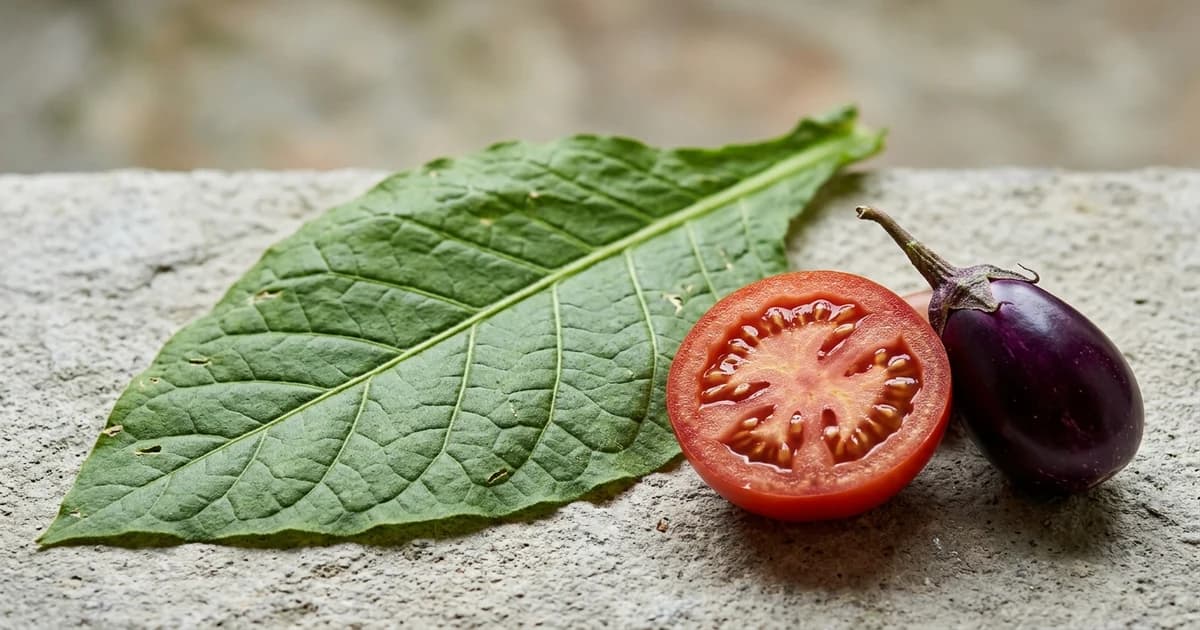
Yes, in trace amounts. These vegetables belong to the same botanical family as tobacco (Solanaceae, the nightshades) and produce small quantities of nicotine.
| Food (fresh) | Nicotine measured | Study |
|---|---|---|
| Tomato | 7.3 ng/g (= 7.3 micrograms per kg) | Davis et al. 1991 |
| Potato | 15 ng/g | Davis et al. 1991 |
| Eggplant | Not detected | Davis et al. 1991 |
| Edible nightshade fruits (tomato, potato, eggplant, peppers) | 2 to 7 micrograms per kg | Siegmund et al. 1999 |
| Average diet (several countries) | about 1.4 micrograms per day (2.25 at the 95th percentile) | Siegmund et al. 1999 |
The studies do not fully agree: Davis found no nicotine in eggplant, while a 1993 letter in the New England Journal of Medicine (Domino et al.) reported nicotine in common vegetables. The Davis authors were R. J. Reynolds Tobacco Company staff.
A 6 mg pouch holds 6,000 micrograms of nicotine on its label. That equals about 822 kg of tomatoes at the Davis value, or about 11.7 years of the Siegmund average dietary intake. For a 3 mg pouch, halve both: about 411 kg of tomatoes, or about 5.9 years of diet. Label nicotine is not the same as the amount the body absorbs.
Is Synthetic Nicotine Safer Than Tobacco-Derived Nicotine?
Not by any measure that has been demonstrated. The molecule is identical. Both are addictive.
A 2026 lab analysis found synthetic nicotine samples contained 2,094 mg/kg total solvents vs. 1,538 mg/kg for tobacco-derived, plus about 11x the phthalate levels (Shin et al., Chem Res Toxicol, 2026). That study tested raw nicotine and e-liquids, not finished pouches. The WHO's 2023 review recommended against claims that synthetic nicotine is purer or healthier unless evidence supports them.
Who Should Avoid Nicotine from Any Source
- Anyone under 21 (the US legal purchase age for tobacco products).
- Pregnant or breastfeeding individuals: the FDA notes nicotine can cross the placenta.
- People with cardiovascular conditions should consult their clinician.
- If you do not currently use nicotine, there is no health reason to start.
- Keep all nicotine products away from children.
- To quit nicotine, call 1-800-QUIT-NOW or ask your doctor about FDA-cleared cessation options.
Related from Roon
Frequently Asked Questions
Is nicotine natural?
Yes. Nicotine occurs naturally in the tobacco plant as an insect deterrent. Trace amounts appear in tomatoes, potatoes, and other nightshade vegetables. The synthetic version is the identical molecule made from different starting chemicals.
Does ZYN use synthetic nicotine?
No. The FDA's review of the 20 authorized ZYN products describes them as containing "nicotine derived from tobacco." ZYN's FAQ lists nicotine bitartrate dihydrate, "pharmaceutical-grade nicotine." The pouch holds no leaf, which is why it is marketed as tobacco-free. See the FDA-authorized nicotine pouches list.
Does synthetic nicotine show up on a nicotine test?
Yes. Synthetic nicotine is the same molecule, so the body breaks it down to cotinine either way. For more on pouch use and testing, see the cotinine test guide.
Can eating vegetables make you fail a nicotine test?
Very unlikely. Davis et al. (1991) modeled that dietary nicotine could produce urinary cotinine of only 0.6 to 6.2 ng/mL. Compare that with the cutoffs in our cotinine test guide.
Is there nicotine in tea?
Some. Davis et al. (1991) found nicotine in black teas ranging from non-detectable to over 100 ng/g, with instant teas reaching up to 285 ng/g. Siegmund et al. (1999) confirmed variable nicotine in tea leaves. These are trace dietary levels, far below the label amount in a pouch.
A Pouch With No Nicotine Source at All
If the question of tobacco vs. synthetic nicotine matters to you because you would rather skip the molecule entirely, Roon removes the variable: there is no nicotine to source. Each Cool Mint pouch holds 80 mg caffeine alongside 60 mg L-theanine, 25 mg methylliberine (Dynamine) and 5 mg theacrine (TeaCrine).
Methylliberine slows caffeine's clearance: a randomized, double-blind crossover PK study (n=12) found co-administration extended caffeine's half-life from 7.2 to 15 hours without raising peak concentration (PK study). That study used 100 mg methylliberine and 150 mg caffeine, about 4x and 1.9x a Roon pouch's doses, so the mechanism applies directionally but the magnitude may differ, and a 15-hour half-life is not 15 hours of felt energy. A single Roon pouch is felt for roughly 6 to 8 hours. Wrap up your last pouch at least 8 hours before bed.
If you would rather leave the tobacco plant's nicotine behind and keep the pouch, try Roon. It costs from $9.16 per tin. It is not a nicotine replacement therapy and is not a substitute for FDA-cleared cessation products. Caffeine has its own limits: cap it at four Roon pouches in a day, and keep your total from coffee, tea and everything else under 400 mg.
Sources
- FDA: Nicotine Is Why Tobacco Products Are Addictive
- FDA: New Law Clarifies FDA Authority to Regulate Synthetic Nicotine (Mar 2022)
- Shitan et al., Plant Signal Behav, 2015
- Steppuhn et al., PLoS Biol, 2004
- Benowitz et al., Handb Exp Pharmacol, 2009
- Berman, Zettler & Jordt, WHO Tech Rep Ser, 2023
- Cheetham et al., PLoS One, 2022
- Keller-Hamilton et al., Nicotine Tob Res, 2025
- Shin et al., Chem Res Toxicol, 2026
- Davis et al., Food Chem Toxicol, 1991
- Siegmund et al., J Agric Food Chem, 1999
- Domino et al., N Engl J Med, 1993
- Methylliberine and caffeine PK study, Journal of Exercise and Nutrition
Written by Roon Team