How to Wake Up Early Without Feeling Wrecked (Even If You Slept Late)
Roon Team

How to Wake Up Early Without Feeling Wrecked (Even If You Slept Late)
You can learn how to wake up early, but first you need to understand what you're fighting. The groggy, half-conscious state that makes 6 a.m. feel impossible has a clinical name: sleep inertia. It typically lasts 15 to 30 minutes and gets worse when you're underslept or waking from deep slow-wave sleep. Layered on top is accumulated sleep debt, the cognitive deficit that builds when you consistently short yourself on rest. Neither is a willpower problem. Both have specific countermeasures.
This article covers the damage-control plan for tomorrow morning and a one-week protocol for shifting your wake time earlier.
Key Takeaways
- Sleep inertia and sleep debt are the two forces working against you, not laziness.
- Light exposure, not your alarm tone, is the strongest lever for waking up and staying awake.
- Caffeine taken immediately on waking can cut through sleep inertia by 12 to 18 minutes after waking.
- Moving your wake time 15 to 30 minutes earlier per day beats one big jump.
If You Slept Late Last Night: The Damage-Control Plan
You went to bed at 1 a.m. and need to be functional by 6:30. Here is what helps, in order.
| Time | Action | Why It Works |
|---|---|---|
| Alarm + 0 min | Get vertical. Feet on the floor, lights on. | Lying horizontal after waking extends sleep inertia. |
| Alarm + 2 min | Drink 12-16 oz of water. | Mild overnight dehydration contributes to morning fatigue. |
| Alarm + 5 min | Caffeine (coffee, tea, or a caffeinated pouch). | A ~85 mg dose reduces psychomotor deficits from sleep inertia by 12 to 18 minutes after waking. |
| Alarm + 10 min | Step outside or face a bright light (10,000 lux+). | Bright light suppresses melatonin and anchors your circadian clock. |
| Alarm + 15 min | Move. A short walk, stretching, anything upright. | Physical activity accelerates sleep inertia dissipation. |
This will not erase a four-hour sleep deficit. Nothing will except sleep. But it is the fastest path from zombie to functional.
The Sleep Debt You're Actually Fighting
Most people think a bad night just means feeling tired. The real damage is subtler.
In a controlled 14-day study, people restricted to six hours of sleep per night accumulated cognitive deficits equivalent to one to two full nights of total sleep deprivation, with no sign of the decline leveling off. Their own subjective sleepiness ratings barely changed after the first few days. They stopped noticing how impaired they were (Van Dongen et al. 2003, Sleep).
If you slept late once, you are dealing with acute sleep loss plus whatever chronic debt you were already carrying. The damage-control plan above handles the acute part. The one-week protocol below addresses the chronic part.
Light Is the Real Lever, Not the Alarm
Your alarm clock forces you out of bed. It does not fix your circadian timing. Light does.
A 2013 study by Wright et al. sent participants on a week-long camping trip with no artificial light at night. Melatonin onset shifted roughly two hours earlier, even though participants chose their own bedtimes. The effect reversed under normal indoor lighting.
A 2019 study by Facer-Childs et al. made this practical. Self-identified night owls who combined morning bright light with a fixed wake time, fixed meal timing, and late-caffeine avoidance advanced their sleep/wake timing by about two hours over three weeks, with no reduction in total sleep. Morning reaction time and self-reported well-being improved.
If you want to become an early riser, morning light is the single highest-return intervention. Get outside within 30 minutes of waking. On overcast days, a 10,000-lux therapy lamp at arm's length works.
Should You Hit Snooze?
The conventional wisdom says snoozing fragments your sleep and worsens grogginess. The data is more nuanced.
In a 2024 study in the Journal of Sleep Research, Sundelin and colleagues found that 30 minutes of snoozing cost only about six minutes of total sleep, prevented awakenings from deep slow-wave sleep, and had no clear negative effects on cortisol, mood, or sleep architecture. Snoozers even performed slightly better on some cognitive tests right after waking.
But if you are genuinely sleep-deprived, those 30 minutes are better spent in continuous sleep. Set one alarm at the last safe moment.
Caffeine Timing: Before or After the Fog Clears?
You have probably heard the advice to wait 90 minutes after waking before coffee, supposedly to let your cortisol awakening response peak first. The reasoning sounds plausible. The problem: no controlled human study has tested this recommendation. It is a logical inference from endocrinology, not an experimental finding.
What the evidence does support: caffeine on waking reduces sleep-inertia deficits faster. Newman et al. (2013) found caffeine gum (~85 mg) given upon waking improved psychomotor vigilance by 12 to 18 minutes after waking. Van Dongen et al. (2001) found caffeine eliminated sleep-inertia vigilance deficits when given before a scheduled wake-up.
If your goal is to stop feeling wrecked in the first 20 minutes, caffeine sooner beats caffeine later. Just watch the other end: caffeine's mean half-life is about 5 hours, with an individual range of 1.5 to 9.5 hours. An early-morning dose should not hurt that night's sleep, but an afternoon re-dose easily could. More on how long caffeine really lasts and when morning coffee actually works best.
A Realistic One-Week Plan to Move Your Wake Time Earlier
Jumping from 8:30 a.m. to 5 a.m. in one shot is how people fail. Shift 15 to 30 minutes earlier per day.
| Day | Wake Time (starting from 8:30) | Key Actions |
|---|---|---|
| 1 | 8:15 | Set alarm 15 min earlier. Morning light within 30 min of waking. |
| 2 | 8:00 | Same routine. Move bedtime 15 min earlier too. |
| 3 | 7:30 | Jump to 30-min shift if Day 2 felt manageable. |
| 4 | 7:00 | Cut caffeine after 2 p.m. to protect sleep onset. |
| 5 | 6:30 | Eat breakfast within 30 min of waking (meal timing anchors the circadian clock). |
| 6 | 6:15 | Maintain. Avoid sleeping in, even if tired. |
| 7 | 6:00 | Hold this time on the weekend. |
The weekend is where most people lose it. Social jetlag, the gap between your weekday and weekend sleep timing, is widespread in industrialized societies. Sleeping until 10 a.m. on Saturday undoes three days of progress. Keep weekend wake time within 30 minutes of your weekday target.
Understanding why some people are wired later can help you set a realistic goal instead of chasing someone else's schedule.
What to Skip
Cold showers. Cold water triggers a cortisol and norepinephrine spike that feels like alertness. But there is no evidence it shifts circadian timing or reduces sleep debt. If it wakes you up, fine. It is not a substitute for light and consistency.
"Just go to bed earlier." Telling a late chronotype to fall asleep at 10 p.m. is like telling them to feel hungry at a time they don't want to eat. Sleep onset is regulated by circadian phase, not willpower. Shift the phase first (light, meals, consistency), and earlier sleep onset follows.
Motivation-only approaches. Sleep inertia does not care about your goals. It is a physiological transition state. It responds to light and caffeine, not enthusiasm.
Building Your Wake-Up Protocol
Waking up early when you slept late is damage control, not a long-term plan. The damage-control steps work because they target sleep inertia directly. The one-week plan works because it targets circadian timing, the mechanism that determines when your body wants to wake up.
If you're fighting the fog itself rather than the timing, that is a different problem. Start with fixing the fog itself.
Frequently Asked Questions
How do I wake up at 5 a.m. if I normally wake at 8?
Shift in 15- to 30-minute increments over 7 to 10 days. Pair each earlier alarm with bright light exposure within 30 minutes and move bedtime in parallel. Jumping three hours in one night reliably fails because your circadian phase has not shifted. The Facer-Childs study showed even night owls can shift about two hours in three weeks with light, meal timing, and consistency.
Can I wake up early without an alarm?
Yes, but it takes time. Once your circadian phase has advanced (typically two to four weeks of consistent timing and morning light), many people begin waking naturally near their target time. The alarm is scaffolding, not a permanent fixture. Your internal clock learns your schedule if you hold it steady through the weekend.
How do I wake up early if I slept late?
Follow the damage-control table: get vertical, hydrate, caffeine immediately, bright light, and move within 15 minutes. You will not feel great. The goal is functional, not refreshed. Do not sleep in to compensate. One late night is recoverable. Sleeping in resets your circadian clock backward.
Is it bad to hit the snooze button?
Not as bad as commonly claimed. Sundelin's 2024 study found 30 minutes of snoozing had no clear negative effects on cortisol, mood, or cognition. But if you are severely sleep-deprived, those 30 minutes are better spent in continuous sleep.
Should I drink coffee right when I wake up or wait 90 minutes?
The "wait 90 minutes" advice is not supported by any controlled study. Research consistently shows caffeine taken immediately upon waking reduces cognitive impairment faster. If your concern is afternoon energy, the more relevant variable is your individual caffeine half-life.
Does waking up early get easier?
Yes, if you hold the schedule. Most people report the first three to five days as hardest, with clear adaptation by week two. The critical mistake is inconsistency: sleeping in on weekends creates social jetlag and resets your progress.
A Faster Caffeine Window for the First 10 Minutes
This article keeps coming back to one finding: caffeine within the first few minutes of waking measurably reduces sleep inertia. Coffee works, but it takes 20 to 45 minutes to hit peak plasma levels because it has to clear your gut first.
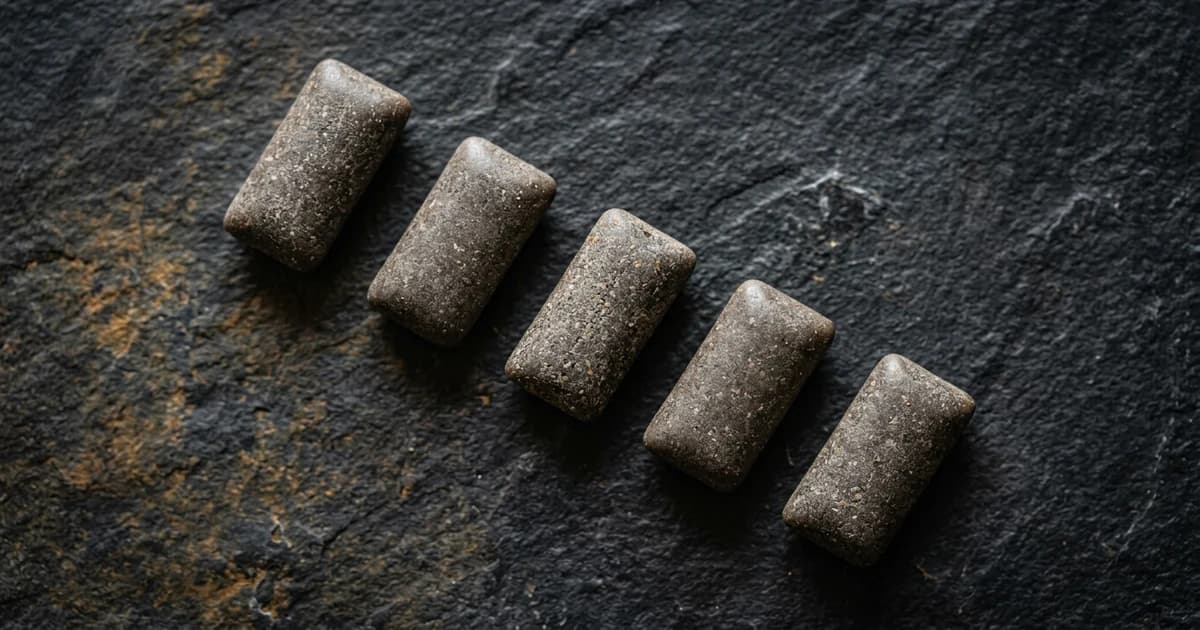
Roon is a zero-nicotine sublingual pouch that delivers caffeine, L-theanine, methylliberine (Dynamine), and theacrine (TeaCrine) through the oral mucosa, so absorption starts faster. Onset is 5 to 10 minutes. The felt duration is 6 to 8 hours, longer than a typical cup of coffee, because methylliberine slows caffeine's clearance. (A randomized, double-blind PK study showed co-administration of methylliberine with caffeine cut oral clearance roughly in half and extended half-life, though that study used higher doses of both compounds than Roon contains, so the effect is directionally the same, not identical.) The trade-off of a longer tail: stop at least 8 hours before bed.
Roon is not a fix for sleep debt. Nothing is, except sleep. It is a faster, more portable way to get caffeine into your system during the window that matters most. Tins start at as little as $0.61 per pouch.
Related from Roon
- Morning Brain Fog: How to Wake Up Mentally Sharp Instead of Groggy
- Not a Morning Person? A Chronotype Reframe
- Coffee and Cortisol: Best Time
- Caffeine Half-Life Factors
Written by Roon Team