Ryze vs Everyday Dose vs MUD WTR: Caffeine, Dose, and Cost
Roon Team
Ryze vs Everyday Dose vs MUD WTR: Caffeine, Dose, and Cost
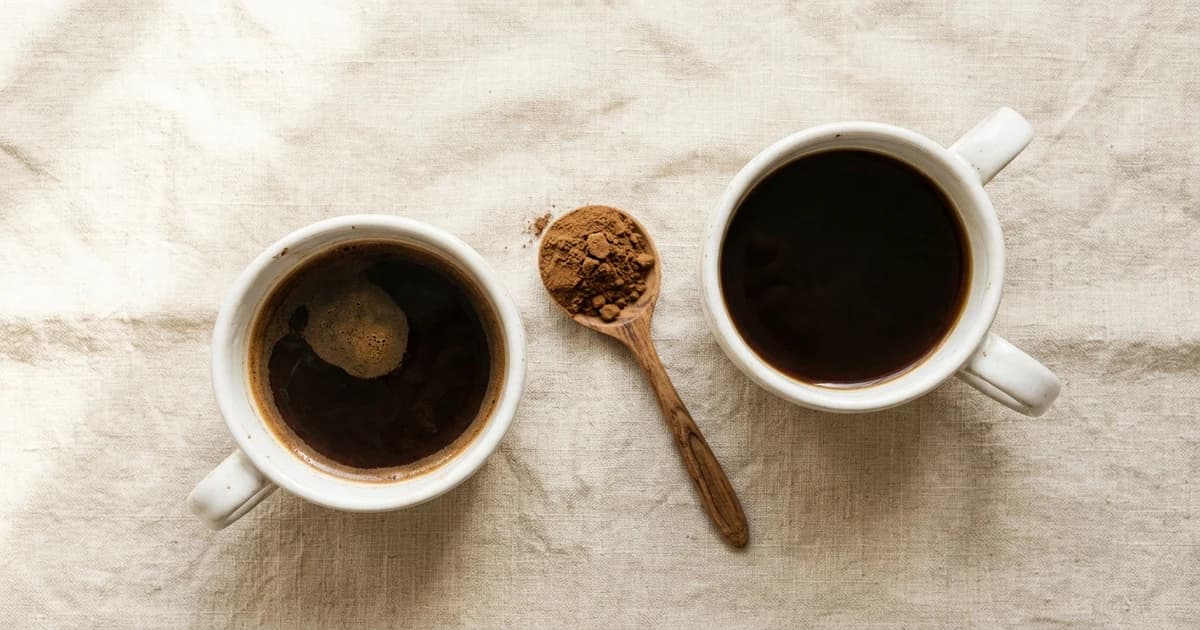
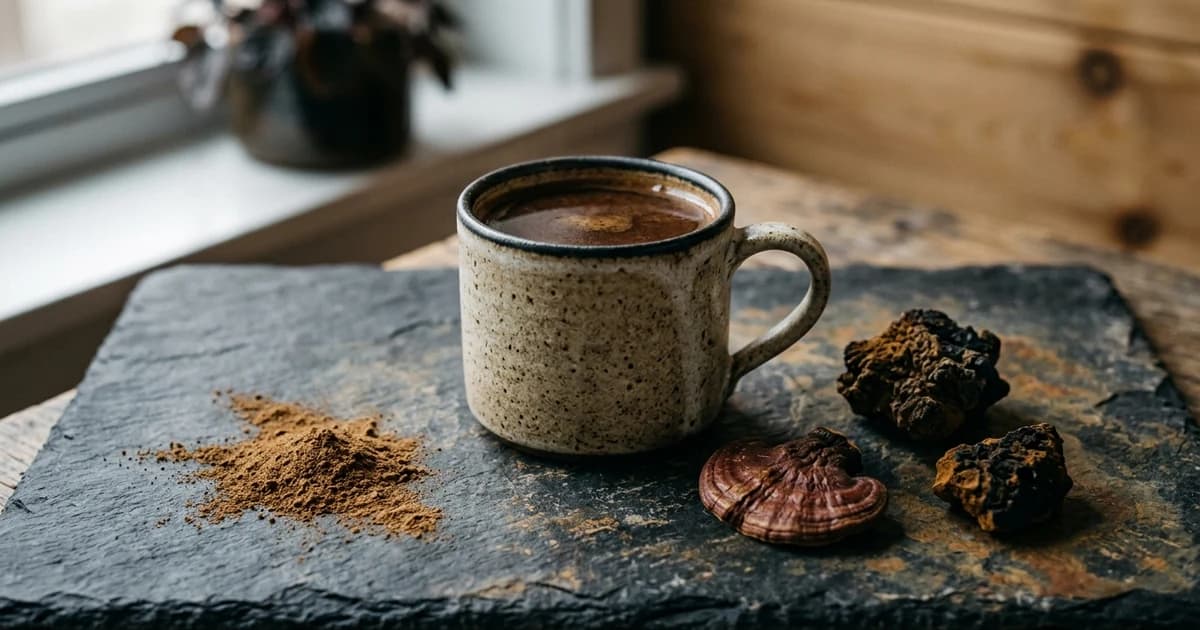
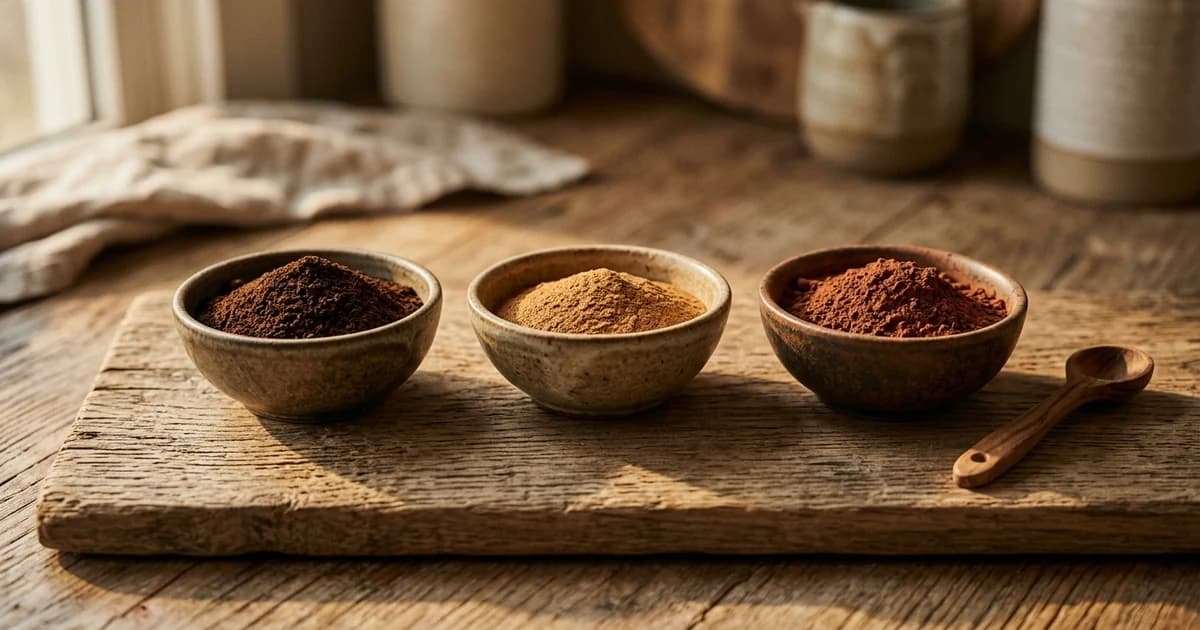
If you are comparing Everyday Dose vs Ryze vs MUD WTR, the honest answer is that these three mushroom coffees are closer than any of their marketing pages admit. Ryze has the most caffeine at about 48 mg per serving (90 mg in the dark roast) and the most mushroom species at six. Everyday Dose carries the fewest mushrooms (two fruiting-body extracts totaling 1,500 mg) but adds 4 g of collagen and 150 mg of L-theanine at 45 mg of caffeine. MUD WTR is not coffee at all: it is a chai-cacao blend built on black tea powder at 35 mg of caffeine, with the largest stated mushroom blend at 2,240 mg. None of the three publishes per-mushroom milligrams.
Both Everyday Dose and Ryze publish their own comparison pages attacking each other. This article skips the marketing and compares what each company actually prints on the label.
Key Takeaways
- Caffeine spread is narrow: 35 mg (MUD WTR), 45 mg (Everyday Dose Mild), 48 mg (Ryze Medium). All three deliver roughly a third to half of a standard 8 oz brewed cup.
- No brand discloses per-mushroom milligrams (Everyday Dose publishes a 1,500 mg combined total but not the Lion's Mane vs Chaga split), so you cannot compare lion's mane dose across them.
- Cost per serving clusters around $1.20 to $1.33 on subscription, with first-order promos dropping Ryze and Everyday Dose below a dollar.
- The non-mushroom extras differ more than the mushrooms do: Ryze adds prebiotic fiber, Everyday Dose adds collagen and L-theanine, MUD WTR adds cacao and seven spices.
Master Comparison Table
| Ryze (Medium) | Everyday Dose (Mild) | MUD WTR (Original) | Roon | |
|---|---|---|---|---|
| Base | Instant coffee | Coffee bean extract | Black tea + cacao | Sublingual pouch |
| Caffeine | ~48 mg | 45 mg | 35 mg | 80 mg |
| Mushroom blend | ~2,000 mg | 1,500 mg | 2,240 mg | None |
| Mushrooms named | 6 (Cordyceps, Reishi, Turkey Tail, King Trumpet, Shiitake, Lion's Mane) | 2 (Chaga, Lion's Mane) | 4 (Chaga, Reishi, Lion's Mane, Cordyceps) | None |
| Per-mushroom dose disclosed | No | No | No | N/A |
| Extras | Prebiotic fiber blend (acacia, inulin, tapioca) | Collagen peptides, L-theanine | Cacao, 7 spices, pink salt | L-theanine, methylliberine, theacrine |
| Servings | 30 | 30 | 30 | 15 |
| List price | $45.00 | $45.00 | $50.00 | $15.00 (4-tin) |
| Subscription | $36.00 | $36.00 | $40.00 | From $9.16/tin |
| Cost per serving | $1.20 (sub) | $1.20 (sub) | $1.33 (sub) | $0.61 to $1.00 |
Sources: Ryze product page, Everyday Dose help center, MUD WTR product page, Roon.
Caffeine per Serving: 48 vs 45 vs 35 mg
A standard 8 oz brewed coffee contains roughly 95 mg of caffeine. All three mushroom coffees sit well below that line. Ryze's medium roast delivers about 48 mg, Everyday Dose Mild Roast lists 45 mg per serving, and MUD WTR Original comes in at 35 mg.
Most comparison pages ignore the full-strength options. Ryze Dark Roast lists 80 to 90 mg of caffeine. Everyday Dose Medium Roast (formerly Bold) lists 90 mg. Those two are functionally equivalent to a standard cup. MUD WTR has no high-caffeine variant; its base is black tea powder, not coffee.
Mushroom Dose and What the Labels Actually Disclose
Ryze lists a 2,000 mg "Super6" proprietary blend containing Cordyceps, Reishi, Turkey Tail, King Trumpet, Shiitake, and Lion's Mane. Six species, zero individual milligrams.
Everyday Dose names two mushrooms: Organic Chaga Fruiting Body Double Extract and Organic Lion's Mane Fruiting Body Extract (Everyday Dose help center). The total mushroom blend is 1,500 mg (Lion's Mane + Chaga combined), but per-mushroom milligrams are not broken out.
MUD WTR states a 2,240 mg mushroom blend across four species: Chaga, Reishi, Lion's Mane, and Cordyceps. No per-mushroom breakdown.
On source material, the labels diverge. Everyday Dose explicitly labels its mushrooms as "Fruiting Body" extracts. MUD WTR's label reads "Mushrooms and Mycelium cultured on Organic Oats and/or Organic Sorghum," a mycelium-on-grain product. Ryze's label does not specify. For why this distinction matters, see Fruiting Body vs Mycelium.
You cannot compare lion's mane dose across these three brands because none publishes individual mushroom milligrams.
The Non-Mushroom Additions
The extras actually separate these products more than the mushrooms do.
Ryze adds an organic prebiotic fiber blend: acacia, inulin, and tapioca fiber (Ryze product page). Common soluble fibers used to support digestion. Grams per serving are not disclosed. For more on what this blend does, see Ryze Mushroom Coffee Side Effects.
Everyday Dose adds hydrolyzed bovine collagen peptides and L-theanine (Suntheanine brand) to its coffee extract base (Everyday Dose ingredients page). The product page lists 4 g of collagen and 150 mg of L-theanine (Suntheanine).
MUD WTR adds organic cacao, a seven-spice blend (cinnamon, turmeric, ginger, cardamom, black pepper, nutmeg, cloves), and Himalayan pink salt (MUD WTR product page). This is what creates MUD WTR's chai-like flavor. The spices are culinary amounts, not standardized supplement doses.
Cost per Serving: Three Ways to Compare
All three brands default to subscription pricing at checkout. Here is what you actually pay.
| List (one-time) | Subscription | First-order promo | |
|---|---|---|---|
| Ryze | $1.50/serving ($45/30) | $1.20/serving ($36/30) | ~$0.90/serving ($27, 40% off first order) |
| Everyday Dose | $1.50/serving ($45/30) | $1.20/serving ($36/30) | ~$0.97/serving ($29 starter kit) |
| MUD WTR | $1.67/serving ($50/30) | $1.33/serving ($40/30) | N/A at time of writing |
Sources: Ryze subscription page, Everyday Dose subscription FAQ, MUD WTR product page.
The promotional prices for Ryze and Everyday Dose apply to first orders only; renewal pricing reverts to the subscription rate. MUD WTR's subscription saves 20% versus one-time. All prices verified September 2026.
Taste and Format
Ryze is instant coffee: hot water, stir, drink. Garage Gym Reviews published a comparison of Ryze and MUD WTR that covers taste and texture in detail.
Everyday Dose uses coffee bean extract instead of instant coffee. The collagen gives it a creamier texture. The brand markets it as ready in 30 seconds with water.
MUD WTR tastes nothing like coffee. It is earthy, slightly chocolate-forward, and spiced. My Subscription Addiction and other reviewers note it benefits from a frother and some kind of milk to cut the chalkiness.
Who Each One Actually Fits
Less caffeine, still coffee: Ryze Medium (48 mg) or Everyday Dose Mild (45 mg). Both mix with water. Everyday Dose adds collagen and L-theanine; Ryze adds fiber and more mushroom species.
Same caffeine as coffee, plus mushrooms: Ryze Dark Roast (~90 mg) or Everyday Dose Medium Roast (90 mg). Same caffeine, different extras.
Leaving coffee entirely: MUD WTR is the only one here with no coffee. Its 35 mg comes from black tea.
Full 80 mg dose, no liquid, every milligram on the label: A different category. See the best mushroom coffee replacement roundup for options that skip the powder format.
What All Three Leave Off the Label
A fair comparison can only rank what is printed. Here is what is missing:
- Ryze: per-mushroom milligrams within the 2,000 mg blend; fiber grams; fruiting body vs mycelium source.
- Everyday Dose: per-mushroom milligrams (Lion's Mane vs Chaga breakdown within the 1,500 mg blend).
- MUD WTR: per-mushroom milligrams within the 2,240 mg blend; beta-glucan content.
These omissions are standard in the supplement industry, but they mean any review claiming one brand has "better mushroom quality" than another is guessing without third-party lab data.
Choosing a Mushroom Coffee on the Numbers
All three mushroom coffees deliver between a third and half the caffeine of a standard brewed cup. All three use proprietary mushroom blends without per-species dosing. The real differences are in what surrounds the mushrooms: fiber vs collagen vs spices, coffee vs tea base, and whether the label says "fruiting body" or "mycelium on grain." Pick by the extras that matter to you, not by the mushroom count, because the dose behind that count is not disclosed by any of the three.
Frequently Asked Questions
Is Everyday Dose better than Ryze?
Neither is objectively better. Everyday Dose uses two fruiting-body mushroom extracts (1,500 mg combined), 4 g of collagen, and 150 mg of L-theanine, but does not break down Lion's Mane vs Chaga individually. Ryze uses six species in a 2,000 mg blend and adds prebiotic fiber, but does not break down per-mushroom doses. Caffeine is nearly identical at 45 vs 48 mg. Choose by which extras matter to you.
Which has more caffeine, Ryze or MUD WTR?
Ryze Medium Roast has about 48 mg per serving; MUD WTR Original has 35 mg. Ryze Dark Roast jumps to 80 to 90 mg. MUD WTR has no higher-caffeine option. Both are still below a standard 95 mg brewed cup.
Is MUD WTR coffee?
No. MUD WTR contains no coffee beans. Its caffeine comes from organic black tea powder, and the rest of the flavor comes from cacao and a seven-spice blend. It is closer to a chai latte than a cup of coffee.
Which mushroom coffee is cheapest per serving?
On subscription, Ryze and Everyday Dose tie at $1.20 per serving. MUD WTR comes in at $1.33. With first-order promotions, Ryze drops to about $0.90 and Everyday Dose to about $0.97. Promotions apply to first orders only; renewals revert to subscription pricing.
Do Ryze, Everyday Dose, and MUD WTR use fruiting body or mycelium?
Everyday Dose explicitly labels its Lion's Mane and Chaga as fruiting-body extracts. MUD WTR's label states "Mushrooms and Mycelium cultured on Organic Oats and/or Organic Sorghum." Ryze's label does not specify. For a deeper look at what this distinction means, see Fruiting Body vs Mycelium.
Does Everyday Dose have more mushrooms than Ryze?
No. Everyday Dose names two species (Lion's Mane and Chaga) with a published 1,500 mg combined total. Ryze names six species in a 2,000 mg blend. By count and stated weight, Ryze has more. But without per-mushroom milligrams from either brand, "more" describes variety, not potency.
The Fourth Row: Every Milligram on the Label
The table above makes two things clear about mushroom coffees. First, the caffeine in all three sits between 35 and 48 mg, a third to half of a brewed cup. Second, every one of them hides the amounts that would let you evaluate the formula: per-mushroom doses, fiber grams, and other individual ingredient weights.
Roon is a different kind of product. It is a zero-nicotine sublingual pouch, not a mushroom coffee. It contains no mushrooms, no fiber blend, and no liquid. What it does contain is printed in full: 80 mg caffeine, 60 mg L-theanine, 25 mg methylliberine (Dynamine), and 5 mg theacrine (TeaCrine).
The 80 mg of caffeine is a small-coffee dose, but the felt window runs 6 to 8 hours instead of coffee's typical 3 to 4. The mechanism: methylliberine slows caffeine's clearance. In a randomized, double-blind, crossover PK study (n=12), co-administration of methylliberine with caffeine cut oral clearance from 41.9 to 17.1 L/hr and extended caffeine's half-life from 7.2 to 15 hours, with no increase in peak concentration. That interaction arm used 100 mg methylliberine + 150 mg caffeine, roughly 4x the methylliberine and 1.9x the caffeine in a Roon pouch. The direction of the effect is the same at Roon's dose, but the magnitude has not been tested at 25 mg. And a longer half-life means you should stop at least 8 hours before bed.
On cost: Roon starts at $0.61 per pouch on the 12-tin subscription, or $1.00 per pouch on the one-time 4-tin purchase, against $1.20 to $1.67 per serving for the three powders. No water, no frother, no mug. If you want full-label transparency and a longer caffeine window without liquid prep, try Roon.
Related from Roon
- Does Ryze Coffee Have Caffeine or Is It Stimulant-Free?
- Ryze Mushroom Coffee Side Effects
- MUD WTR vs Magic Mind vs Matcha
- Fruiting Body vs Mycelium: What the Label Tells You
Written by Roon Team