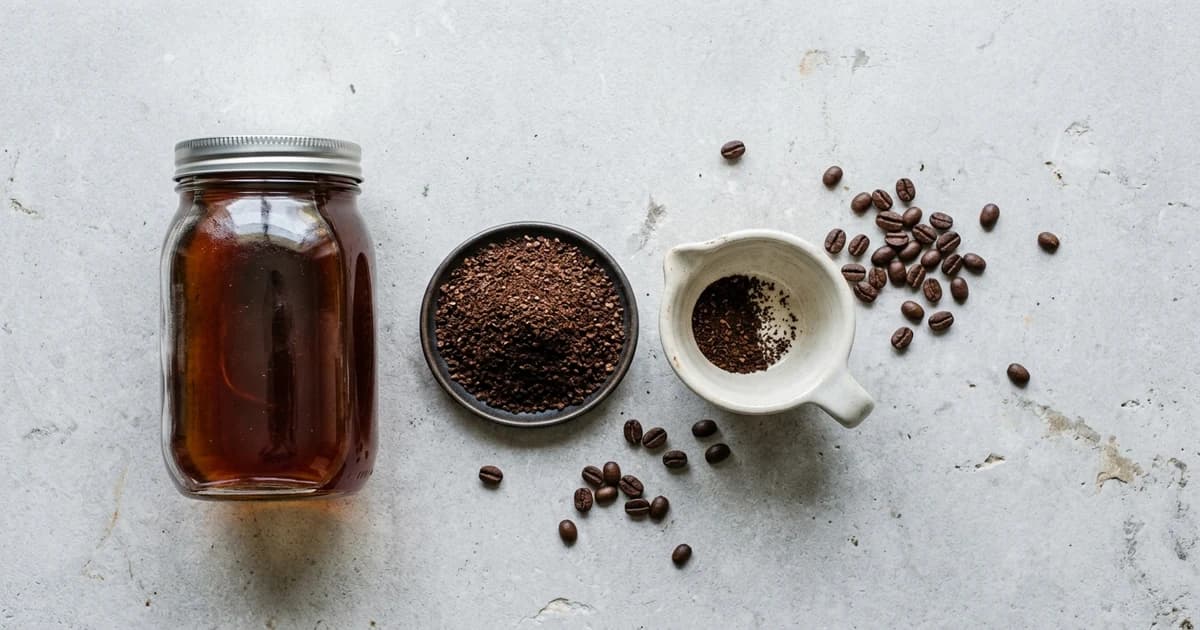
Mushroom Coffee: Does It Actually Deliver a Cognitive Dose?
Roon Team

Mushroom Coffee: Does It Actually Deliver a Cognitive Dose?
The pitch is clean: swap your regular cup for a blend spiked with lion's mane and chaga, and your brain runs sharper without the crash. The marketing leans hard on the mushrooms. But the mushroom coffee science tells a quieter, more honest story, and most of it comes down to one number on the label that almost nobody checks.
That number is the dose. Specifically, how many milligrams of actual mushroom extract land in your cup versus how many the research used to move the needle. The gap is wide enough to drive a truck through.
Here's what the data actually says, and why the lift you feel from your morning mug probably isn't coming from the fungus.
Key Takeaways
- Clinical lion's mane trials used 1,000 to 3,000 mg per day. Most mushroom coffees deliver around 250 mg per serving, roughly a tenth of the studied dose.
- The cognitive effects in trials built over 8 to 16 weeks, not in a single morning. There is no evidence of an acute "focus hit" from lion's mane.
- The lift you feel is almost certainly the caffeine, which mushroom coffee actually contains less of than a standard cup.
- The strongest acute focus evidence points to caffeine paired with L-theanine, not mushrooms.
What Mushroom Coffee Actually Is
Mushroom coffee is ground coffee blended with powdered medicinal mushroom extract, usually lion's mane (Hericium erinaceus) plus chaga, cordyceps, or reishi. The mushrooms add an earthy note and a wellness halo. The coffee does the heavy lifting on alertness.
The mushroom powders contain no caffeine. Because the blend cuts coffee with mushroom filler, Healthline notes the caffeine content drops compared with regular coffee. According to NBC News, experts put mushroom coffee at roughly 50 to 60 mg of caffeine per cup, against about 96 to 150 mg in a standard brew.
So you are paying a premium for a cup that, by design, gives you less of the one ingredient with proven acute effects.
The Mushroom Coffee Science: Dose Is the Whole Game
The core problem with mushroom coffee is the dose, not the mushroom. Lion's mane has real, if modest, human evidence behind it. The catch is that the evidence used 4 to 12 times more extract than your cup contains.
The most cited human trial is Mori and colleagues (2009). As the Alzheimer's Drug Discovery Foundation summarizes, clinical trials have tested up to 3 grams of lion's mane per day, though no standard dose has been established for any use. In the Mori trial, 30 older adults with mild cognitive impairment took 3,000 mg daily, split across three doses, and showed improved cognitive scores at weeks 8, 12, and 16, with scores dropping back four weeks after they stopped.
Now compare that to a real product. Four Sigmatic, one of the category leaders, lists 250 mg of lion's mane per serving on its instant coffee. That is about 8% of the dose used in the trial that everyone cites to sell the stuff.
So when people ask does mushroom coffee work, the honest answer is: not at the dose most cups deliver, and not on the timeline you want.
Mushroom coffee dosage vs. the clinical dose
The table below lines up the typical serving against the research. The mismatch is the entire point.
| Source | Lion's mane per serving | Caffeine | Timeline to effect |
|---|---|---|---|
| Typical mushroom coffee (e.g. Four Sigmatic) | ~250 mg | ~50 to 60 mg | None demonstrated acutely |
| Mori 2009 clinical protocol | 3,000 mg/day (3 doses) | n/a | 8 to 16 weeks |
| General cognitive support range | 1,000 to 3,000 mg/day | n/a | Weeks of daily use |
| Standard brewed coffee | 0 mg | ~96 to 150 mg | 5 to 45 min (caffeine) |
To match the lion's mane coffee dose used in research, you would need to drink roughly 12 cups of a 250 mg blend every day, for two months, before judging the cognitive effect. Nobody does that.
The Timing Problem Nobody Mentions
Even if you hit the clinical dose, lion's mane does not work like caffeine. There is no credible evidence that lion's mane produces an acute focus boost within minutes or hours. Its effects, where they exist, build slowly with consistent daily use.
That matters because mushroom coffee is sold for the morning hit. You feel something within 20 minutes. That something is caffeine binding adenosine receptors, full stop.
The newer human data on acute effects is underwhelming. A 2025 study reported by NutraIngredients found a standardized lion's mane extract improved motor dexterity but had no marked effect on cognitive performance or mood in healthy adults. And a 2024 trial summarized by Examine found that neither short-term nor longer-term lion's mane supplementation improved cognition or reduced stress in young adults versus placebo.
That is the state of the mushroom coffee benefits evidence for healthy people: thin, mixed, and mostly built on doses far above what a cup delivers.
So Is Mushroom Coffee Effective at All?
It depends on what you want from it. As a lower-caffeine coffee with a pleasant earthy taste, it works fine. As a long-term lion's mane supplement, it underdoses you by an order of magnitude.
If your goal is a calmer caffeine experience, the better-supported route is pairing caffeine with L-theanine, the amino acid in tea. Research covered by PsyPost found that L-theanine combined with caffeine enhanced attention, and Simply Psychology notes the roughly 1:2 caffeine-to-theanine pairing improves accuracy on attention tasks while reducing self-rated jitteriness versus caffeine alone.
That combination has more, cleaner human data behind acute focus than lion's mane does. And you can dose it precisely, which is the one thing a coffee blend can't promise.
If you want the deeper mechanics, our breakdown of how caffeine and L-theanine work together for focus covers the ratio and the timing. For the broader category, see our guide to what actually drives clean, sustained focus.
The Honest Verdict on Your Morning Cup
Mushroom coffee is decent coffee with a wellness story stapled to the side. The acute effect you feel is caffeine, the same molecule in any cup, only there's less of it. The lion's mane is real, but the dose is too low and the timeline too slow to do anything you'd notice over breakfast.
If you genuinely want lion's mane's potential cognitive support, take a standalone extract at a research-backed dose and give it weeks. If you want focus this morning, drink coffee and stop paying extra for filler.
Either way, the lesson is the same. Read the milligrams, not the marketing.
Frequently Asked Questions
Does mushroom coffee actually improve focus?
Any immediate focus you feel from mushroom coffee comes from caffeine, not the mushrooms. The lion's mane dose in a typical cup, around 250 mg, sits far below the 1,000 to 3,000 mg used in clinical trials, and those trials showed effects only after 8 to 16 weeks of daily use. There is no good evidence of an acute cognitive lift from the mushroom component itself.
How much lion's mane is in mushroom coffee?
Most blends contain roughly 250 mg of lion's mane per serving. Clinical trials that found cognitive benefits used 1,000 to 3,000 mg per day, often split into multiple doses. To match the studied amount, you would need to drink around a dozen cups daily, which makes the cup an impractical delivery method for a meaningful dose.
Is mushroom coffee healthier than regular coffee?
It is not clearly healthier, just lower in caffeine. Mushroom coffee typically delivers about 50 to 60 mg of caffeine per cup versus 96 to 150 mg in regular coffee, which can suit caffeine-sensitive drinkers. The added mushroom extracts are generally safe but underdosed for the cognitive benefits the marketing implies.
What does the science say about lion's mane and memory?
The strongest study, Mori 2009, found cognitive improvement in older adults with mild cognitive impairment taking 3,000 mg daily, with gains fading a month after stopping. More recent trials in healthy young adults found little to no cognitive benefit. The evidence is promising for some groups but far from settled, and it depends on a high, consistent daily dose.
Why does mushroom coffee have less caffeine?
Because the blend replaces some ground coffee with caffeine-free mushroom powder. That dilution is why a cup lands closer to 50 to 60 mg of caffeine. For some people that is a feature. For anyone chasing alertness, it means a weaker stimulant dose than a standard brew.
What works better than mushroom coffee for focus?
For acute focus, caffeine paired with L-theanine has stronger and cleaner human evidence than lion's mane. The combination, at roughly a 1:2 caffeine-to-theanine ratio, improves attention accuracy while reducing jitteriness. Unlike a mushroom coffee blend, that pairing can be dosed precisely so you know exactly what you are getting.
When the Lift Is Really the Caffeine, Dose It on Purpose
This whole article comes down to one uncomfortable fact: the morning sharpness you credit to mushrooms is almost always the caffeine, hidden inside a cup that doesn't tell you how much it contains. If caffeine is doing the work, the smart move is to dose it precisely instead of guessing.
That is the gap Roon is built to close. It is a zero-nicotine sublingual pouch with a four-ingredient formula: 80 mg caffeine, 60 mg L-theanine, 25 mg methylliberine (Dynamine), and 5 mg theacrine (TeaCrine). The caffeine and L-theanine pairing is the same combination with real acute-focus evidence behind it, delivered at a known dose with a 5 to 10 minute onset and a 6 to 8 hour window without the jitters or crash.
Roon is not a lion's mane supplement, and it won't replace weeks of consistent extract use if long-term cognitive support is your goal. What it does is give you a clean, measured focus tool when you actually need to perform. Try Roon when you want the lift without the guesswork.
Related from Roon
- Ryze Mushroom Coffee Side Effects: What the Label Predicts
- Ryze vs Everyday Dose vs MUD WTR: Caffeine, Dose, and Cost
Written by Roon Team