Period Cravings: Why You Want Chocolate and Carbs Before Your Period
Period Cravings: Why You Want Chocolate and Carbs Before Your Period
Yes, period cravings are real, and they follow a predictable biological pattern. They typically begin during the luteal phase, the roughly 12 to 16 days between ovulation and the start of your next period. A 2024 systematic review and meta-analysis in Nutrition Reviews (Tucker et al., 330 women) found that energy intake averaged 168 kcal/day higher in the luteal phase than the follicular phase (SMD 0.69, P = .039). That is not a willpower problem. It is a measurable shift in how your body processes food and regulates hunger signals.
The question worth asking is not whether the cravings are real, but why your body steers you toward chocolate, bread, and sugar specifically.
Key Takeaways
- Period cravings are driven by hormonal changes in progesterone, insulin signaling, and serotonin precursor availability during the luteal phase.
- The luteal phase also raises your resting metabolic rate by an estimated 30 to 120 kcal/day, creating a genuine (small) increase in energy demand.
- Chocolate cravings have a serotonin and cultural component; the popular "magnesium deficiency" explanation is debated and likely incomplete.
- If cravings feel uncontrollable or are followed by guilt, distress, or binge episodes, that is worth discussing with a clinician.
When Do Period Cravings Start?
Cravings typically ramp up in the mid-to-late luteal phase, roughly 5 to 10 days before your period begins. The luteal phase runs from ovulation until the first day of menstruation, a window of about 12 to 16 days. Some women notice them right after ovulation; others only in the final three or four days.
The trigger is progesterone. It peaks roughly a week after ovulation, then drops sharply if pregnancy does not occur. That decline, alongside falling estrogen, is the metabolic and neurochemical starting gun for PMS symptoms, cravings included.
What Is Actually Driving It: Progesterone, Serotonin, and Insulin
Three overlapping mechanisms explain why the luteal phase makes you hungrier and more specific about what you want to eat.
1. Your metabolic rate actually increases
A 2026 systematic review in Frontiers in Physiology found that five of six studies comparing follicular and luteal phases reported a metabolic increase of roughly 30 to 120 kcal/day (about 3 to 5%) during the luteal phase. The effect is subtle but real: your body is burning slightly more energy preparing the uterine lining, and it wants that energy replaced.
2. Insulin signaling shifts
A 2018 study by Krishnan et al. (UC Davis / USDA Western Human Nutrition Research Center, 17 premenopausal women) found postprandial insulin was higher 2 hours after a meal in the follicular phase than in the luteal phase (p < .001). Progesterone was positively associated with carbohydrate craving. During the luteal phase, your altered insulin response may change how efficiently tryptophan, the amino acid precursor to serotonin, crosses the blood-brain barrier.
3. Serotonin drops, and carbs are a fast fix
Estrogen supports serotonin synthesis. When estrogen falls in the late luteal phase, serotonin levels can drop with it. Carbohydrate-rich foods trigger insulin release, which in turn helps shuttle tryptophan into the brain, temporarily boosting serotonin. This mechanism was described by Rapkin (2002) and others studying serotonin's role in PMS. Your body is not craving sugar because it is weak. It is craving sugar because sugar is the fastest available route to a neurotransmitter it is running low on.
| Mechanism | What happens in the luteal phase | Result |
|---|---|---|
| Resting metabolic rate | Rises ~30 to 120 kcal/day | Genuine increase in energy demand |
| Progesterone | Peaks then drops sharply | Associated with carbohydrate craving (Krishnan et al., 2018) |
| Postprandial insulin | Lower 2-hour insulin vs. follicular phase | Altered tryptophan transport to the brain |
| Estrogen/serotonin | Both decline before menstruation | Drives preference for carb-heavy, sweet foods |
| Caloric intake | Averages +168 kcal/day vs. follicular phase | Measurable increase across 330 women (Tucker et al., 2024) |
The Most Common Period Cravings (and Why Chocolate Wins)
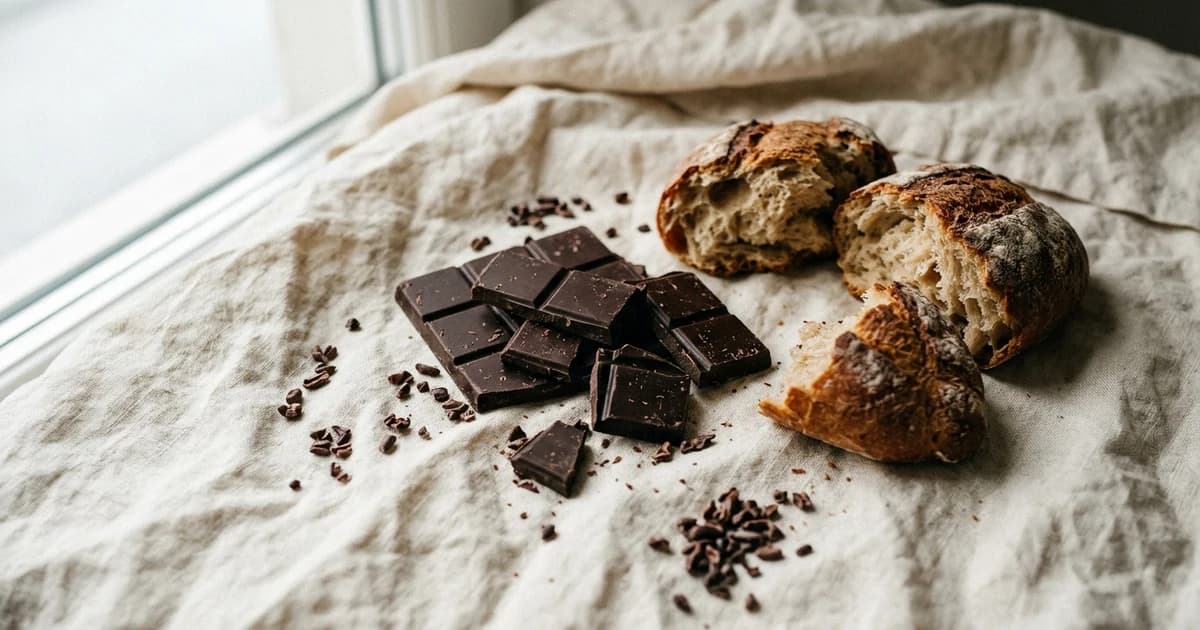
The most commonly reported premenstrual food craving is chocolate, followed by other refined carbohydrates and salty snacks. The serotonin story above partly explains the pull toward sweets. But chocolate specifically? Two theories compete.
The magnesium hypothesis. Dark chocolate is one of the richest dietary sources of magnesium, and some researchers have suggested that perimenstrual magnesium dips drive the craving. The problem: if your body purely needed magnesium, you would crave spinach or pumpkin seeds with equal intensity. You do not.
The cultural hypothesis. A 2004 study by Zellner et al. found that 40% of American women spontaneously reported perimenstrual chocolate cravings, compared with just 4% of Spanish women. The fixation on chocolate appears partly learned. Chocolate sits at a convenient intersection: high in sugar, fat, and flavor compounds that activate the reward system simultaneously.
The honest answer is probably both. Some magnesium involvement, a strong serotonin/reward component, and a cultural script that says "period = chocolate." The mechanism is layered, not simple, but the craving is no less real for it.
Does Caffeine Make Period Cravings Worse?
Caffeine's relationship with period cravings is more nuanced than most wellness advice suggests.
One real change: caffeine clearance slows during the luteal phase. A 1992 study by Lane et al. in European Journal of Clinical Pharmacology (10 healthy women) found systemic caffeine clearance was slower in the luteal phase, though the half-life itself did not differ. The slowing effect was tied to progesterone levels and proximity to menstruation. The clinical significance for most women is likely small. (For more on what changes caffeine processing speed, see what changes caffeine half-life and are you a slow metabolizer.)
But does caffeine itself worsen PMS? The largest study on the question says no. Purdue-Smithe et al. (2016) analyzed the Nurses' Health Study II (1,234 PMS cases, 2,426 controls, 14 years of follow-up). Total caffeine intake was not associated with PMS risk (OR 0.79, 95% CI 0.61 to 1.04, highest vs. lowest quintile). Cutting caffeine is common PMS advice, but the evidence does not support it as a craving-reduction strategy.
What caffeine can do is reinforce a sugar habit. If your go-to source is a sweetened latte or an energy drink with 40 grams of sugar, the caffeine-plus-sugar pairing becomes a conditioned craving loop. That is behavioral, not pharmacological.
What Actually Helps Take the Edge Off
No single food or supplement eliminates luteal phase cravings, because the underlying hormonal shifts are a normal part of cycling. But a few evidence-informed strategies can reduce the intensity.
- Pair carbs with protein and fiber. This slows glucose absorption and produces a steadier tryptophan-to-serotonin conversion. Whole-grain toast with peanut butter does what a handful of candy tries to do, just more slowly and for longer.
- Keep meal timing consistent. Skipping meals in the luteal phase amplifies cravings by the afternoon. Regular meals prevent the blood sugar dips that make your brain reach for the fastest available sugar.
- Prioritize sleep. Sleep deprivation increases ghrelin (the hunger hormone) and reduces leptin (the satiety hormone). In a cycle phase where appetite is already elevated, short sleep stacks on top of that baseline shift.
- Do not moralize the craving. Your metabolism is running higher and your serotonin signaling is lower. Eating 168 extra calories a day during the luteal phase is close to what your body is actually asking for.
When Cravings Are a Bigger Signal
Normal luteal phase cravings are annoying but manageable. They come, you eat a bit more, they pass. If they do not pass, or if the eating feels out of control, that can indicate something beyond typical PMS.
Premenstrual Dysphoric Disorder (PMDD) affects an estimated 3 to 8% of premenopausal women (Yonkers et al., 2008, The Lancet) and involves severe mood, anxiety, and behavioral symptoms that track the luteal phase. Intense food cravings and binge episodes can be part of that picture. Case reports and clinical observations have described co-occurring PMDD and disordered eating, potentially connected by shared neuroendocrine pathways, particularly serotonin dysregulation (Barron & Khawaja, 2018).
If your premenstrual cravings are followed by binge eating, purging, severe guilt, or significant distress, talk to your clinician. These are not symptoms to self-diagnose or self-treat.
Conclusion: The Biology Is the Explanation, Not the Excuse
Period cravings are a predictable consequence of the hormonal and metabolic shifts that define the luteal phase. Progesterone rises and falls. Insulin signaling changes. Serotonin dips. Your metabolic rate ticks up. The result is a real, measurable increase in hunger, and a specific pull toward carbohydrate-rich and sweet foods. None of this is imaginary, and none of it is a character flaw.
The practical response is straightforward: eat enough, include protein and fiber, sleep well, and save the guilt for something that actually deserves it.
Frequently Asked Questions
Are period cravings real?
Yes. A 2024 meta-analysis (Tucker et al., 330 women) found that energy intake averaged 168 kcal/day higher in the luteal phase than the follicular phase. The increase is driven by hormonal changes in progesterone, insulin, and serotonin signaling, not imagination or lack of discipline.
When do period cravings start?
Most women notice cravings in the mid-to-late luteal phase, roughly 5 to 10 days before their period. The luteal phase itself spans about 12 to 16 days from ovulation to menstruation, per NICHD. Individual variation is wide.
Why do you crave sugar before your period?
Estrogen supports serotonin production. When estrogen drops in the late luteal phase, serotonin falls with it. Carbohydrate-rich foods trigger insulin release, which helps move tryptophan into the brain to rebuild serotonin. Sugar is the fastest biochemical route to a neurotransmitter your body is running low on.
Why do I crave chocolate specifically?
Chocolate combines sugar, fat, and reward-stimulating flavor compounds in a single food. The popular magnesium-deficiency theory is plausible but incomplete: a cross-cultural study found that perimenstrual chocolate cravings were far more common among American women (40%) than Spanish women (4%), suggesting a strong learned and cultural component alongside the biology.
Does caffeine make PMS cravings worse?
The largest study on the question, the Nurses' Health Study II analysis (1,234 PMS cases, 2,426 controls, 14 years), found no association between caffeine intake and PMS risk. Caffeine clearance does slow slightly in the luteal phase, but the effect is small for most women.
Do period cravings mean something is wrong?
Not usually. They are a normal part of the hormonal cycle for most women. If cravings are accompanied by binge eating, severe distress, or symptoms consistent with PMDD, that warrants a conversation with a clinician.
How many extra calories does the luteal phase actually burn?
Estimates vary, but a 2026 systematic review found that five of six studies reported a resting metabolic rate increase of 30 to 120 kcal/day (roughly 3 to 5%) during the luteal phase. It is a real increase, but a modest one.
Can you stop period cravings entirely?
Probably not, and you do not need to. The hormonal fluctuations that drive them are a normal feature of menstrual cycling. The realistic goal is reducing their intensity through consistent meals, protein and fiber, and good sleep.
A Cleaner Caffeine Source for Your Luteal Phase
If you rely on caffeine during the second half of your cycle, the delivery format matters. Sweetened coffee drinks and sugar-loaded energy drinks pair caffeine with exactly the fast carbs your luteal brain is already over-requesting, reinforcing the habit loop this article describes.
Roon is a zero-nicotine, zero-sugar oral pouch that delivers 80 mg of caffeine alongside 60 mg L-theanine, 25 mg methylliberine (Dynamine), and 5 mg theacrine (TeaCrine). It is not a craving suppressant, an appetite-control product, or a PMS remedy. It is a caffeine source that skips the sugar. One pouch provides a 6 to 8 hour felt window of focus with zero sugar and zero calories.
Worth noting: caffeine clearance runs slightly slower in the luteal phase, so you may feel the same dose more than usual. If you are sensitive, adjust your timing and stop at least 8 hours before bed. For more on how cycle phase affects caffeine processing, see period brain fog explained and PMS anxiety supplement science.
Related from Roon
- https://www.takeroon.com/blog/brain-fog-period-hormones-cycle
- https://www.takeroon.com/blog/pms-anxiety-supplements-science-based-guide
- https://www.takeroon.com/blog/caffeine-half-life-factors
- https://www.takeroon.com/blog/slow-caffeine-metabolizer-cyp1a2-gene
Written by Roon Team