Parkinson's Law: When Tight Deadlines Help, When They Hurt

Parkinson's Law: When Tight Deadlines Help, When They Hurt
Parkinson's law says work expands to fill the time available for its completion. C. Northcote Parkinson wrote it in The Economist in November 1955, as satire about government offices. Experiments since then back the basic idea: give people extra time and they use it, often without producing better work. The catch is that deadlines that are too tight backfire too, especially for creative thinking.
The name has nothing to do with Parkinson's disease. It comes from a historian who studied bureaucracies, not a neurologist.
Key Takeaways
- Parkinson's original point was about bureaucratic growth, not personal productivity. He backed it with Admiralty staffing tables showing a 78% rise in officials while the fleet shrank by two-thirds.
- Lab and field studies from 1966 to 1999 support the excess-time effect: people given more time than they need slow down, set easier goals, and dawdle.
- The best-known deadlines study (Ariely and Wertenbroch 2002) was retracted in September 2026 after a failed replication and evidence of data tampering.
- Time pressure follows an inverted U. Moderate pressure helps on routine work; heavy or sustained pressure reduces creative output, sometimes for days afterward.
What Parkinson Actually Wrote in 1955
Parkinson opened with what he called "a commonplace observation," not a discovery. The essay appeared in The Economist on November 19, 1955 (Wikipedia), and his famous first line read: "Work expands so as to fill the time available for its completion."
His example was an elderly lady who spends an entire day sending a postcard to her niece at Bognor Regis. She finds the card, looks for her glasses, writes the address, and deliberates over whether to take an umbrella to the mailbox. A task, Parkinson wrote, that "would occupy a busy man for three minutes."
But the postcard was just the hook. The real target was the British Admiralty, and Parkinson brought numbers.
| Admiralty Metric (1914 vs. 1928) | 1914 | 1928 | Change |
|---|---|---|---|
| Capital ships in commission | 62 | 20 | -67.74% |
| Officers and men | 146,000 | 100,000 | -31.50% |
| Dockyard workers | 57,000 | 62,439 | +9.54% |
| Dockyard officials and clerks | 3,249 | 4,558 | +40.28% |
| Admiralty officials | 2,000 | 3,569 | +78.45% |
The fleet shrank. The bureaucracy grew. Parkinson attributed this to two forces: "An official wants to multiply subordinates, not rivals" and "Officials make work for each other." He claimed civil service staff grow 5.17 to 6.56 percent a year "irrespective of any variation in the amount of work (if any) to be done," citing the Colonial Office's average of 5.89% annual growth.
It was satire, deliberately sharp. But the observation underneath it, that available time shapes how much time gets used, turned out to be testable.
Parkinson's Law Examples from Everyday Work
You do not need a government bureau to see the effect. It shows up wherever a time container is larger than the task inside it.
| Situation | What Expands | What the Law Predicts | Fix |
|---|---|---|---|
| Report due Friday vs. due in a month | Research, editing, formatting | The month-long version takes a month | Set an internal deadline at the honest estimate |
| 60-minute meeting for a 20-minute agenda | Discussion, tangents, restating | The meeting fills the hour | Default to 25 or 30 minutes; end when the agenda ends |
| Open-ended "research" task | Scope, rabbit holes, reading lists | Research never finishes on its own | Define the deliverable and timebox the session |
| Budget that is always fully spent | Line items, end-of-year purchases | Departments spend to their ceiling | This is the budget version of Parkinson's law, an application, not a studied finding |
| Email triage with no end time | Checking, re-reading, composing replies | Email fills any open slot | Cap it: 20 minutes, then start the real work |
Does Parkinson's Law Hold Up? What Experiments Found
The satirical essay came first. Lab tests came later. Here is what they found, in order.
Aronson and Gerard, 1966. Published in the Journal of Personality and Social Psychology (DOI 10.1037/h0023000), this was the first experimental test of what they called the "excess time effect." Participants given extra time on a task spent more time on a later version of the same task. The surplus carried over.
Bryan and Locke, 1967. In Organizational Behavior and Human Performance (DOI 10.1016/0030-5073(67)90021-9), they framed the effect as a goal-setting phenomenon: generous time limits go with easier self-set goals and a slower work pace. People adjust their effort to match the container, not the task.
Latham and Locke, 1975. A field study in the Journal of Applied Psychology titled "A field replication of Parkinson's law." When mill buying limits cut the number of days logging crews could deliver, daily output rose. Less time, same work, higher daily productivity.
Brannon, Hershberger, and Brock, 1999. Published in Psychonomic Bulletin & Review, this study had undergraduates judging sets of photos. Those told the next set was cancelled dawdled on the current one. The effect reproduced in two exact replications and a conceptual replication. The authors called it the first artifact-free demonstration of Parkinson's law at the individual level.
The retracted study: Ariely and Wertenbroch, 2002. This was the big one. Published in Psychological Science, it reported that evenly spaced external deadlines beat self-imposed ones for both professionals (Study 1, n=99) and students (Study 2, n=60). It became the go-to citation for "impose deadlines on yourself."
It was retracted on September 2, 2026. A replication by Kyle Hyndman and Alberto Bisin, published July 15, 2026 in the same journal, found that deadline changes had negligible effects. Then Data Colada concluded that the data for Study 2 were "severely tampered with or fabricated." Coauthor Klaus Wertenbroch requested the retraction on July 23, 2026.
What this means for the broader question: the case for the excess-time effect rests on the older work above, not on that paper. The 1966-and-later studies still stand. But the most popular deadline-imposing argument just lost its best-known citation.
When Tight Deadlines Backfire
Remove the slack and you get more done per hour. That much holds. But tighten past a certain point and performance degrades, especially creative performance.
Amabile, Hadley, and Kramer (2002). In "Creativity Under the Gun" (Harvard Business Review), they analyzed more than 9,000 daily diary entries from 177 employees at seven U.S. companies. High time pressure usually went with less creative thinking, and the effect lingered about two days afterward: a "time-pressure hangover." The exceptions were days that felt like being "on a mission," with one focused problem and protected time, rather than "on a treadmill," with constant context switching and fragmented attention.
Baer and Oldham (2006). In a study of 170 employees and 10 supervisors at a manufacturing firm (Journal of Applied Psychology), they found an inverted-U relationship between creative time pressure and creativity. But only for employees high in openness to experience who also had support for creativity. Do not generalize this curve to everyone or every task.
That inverted U mirrors the broader pattern in arousal and attention: moderate activation helps, extremes hurt.
The planning fallacy. Buehler, Griffin, and Ross (1994) asked 37 psychology honors students to predict how long their thesis would take. The average prediction was 33.9 days. Actual completion: 55.5 days. About 30% finished by their own predicted date. If your honest estimate is already optimistic, cutting it further does not create productive pressure. It sets up a miss.
| Tighter Deadline Tends to Help | Tighter Deadline Tends to Hurt |
|---|---|
| Routine tasks with a known shape | Novel or creative problem solving |
| Tasks that sprawl (editing, email, meetings) | Work that depends on others' schedules |
| When the deliverable is clearly defined | Fragmented days with constant switching |
| One problem, protected time ("mission" days) | Estimates that are already short |
| Sustained pressure stacked day after day |
How to Set a Deadline That Uses Parkinson's Law
The goal is to remove slack without creating a squeeze. Six steps:
-
Define the deliverable first. "Research the market" is not a deliverable. "Write a 500-word competitor summary" is. Parkinson's law exploits vague scope more than vague time.
-
Estimate, then check against your own history. The planning fallacy means your gut estimate is probably short. Look at how long similar tasks actually took, not how long you hope this one will take.
-
Set the deadline at the honest estimate, not below it. The gain comes from removing excess time, not from squeezing below what the task actually needs.
-
Cut the slot, not the standard. Default meetings to 25 minutes instead of 60. Timebox your research window. Cap email at two fixed blocks per day. Place short, hard sprints in your sharpest hours. The task quality stays the same; the container shrinks.
-
For creative work, protect a focused window instead of shortening the deadline. Amabile's "mission" days produced creative output under pressure because the person had one problem and no interruptions. The pressure helped because the focus was already there. Deep work needs room, not just speed.
-
Avoid stacking tight deadlines day after day. The two-day hangover effect is real. If every day is a sprint, the quality of each sprint drops.
Parkinson's Other Laws
Parkinson's writing produced a few corollaries worth knowing.
The law of triviality, also called bike-shedding: a committee will spend time on an agenda item in inverse proportion to the money involved. An expensive reactor gets a rubber stamp; the cheap bike shed gets a long debate, because everyone understands a bike shed.
The staff-growth law was the essay's main quantitative claim: civil service staff grow between 5.17 and 6.56 percent a year regardless of workload. Klimek, Hanel, and Thurner (2009) built a mathematical model around Parkinson's committee-size observation and found that decision-making bodies get inefficient above roughly 20 members. That is a modeled result, not an observed study, but it gave the satire some formal footing.
Remove the Slack, Keep the Slope
Parkinson's law is real enough in the lab and the field: people use the time they are given, and surplus time does not improve output on routine work. The practical answer is not "make every deadline brutal." It is to match the container to an honest estimate of the task, protect focused windows for creative work, and avoid the trap of treating sustained time pressure as a productivity strategy. Moderate pressure on a clear deliverable helps. Chronic pressure on vague work does not.
Frequently Asked Questions
What is Parkinson's law in simple terms?
Work expands to fill the time you give it. If you have a week to write a two-page memo, you will probably use most of that week. If you have two hours and a clear outline, you will likely finish in two hours. The law describes a tendency, not a physical constant; it shows up most with routine or loosely defined tasks.
Who came up with Parkinson's law?
C. Northcote Parkinson, a British naval historian, coined it in a satirical essay published in The Economist on November 19, 1955 (Wikipedia). The essay targeted government bureaucracy, not personal productivity. He later expanded it into a book.
Is Parkinson's law scientifically proven?
Lab and field studies from 1966 onward support the excess-time effect: people slow down, set easier goals, and dawdle when given more time than they need. It is a reliable tendency, not a law of nature. The most-cited deadlines study (Ariely and Wertenbroch 2002) was retracted in September 2026 after a replication failure and evidence that Study 2's data were tampered with.
What is an example of Parkinson's law at work?
The classic workplace example is a 60-minute meeting for a 20-minute agenda. The discussion, tangents, and restating fill the full hour. Switching to a 25-minute default forces the group to cover the agenda and stop. The same dynamic applies to email triage, research tasks, and weekly reports.
How do you beat Parkinson's law?
Define the deliverable first, estimate based on past experience (not hope), and set the deadline at the honest estimate. Use timeboxes for tasks that sprawl, like email and research. Default meetings to shorter slots. The fix is removing excess time, not creating unrealistic pressure.
Can deadlines be too tight?
Yes. A diary study of 177 employees found that high time pressure usually reduced creative thinking, with effects lasting about two days. A separate study of 170 employees found the inverted-U pattern: moderate pressure helped, but only for certain people in supportive environments. If your estimate is already optimistic (and research on the planning fallacy says it probably is), cutting it further just guarantees a miss.
Short Sprints Need a Steady Engine, Not a Bigger Jolt
The article's practical conclusion: short, defined sprints inside a protected window, not sustained pressure stacked day after day. That rhythm needs a steady energy baseline, not a short spike and a second large coffee when the first wears off.
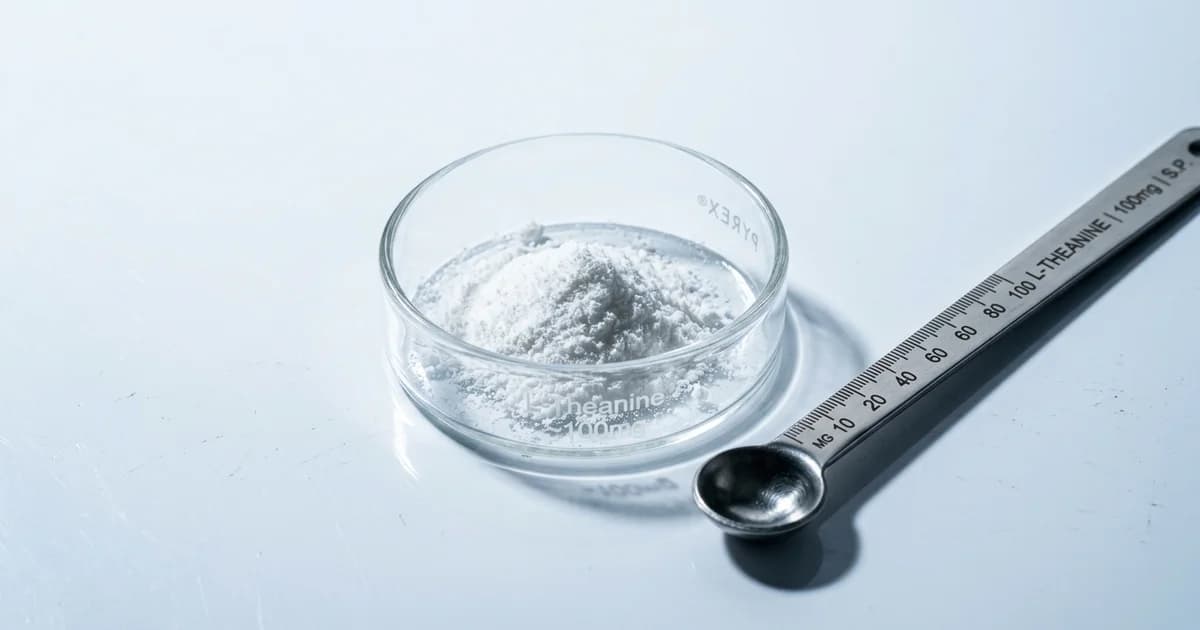
Roon is a zero-nicotine oral pouch built for that pattern: 80 mg caffeine, 60 mg L-theanine, 25 mg methylliberine (Dynamine), and 5 mg theacrine (TeaCrine), with a felt window of 6 to 8 hours. A 2025 review of 50 RCTs found L-theanine plus caffeine favored attention-switching accuracy versus placebo (SMD 0.33), though the authors noted the confidence intervals "frequently highlighted the uncertainty."
The duration comes from methylliberine. In a randomized, double-blind, crossover PK study (n=12), 100 mg methylliberine with 150 mg caffeine cut caffeine's oral clearance from 41.9 to 17.1 L/hr and extended its half-life from 7.2 to 15 hours, with no increase in peak concentration (study). That is 4x Roon's methylliberine and roughly 1.9x its caffeine, so the mechanism runs the same direction at a different scale; Roon's 6 to 8 hour window is a felt-duration claim, not a replication of those numbers. Stop at least 8 hours before bed.
Roon is not a way to work longer hours or meet an unrealistic deadline. It is a steady floor for focused sprints. From $9.16 per tin on a 12-tin subscription, with a 30-day money-back guarantee on your first order.
Related from Roon
- Timeboxing: How to Put a Hard Stop on Every Task
- The Context-Switching Cost: Why Fragmented Days Hurt So Much
- Norepinephrine and Attention: The Inverted U
- Deep Work vs. Shallow Work: How to Tell the Difference
Written by Roon Team