Mucuna Pruriens: The Natural Dopamine Booster That Deserves a Closer Look
Roon Team
Mucuna Pruriens: The Natural Dopamine Booster That Deserves a Closer Look
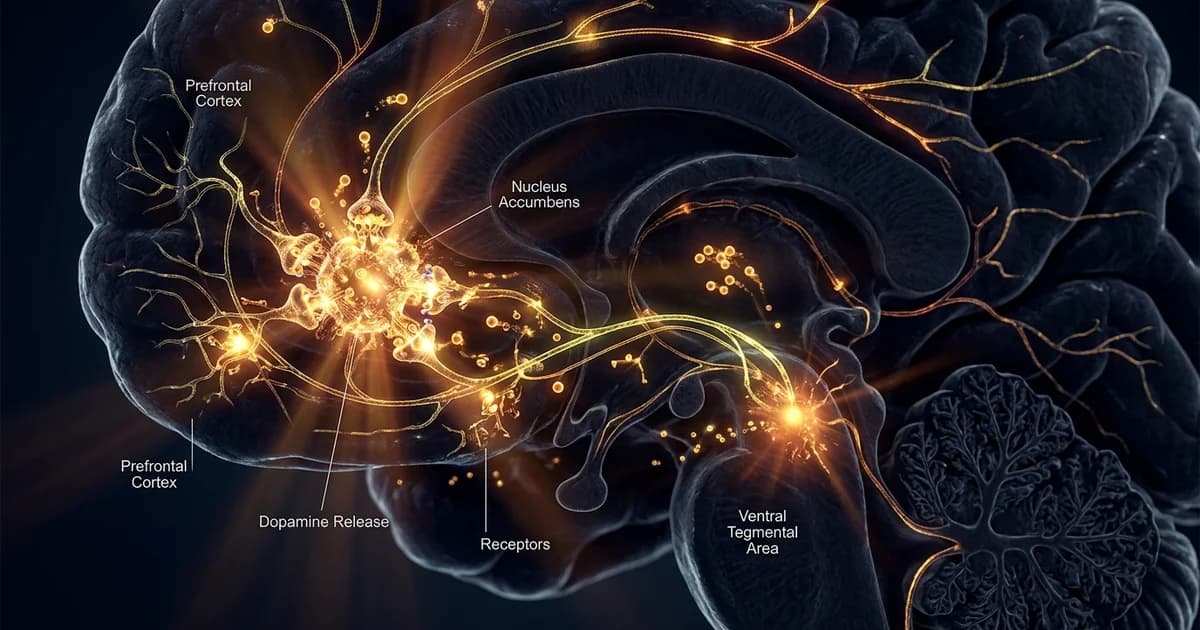
Your brain runs on dopamine. Not just for pleasure or reward, but for the basic machinery of motivation, working memory, and sustained attention. So it makes sense that mucuna pruriens, a tropical legume packed with L-DOPA (the direct precursor to dopamine), has become one of the most talked-about ingredients in the nootropic space.
But popularity and efficacy aren't the same thing. Before you add an L-DOPA supplement to your morning routine, you need to understand what mucuna actually does in your brain, what the research supports, where the risks hide, and how it stacks up against other approaches to cognitive performance.
Key Takeaways:
- Mucuna pruriens contains L-DOPA, the immediate biochemical precursor to dopamine, and has been used in Ayurvedic medicine for centuries.
- Standardized extracts (15-20% L-DOPA) are the most common supplement form, with typical nootropic doses around 100-600 mg daily.
- Long-term, unsupervised use carries real risks: tolerance, dopamine receptor changes, and interactions with medications.
- For sustained daily focus, ingredients that support dopamine signaling without flooding the system may offer a better risk-to-benefit ratio.
What Is Mucuna Pruriens?
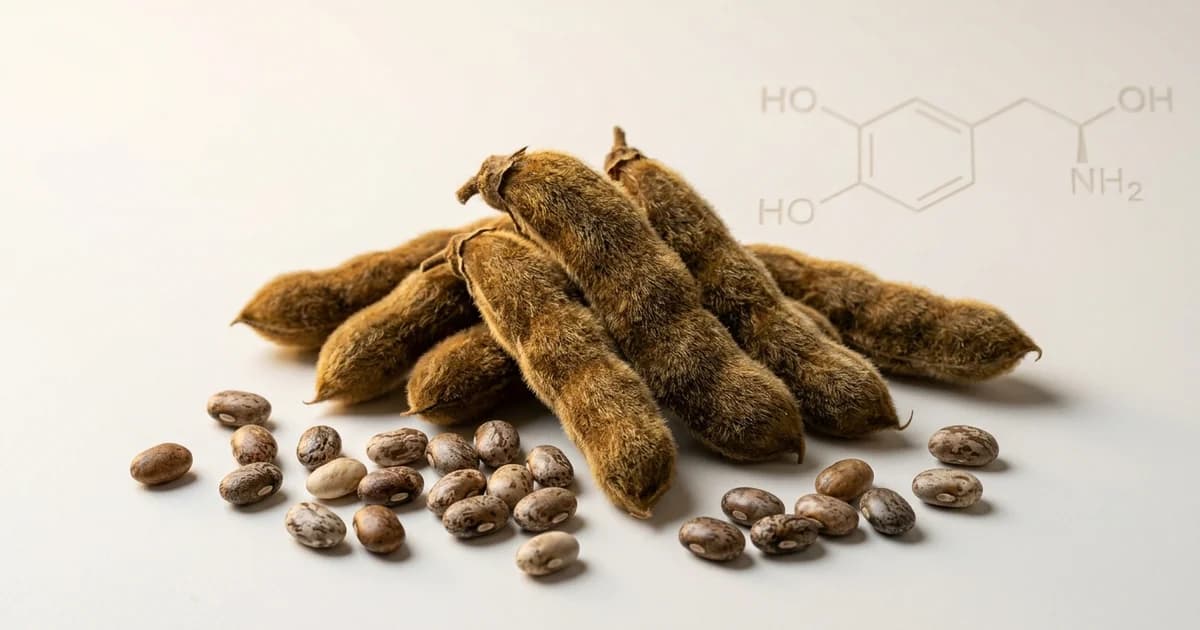
Mucuna pruriens, also called velvet bean, is a tropical legume native to Africa and Asia. The seeds contain high concentrations of L-DOPA (L-dihydroxyphenylalanine), typically around 3.1-6.1% by dry weight in raw form. L-DOPA crosses the blood-brain barrier and converts directly into dopamine via the enzyme aromatic L-amino acid decarboxylase.
That's the core appeal. Unlike most "dopamine-boosting" supplements that work indirectly (through precursor amino acids like tyrosine, or by inhibiting dopamine breakdown), mucuna delivers the molecule one enzymatic step away from dopamine itself.
The plant has a long history in Ayurvedic medicine, where it's been used for mood, vitality, and nervous system support, similar to the Ayurvedic memory herb bacopa monnieri. Modern science has largely focused on its potential in Parkinson's disease, where dopamine-producing neurons degenerate. A 2025 systematic review published in Parkinson's Disease examined clinical trials using mucuna pruriens in PD patients, noting its anti-inflammatory, antioxidant, and antiparkinsonian properties.
Mucuna Pruriens Benefits: What the Research Actually Shows
The mucuna pruriens benefits that get the most attention fall into a few categories:
Dopamine Precursor Activity
This is the big one. L-DOPA from mucuna converts to dopamine in the brain. A case report published in the Journal of Movement Disorders noted that commercial mucuna preparations typically contain 100 mg or more of levodopa per capsule, and at appropriate doses, mucuna supplementation has shown efficacy comparable to pharmaceutical-grade levodopa preparations in some Parkinson's studies.
For healthy individuals using mucuna as a nootropic, the logic is straightforward: more L-DOPA means more raw material for dopamine synthesis. The reality is more nuanced, which we'll get to.
Mood and Motivation Support
Because dopamine is central to the brain's reward and motivation circuits, mucuna has been studied for its effects on mood, much as a serotonin precursor for mood like 5-HTP targets a parallel pathway. A preclinical study available on PMC found that mucuna pruriens seeds produced antidepressant-like effects in animal models, and the mechanism appeared to be dopamine-mediated.
Male Reproductive Health
Several clinical trials have examined mucuna's effects on testosterone levels and semen quality in infertile men, with some positive findings. This is a separate use case from cognitive performance, but it's worth knowing the research exists.
Antioxidant Properties
Mucuna contains additional bioactive compounds beyond L-DOPA, including various polyphenols with antioxidant activity, making it one of the more studied plant-based cognitive supplements. These aren't the primary reason people buy the supplement, but they contribute to the overall pharmacological profile.
Mucuna Pruriens Dosage: How Much Are People Taking?
Dosing mucuna pruriens is where things get complicated. According to Examine.com, clinical trials for Parkinson's disease have used daily doses ranging between 5 and 45 grams of seed powder, corresponding to roughly 200 mg to over 1,000 mg of L-DOPA.
For nootropic use in healthy adults, the numbers are lower. Wholistic Research suggests that 500-600 mg of standardized extract (15-20% L-DOPA) is considered the upper end of safe daily dosing for healthy adults, with doses above that threshold potentially causing nausea, headache, dizziness, or involuntary movements (dyskinesia).
Here's the practical breakdown:
| Use Case | Typical Dose | L-DOPA Content | Notes |
|---|---|---|---|
| General nootropic use | 100-400 mg standardized extract | 15-80 mg L-DOPA | Lower end recommended for beginners |
| Mood support | 200-600 mg standardized extract | 30-120 mg L-DOPA | Often cycled (5 days on, 2 off) |
| Clinical (Parkinson's) | 5-45 g seed powder | 200-1,000+ mg L-DOPA | Under medical supervision only |
The critical variable is standardization. A "500 mg mucuna capsule" could contain anywhere from 25 mg to 100 mg of actual L-DOPA depending on whether it's raw powder or a standardized extract. A 2025 analysis published in Frontiers in Chemistry found that many commercial L-DOPA products sold as dietary supplements had inconsistent labeling, with actual L-DOPA content sometimes differing from what was stated on the label.
The Risks Nobody Wants to Talk About
This is where the "natural dopamine booster" narrative needs a reality check.
Tolerance and Receptor Adaptation
Your brain doesn't passively accept a flood of dopamine. When you consistently elevate dopamine levels through exogenous L-DOPA, your neurons adapt. Dopamine receptors can downregulate, meaning you need more of the substance to get the same effect. This is the same fundamental mechanism behind tolerance to any dopaminergic substance.
Community reports on forums like Longecity consistently describe a honeymoon period of 2-4 weeks with mucuna, followed by diminishing returns. Some users report feeling worse than baseline after stopping, a pattern consistent with temporary dopamine receptor downregulation.
Dysregulation Risk
A 2024 case report in PMC documented a Parkinson's patient who developed dopamine dysregulation syndrome from overuse of mucuna pruriens supplements, experiencing hallucinations and compulsive behavior. While this was a PD patient on other medications, the case illustrates that mucuna's L-DOPA content is pharmacologically active enough to cause serious dopaminergic side effects.
Drug Interactions
Mucuna should not be combined with MAO inhibitors, dopamine agonists, or pharmaceutical levodopa. The interaction risk is real and potentially dangerous.
Inconsistent Products
The supplement industry's quality control issues are well-documented, and mucuna is no exception. That Frontiers in Chemistry analysis found that some products marketed as "natural" mucuna extracts contained L-DOPA levels more consistent with synthetic addition than natural extraction.
Comparing Popular Mucuna Pruriens and Dopamine-Focused Supplements
If you're shopping for cognitive support through the dopamine pathway, here's how the major options compare:
| Product | Active Ingredients | L-DOPA per Serving | Price (Approx.) | Format | Caffeine? |
|---|---|---|---|---|---|
| NOW Foods DOPA Mucuna | Mucuna pruriens extract (15% L-DOPA) | ~120 mg (from 800 mg extract) | ~$15-20 / 90 caps | Capsule | No |
| Double Wood Mucuna | Mucuna pruriens extract (20% L-DOPA) | ~200 mg (from 1,000 mg extract) | ~$20-25 / 210 caps | Capsule | No |
| Onnit Alpha Brain Black Label | Mucuna, caffeine, Lutemax, and others | Undisclosed (proprietary blend) | $124.95 / 80 caps | Capsule | Yes |
| Himalaya Organic Mucuna | Whole-herb mucuna pruriens | Unstandardized | ~$15-20 / 60 caps | Capsule | No |
NOW Foods DOPA Mucuna is the best-selling standalone mucuna product. It uses a 15% L-DOPA standardized extract at 800 mg per two-capsule serving. Simple, affordable, and transparent about its L-DOPA content.
Double Wood offers a higher L-DOPA concentration (20%) at a competitive price point, making it popular among nootropic enthusiasts who want a stronger dopaminergic effect per capsule.
Onnit Alpha Brain Black Label takes a different approach, combining mucuna with caffeine, Lutemax, and other nootropic ingredients. The tradeoff: proprietary blends mean you don't know exactly how much L-DOPA you're getting. At $124.95 for 80 capsules it is also the most expensive option in the table by a wide margin.
Himalaya Organic Mucuna uses whole-herb preparation without standardized L-DOPA content, which means lower potency but potentially a broader spectrum of the plant's other bioactive compounds.
What's Missing from These Products
After looking at the mucuna supplement market, a few consistent gaps emerge.
No Crash Protection
Standalone mucuna products deliver L-DOPA without any mechanism to smooth out the dopamine spike. You get a burst of dopaminergic activity, then it clears. The result for many users is a noticeable drop in energy and mood 2-3 hours after dosing. None of the standalone products include ingredients that extend or stabilize the effect.
Tolerance Is Built Into the Design
Every product in this category works by the same mechanism: dump L-DOPA into your system, let your brain convert it to dopamine. Daily use of this approach almost guarantees receptor adaptation over time. No product in the mucuna category addresses this fundamental limitation.
Jitters or Nothing
Products like Alpha Brain Black Label add caffeine, but without a calming counterbalance, you're trading one problem (dopamine crash) for another (stimulant jitters). The standalone mucuna products skip caffeine entirely, which means no sustained alertness support.
Absorption Variability
Oral capsules pass through the digestive system, where stomach acid and first-pass liver metabolism reduce bioavailability. The amount of L-DOPA that actually reaches your brain from a 200 mg capsule is substantially less than 200 mg.
No Complementary Stack Design
Most mucuna products are single-ingredient. They don't account for the fact that cognitive performance depends on multiple neurotransmitter systems working together, not just dopamine in isolation.
A Different Approach to the Dopamine Pathway
The core insight from the mucuna research is sound: dopamine matters for focus, motivation, and mental clarity. The execution, flooding your brain with a direct precursor on a daily basis, is where the problems start.
A smarter approach supports dopamine signaling without brute-forcing the pathway. That means working with your brain's existing chemistry rather than overriding it.
Roon was designed around this principle. Instead of L-DOPA, it combines 80 mg of caffeine with L-Theanine, Theacrine, and Methylliberine, four compounds that work together to promote sustained alertness and focus through complementary mechanisms.
Here's how that maps to the gaps identified above:
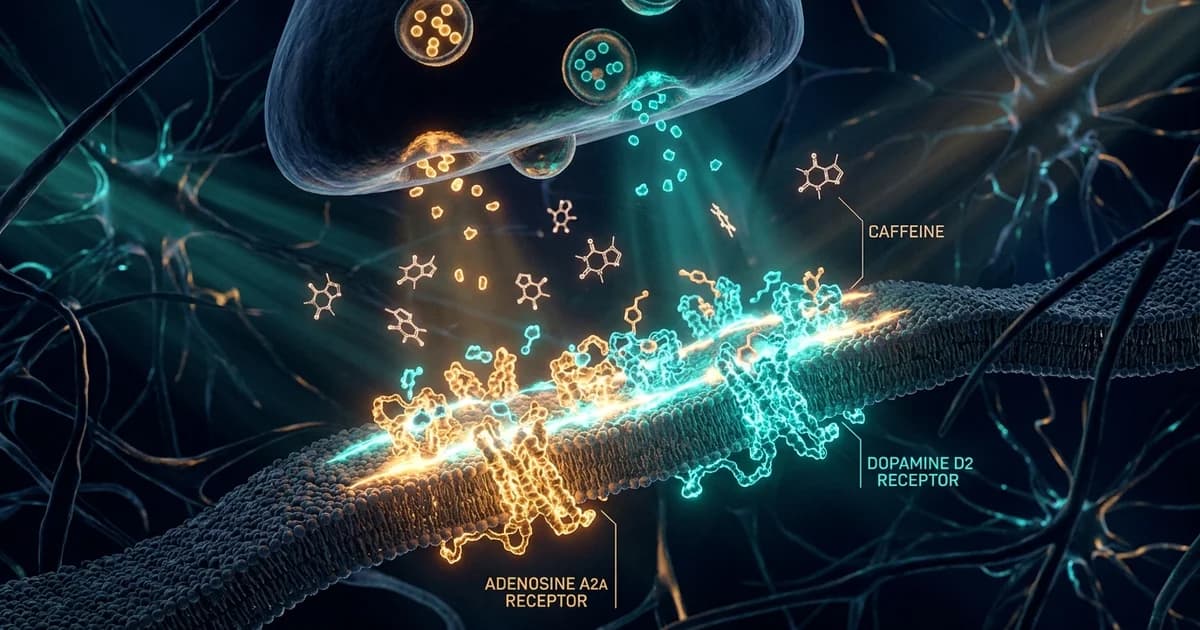
- Crash protection: L-Theanine and focused calm go hand in hand: L-Theanine smooths out caffeine's stimulant curve. A study indexed on PubMed found that L-Theanine combined with 40 mg of caffeine helped focus attention during demanding cognitive tasks, without the jittery overstimulation of caffeine alone. (Roon uses 80 mg of caffeine per pouch, comparable to a cup of coffee, paired with 60 mg of L-Theanine for a smoother, longer-lasting curve.)
- Tolerance resistance: Theacrine and methylliberine are structurally related to caffeine but show reduced tolerance buildup in research. This means the effect stays consistent over time, unlike L-DOPA's diminishing returns.
- Sustained duration: The combination is designed for 6-8 hours of steady focus, not a sharp spike followed by a crash.
- Sublingual delivery: Roon is a sublingual pouch, not a capsule. This bypasses the digestive system entirely, allowing faster and more consistent absorption.
Roon doesn't contain mucuna pruriens or L-DOPA. That's a deliberate choice. Rather than forcing dopamine production through a direct precursor, it supports the neurochemical environment where focus and motivation happen naturally. No jitters. No crash. No tolerance treadmill.
If you're curious about what that feels like in practice, check it out here.