Memory Supplements: The Evidence Table (Today, Six Weeks, Never)

Memory Supplements: The Evidence Table (Today, Six Weeks, Never)
No memory supplement reliably improves recall in a healthy adult on the day you take it. Harvard Health puts it plainly: "There is no good proof that dietary supplements are helpful for enhancing memory." Yet 26% of Americans over 50 take at least one supplement for brain health, and 71% say the goal is memory, per a 2019 AARP survey.
The disconnect exists because the pharmacy shelf never sorts by the question that matters: when? A few ingredients work the same day, but what they improve is attention, not memory. A smaller set has real memory signals after six weeks or more. A third set has no credible evidence at all. This page sorts every major memory supplement on that axis.
Key Takeaways
- Same-day effects exist, but they are attention effects. Caffeine above 75 mg improves alertness and reaction time. Not memory.
- The real memory evidence is slow. Bacopa, creatine (in older adults), and citicoline show signals after 4 to 12 weeks of daily use, in small trials, usually industry-funded.
- Some products' own trials missed. Apoaequorin's 218-person study found nothing on any of nine endpoints. Ginkgo's 3,069-person study found no difference from placebo over six years.
- Deficiency correction is real; extra supplementation is not. Low B12, D, or omega-3 can impair cognition. Normal levels plus extra does not improve it.
- Outside review is evidence. Courts, the FTC, and self-regulatory bodies have examined specific claims. Their findings belong in the table.
The Master Evidence Table
| Ingredient / Product | Horizon | Best Evidence (n, Duration) | What It Measured | Funder | Outside Record |
|---|---|---|---|---|---|
| Caffeine (>=75 mg) | Today | 31 RCTs, n=1,455 | Attention accuracy g=0.27; reaction time g=0.28 | Various | EFSA approved claims at 75 mg |
| Caffeine + L-theanine | Today | 50 RCTs (15 pooled) | Attention-switching SMD 0.33; choice RT SMD -0.48 | Various | No memory outcome reported |
| Bacopa monnieri | 6+ wks | RCT, n=48, 12 wks | Delayed recall improved | Independent | Systematic review: 8-12 wk onset |
| Creatine | 6+ wks | 8 RCTs pooled | Memory SMD 0.29; age 66-76 SMD 0.88; age 11-31 SMD 0.03 | Various | EFSA (2024): could not confirm |
| Citicoline | 6+ wks | RCT, n=100, 12 wks | Episodic memory yes; working memory no | Kyowa Hakko Bio | None |
| Lion's mane | 6+ wks | RCT, n=30, 16 wks | Cognitive scores up; reversed after stopping | Independent | Population: MCI, not healthy |
| Alpha Brain | 6+ wks | RCT, n=63, 6 wks | Delayed verbal recall, executive function | Onnit Labs | Class action alleges no efficacy |
| Mind Lab Pro | 6+ wks | RCT, n=49, 30 days | Memory improved; placebo also improved | Opti-Nutra | 36-vs-13 split |
| Neuriva | 6+ wks | RCT, n=138, 42 days | Working memory p<=0.024; BDNF not significant | Reckitt | Settlement vacated (2023) |
| Prevagen | None | RCT, n=218, 90 days | 0 of 9 endpoints significant | Quincy Bioscience | Jury: 8 claims unsupported, 2 materially misleading; appeal pending |
| Ginkgo biloba | None | RCT, n=3,069, 6.1 yrs | No difference from placebo | NIH | Largest trial in category; null |
| Focus Factor | None | n=89, 6 wks | Word recall +6.5 vs +4.5; 1 measure p=0.031 | Factor Nutrition Labs | FTC $1M settlement (2004); NAD "#1" claim removed (2020) |
Horizon 1: Works Today, on Attention
This section is short on purpose. Two entries clear the bar, and neither is a memory result.
Caffeine at 75 mg or above has EFSA-approved claims for alertness and attention (advisory: do not exceed 300 mg/day). A 2025 meta-analysis (31 trials, n=1,455) found attention accuracy g=0.27 and reaction time g=0.28. Higher doses produced larger effects, though accuracy peaks and then declines.
What about memory? A 2021 review found limited evidence caffeine affects memory beyond faster reaction times. A 2014 Nature Neuroscience study (n=160) found 200 mg post-study improved pattern separation, but a 2020 replication ruled out medium and large enhancements.
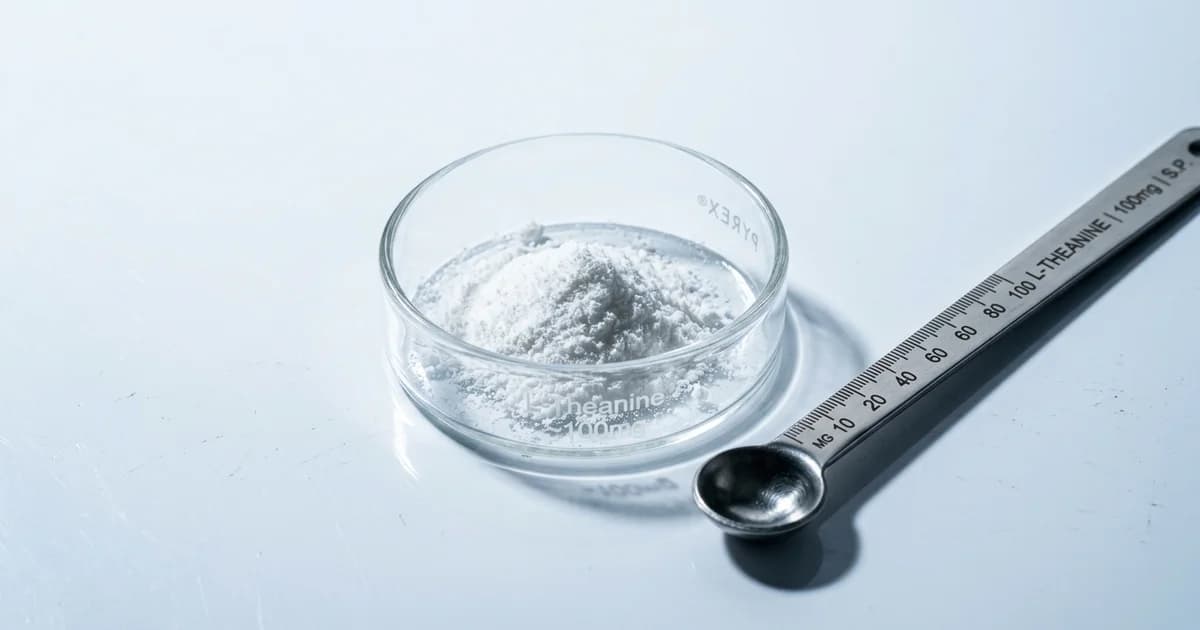
Caffeine plus L-theanine. A 2025 review in Nutrition Reviews (50 RCTs, 15 pooled) found improved attention-switching accuracy (SMD 0.33) and choice reaction time (SMD -0.48) at median doses of ~82 mg theanine and ~89 mg caffeine. Caffeine drives most of the benefit. Caveats: confidence intervals often included no effect, and half the studies had high risk of bias. No memory outcome was reported.
Every outcome in Horizon 1 is attention, alertness, or reaction time. The word "memory" does not appear in any of these effect sizes.
Horizon 2: Works in Six Weeks or More, If It Works
Every entry here shares three asterisks: small sample, weeks of daily use, and usually the ingredient or product maker paid for the trial. Weak evidence is not zero evidence, and the distinction matters.
Bacopa monnieri. A 12-week RCT (n=48 completed, ages 65+, no dementia) found 300 mg/day improved delayed recall versus placebo. A systematic review confirmed: memory acquisition and retention improved after 8 to 12 weeks. The counterweight: across the broader trial set, most cognitive scores were unaffected. More on the 12-week trial.
Creatine. A 2023 meta-analysis (8 RCTs) found a small memory effect (SMD 0.29, p=0.02). The age split matters: adults 66 to 76 showed SMD 0.88 (p=0.009); adults 11 to 31 showed SMD 0.03 (p=0.72). Heterogeneity was high (I²=66%). EFSA's 2024 opinion criticized a related meta-analysis for pooling non-independent test results and could not confirm the claim. Full breakdown of the cognition research and the age split.
Citicoline. A 28-day trial (n=75, adolescent males) found improved attention and psychomotor speed. A 12-week trial (n=100, ages 50+, age-associated memory impairment) found 500 mg/day improved episodic memory but not short-term or working memory. That trial was funded by Kyowa Hakko Bio, which makes the Cognizin ingredient. More on the 12-week trial.
Lion's mane. A 16-week RCT (n=30, ages 50 to 80, mild cognitive impairment) found 3 g/day improved cognitive function scores versus placebo. Four weeks after stopping, scores decreased again. The study population had mild cognitive impairment; results do not extend to healthy adults.
Alpha Brain (Onnit). A 6-week RCT (n=63, ages 18 to 35) found improved delayed verbal recall and executive function. Onnit Labs is in the author affiliations. The only RCT on the finished product: positive, small, company-funded, not replicated. A class action alleges the products do not work as advertised; a filed allegation is not a finding.
Mind Lab Pro (Opti-Nutra). A 30-day RCT (n=49, split 36 active and 13 placebo) found memory subtests improved in the active group, but the placebo group also improved on auditory memory and immediate recall. The 36-versus-13 split limits interpretation. Manufacturer funded.
Neuriva (Reckitt). A 42-day RCT (n=138, ages 40 to 65) found significant working memory accuracy gains (p<=0.024) and reaction time improvements (p<=0.031). BDNF and the Everyday Memory Questionnaire were not significant. Reckitt funded. Retail formula: 100 mg coffee fruit extract and 100 mg phosphatidylserine per capsule. A proposed $8 million class settlement was vacated by the Eleventh Circuit in April 2023 on standing grounds; no payout was made and no court order restricts the marketing.
Horizon 3: No Credible Evidence
Apoaequorin (Prevagen). The Madison Memory Study (n=218, 90 days, nine cognitive tasks) did not show a statistically significant improvement on any of the nine endpoints. More than 30 post hoc subgroup analyses followed; a few were nominally significant.
The outside record: in a February-March 2024 trial, a federal jury found all eight challenged statements lacked scientific support but only two materially misleading; in December 2024, the court entered an injunction. All parties appealed. The Second Circuit heard oral argument on February 26, 2026; no decision has been reported as of publication. The product remains legally on sale. Full analysis in the Prevagen review.
Ginkgo biloba. The GEM study is the largest trial in the category: 3,069 participants aged 72 to 96, six academic medical centers, median follow-up 6.1 years. The trial tested whether 120 mg twice daily would slow cognitive decline and found no difference from placebo. NIH funded. The full GEM trial breakdown.
Focus Factor. One company-funded study (96 enrolled, 89 completed, six weeks): word recall +6.5 versus +4.5 in placebo, one concentration measure at p=0.031. No peer-reviewed publication located. The formula is a multivitamin base plus a 640 mg proprietary blend across sixteen ingredients; because proprietary blends are not evenly distributed, individual ingredient doses are undisclosed. Full analysis in the Focus Factor review.
Two outside actions. In 2004, the FTC settled charges of unsubstantiated claims against Vital Basics, Inc. (a prior corporate owner) for $1 million. In 2020, Factor Nutrition permanently discontinued its "#1 Brain Health Supplement" claim following a National Advertising Division recommendation (NAD is a self-regulatory forum, not a court).
The Special Case: Fixing a Shortfall Is Not the Same as a Boost
Vitamin B12, vitamin D, and omega-3 fatty acids appear on every brain-supplement roundup. The pattern across all three is the same: correcting a genuine deficiency can move cognitive measures; supplementing on top of adequate levels does not. The action is a blood test conversation with your doctor, not a purchase.
How to Read a Memory Supplement Label in Four Questions
1. Was the study on this product, or on an ingredient? The FTC's 2022 Health Products Compliance Guidance sets the standard: a memory claim requires human clinical research on the product itself. A label that says "clinically studied ingredient" may reference a study at a dose the product does not contain. See the full supplement evaluation guide and our consumer review roundup.
2. Did the amount in the bottle match the amount in the study? Focus Factor uses a proprietary blend where individual ingredient doses are undisclosed. Bacopa's positive trials used 300 mg. Creatine's trials used 2.2 to 20 g per day (Prokopidis et al., 2023).
3. Who paid for it? Of the seven products in Horizon 2, six had their trial funded by the product or ingredient maker.
4. Has anyone independent repeated it? For every product in the table above, the answer is no. The single-study problem is the category's defining weakness.
What "Clinically Tested," "Clinically Proven," and "Clinically Studied" Actually Mean
Clinically tested describes an event: a product was put into a clinical trial. It says nothing about the result. Prevagen was clinically tested on 218 people and missed on all nine endpoints.
Clinically proven describes a result, implying the trial demonstrated efficacy. No supplement has FDA approval for a memory claim, and there is no regulatory definition of "proven" for this category.
Clinically studied is the loosest phrase. It can refer to the finished product, a single ingredient, or an ingredient at a dose the product does not contain. Check which one.
Conclusion: What the Boring Evidence Supports
The interventions with the strongest evidence for cognitive health are not sold in bottles: consistent sleep (seven or more hours), corrected hearing and vision, regular aerobic exercise, spaced retrieval practice, and treatment of conditions that affect thinking (hypertension, depression, sleep apnea, medication side effects). The AARP Global Council on Brain Health reviewed the supplement evidence in 2019 and could not endorse any ingredient, product, or formulation designed for brain health. What it did endorse was that list.
Frequently Asked Questions
Do memory supplements actually work?
No single supplement has strong, independent evidence for improving memory in healthy adults. Caffeine improves attention and reaction time the same day, but a 2021 review found limited evidence it affects memory beyond faster responses. Bacopa and creatine show small memory effects in trials of 6 to 12 weeks, mostly in older adults, but these studies are small and often industry-funded. The AARP Global Council on Brain Health could not endorse any supplement formulation for brain health.
What is the best supplement for memory?
No clear winner. Bacopa monnieri has the most consistent memory-specific signal (delayed recall after 12 weeks at 300 mg/day), but the trials are small. Creatine shows a stronger effect in adults over 65 than in younger people. Citicoline at 500 mg/day improved episodic memory in one 12-week trial of adults over 50. None has been independently replicated.
How long do memory supplements take to work?
The ingredients with actual memory signals require 4 to 12 weeks of daily use. Bacopa shows benefits at 8 to 12 weeks. Creatine trials ranged from 5 days to 24 weeks. Citicoline's memory result came at 12 weeks. If a product claims to improve memory in hours, the evidence almost certainly measures attention or reaction time.
Are vitamins for memory worth taking?
If you have a diagnosed deficiency in B12, vitamin D, or omega-3, correcting it can improve cognitive measures. If your levels are normal, supplementing more does not help. The only way to know is a blood test and a conversation with your doctor.
What is the difference between a focus supplement and a memory supplement?
Focus supplements typically contain caffeine, L-theanine, or similar compounds that improve attention and reaction time within minutes. Memory supplements claim to improve recall or long-term cognitive function. The overlap: many "memory" supplements actually measure attention outcomes in their studies. Check what the trial measured, not what the label says.
Does "clinically tested" mean a supplement works?
No. It means the product was placed into a clinical trial. It does not tell you the result. Prevagen was clinically tested on 218 people and showed no significant improvement on any of nine endpoints. Always ask what the trial found, not just whether one happened.
Verdict Pages
- Does Prevagen Work? The 218-person study, the jury, and the injunction.
- Does Neuriva Work? The 100 mg question and the settlement that was thrown out.
- Does Focus Factor Work? One unpublished trial and a 640 mg proprietary blend.
- Does Magic Mind Work? What the disclosed doses are, and what they are not.
Roon Makes No Memory Claim, and That Is the Point
The evidence table above separates what works today (acute attention), what takes weeks (bacopa, citicoline), and what never cleared its own trial (Prevagen, Neuriva). Most "memory" supplements quietly measure attention outcomes, then let the label do the rest. Roon sits in the acute-attention column and stays there: 80 mg caffeine, 60 mg L-theanine, 25 mg methylliberine (Dynamine), and 5 mg theacrine (TeaCrine) in a sublingual pouch built for 6 to 8 hours of sustained focus. Dynamine slows caffeine clearance. A randomized double-blind crossover PK study (n=12) found methylliberine cut oral clearance from 41.9 to 17.1 L/hr and extended half-life from 7.2 to 15 hours, but that study used 100 mg methylliberine and 150 mg caffeine (roughly 4x the methylliberine and 1.9x the caffeine in Roon), so the mechanism is directionally the same and the study did not measure Roon. A longer tail means stopping at least 8 hours before bed.
Roon is not a substitute for a clinician's evaluation of cognitive decline, and it will not improve your recall at six weeks or any other horizon. What it does is keep you alert and attentive right now, with ingredients whose evidence base is not dressed up as something it is not. Zero sugar, as little as $0.61 per pouch. Try Roon for honest, same-day focus.
Written by Roon Team