Healthy Fats for Brain Performance: Omega, 3, MCT
Roon Team
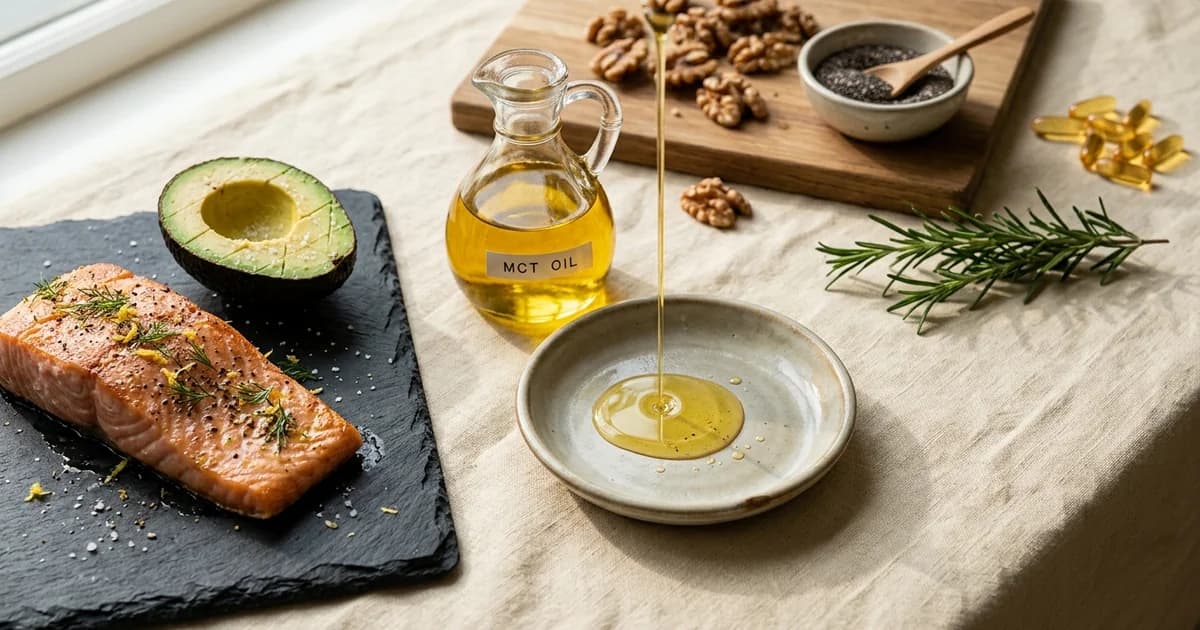
Healthy Fats for Brain Performance: Omega-3, MCT, and the Cognition Connection
Your brain is nearly 60% fat by dry weight. Not protein, not carbohydrate, fat. And the specific fats that make up your neuronal membranes dictate how well those neurons fire, communicate, and survive over decades. If you've been optimizing sleep, training, and supplementation but ignoring omega-3 for brain health, you're building on a weak foundation.
This guide covers everything you need to know about omega-3 brain health: the five fats that matter most for cognitive performance, what the clinical evidence actually says about each one, and how to build a practical daily protocol around them.
Key Takeaways:
- DHA makes up over 40% of the omega-3 fatty acids in your brain's gray matter and directly controls membrane fluidity and signal transmission.
- Most Americans have an Omega-3 Index well below the 8% target associated with optimal brain function.
- MCT oil supports cognition primarily in fasted or ketogenic states, not as a general-purpose brain booster.
- Acute focus tools like caffeine and L-theanine work best when the underlying neuronal substrate is already fat-replete.
The Five Brain Fats: A Quick Comparison
Before getting into the science, here's a structured overview of the five dietary fats with the strongest evidence for brain function.
| Fat | Key Role | Dose (Daily) | Top Food Sources | Supplement Form | Evidence Strength | Best For |
|---|---|---|---|---|---|---|
| DHA (22:6n-3) | Neuronal membrane fluidity, synaptic signaling | 500–1,000 mg | Salmon, sardines, mackerel | Fish oil, algae oil | Strong (RCTs) | Core structural brain support |
| EPA (20:5n-3) | Anti-inflammatory, mood regulation | 500–1,000 mg | Fatty fish, fish oil | Fish oil, krill oil | Strong (RCTs, meta-analyses) | Mood and neuroinflammation |
| Phosphatidylserine (PS) | Cell membrane signaling, cortisol modulation | 100–300 mg | Organ meats, soy, white beans | Soy-derived or sunflower-derived capsules | Moderate (small RCTs) | Age-related memory support |
| MCTs (C8/C10) | Ketone fuel for neurons under glucose restriction | 15–30 g | Coconut oil, MCT oil | Liquid MCT oil (C8 preferred) | Moderate (context-dependent) | Fasted or keto-adapted cognition |
| Omega-6 (LA/AA) | Pro-inflammatory signaling (excess is harmful) | Reduce if ratio >15:1 | Vegetable oils, processed foods | Not recommended as supplement | Observational | Balancing, not supplementing |
DHA: The Structural Backbone of Your Brain
DHA (docosahexaenoic acid) isn't just another omega-3. It's the dominant polyunsaturated fatty acid in neuronal tissue. According to a systematic review in Nutrients, DHA accounts for more than 40% of total omega-3 PUFAs in gray matter, with particular concentration in synaptic membranes where neurotransmission happens.
DHA determines membrane fluidity, the physical property that allows receptors, ion channels, and signaling proteins to function within the cell membrane. A 2017 review by Hashimoto et al. in Critical Reviews in Biotechnology detailed how DHA modulates antioxidant defenses, supports neurogenesis, and regulates apoptotic pathways.
The most cited clinical trial on DHA for brain function is the MIDAS study. This randomized, double-blind, placebo-controlled trial enrolled 485 healthy older adults with age-related cognitive decline and assigned them to 900 mg/day of algal DHA or placebo for 24 weeks. The DHA group made fewer errors on visuospatial memory tests (p < 0.03) and showed improvements in verbal recognition memory (p < 0.02). A meaningful result from a single ingredient at a moderate dose.
How Much DHA Do You Actually Need?
The NIH Office of Dietary Supplements notes that most expert bodies recommend 250–500 mg of combined EPA and DHA daily for general health. For cognitive optimization, the research points higher. The MIDAS trial used 900 mg of DHA alone. For brain health, aim for 1–2 g of combined EPA + DHA per day, with at least 500 mg from DHA.
EPA vs. DHA: Which Omega-3 Matters More for Your Brain?
The answer: they do different things.
DHA is structural. It embeds in neuronal membranes and stays there, maintaining the physical architecture of your brain cells. EPA serves as a precursor to resolvins and protectins, specialized pro-resolving mediators that reduce neuroinflammation and support mood regulation.
A 2007 review by Conklin and colleagues in Alternative Therapies in Health and Medicine concluded that DHA is the primary structural fatty acid for brain tissue, while EPA acts as an anti-inflammatory and mood modulator.
You want both. But if you had to prioritize, DHA is the non-negotiable foundation. EPA adds the anti-inflammatory layer on top.
The Omega-3 Index: A Biomarker You Should Know
Your Omega-3 Index measures the percentage of EPA + DHA in your red blood cell membranes. It reflects long-term omega-3 status, not just what you ate yesterday.
Research from Harris and von Schacky established the Omega-3 Index framework, with an 8% or higher target associated with the lowest cardiovascular and cognitive risk. Below 4% is high-risk.
Most people fall well short. A 2024 global analysis in Progress in Lipid Research covering 342,864 subjects across 48 countries found the United States had a mean Omega-3 Index of just 2.7%, placing Americans among the lowest in the world alongside Canada (2.9%) and Hungary (2.4%).
The average American brain is running on roughly one-third of the omega-3 levels associated with optimal function, which is one reason so many people are still searching for what actually works for brain health. A dried blood spot test can measure your Omega-3 Index at home for under $50.
Choosing the Best Omega-3 for Brain Health: Fish, Krill, or Algae?
The three main delivery forms each have distinct trade-offs.
| Supplement Type | EPA + DHA per Serving | Form | Approx. Price/Serving | Best For |
|---|---|---|---|---|
| Nordic Naturals Ultimate Omega (fish oil) | 1,280 mg (2 softgels) | rTG softgel | ~$0.50–$0.70 | High-potency, well-tested fish oil |
| Momentous Omega-3 (fish oil) | 1,600 mg (2 softgels) | TG softgel, NSF Certified | ~$1.50 | Athletes needing third-party sport certification |
| Sports Research Triple Strength (fish oil) | 1,040 mg (1 softgel) | rTG softgel | ~$0.35–$0.50 | Budget-friendly single-softgel convenience |
| Krill oil (generic high-quality) | 200–400 mg (2 capsules) | Phospholipid-bound | ~$0.60–$1.00 | Superior bioavailability per mg, smaller dose |
| Algae oil (vegan DHA) | 400–600 mg DHA (2 capsules) | Triglyceride | ~$0.50–$1.00 | Vegan/vegetarian brain support |
Fish oil in re-esterified triglyceride (rTG) form remains the most cost-effective way to hit high EPA + DHA doses. Nordic Naturals Ultimate Omega delivers 1,280 mg of total omega-3s per two-softgel serving in rTG form.
Krill oil offers omega-3s bound to phospholipids, which research on omega-3 bioavailability suggests may improve absorption compared to standard fish oil. The trade-off: lower total EPA + DHA per capsule and higher cost per gram of omega-3.
Algae oil is the only vegan source of preformed DHA. The conversion rate from plant-based ALA (flaxseed, chia) to DHA is less than 5%, making direct algae-derived DHA the only reliable plant-based option for brain support.
The Oxidation Problem: TOTOX Values
Oxidized omega-3s generate aldehydes and peroxides that promote inflammation rather than reduce it. The TOTOX (Total Oxidation) value is the industry standard for freshness; the GOED Voluntary Monograph sets the maximum at 26 or below. Look for brands that publish their TOTOX values on the label or certificate of analysis.
MCT Oil for Brain: When It Works (and When It Doesn't)
MCT oil has earned a reputation as a "brain fuel," but the reality is more nuanced than the marketing suggests.
MCTs, particularly caprylic acid (C8), are rapidly converted to ketone bodies in the liver. Ketones cross the blood-brain barrier and serve as an alternative energy substrate for neurons when glucose availability is limited.
A 6-month randomized controlled trial in Alzheimer's subjects used 42 g/day of MCT oil and found trends toward cognitive maintenance in participants who achieved sustained ketosis. A 2025 study in Physiology & Behavior found that both a single dose and a 4-week daily MCT regimen boosted working memory in young, healthy adults, with evidence pointing to improved cerebral blood flow and mitochondrial function.
The key distinction: if you're eating a standard mixed-macro diet and your brain has plenty of glucose, the cognitive benefit of MCTs is minimal. MCT oil works best in a fasted state, during a ketogenic protocol, or as part of a morning routine before carbohydrate intake.
Phosphatidylserine: The Underrated Membrane Phospholipid
Phosphatidylserine (PS) is a phospholipid concentrated in neuronal cell membranes, where it supports cell signaling, apoptosis regulation, and neurotransmitter release. A 2010 study in the Journal of Clinical Biochemistry and Nutrition found that soy-derived PS improved memory function in elderly subjects with memory complaints. The effective dose ranges from 100 to 300 mg per day.
PS won't match the impact of high-dose DHA, but it fills a complementary role in membrane integrity. It's worth considering for adults over 50 experiencing age-related memory changes.
Building the Full Stack: Chronic Foundation + Acute Focus Layer
Here's the framework that ties this all together.
Omega-3s, particularly DHA, are the chronic foundation. They build and maintain the physical structure of your neuronal membranes over weeks and months. You can't feel DHA working on any given Tuesday. But after 8–24 weeks of consistent supplementation at 1–2 g of EPA + DHA daily, the structural quality of your brain tissue improves, as the MIDAS trial demonstrated.
Acute focus tools operate on top of that foundation. Caffeine, L-theanine, and related compounds modulate neurotransmitter activity in real time. A study in Nutritional Neuroscience found that combining L-theanine and caffeine improved both speed and accuracy on attention-switching tasks within 60 minutes.
But the acute layer's effectiveness depends on the quality of the underlying substrate. If your neuronal membranes are omega-3-depleted (and with a national average Omega-3 Index of 2.7%, most Americans' are), even the best acute focus stack is working with compromised hardware.
The acute layer's effectiveness depends on the quality of the underlying substrate. If your neuronal membranes are omega-3-depleted, even the best acute focus stack is working with compromised hardware. That's why the two-layer model matters: chronic structural support first, acute neurotransmitter modulation on top. Neither layer replaces the other, and neither is sufficient alone.
Related from Roon
- Neurohacking 101: 7 Science-Backed Brain Optimization Techniques for 2026
- Best Nootropics for Productivity in 2026: A Professional's Stack Guide
- Natural Focus Enhancers: 9 Evidence-Based Options Ranked by Effect Size
Frequently Asked Questions
What is the best omega-3 supplement for brain health?
Look for a supplement high in DHA, since DHA makes up over 40% of omega-3 fatty acids in brain gray matter. Fish oil in re-esterified triglyceride (rTG) form offers the best balance of potency and absorption. Nordic Naturals Ultimate Omega and Sports Research Triple Strength are both well-tested options. Aim for at least 500 mg of DHA per day.
How much DHA should I take per day for cognitive function?
Most clinical trials showing cognitive benefits used between 500 mg and 900 mg of DHA daily. The MIDAS trial, which demonstrated memory improvements in older adults, used 900 mg/day of algal DHA for 24 weeks. For general cognitive maintenance, 500 mg of DHA combined with 500 mg of EPA is a solid daily target.
Is MCT oil good for brain function?
MCT oil can support brain function, but primarily when your brain needs an alternative to glucose for fuel. This means fasted states, ketogenic diets, or very low-carb protocols. In a standard mixed-macro diet, MCT oil's cognitive benefits are minimal because your brain already has sufficient glucose. C8 (caprylic acid) is the most ketogenic MCT fraction.
What are the best vegan sources of omega-3 for brain health?
Algae oil is the only reliable vegan source of preformed DHA. The conversion rate from plant-based ALA (found in flaxseed, chia seeds, and walnuts) to DHA is less than 5%, which is too low to meaningfully support brain DHA levels. Look for algae-derived DHA supplements providing at least 400–600 mg of DHA per serving.
Does fish oil really improve brain function?
Yes, but the effects are gradual, not immediate. The strongest evidence comes from DHA supplementation over 12–24 weeks in populations with low baseline omega-3 status or mild cognitive decline. The MIDAS trial showed measurable memory improvements with 900 mg/day DHA over 6 months. Don't expect to feel smarter the day you start taking fish oil. It's a long-term structural investment.
What is the Omega-3 Index and why does it matter?
The Omega-3 Index measures the percentage of EPA and DHA in your red blood cell membranes. An index of 8% or higher is considered optimal. Below 4% is high-risk. The average American Omega-3 Index is approximately 2.7%, well below the target. You can test your Omega-3 Index at home with a dried blood spot test for under $50.
Can I get enough omega-3 from diet alone?
Two to three servings of fatty fish per week (salmon, sardines, mackerel) can provide roughly 1,000–2,000 mg of EPA + DHA. Most Americans eat far less. If you eat fatty fish fewer than twice a week, supplementation is the most reliable way to maintain adequate brain DHA levels.
Should I take omega-3 and a focus supplement together?
They serve different purposes on different timescales. Omega-3s build neuronal membrane structure over weeks and months. Acute focus supplements modulate neurotransmitter activity in real time. Taking both addresses the chronic foundation and the acute performance layer for a more complete approach to cognitive optimization.
The Acute Layer Your Omega-3 Foundation Was Built For
Omega-3s are a months-long structural investment. They rebuild neuronal membranes, restore membrane fluidity, and create the biological conditions under which your brain can actually perform. But DHA doesn't sharpen your focus at 2pm on a Tuesday. That's a different problem, and it requires a different tool.
Roon is that tool. Each pouch delivers 80mg caffeine, 60mg L-theanine, 25mg methylliberine, and 5mg theacrine sublingually, meaning absorption starts in minutes, not an hour. The result is 6 to 8 hours of clean, sustained focus without jitters, without a crash, and without the tolerance buildup that makes daily caffeine use a diminishing return. Roon is not a substitute for fish oil. It does nothing for your Omega-3 Index. What it does is give you a precise, repeatable acute performance layer to place on top of the structural foundation you're building.
Get the chronic work right first. Then use Roon when you need the acute layer to show up.