How Much L-Theanine Per Day? A Complete Dosage Guide
How Much L-Theanine Per Day? A Complete Dosage Guide
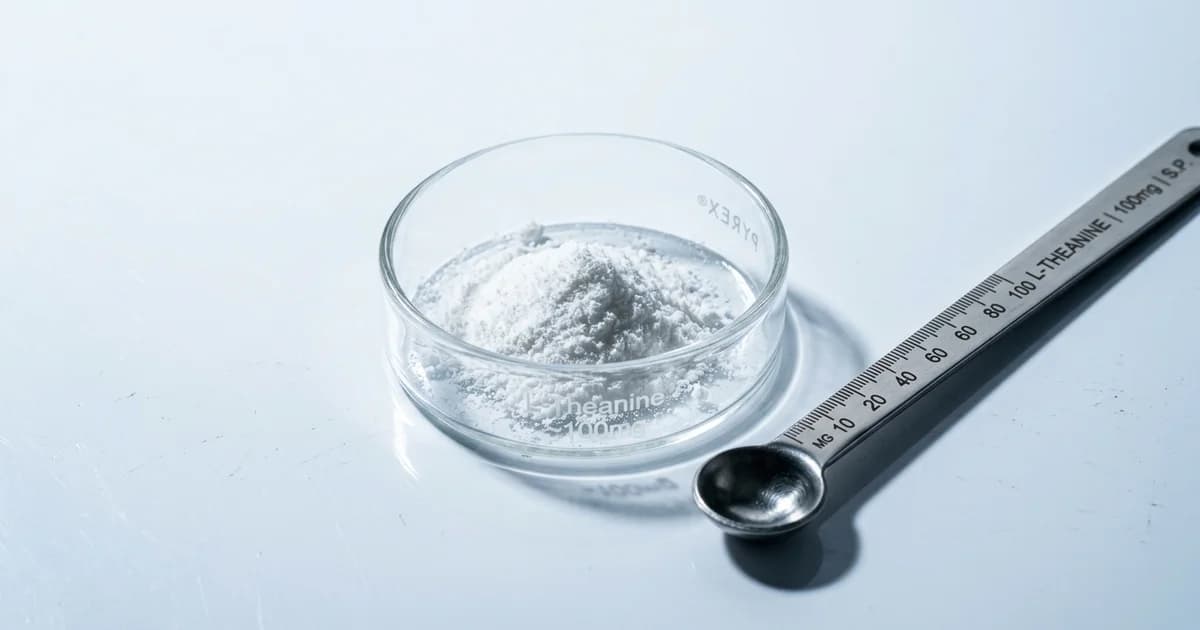
Short answer: 200mg per day is the dose that shows up most often in well-designed trials, and 100 to 400mg per day covers nearly every documented use case. Below 100mg the effect gets hard to detect. Above 400mg the benefits flatten out rather than climbing.
By goal: 100 to 200 mg for focus (often alongside caffeine), about 200 mg for everyday stress, and 200 to 450 mg before bed for sleep. Trials have used up to 900 mg a day for 8 weeks, but no trial shows that going above 400 mg works better.
That is the number most people are looking for. The rest of this guide is what the number leaves out: how much l theanine per day shifts depending on whether you're chasing calm, sleep, or sharper focus, how it changes when you pair it with caffeine, and where the real upper limit sits.
You bought a bottle of L-theanine, probably after scanning top-rated L-theanine supplements online. The label says "200mg." The Reddit thread you read last night said 400mg. Your friend takes 100mg and swears by it. The disagreement is real, and it exists because all three sit inside the evidence-backed range. Which one is right for you comes down to the goal you're chasing.
Key Takeaways:
- How much l theanine per day for occasional stress: 200mg, with trials using up to 400mg. That is also the most studied l theanine anxiety dosage in healthy adults; L-theanine is not a treatment for an anxiety disorder.
- For sleep, a systematic review found that 200 to 450mg daily supports healthy sleep quality.
- L-theanine pairs well with caffeine; the classic lab pairing used about 2:1 (97 mg L-theanine to 40 mg caffeine), improving focus without the jitters.
- Doses up to 900mg daily have been used in an 8-week trial (Sarris 2019, adults with generalized anxiety on antidepressants), but long-term safety is unclear and there's no evidence that more works better.
What L-Theanine Actually Does in Your Brain
Before you can pick the right l theanine anxiety dosage, you need to understand what this amino acid is doing once it crosses the blood-brain barrier.
L-theanine (technically L-gamma-glutamylethylamide) is a non-protein amino acid found almost exclusively in tea leaves. L-theanine is structurally similar to glutamate, one of the brain's primary excitatory neurotransmitters. But instead of ramping up neural activity, L-theanine promotes a calm, alert state by influencing several neurotransmitter systems at once.
The most well-documented effect is its ability to increase alpha brain wave activity. A study published in PubMed measured EEG activity in healthy young participants and found that those who took L-theanine showed a greater increase in alpha wave activity compared to placebo, with effects appearing within 45 minutes of ingestion. Alpha waves are the electrical signature of relaxed focus, the mental state you hit when you're absorbed in work but not stressed about it.
A separate trial on AlphaWave® L-Theanine confirmed this: a single 200mg dose increased frontal region alpha power in response to an acute stress challenge. The researchers described this as "indicative of relaxation in the brain," suggesting a genuine calming response rather than a placebo effect.
L-theanine also modulates levels of GABA, serotonin, and dopamine. This is why L-theanine doesn't just make you "calm." L-theanine promotes a specific type of calm where your thinking stays sharp, your mood stays level, and you don't feel sedated. Think of it less like a dimmer switch and more like noise cancellation for your nervous system.
The Right L-Theanine Anxiety Dosage for Stress
This is where most people start, and the research here is solid. It sits alongside the other supplements people use for everyday anxiety, but its dosing is some of the best documented.
A randomized controlled trial published in PMC gave participants l theanine 200mg per day for four weeks. Stress, anxiety and sleep scores fell during the L-theanine period, and some sleep sub-scores and verbal fluency improved versus placebo; most other gains were within-group. That still fits how tightly stress and sleep are linked.
A 2019 review referenced by Healthline found that 200 to 400 milligrams per day could help ease anxiety and stress, with some effects appearing within a few hours of the first dose.
Want a higher l theanine anxiety dosage? A 2024 randomized, double-blind trial published in Neurology and Therapy tested l theanine 400mg daily (as AlphaWave® L-Theanine) in healthy adults with moderate stress for 28 days. Perceived Stress Scale scores fell about 18% on L-theanine after four weeks, but the placebo group fell almost exactly as much (17.9%), and salivary cortisol did not differ between groups. The trial (15 people per arm, run by the ingredient maker's research partners) supports tolerability at 400mg more than it proves a stress effect.
A review published in ScienceDirect put it plainly: daily doses ranging from 200 to 400mg for up to 8 weeks are safe and produce measurable anxiolytic and anti-stress effects in both acute and chronic conditions.
So What's the Best L-Theanine Anxiety Dosage?
Here's how to think about it:
| Goal | Recommended Dose | Timing |
|---|---|---|
| Mild daily stress | 100–200mg | Morning or as needed |
| Higher daily stress load | 200–400mg | Split into 1–2 doses |
| Acute stress (presentations, exams) | 200mg single dose | 30–60 minutes before |
If you've never taken L-theanine before, start at l theanine 100mg and work up. Most people land somewhere around 200mg as their daily l theanine anxiety dosage sweet spot.
These ranges come from trials in healthy adults dealing with everyday stress. L-theanine is not a treatment for an anxiety disorder; if you have a diagnosed anxiety condition or take medication for one, set the dose with your clinician.
L-Theanine Anxiety Dosage for Sleep
L-theanine isn't a sedative. L-theanine won't knock you out like melatonin or a prescription sleep aid. What it does is reduce the mental noise that keeps you staring at the ceiling at 1 AM.
A 2025 systematic review published in Nutritional Neuroscience examined thirteen trials and concluded that supplementation with 200 to 450mg per day of L-theanine appears to be a safe and effective way to support healthy sleep in adults.
A separate 2025 meta-analysis published in Sleep Medicine Reviews found that L-theanine improved subjective sleep onset latency and reduced daytime dysfunction. The effect wasn't enormous, but it was statistically meaningful across ten studies.
The l theanine dosage for sleep that shows up most often in the research is 200mg taken 30 to 60 minutes before bed. Some studies used higher doses (up to 450mg), particularly in populations with existing sleep difficulties or psychiatric conditions.
The mechanism makes sense. By boosting alpha wave activity and calming excitatory neurotransmission, L-theanine helps your brain transition from "on" to "winding down" without the grogginess that comes with stronger sleep compounds.
One important distinction: L-theanine won't override bad sleep habits. If you're scrolling your phone in bed at midnight, 400mg of L-theanine isn't going to save you. But if your problem is a racing mind that won't quiet down even when you've done everything else right, the l theanine anxiety dosage for sleep supported by research is a solid place to start.
L-Theanine + Caffeine: The Ratio That Actually Works
This is where l theanine anxiety dosage gets really interesting for cognitive performance.
Caffeine alone sharpens attention but increases anxiety and jitteriness in a lot of people, which is why achieving calm focus with coffee requires more than caffeine by itself. L-theanine alone promotes calm but doesn't necessarily boost speed or alertness. Put them together and you get something better than either one on its own.
A study published in PubMed tested a combination of 97mg L-theanine and 40mg caffeine against placebo. The combination improved cognitive performance and increased subjective alertness. Another study from the same research group found that L-theanine and caffeine together improved both speed and accuracy on attention-switching tasks, and reduced susceptibility to distracting information.
The ratio in the best-known pairing studies is roughly 2:1 L-theanine to caffeine (97 mg to 40 mg in Giesbrecht 2010), though other trials used different ratios. So if you're consuming 40mg of caffeine, pairing it with 80 to 100mg of L-theanine hits the zone where focus sharpens without the edge.
This is also why the L-theanine and coffee pairing feels different from drinking coffee on its own. Tea does not deliver that ratio, though. A cup of black tea carries roughly 20 mg of L-theanine (Nobre 2008) alongside more caffeine than that, so tea is caffeine-forward, not 2:1.
A study from ScienceDirect added more detail to the picture. Researchers found that the L-theanine and caffeine combination increased target discriminability (your brain's ability to pick out relevant information from noise), while caffeine alone only partially achieved the same effect. L-theanine alone didn't move the needle on alertness. The pairing is what makes it work. If you have been looking into how to clear brain fog, that sharper signal-to-noise is the kind of mental clarity people are usually chasing.
The caffeine and L-theanine ratio guide covers the trial doses in detail.
What's the L-Theanine Max Dose? Safety and Upper Limits
L-theanine has a remarkably clean safety profile.
WebMD gives no dose and notes the FDA has not reviewed theanine for safety and effectiveness. The highest dose in a controlled trial is up to 900mg daily (450 to 900mg) for 8 weeks (Sarris 2019, adults with generalized anxiety taking antidepressants), and it did not beat placebo for anxiety. The most common side effects at any l theanine anxiety dosage are mild: occasional headaches or slight sleepiness.
The Cleveland Clinic notes that many studies use 200 to 400mg per day for a few weeks, and that doses up to 900mg have been studied but long-term safety is unclear.
For context on just how safe this compound is, Drugs.com reports that L-theanine has been granted FDA GRAS (Generally Recognized as Safe) status at doses up to 250mg per serving. The median lethal dose in animal studies is 5g/kg, a very high figure, though rodent toxicity numbers do not translate directly into a safe human dose.
Here's the practical l theanine max dose breakdown:
- Most studied range: 200–400mg/day
- Upper limit used in clinical trials: up to 900mg/day (450 to 900mg) for 8 weeks
- Most-studied range: 200 to 400mg/day; above that, ask a clinician (no official upper limit exists)
- FDA GRAS: Up to 250mg per serving
Is 400mg of L-Theanine Too Much?
No. 400mg sits inside the range used in published randomized trials, not above it. The 2024 Neurology and Therapy trial dosed 400mg daily for 28 days in healthy adults with moderate stress, and the 8-week schizophrenia trial (Ritsner 2011, n=60) added 400mg per day to antipsychotics and reported it as well tolerated. (A separate single-dose AlphaWave study tested 200mg under acute stress.)
The more useful question is whether 400mg is more than you need. For most goals it is. No trial has compared 200mg against 400mg head to head for stress or sleep, and reaction-time gains peak at 100 to 200mg and get no better higher up. So 400mg is a reasonable daily ceiling to try for stress or sleep, and probably wasted if focus is.
Two practical caveats before you sit at 400mg. Higher doses are where the mild drowsiness reports cluster, so try it on a day you're not driving. And if you take blood pressure medication or a sedative, the dose conversation belongs with your prescriber first, not with a dosage chart.
For overdose symptoms and the animal toxicology ceiling, see how much L-theanine is too much.
The takeaway: it's very hard to take too much L-theanine, but there's also no evidence that mega-dosing gives you better results. The dose-response curve flattens out. A 2022 double-blind crossover study published in Nutritional Neuroscience tested doses of 100mg, 200mg, and 400mg against placebo. Only simple reaction time beat placebo, at 100 and 200mg; the sustained-attention changes at 200 to 400mg did not. More isn't always more.
How Much L-Theanine Can You Take in a Day? (Max vs Typical)
Most people take about 200mg a day, and no official upper limit exists. The table separates what is typical from what has been studied.
| Measure | Amount | Source |
|---|---|---|
| Typical daily dose in trials | 200mg | Hidese 2019 |
| Common study range | 200 to 400mg for a few weeks | Cleveland Clinic |
| Highest dose in a controlled trial | Up to 900mg/day (450 to 900mg) for 8 weeks | Sarris 2019 |
| Official upper limit (UL) | None set | FDA has not reviewed theanine (WebMD) |
Who should skip L-theanine or ask first
- Pregnant or breastfeeding: there isn't enough safety data, so skip it unless your clinician says otherwise.
- Blood-pressure medication or sedatives: L-theanine may add to their effects (Cleveland Clinic).
- Children: dosing for a child belongs with a pediatrician.
- Anxiety disorder or psychiatric medication: L-theanine is not a treatment; talk to your prescriber before adding it.
This page is general information, not medical advice.
How Much L-Theanine Per Day, By Goal: The Quick Reference
Based on the available clinical evidence, here's the l theanine recommended dose for each use case:
| Use Case | Dose | Frequency | Notes |
|---|---|---|---|
| General focus | 100–200mg | 1–2x daily | Pair with caffeine for best results |
| Occasional stress | 200–400mg | Daily | Split or single dose; anxiety disorders need a clinician |
| Sleep support | 200–450mg | Once, before bed | Not a sedative; reduces mental chatter |
| Caffeine pairing | 80–200mg | Per caffeine serving | Aim for ~2:1 ratio (theanine:caffeine) |
| Upper studied limit | 900mg | Daily, 8 weeks (Sarris 2019) | No clear benefit over 400mg; long-term safety unclear |
How to Get Your L-Theanine Anxiety Dosage Right
The research points to a clear pattern. For most goals, 200mg is the dose that keeps showing up in well-designed trials. That l theanine anxiety dosage is enough to shift your brain chemistry in a measurable direction without overshooting. If you're dealing with higher stress loads or want sleep support, trials have used up to 400mg (and 450mg for sleep), though placebo groups often improved nearly as much.
The real performance advantage comes from combining L-theanine with caffeine, a stack favored by high-profile L-theanine advocates well beyond the research community. The two compounds balance each other in a way that neither achieves alone: sustained attention, faster reaction times, and calm alertness instead of wired anxiety.
Roon uses a caffeine-forward formula rather than the 2:1 ratio above; here is why Roon uses a caffeine-forward ratio.
This is exactly the thinking behind Roon. Each pouch pairs L-theanine with caffeine, methylliberine, and theacrine in a sublingual format that absorbs fast and delivers 6 to 8 hours of clean, sustained focus. No pills to swallow, no coffee to brew, no measuring doses. That is the appeal of Roon's focus pouch for people who want the pairing without the prep. Once you've settled on how much l theanine per day works for you, Roon is the simplest way to put it to work every day.
Roon contains caffeine and is for adults 18+. Skip it if you are pregnant, caffeine-sensitive, or take stimulant or blood-pressure medication without checking with your clinician.
Sources
- Moulin M et al. Neurology and Therapy, 2024. RCT, n=30, 400 mg/day for 28 days; industry-run (KGK Science, Ethical Naturals). PubMed
- Sarris J et al. Journal of Psychiatric Research, 2019. RCT, n=46 adults with GAD, 450 to 900 mg/day for 8 weeks. PubMed
- Hidese S et al. Nutrients, 2019. RCT, n=30, 200 mg/day for 4 weeks. PubMed
- Dassanayake TL et al. Nutritional Neuroscience, 2022. Crossover RCT, n=32, 100/200/400 mg. PubMed
- Giesbrecht T et al. Nutritional Neuroscience, 2010. RCT, 97 mg L-theanine + 40 mg caffeine; Unilever-funded. PubMed
- Ritsner MS et al. Journal of Clinical Psychiatry, 2011. RCT, n=60, 400 mg/day for 8 weeks. PubMed
- Nobre AC et al. Asia Pacific Journal of Clinical Nutrition, 2008. Tea theanine content and EEG; Unilever authors. PubMed
- Cleveland Clinic, L-theanine overview, May 2026. clevelandclinic.org