L-Theanine and Coffee: The Complete Guide to Calmer
Roon Team

L-Theanine and Coffee: The Complete Guide to Calmer, Sharper Focus
Your morning coffee is only doing half its job. Caffeine wakes you up, sure. But that alertness comes packaged with a racing heart, a twitchy knee, and a 2 p.m. crash that sends you back to the pot for another cup. L-theanine and coffee, taken together, fix this. The amino acid L-theanine, found naturally in tea leaves, smooths out caffeine's rough edges while keeping (and even boosting) the mental sharpness you're after.
This isn't a fringe theory. L-theanine and coffee is one of the most well-studied nootropic combinations in nutritional neuroscience, backed by over a decade of controlled trials. Here's exactly how the pairing works, what doses matter, and how to get the ratio right.
Key Takeaways
- L-theanine counteracts caffeine's downsides (jitters, anxiety, crash) without reducing its cognitive benefits.
- L-theanine and coffee together outperform either compound alone on tests of attention, task-switching, and alertness.
- The optimal ratio is 2:1, L-theanine to caffeine (e.g., 200 mg L-theanine with 100 mg caffeine).
- A standard cup of green tea doesn't contain enough L-theanine to produce noticeable effects with coffee. You need a targeted dose.
What L-Theanine Actually Does to Your Brain
L-theanine (technically, L-γ-glutamylethylamide) is a non-protein amino acid found almost exclusively in the Camellia sinensis plant. That's the tea plant. L-theanine crosses the blood-brain barrier within about 30 minutes of ingestion and gets to work on several neurotransmitter systems at once.
The most notable effect: L-theanine promotes alpha brain wave activity, the electrical pattern your brain produces during states of calm, wakeful attention. Think of it as the brain state you're in during meditation or a focused creative session. A study published in PubMed found a measurable increase in alpha activity in participants who consumed L-theanine compared to placebo.
A randomized, placebo-controlled trial confirmed that a single 200 mg dose of L-theanine produced a significant increase in frontal region alpha power compared to placebo in response to an acute stress challenge. These changes indicate relaxation in the brain without sedation.
L-theanine also modulates levels of GABA, serotonin, and dopamine, and the science behind caffeine anxiety and L-theanine helps explain why this pairing works. L-theanine increases GABA, the brain's primary inhibitory neurotransmitter, which helps explain the anti-anxiety effect. And it nudges dopamine levels up just enough to support motivation and mood without overstimulation. The net result is a state that researchers describe as "relaxed alertness," a reduction in stress and anxiety without drowsiness.
How L-Theanine and Coffee Work Together
Caffeine blocks adenosine receptors. That's why you feel awake after drinking coffee. But adenosine blockade also triggers a cascade of effects: increased norepinephrine, elevated cortisol, vasoconstriction in the brain. That's where the jitters, the anxiety, and the eventual crash come from.
L-theanine doesn't block caffeine. L-theanine balances it.
A study published in Nutritional Neuroscience tested 97 mg of L-theanine with 40 mg of caffeine against placebo. The combination improved accuracy during task switching, increased self-reported alertness, and reduced self-reported tiredness. All statistically significant.
A separate trial published in PubMed compared 50 mg caffeine alone versus 50 mg caffeine plus 100 mg L-theanine. The combination improved both speed and accuracy on attention-switching tasks at 60 minutes and reduced susceptibility to distracting information at both 60 and 90 minutes. Caffeine alone didn't produce those attention benefits.
Here's the key finding that keeps showing up across the literature: a systematic review published in PMC analyzed the combined cognitive effects of l theanine and coffee and found improvements in short-term sustained attention, overall cognition, and inhibitory control. The combination was also associated with decreased task-related mind-wandering.
Put plainly, caffeine makes you alert. L-theanine makes you focused. Together, l theanine and coffee deliver alert and focused performance, without the side effects that make caffeine a double-edged sword.
The Jitters Problem (and How L-Theanine and Coffee Solves It)
If you've ever had one cup too many, you know the feeling. Heart rate climbs. Your hands aren't quite steady. There's an undercurrent of anxiety that makes it hard to sit still, let alone concentrate.
L-theanine directly addresses this. Research from the Journal of Physiological Anthropology showed that L-theanine reduced Tension-Anxiety scores on the Profile of Mood States assessment and attenuated stress-induced increases in heart rate and blood pressure.
A PMC study on cerebral blood flow found that combining L-theanine with caffeine at levels equivalent to one to two cups of tea eliminated caffeine's vasoconstrictive effect. That's the mechanism behind the "head pressure" feeling some people get from coffee. L-theanine neutralized it.
Multiple studies on L-theanine for jitters and anxiety report that participants taking l theanine and coffee experience less subjective jitteriness and anxiety compared to caffeine alone, while maintaining the same or better cognitive performance. You keep the upside. You lose the downside.
The Right Dose: Getting the L-Theanine to Coffee Ratio Correct
Not all doses are equal. The research points to a clear sweet spot.
| Component | Effective Dose Range | Most Studied Dose |
|---|---|---|
| Caffeine | 40–150 mg | 100 mg |
| L-Theanine | 97–250 mg | 200 mg |
| Ratio (L-Theanine : Caffeine) | 1:1 to 2:1 | 2:1 |
According to Consensus.app's analysis of the research, the most commonly recommended and effective dosage for cognitive benefits is 100 mg L-theanine with 40–50 mg caffeine. That said, Legion Athletics' review of the literature notes that the optimal ratio falls between 1:1 and 2:1, with 200 mg L-theanine paired with 100 mg caffeine being the most common recommendation.
A standard cup of brewed coffee contains roughly 95 mg of caffeine. So if you're drinking one cup, you'd want 100–200 mg of supplemental L-theanine alongside it.
Can You Just Drink Green Tea Instead?
Not really. At least, not in practical amounts.
A typical cup of matcha contains roughly 20–40 mg of L-theanine per one to two grams of powder. Regular brewed green tea contains even less. To hit 200 mg of L-theanine from matcha alone, you'd need to drink five to ten cups. And matcha itself contains caffeine (about 70 mg per cup), so you'd be stacking caffeine on caffeine without getting the ratio right.
The math just doesn't work. If you want the clinically studied benefits of l theanine and coffee together, you need a concentrated source.
What the Sleep Deprivation Research Tells Us About L-Theanine and Coffee
One of the most compelling recent studies comes from the British Journal of Nutrition. This double-blind, placebo-controlled crossover study tested a high-dose l theanine and coffee combination on 37 overnight sleep-deprived young adults.
The results: l theanine and coffee improved both behavioral and neurophysiological measures of selective attention. The researchers also noted that the degree of attentional improvement from the combination was greater than from either compound alone, suggesting the two compounds work better together than separately.
This matters because most people reach for coffee specifically on days when they're tired. And those are exactly the conditions where caffeine's side effects hit hardest: more jitters, more anxiety, a steeper crash. Adding L-theanine doesn't just maintain performance under sleep pressure. L-theanine and coffee together elevate performance beyond what coffee can do on its own.
L-Theanine and Coffee: A Practical Protocol
Here's how to actually implement this combination in your daily routine.
Option 1: Coffee + L-Theanine Capsule Brew your normal cup of coffee. Take 100–200 mg of L-theanine in capsule form alongside it. Simple, effective, and easy to dose precisely.
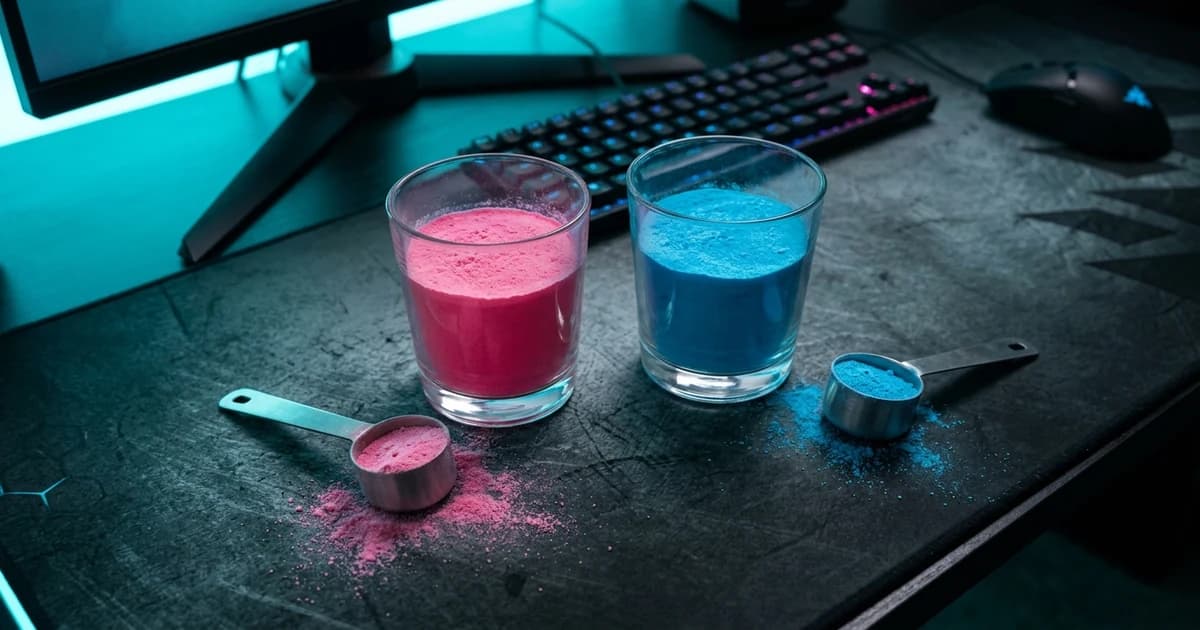
Option 2: L-Theanine Powder in Coffee L-theanine is water-soluble and nearly tasteless. You can stir it directly into your coffee. Use a small kitchen scale for accuracy.
Option 3: A Pre-Built Stack Some products combine caffeine and L-theanine (along with other complementary compounds) in a single format, removing the guesswork entirely.
Timing note: Both caffeine and L-theanine take roughly 30–45 minutes to reach peak plasma levels. Take them at the same time for synchronized effects. If you're using a sublingual format, absorption can be faster since the compounds bypass first-pass metabolism in the liver.
Who Should Consider This L-Theanine and Coffee Stack?
- Daily coffee drinkers who experience jitters, anxiety, or afternoon crashes.
- Knowledge workers who need sustained focus for long stretches, not just a quick burst of energy.
- Anyone sensitive to caffeine who still wants its cognitive benefits without the physical side effects.
Beyond L-Theanine: Compounds That Pair Well With Coffee
L-theanine is the most studied caffeine companion, but it's not the only one. Two other methylxanthine derivatives deserve mention:
Theacrine (found in kucha tea) has a similar structure to caffeine but doesn't appear to build tolerance with repeated use. That's a big deal, because caffeine tolerance is the reason your first cup of coffee felt electric and your 500th feels like baseline maintenance. Theacrine may extend the duration of alertness without the same crash profile.
Methylliberine acts faster than caffeine and may amplify its effects on mood and energy. When stacked with caffeine and L-theanine, these compounds create a more complete cognitive profile: faster onset, smoother peak, longer duration, cleaner offset.
Smarter Coffee Starts With Better Chemistry
The science on l theanine and coffee is clear. Caffeine alone is a blunt instrument. Paired with L-theanine, it becomes precise. You get the alertness, the focus, and the motivation, without the jitters, the anxiety, or the crash.
If measuring powders and timing capsules with your morning brew sounds like too much friction, Roon built a simpler solution. Roon's nootropic pouches each deliver 80 mg of caffeine alongside L-theanine, theacrine, and methylliberine in a single, zero-nicotine format. No coffee required. No guesswork. Just 6-8 hours of clean, sustained focus, exactly what the research says l theanine and coffee should deliver.