Supplements for Anxiety: What Actually Works
Roon Team

Supplements for Anxiety: What Actually Works (and What's Just Hype)
Short answer: The supplements for anxiety with the strongest clinical evidence are L-theanine, magnesium, and ashwagandha, with omega-3s, passionflower, and vitamin D playing more situational roles. Dose and form matter more than the ingredient name, and the right pick depends on whether your anxiety is physical, mental, or chronic. None of these replace therapy or medication for a diagnosed anxiety disorder; they are tools that may help take the edge off, not treatments.
Roughly 42.5 million American adults live with an anxiety disorder, making it the single most common mental health condition in the country. Supplements for anxiety have become a major topic of interest for people searching for relief. That's according to recent data compiled by the LA OPC Center. A huge number of those people are either unmedicated, undermedicated, or simply looking for something to take the edge off without a prescription. That's exactly where supplements for anxiety enter the conversation.
The problem is, the supplement aisle is crowded. Ashwagandha gummies sit next to magnesium powders, which sit next to mystery blends with names that sound more like energy drinks than anything calming. Some of these supplements for anxiety are backed by real clinical data. Others are riding pure TikTok hype.
This guide breaks down the best supplements for anxiety based on what the research actually says, who each one works best for, and what to skip entirely.
Key Takeaways
- L-Theanine, magnesium, and ashwagandha have the strongest clinical evidence among supplements for anxiety.
- Dosing matters enormously. A supplement can be legitimate at 400mg and useless at 50mg.
- Not all anxiety is the same. Generalized background stress, acute performance anxiety, and clinical anxiety disorders respond to different compounds.
- No supplement replaces therapy or medication for diagnosed anxiety disorders. These are tools, not treatments.
The Best Supplements for Anxiety (Ranked by Evidence)
1. L-Theanine: The Calm Focus Compound
L-theanine is an amino acid found naturally in green tea, and it ranks among the most promising supplements for anxiety based on current clinical evidence. It appears to work in part by crossing the blood-brain barrier and increasing alpha brain wave activity, a pattern associated with relaxed alertness and meditative states.
A 2021 randomized, triple-blind, placebo-controlled study published in Neurology and Therapy found that a single dose of L-theanine led to a greater increase in frontal region and whole-scalp alpha power compared to placebo, even under acute stress conditions. Participants were put through a mental arithmetic stress test, and the L-theanine group showed measurably calmer brain activity afterward.
A 2024 review in Nutrition Research published in Nutrition Research further supported these findings, noting that L-theanine at standard supplemental doses of 50 to 250 mg increased alpha wave activity in healthy adults and promoted a state of psychophysiological relaxation. The review also observed that L-theanine may act as a partial agonist at NMDA receptors, suggesting a mechanism that is more nuanced than simple sedation.
What distinguishes L-theanine from many other supplements for anxiety is its ability to promote relaxation without impairing alertness. It appears to modulate GABA, serotonin, and dopamine activity, which may help explain why it can reduce stress while preserving mental clarity. Most studies use doses ranging from 100 to 400 mg per day. For those exploring supplements for anxiety, L-theanine is a strong place to begin.
Best for: People who need to stay focused while reducing stress. Think presentations, deep work sessions, or high-pressure deadlines.
2. Magnesium: The Deficiency You Probably Have
Magnesium is involved in more than 300 enzymatic reactions in the body, including several that help regulate the stress response. As one of the most widely studied supplements for anxiety, it deserves serious consideration. The issue is that many people do not get enough of it from food alone.
A 2024 systematic review published in Cureus examined 15 studies on magnesium supplementation and found that nearly all of the anxiety-related trials reported symptom improvement. The authors also noted that supplemental magnesium was associated with better sleep quality and lower self-reported anxiety across multiple populations.
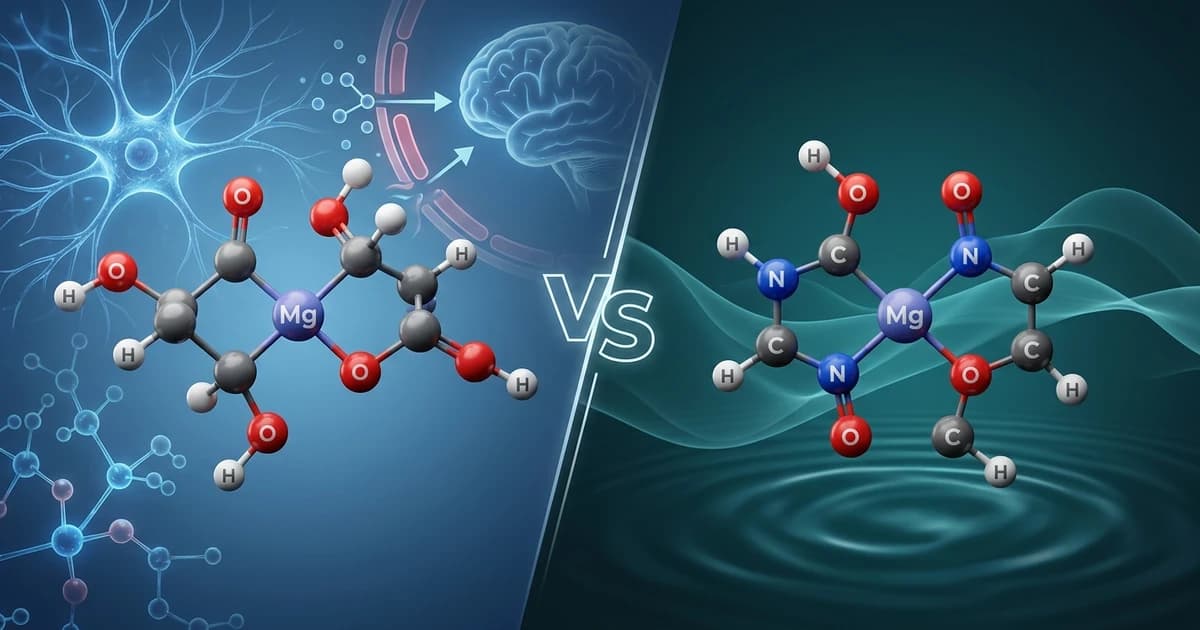
Not all forms of magnesium are equally useful. Magnesium glycinate and magnesium L-threonate are generally considered better absorbed and more relevant for brain-related benefits. Magnesium oxide, by contrast, is the least expensive and most commonly used form in many over-the-counter supplements, yet it has relatively poor bioavailability and is more likely to cause gastrointestinal side effects than meaningful calming effects.
Clinical doses typically range from 248 to 500mg per day, according to ICANotes' review of evidence-based mental health supplements.
Best for: People with chronic, low-grade anxiety, poor sleep, or muscle tension. Especially useful if your diet is low in leafy greens, nuts, and seeds.
3. Ashwagandha: The Cortisol Regulator
Ashwagandha (Withania somnifera) is an adaptogenic herb that has been used in Ayurvedic medicine for centuries. Among supplements for anxiety associated with chronic stress, ashwagandha stands out for its growing body of clinical evidence.
A 2025 systematic review and meta-analysis published in BJPsych Open analyzed randomized clinical trials and found that ashwagandha supplementation resulted in a statistically significant reduction of cortisol levels, PSS (Perceived Stress Scale) scores, and HAM-A (Hamilton Anxiety Rating Scale) scores. The review pulled data from trials searched across PubMed, Web of Science, and other major databases through September 2024.
An earlier randomized, double-blind, placebo-controlled study found that over 60 days, ashwagandha supplementation was associated with a statistically significant reduction in anxiety scores compared to placebo, with no adverse events reported.
A separate 60-day trial using a high-concentration full-spectrum extract showed even more dramatic results: a 75.6% reduction in scores on the anxiety item-subset and a 64.2% reduction in the stress item-subset, compared to far smaller improvements in the placebo group.
The effective dose in most clinical trials ranges from 300 to 600 mg per day of a root extract standardized to withanolides. One important limitation is that ashwagandha is not a fast-acting supplement. Most studies assess outcomes after 8 weeks or more, so it is not the right option for someone looking for immediate relief.
Best for: People dealing with ongoing, chronic stress that shows up as elevated cortisol, fatigue, and that constant "wired but tired" feeling. Among supplements for stress and anxiety, ashwagandha is one of the stronger long-term options.
4. Omega-3 Fatty Acids: The Anti-Inflammatory Angle
Anxiety does not exist only in the mind. Systemic inflammation appears to play a measurable role in mood disorders, and omega-3 fatty acids, particularly EPA and DHA, are among the best-studied anti-inflammatory supplements for anxiety.
A dose-response meta-analysis published in Frontiers in Nutrition found that each 1 gram per day of omega-3 supplementation resulted in a moderate decrease in anxiety symptoms. The analysis also showed that doses below 2g per day had limited effects, suggesting you need a meaningful dose to see results.
A separate meta-analysis of 19 clinical trials published in JAMA Network Open concluded that omega-3 PUFAs might help reduce symptoms of clinical anxiety, particularly in individuals with diagnosed anxiety conditions.
Best for: People whose anxiety may overlap with inflammation, poor diet quality, or very low intake of fatty fish.
5. Passionflower: The Gentle Sedative
Passionflower (Passiflora incarnata) is one of the older herbal supplements for anxiety, and it has more clinical support than most people realize.
A pilot double-blind randomized controlled trial compared passionflower extract with oxazepam, a benzodiazepine, for generalized anxiety disorder. Both protocols were effective by the end of the trial, with no significant difference between them. The main distinction was that oxazepam worked faster, while passionflower was associated with less impairment in job performance.
6. Vitamin D: The Overlooked Foundation
Vitamin D is not a traditional anxiety supplement, but the link between low vitamin D status and mood symptoms is difficult to ignore.
A 2024 cross-sectional study published in Frontiers in Nutrition found a meaningful association between low serum vitamin D levels and anxiety in U.S. adults. And a review published in Nutritional Neuroscience noted that while animal models were inconclusive, strong evidence suggests vitamin D supplementation may alleviate anxiety symptoms in chronically deficient individuals.
This isn't one of those supplements for anxiety that will calm you down in the moment. It's a foundational nutrient. If you're deficient (and an estimated 40% of Americans are), fixing that deficiency may reduce baseline anxiety over weeks to months.
Best for: People who spend most of their time indoors, get little sun exposure, or have confirmed low vitamin D levels on a blood test.
Anti Anxiety Supplements: What to Skip
Not everything on the shelf deserves your money. Even among popular supplements for anxiety, some products fall short. This is where flashy branding tends to outrun the evidence.
| Supplement | The Claim | The Reality |
|---|---|---|
| Kava | Powerful anxiolytic | Effective, but the NCCIH flagged serious liver toxicity risks. Not worth it without medical supervision. |
| Valerian Root | Calms anxiety | Evidence is mostly for sleep, not anxiety. Results are inconsistent across studies. |
| CBD | Cures everything | Some promising preliminary data, but dosing is wildly inconsistent across products, and regulation is minimal. |
| 5-HTP | Boosts serotonin | Can interact dangerously with SSRIs and other medications. Should not be taken without medical guidance. |
How to Choose the Best Supplements for Stress and Anxiety
Picking the right supplements for anxiety depends on your specific situation. Here's a quick decision framework:
If your anxiety is physical (tight shoulders, jaw clenching, restless legs): Start with magnesium glycinate, 300-400mg before bed.
If your anxiety is mental (racing thoughts, difficulty concentrating, mental fog under pressure): Try L-theanine, 200-400mg. It works within 30 to 60 minutes.
If your anxiety is chronic and stress-driven (high cortisol, burnout, feeling constantly overwhelmed): Consider ashwagandha, 300-600mg daily for at least 8 weeks. This is one of the best supplements for stress and anxiety in the long-term category.
If your anxiety co-occurs with inflammation or poor diet: Add omega-3s at 2g or more per day.
If you haven't checked your vitamin D levels: Get a blood test. Fix the foundation first.
Stacking: Can You Combine Supplements for Anxiety?
Yes, and some combinations work better than individual compounds. L-theanine and caffeine is one of the most well-studied stacks in cognitive science. The caffeine provides alertness while L-theanine improves attention-switching accuracy and promotes alpha-wave activity, producing a state researchers often describe as "alert calm."
A study on the combination of caffeine, theacrine, and methylliberine found that the stack improved cognitive performance and reaction time without negatively affecting mood in a randomized crossover design. This is the principle behind most well-designed nootropic formulations: compounds that complement each other's mechanisms rather than just piling on more stimulation.
A separate double-blind, placebo-controlled trial on tactical personnel tested caffeine alongside methylliberine and theacrine. The researchers speculated that the different peak times and half-lives of these compounds could sustain cognitive benefits over a longer window compared to caffeine alone. The data supported similar vigilance benefits with the combination versus a much higher dose of caffeine by itself.
Magnesium pairs well with nearly every other option on this list of supplements for anxiety. Ashwagandha and L-theanine can be taken together safely. The main interaction to watch is between 5-HTP and any prescription serotonergic medication, which is why 5-HTP landed on the "skip" list above.
A Note on Quality and Regulation
Supplements for anxiety are not regulated the same way prescription drugs are. This means the label doesn't always match the bottle. A few rules to protect yourself:
- Look for third-party testing. Certifications from NSF, USP, or Informed Sport mean the product has been independently verified for purity and potency.
- Check the form of the ingredient. "Magnesium" on a label tells you very little. Magnesium glycinate, citrate, and L-threonate behave very differently in your body than magnesium oxide.
- Read the dose, not just the ingredient list. A product can contain L-theanine and still be useless if the dose is 25mg when the clinical evidence starts at 100mg.
- Be wary of proprietary blends. If a label lists a "proprietary blend" without disclosing individual ingredient doses, you have no way of knowing whether you're getting a clinical dose or a sprinkle of fairy dust.
Best Supplements for Anxiety: The Bottom Line
The supplement market is full of noise, but a small group of supplements for anxiety does have legitimate, peer-reviewed support behind it. L-theanine, magnesium, ashwagandha, omega-3s, passionflower, and vitamin D each have some degree of clinical evidence for anxiety-related symptoms, although they do not work through the same mechanism and they do not fit the same person equally well.
The smartest way to approach supplements for anxiety is to be targeted. First, identify the type of anxiety you are dealing with. Second, correct any obvious nutritional gaps or deficiencies. Then, if needed, layer in compounds that actually match your symptoms. The best supplements for stress and anxiety are rarely the ones with the flashiest packaging. They are the ones that make biological sense for the person taking them.
If what you are really after is calm focus --- the kind where stress comes down but mental sharpness stays intact --- L-theanine remains one of the strongest options in this category. That is the logic behind Roon's formula: pairing L-theanine with caffeine, theacrine, and methylliberine in a sublingual pouch designed to support sustained cognitive performance without the jitters or crash. Calm focus, not drowsy calm.
Frequently Asked Questions
What is the best supplement for anxiety?
There is no single best supplement for anxiety, because the right choice depends on your symptoms. L-theanine suits mental, racing-thought anxiety and works within 30 to 60 minutes. Magnesium glycinate fits physical tension and poor sleep. Ashwagandha targets chronic, cortisol-driven stress over 8 weeks or more. Match the compound to your specific pattern rather than chasing one universal answer.
How long do supplements for anxiety take to work?
It depends on the compound. L-theanine acts quickly, usually within 30 to 60 minutes, which makes it useful before a presentation or deadline. Magnesium may take a few weeks of consistent use to affect baseline tension and sleep. Ashwagandha is the slowest, with most clinical trials measuring outcomes after 8 weeks or more, so it rewards patience rather than offering instant relief.
Can you take supplements for anxiety alongside prescription medication?
Always check with a healthcare provider first, because some supplements interact with prescription drugs. The clearest example is 5-HTP, which can combine dangerously with SSRIs and other serotonergic medications. Even widely used options like magnesium or ashwagandha can affect how certain drugs work. Supplements are not a substitute for prescribed treatment, and combining them without guidance can create avoidable risks.
What is the best supplement for anxiety and sleep?
Magnesium glycinate is the most common pick when anxiety and poor sleep overlap, since it supports muscle relaxation and is better absorbed than magnesium oxide. Clinical doses generally fall between 248 and 500 mg per day, often taken before bed. A 2024 systematic review in Cureus also linked supplemental magnesium with better sleep quality and lower self-reported anxiety across several populations.
Can L-theanine and caffeine be taken together for calm focus?
Yes, and it is one of the most studied combinations in cognitive science. Caffeine provides alertness while L-theanine improves attention-switching accuracy and promotes alpha-wave activity, producing what researchers call alert calm. This pairing is the idea behind Roon, a sublingual pouch that combines L-theanine with caffeine, theacrine, and methylliberine to support sustained focus without the jitters or crash. It is built for calm focus, not anxiety relief.
Are supplements for anxiety safe?
Most evidence-backed options like L-theanine, magnesium, and ashwagandha are well tolerated at clinical doses, but safe does not mean unregulated quality. Supplements are not vetted like prescription drugs, so look for third-party testing from NSF, USP, or Informed Sport. Check the ingredient form and dose, avoid proprietary blends, and talk to a provider if you take other medications or have a health condition.
Disclaimer: This article is for informational purposes only and does not constitute medical advice. Consult a healthcare provider before starting any supplement regimen, especially if you are taking prescription medications.
By Roon Team