How Much Caffeine Is in a Shot of Espresso? Single, Double, by Chain
Roon Team
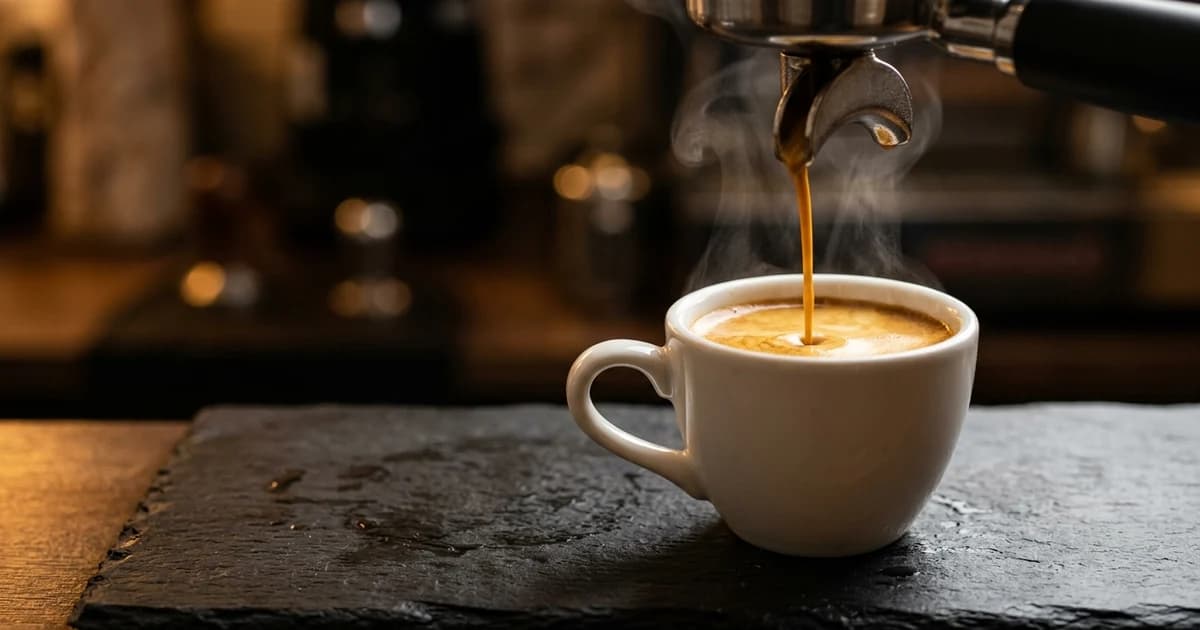
How Much Caffeine Is in a Shot of Espresso? Single, Double, by Chain
A standard single shot of espresso contains about 63 mg of caffeine per 1 oz serving, according to USDA FoodData Central. At Starbucks, that number is 75 mg per solo shot. But those averages hide a wild range: a 2012 lab analysis of 20 coffee shops found espresso caffeine content ranging from 51 mg to 322 mg, a six-fold spread, though serving sizes varied from 23 ml to 100 ml, not all standard 1 oz pulls. The shot you ordered this morning could contain less caffeine than a cup of green tea or more than three cans of cola.
This page gives you every number you need: single, double, ristretto, lungo, decaf, and chain-by-chain, all sourced.
The Full Espresso Caffeine Table
Every variant below uses the most reliable source available for that row. Where chain-specific data exists, it takes priority over the USDA average.
| Espresso Variant | Serving Size | Caffeine (mg) | Source |
|---|---|---|---|
| Single shot (USDA average) | 1 oz (30 ml) | ~63 | USDA FoodData Central |
| Double shot / doppio (USDA avg.) | 2 oz (60 ml) | ~126 | USDA (2x single) |
| Starbucks Signature single shot | 0.75 oz | 75 | Starbucks Nutrition |
| Starbucks doppio | 1.5 oz | 150 | Starbucks Nutrition |
| Nespresso OriginalLine espresso | 1.35 oz (40 ml) | 55-65 | Nespresso / Caffeine Informer |
| Nespresso OriginalLine Lungo | 3.7 oz (110 ml) | 77-85 | Nespresso / Caffeine Informer |
| Ristretto (typical) | 0.5-0.75 oz | ~40-50 | Estimate; no peer-reviewed source |
| Lungo (typical bar pull) | 2-3 oz | ~70-90 | Estimate; no peer-reviewed source |
| Decaf espresso (Starbucks) | 1 shot | 3-15.8 | McCusker et al., 2006 |
| Crozier study range (20 shops) | 23-100 ml (varied) | 51-322 | Crozier et al., 2012 |
Starbucks uses a slightly larger dose of ground coffee per pull than many independent cafes, which is why its 75 mg per shot sits above the USDA's 63 mg baseline.
How Espresso Compares to Drip Coffee, Cola, Tea, and a Pouch
The per-ounce concentration of espresso is high. The per-serving total is often lower than a full mug of drip. This distinction matters more than most caffeine guides acknowledge.
| Beverage | Typical Serving | Caffeine (mg) | Caffeine per oz (mg) |
|---|---|---|---|
| Espresso, single shot | 1 oz | 63 | 63 |
| Drip coffee | 8 oz | ~95 | ~12 |
| Cold brew | 16 oz | ~200 | ~12.5 |
| Black tea | 8 oz | ~47 | ~6 |
| Cola (Coca-Cola) | 12 oz | ~34 | ~2.8 |
| Red Bull | 8.4 oz | 80 | ~9.5 |
| Roon pouch | n/a (sublingual) | 80 | n/a |
Drip coffee data is derived from the FDA's consumer guide, which puts an 8 oz cup at 80-100 mg. For a deeper look at brewed coffee numbers, see the full drip coffee breakdown.
Why One Espresso Shot Can Range from 50 mg to Over 300 mg
The USDA average of 63 mg is a useful shorthand and a terrible prediction for any specific cup.
Crozier et al. (2012) bought espresso servings from 20 different coffee shops in Glasgow and ran each through HPLC analysis. Serving sizes ranged from 23 ml to 100 ml; only 11 of 20 were near a standard 30 ml shot, and among those the range was 51-173 mg. The results across all servings: a six-fold range in caffeine content, from 51 mg to 322 mg. Four of the 20 shots exceeded 200 mg, meaning a single "shot" delivered more caffeine than two full cans of Red Bull.
The biggest variable? The amount of ground coffee the barista loaded into the portafilter. Bean species matters too: robusta beans carry roughly twice the caffeine of arabica, and some blends mix the two. Roast level, grind size, water temperature, and extraction time all add smaller shifts. But dose is dominant.
This is why "one shot of espresso" is not a fixed unit of caffeine. If you are tracking intake against the FDA's 400 mg/day guideline, treat 63 mg as a floor estimate, not a ceiling.
Single Shot vs. Double Shot vs. Ristretto vs. Lungo
These four pulls start with the same beans but change the water volume and extraction time. That changes both flavor and caffeine.
Single shot (solo)
The standard: 7-9 g of ground coffee, 25-30 seconds of extraction, ~1 oz of liquid. Expect roughly 63 mg (USDA) to 75 mg (Starbucks).
Double shot (doppio)
Twice the coffee dose, twice the water, same extraction time. Caffeine scales linearly: ~126 mg (USDA average) or 150 mg at Starbucks. Most specialty cafes default to a doppio in every drink, so your "latte" already contains two shots unless you ask otherwise.
Ristretto ("restricted")
Same coffee dose as a single shot, but the pull is cut short at roughly 15-20 seconds, yielding about half the liquid (~0.5 oz). Less water passing through the puck means less caffeine extracted, typically 40-50 mg per shot. The flavor is more concentrated and sweeter, but the caffeine hit is actually smaller.
Lungo ("long")
The opposite of a ristretto. The pull runs longer (up to 45-60 seconds), pushing more water through the same dose. More extraction time means more caffeine in the cup, roughly 70-90 mg per shot. The trade-off: a thinner body and more bitter notes, because the extended contact also extracts harsher compounds.
Short version: ristretto < single < lungo in caffeine. The difference between a ristretto and a lungo from the same dose can be 40-50 mg, which is not trivial if you are stacking shots.
Is Espresso Stronger Than Coffee?
Per ounce, yes. Per serving, usually no.
A single espresso shot delivers about 63 mg of caffeine in 1 oz. Drip coffee delivers about 95 mg in 8 oz. Ounce for ounce, espresso is roughly five times more concentrated. But nobody drinks 8 oz of straight espresso. In practice, a standard mug of drip coffee gives you more total caffeine than a single shot.
The crossover happens at a doppio. Two shots (~126-150 mg) surpass most 8 oz cups of drip. A triple-shot drink at Starbucks puts you at 225 mg. Starbucks' own data shows a Tall (12 oz) brewed coffee at about 260 mg, well above a triple espresso. So the real answer depends on how many shots are in your drink and how large your drip cup is.
For a side-by-side look at how different doses feel over time, see how long that shot lasts and why the buzz fades at different rates.
Does Decaf Espresso Have Caffeine?
Yes. Decaf is not zero-caf.
McCusker et al. (2006) tested six Starbucks decaf espresso shots from the same location and found caffeine levels ranging from 3.0 to 15.8 mg per shot. That five-fold variation within a single store, on the same decaf beans, shows how much extraction conditions fluctuate shot to shot.
For most people, 3-16 mg is negligible. But if you are highly caffeine-sensitive or stacking four or five decaf shots (a decaf quad latte, say), you could be taking in 12-64 mg without realizing it. That is a meaningful dose for someone who thought they were at zero.
Will One Shot of Espresso Keep You Awake?
A single shot (63-75 mg) is a moderate caffeine dose, comparable to a small cup of brewed coffee. Caffeine's half-life in most healthy adults runs about 5-6 hours, so half of that 63 mg is still circulating roughly five hours after you drink it.
Whether it disrupts your sleep depends on your genetics (CYP1A2 metabolizer status), your tolerance, and when you drink it. A 2 PM espresso, for instance, still leaves ~16-19 mg active at midnight in an average metabolizer. That is below most people's sleep-disruption threshold, but a slow metabolizer could have double that amount circulating.
The FDA recommends a ceiling of 400 mg per day for most healthy adults. One shot is well within that limit. Five doppio shots would push past it.
Conclusion
The "right" espresso order depends on what you are trying to achieve. A ristretto gives you intensity with less total caffeine. A lungo extracts more but tastes thinner. A doppio doubles the dose. And the chain or cafe you visit may matter more than the pull style, given the six-fold variation Crozier's team documented.
If you want a predictable caffeine dose without guessing what the barista loaded into the basket, a standardized source removes the variability. That is the core argument for any pre-dosed format, whether it is a capsule, a tablet, or a pouch.
Frequently Asked Questions
How much caffeine is in a double shot of espresso?
A double shot (doppio) contains roughly 126 mg using the USDA average of 63 mg per shot. At Starbucks, a doppio delivers 150 mg because their single shot runs 75 mg. If your cafe uses a heavier dose of grounds, the total could be higher. Assume 120-150 mg as a practical range for most double shots.
Is espresso stronger than coffee?
Espresso is about five times more concentrated per ounce (~63 mg/oz vs. ~12 mg/oz for drip). But a standard 8 oz cup of drip coffee contains more total caffeine (~95 mg) than a single 1 oz shot (~63 mg). Espresso wins on concentration; drip wins on total dose per serving.
How much caffeine is in a shot of espresso at Starbucks?
Starbucks lists 75 mg of caffeine per solo espresso shot on its nutrition page. A doppio is 150 mg. Drinks built on espresso (lattes, cappuccinos, macchiatos) multiply that number by the shot count in each size.
Does a ristretto have less caffeine than a regular espresso?
Yes. A ristretto uses the same coffee dose but cuts the extraction short, pulling roughly half the water volume. Less water means less caffeine extracted, typically 40-50 mg versus 63 mg for a full single shot.
Does a lungo have more caffeine than espresso?
Generally, yes. The longer extraction time pulls more caffeine from the grounds, yielding roughly 70-90 mg per shot compared to 63 mg for a standard pull. Nespresso's Lungo capsules reflect this: 77-85 mg versus 55-65 mg for their espresso capsules.
How much caffeine is in decaf espresso?
A decaf espresso shot contains approximately 3-16 mg of caffeine. McCusker et al. (2006) measured Starbucks decaf espresso at 3.0-15.8 mg per shot. Decaf removes most caffeine, not all of it.
How many espresso shots equal 400 mg of caffeine?
Using the USDA average of 63 mg per shot, you would hit 400 mg at about 6.3 shots. Using Starbucks' 75 mg figure, 5.3 shots. The FDA's 400 mg daily guideline applies to most healthy adults, though individual tolerance varies.
Can espresso caffeine content vary between shops?
Dramatically. Crozier et al. (2012) found a six-fold range (51-322 mg) across 20 coffee shops, with the amount of ground coffee per shot being the largest variable. Your local cafe's espresso could contain twice the caffeine of Starbucks, or half.
A Predictable 80 mg, Without the Guesswork
The core problem with espresso caffeine is variance. You order the same drink every day, but the dose changes based on who pulled the shot, which beans are in the hopper, and whether the grinder drifted. If you care about consistent energy, that is a design flaw.
Roon is a zero-nicotine sublingual pouch built around a fixed 80 mg caffeine dose, paired with 60 mg L-theanine, 25 mg methylliberine (Dynamine), and 5 mg theacrine (TeaCrine). The methylliberine slows caffeine clearance, so the felt window stretches to 6-8 hours instead of espresso's typical 3-4 hour arc. (The mechanism was demonstrated in a randomized PK study using 100 mg methylliberine + 150 mg caffeine, roughly 4x the methylliberine and 1.9x the caffeine in a Roon pouch, so the study's exact clearance numbers do not map one-to-one, but the direction holds.) Because the half-life extends, stop at least 8 hours before bed.
It is not a replacement for good espresso. It is a replacement for the third reorder when the first two shots wore off unpredictably. From $9.16 per tin on a 12-tin subscription, that works out to $0.61 per pouch. For a closer look at how 80 mg in a pouch compares to a shot, see 80 mg pouch vs. a shot.
Written by Roon Team