Does Hot Chocolate Have Caffeine? (Every Type of Chocolate, Compared)
Does Hot Chocolate Have Caffeine? (Every Type of Chocolate, Compared)
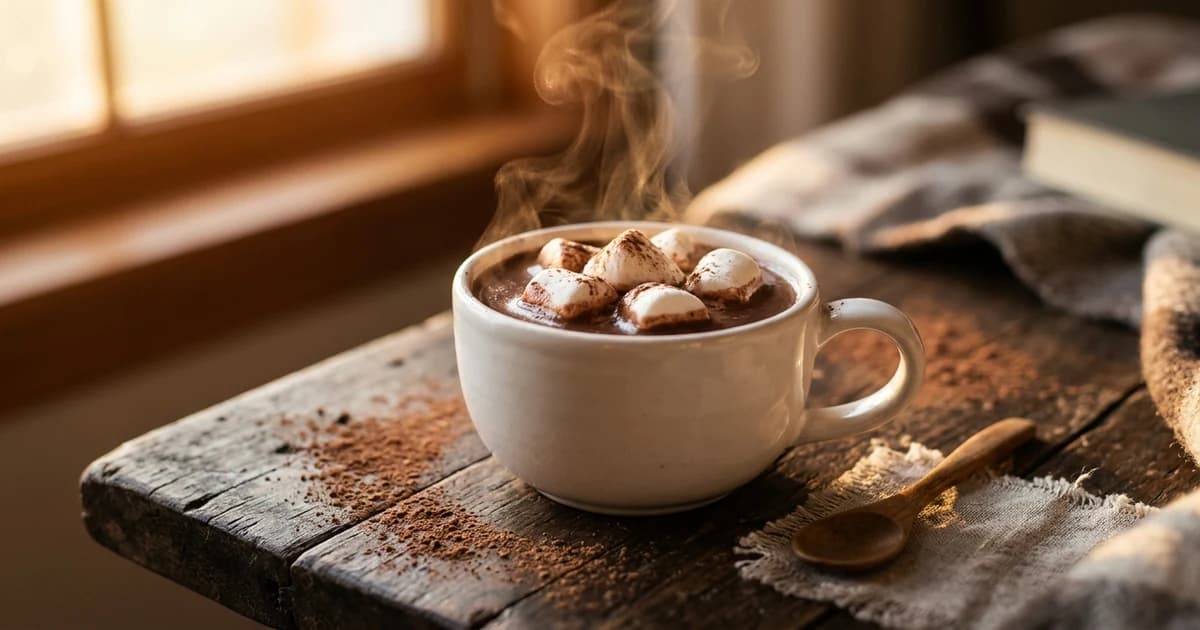
Yes, hot chocolate contains caffeine, but very little. A standard 8 oz cup made from cocoa mix has roughly 5 mg of caffeine, according to USDA FoodData Central data. That is about 5% of what you get from a cup of drip coffee. Swiss Miss puts it at 99.9% caffeine-free. A Starbucks Grande Hot Chocolate comes in higher, at about 25 mg, because it uses more cocoa in the mocha sauce.
The real story is that chocolate's primary stimulant is not caffeine at all. It is theobromine, present at roughly 10 times the concentration. The caffeine table below gives you the quick answer.
The Full Hot Chocolate and Chocolate Caffeine Table
Every number in this table is per standard serving. Sources are USDA FoodData Central, brand-published nutrition data, and Caffeine Informer.
| Source | Serving | Caffeine (mg) | Notes |
|---|---|---|---|
| Hot cocoa from mix (generic) | 8 oz | ~5 | USDA FDC, homemade/prepared |
| Swiss Miss Classic | 1 packet (6 oz) | ~1-3 | swissmiss.com FAQ: "99.9% caffeine free" |
| Starbucks Hot Chocolate (Grande) | 16 oz | ~25 | Cocoa in mocha sauce; source |
| Unsweetened cocoa powder | 1 tbsp (5.4 g) | ~12 | USDA SR Legacy 169593; 230 mg per 100 g |
| Dark chocolate, 70-85% cacao | 1 oz (28 g) | ~23 | USDA FDC 170273; 80 mg per 100 g |
| Milk chocolate | 1 oz (28 g) | ~6 | USDA; lower cocoa solids |
| White chocolate | 1 oz (28 g) | 0 | No cocoa solids, only cocoa butter |
White chocolate is the only true zero. Everything else made from cocoa solids carries at least trace caffeine.
How Hot Chocolate Compares to Coffee, Tea, and an 80 mg Pouch
To put those numbers in perspective, here is the same scale with more familiar caffeine sources. Drip coffee data from USDA; tea data from USDA; cola and energy drink from manufacturer labels.
| Drink / Product | Serving | Caffeine (mg) |
|---|---|---|
| Drip coffee | 8 oz | ~95 |
| Black tea | 8 oz | ~47 |
| Starbucks Hot Chocolate | 16 oz (Grande) | ~25 |
| Green tea | 8 oz | ~28 |
| Hot cocoa from mix | 8 oz | ~5 |
| Swiss Miss Classic | 6 oz packet | ~1-3 |
| Coca-Cola Classic | 12 oz can | ~34 |
| Roon pouch | 1 pouch | 80 |
A cup of Swiss Miss delivers less caffeine than a single bite of dark chocolate. Even the Starbucks Grande, the most caffeinated mainstream hot chocolate, is about a quarter of a standard coffee.
Does Chocolate Have Caffeine? Dark vs Milk vs White
All chocolate made from cocoa solids contains some caffeine. The concentration scales directly with the percentage of cacao in the product.
Dark chocolate (70-85% cacao) contains roughly 80 mg of caffeine per 100 g, or about 23 mg per ounce, based on USDA FoodData Central entry 170273. That makes a full 3.5 oz bar roughly equivalent to a third of a cup of coffee.
Milk chocolate drops to about 20 mg per 100 g, roughly 6 mg per ounce. Milk solids and sugar dilute the cocoa concentration. White chocolate contains zero caffeine because it is made from cocoa butter only, with none of the cocoa solids where caffeine resides. Going from a typical milk chocolate (45% cacao) to 85% cacao roughly quadruples the caffeine per ounce.
Does Swiss Miss Have Caffeine?
Swiss Miss products are 99.9% caffeine-free, with approximately 1 to 3 mg of naturally occurring caffeine per serving from the cocoa. That figure comes directly from the Swiss Miss FAQ page.
The Simply Cocoa and Café Blends lines are described as 99% caffeine-free, slightly higher, likely 3 to 5 mg per cup. Any variety listing espresso powder in the ingredients will add a few more milligrams. You would still need 30 to 40 classic packets to match one 8 oz coffee.
How Much Caffeine Is in Starbucks Hot Chocolate?
A Grande (16 oz) Starbucks Hot Chocolate contains approximately 25 mg of caffeine. The caffeine comes entirely from the cocoa in Starbucks' mocha sauce. No coffee or espresso is added to the standard recipe.
A Grande Pike Place drip coffee runs about 310 mg, over 12 times as much. A Tall (12 oz) will be roughly 15 mg; a Venti (20 oz) around 30 mg. Order a White Hot Chocolate and the caffeine drops near zero. Adding an espresso shot (making it a mocha) adds roughly 75 mg per shot.
Theobromine vs Caffeine: Why Chocolate Feels Different Than Coffee
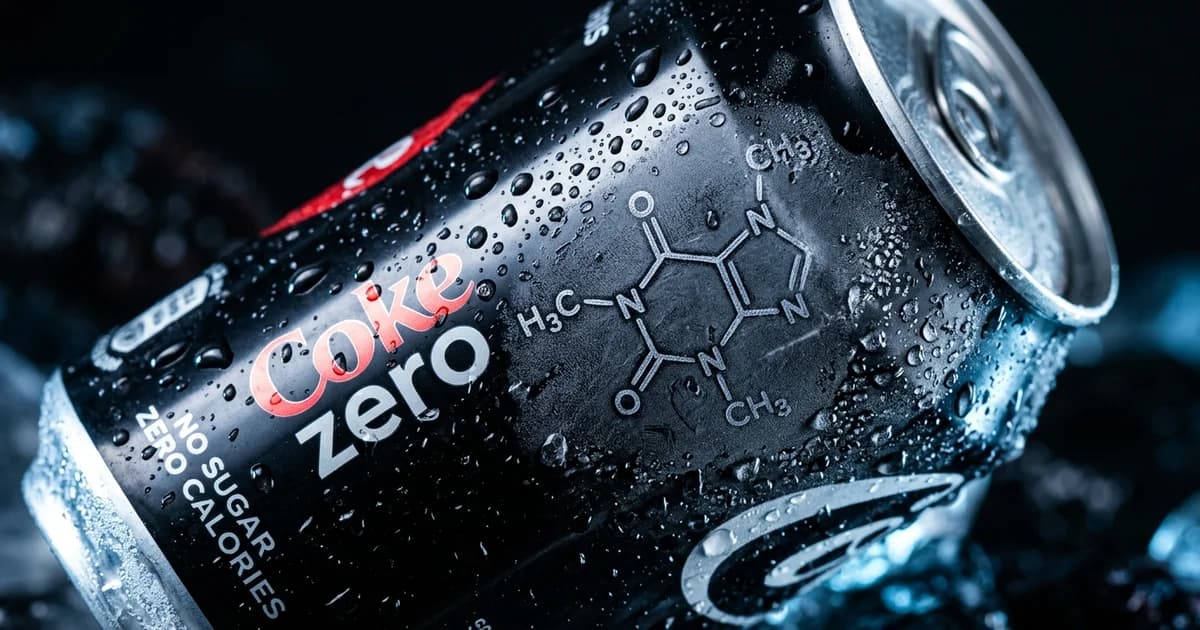
Chocolate's stimulant reputation comes primarily from theobromine, not caffeine. Dark chocolate (70-85% cacao) contains roughly 802 mg of theobromine per 100 g versus 80 mg of caffeine per 100 g, a 10:1 ratio. Both are methylxanthine compounds, but they act differently in the body.
Theobromine has a half-life commonly cited at roughly 6 to 10 hours in adults (multiple pharmacokinetic sources; ranges vary by population and dose), longer than caffeine's typical 5 to 6 hours. It produces a milder effect: slight mood elevation, mild vasodilation, and gentle diuresis, without caffeine's sharp alertness peak. This is why a square of dark chocolate before bed feels different from a shot of espresso.
For the full comparison, see why chocolate's stimulant isn't caffeine and theobromine's own mg breakdown.
Is Hot Chocolate Caffeine-Free Enough for Kids or Bedtime?
A standard cup of hot cocoa from mix contains roughly 1 to 5 mg of caffeine. The FDA cites 400 mg per day as the general guidance for healthy adults but has not set a formal limit for children. The American Academy of Pediatrics discourages caffeine for children and adolescents without specifying a hard cutoff.
At 1 to 5 mg per cup, hot cocoa sits well below any commonly discussed threshold. That said, this is not medical advice. If you have concerns about caffeine and a specific child, ask their pediatrician.
For bedtime: the caffeine in hot cocoa is unlikely to be the main sleep disruptor. The sugar (15 to 25 g per packet in most mixes) and theobromine (milder but longer-lasting) are more relevant. White hot chocolate eliminates all methylxanthine stimulants entirely.
Picking the Right Warm Drink for the Right Moment
Hot chocolate is not caffeine-free, but it is caffeine-trivial. A cup from mix contains roughly 1 to 5 mg, a rounding error next to coffee's 95 mg or even tea's 47 mg. The variable that matters more in chocolate is theobromine, which is milder per milligram but present at much higher concentrations.
If your goal is zero methylxanthine stimulants, white hot chocolate or herbal tea is the only clean option. For everyone else, standard hot cocoa is about as close to caffeine-free as a cocoa-based drink gets.
Frequently Asked Questions
Does hot chocolate have caffeine?
Yes, but very little. A typical 8 oz cup from cocoa mix has roughly 5 mg. That is about 5% of the caffeine in a cup of drip coffee. Swiss Miss Classic lands at 1 to 3 mg per packet.
Is hot chocolate caffeine-free?
Not technically. Any product made from cocoa solids contains trace caffeine. White chocolate is the only caffeine-free option because it contains no cocoa solids.
Does Swiss Miss have caffeine?
Swiss Miss calls its classic mixes 99.9% caffeine-free, with about 1 to 3 mg of naturally occurring caffeine per serving from the cocoa.
How much caffeine is in Starbucks hot chocolate?
A Grande (16 oz) contains approximately 25 mg, all from cocoa in the mocha sauce. No espresso is added to the standard recipe.
Does dark chocolate have more caffeine than milk chocolate?
Yes. Dark chocolate (70-85% cacao) has about 23 mg per ounce versus roughly 6 mg per ounce for milk chocolate. Higher cacao percentage means more caffeine.
Will hot chocolate keep me awake?
Probably not from the caffeine. At 1 to 5 mg per cup, standard hot cocoa has less caffeine than decaf coffee (typically 2 to 15 mg per 8 oz). Sugar and theobromine are more likely to affect sleep quality.
Does white chocolate have caffeine?
No. White chocolate contains zero caffeine because it is made from cocoa butter, not cocoa solids.
Is dark chocolate a good source of caffeine?
Not really. One ounce of 70-85% dark chocolate has about 23 mg, roughly a quarter of a cup of coffee. Chocolate is a better source of theobromine, present at about 10 times the concentration.
When 5 mg Is Not the Point
If you landed here wondering whether your evening hot cocoa was secretly wiring you, the answer is almost certainly no. Five milligrams is background noise. But if you are on the other side of the question, looking for a caffeine source that actually sustains focus through a work session or a long drive, hot chocolate is not it.
Roon is a zero-nicotine, zero-sugar oral pouch built for that purpose. Each pouch delivers 80 mg of caffeine alongside 60 mg L-theanine, 25 mg methylliberine (Dynamine), and 5 mg theacrine (TeaCrine). Methylliberine slows caffeine's clearance: a randomized, double-blind, crossover PK study (n=12) found that co-administration of 100 mg methylliberine with 150 mg caffeine cut oral clearance from 41.9 to 17.1 L/hr, with no increase in peak concentration. That study used 4x the methylliberine and ~1.9x the caffeine in a Roon pouch, so the magnitude won't be identical, but the mechanism is directionally the same: same peak, longer tail. The felt window is 6 to 8 hours. Because the tail is real, stop at least 8 hours before bed.
Roon is not a replacement for your morning coffee or your evening cocoa. It fills a different slot. Tins start at $9.16 for a 12-tin subscription, or $15.00 per tin one-time (4 tins).
Related from Roon
- Theobromine vs Caffeine: Why Chocolate's Stimulant Isn't Caffeine
- Theobromine as a Stimulant in Chocolate: The Full mg Breakdown
- Cocoa Flavanols, Brain Health, and Memory
- Does Chai Have Caffeine?
Written by Roon Team