Cocoa Flavanols and the Brain: Blood Flow, Memory
Roon Team
Cocoa Flavanols and the Brain: Blood Flow, Memory, and the Dose That Matters
A square of chocolate will not make you smarter. The compounds inside the cocoa bean, though, do something measurable to your brain. The science on cocoa flavanols and the brain comes down to one thing: how much blood reaches your neurons, and over time, that has shown up as a real difference in memory tests.
The catch is dose and context. Most chocolate has been processed in ways that strip the active compounds out, and the people who benefit most are not who you would expect.
Here is what the research actually says about cocoa flavanols, the brain, and the amount that moves the needle.
Key Takeaways
- Cocoa flavanols are plant compounds, mostly epicatechin, that support nitric oxide production and widen blood vessels, including the ones feeding your brain.
- The largest trial to date used 500 mg of cocoa flavanols daily, including 80 mg of epicatechin, far more than a normal chocolate bar provides.
- Memory gains in that trial showed up mainly in older adults who already ate a low-flavanol diet, not in everyone.
- Standard dark chocolate is an unreliable source, since processing destroys much of the flavanol content.
What Cocoa Flavanols Actually Are
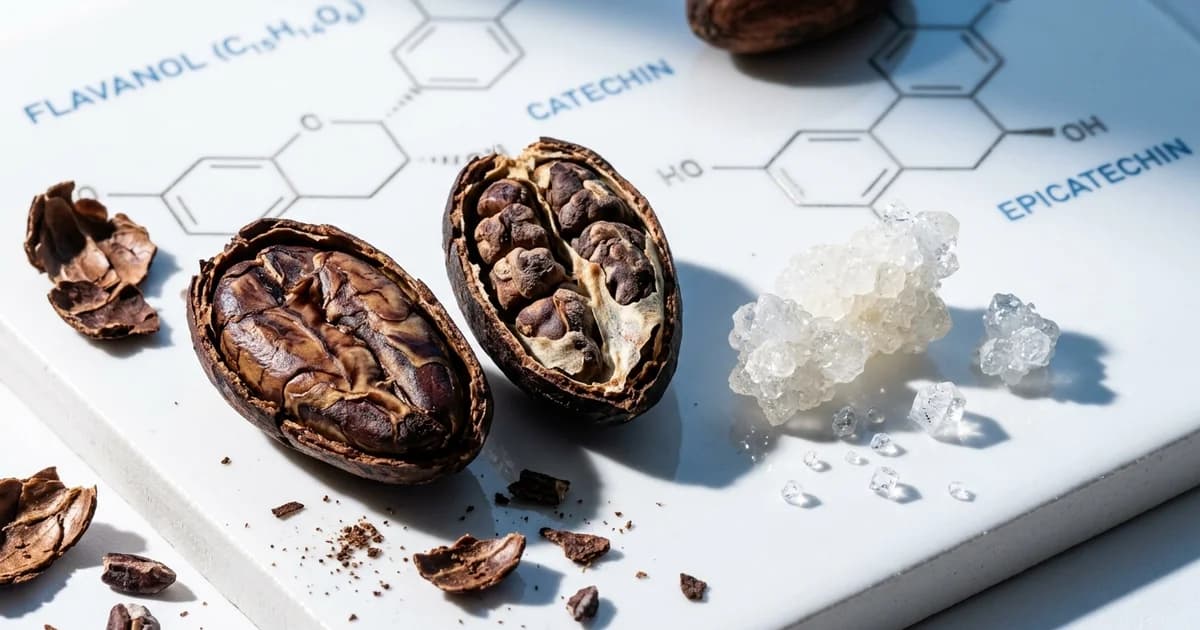
Cocoa flavanols are a group of antioxidant compounds found in the cocoa bean. The headline molecule is epicatechin, which is the most studied of the group for effects on the brain and the blood vessels.
These compounds belong to the broader flavonoid family found in tea, berries, apples, and red wine. Raw cocoa is one of the richest sources on earth. The problem is what happens between the bean and the bar.
Roasting, fermentation, and a step called Dutch processing (alkalization) all degrade flavanols. A dark chocolate square that tastes intense and bitter still carries no guarantee of high flavanol content, because bitterness and flavanol levels do not track each other reliably. This is why dark chocolate cognition claims fall apart when you look at the actual compound counts in a typical bar.
How Cocoa Flavanols Reach the Brain
The clearest mechanism for cocoa flavanols cerebral blood flow is vascular. Epicatechin supports the production of nitric oxide, a signaling molecule that relaxes the lining of your blood vessels and lets them widen. Wider vessels carry more blood.
Your brain is a demanding organ. It runs on roughly 20 percent of your oxygen and glucose despite being about 2 percent of your body weight, so anything that improves perfusion has a plausible path to affecting how the brain works.
Researchers have tracked this in real time. An acute trial in healthy elderly adults found that flavanol-rich cocoa increased cerebral blood flow, measured by MRI, after a single high-flavanol drink. The effect was strongest in the days following repeated intake.
The vascular angle holds up under stress, too. A 2023 study in the Journal of Applied Physiology reported that cocoa flavanols helped protect cognitive function and cerebral oxygenation during severe hypoxia, the kind of low-oxygen state that normally drags down mental performance. When the brain was starved of oxygen, flavanols softened the blow.
The Memory Question: What the Big Trial Found
The strongest evidence for cocoa flavanols memory comes from COSMOS-Web, an arm of one of the largest flavanol trials ever run. The headline finding is specific, and it matters more than the usual "chocolate is good for you" coverage suggested.
Researchers at Columbia, led by Adam Brickman, randomly assigned more than 3,500 older adults to take either a daily cocoa flavanol supplement or a placebo. The active dose was 500 mg of cocoa flavanols, including 80 mg of epicatechin, an amount you are advised to get from food but rarely do.
Across the whole group, the flavanol supplement did not beat placebo on the primary memory measure. That sounds like a failure. It is not.
When the team looked at participants who started with a low-flavanol diet, the picture changed. In that subgroup, flavanol supplementation restored hippocampal-dependent memory, the type of memory most sensitive to aging. The people who were deficient got the benefit. The people already eating well did not have much room to improve.
That is a more honest and more useful result than a blanket claim. Cocoa flavanols appear to correct a shortfall rather than supercharge a healthy brain.
The Earlier Dentate Gyrus Work
This was not the first signal. A 2014 study from the same Columbia group zeroed in on the dentate gyrus, a region of the hippocampus tied to the kind of memory decline that comes with normal aging rather than disease.
Using a high-dose cocoa flavanol drink, the researchers reported improved function in that specific region and better performance on a memory task. The sample was small, which is exactly why the 3,500-person follow-up mattered. The big trial confirmed the direction and clarified who responds.
The Dose That Matters (and Why Chocolate Falls Short)
Here is the number to remember: the trials that moved memory used around 500 mg of cocoa flavanols per day, with roughly 80 mg coming from epicatechin.
A typical dark chocolate bar does not get you there without a sugar and calorie load that undoes the point. Flavanol content in commercial chocolate varies wildly, and the bitter-tasting compounds get destroyed during standard manufacturing. You would need to eat an unrealistic amount of well-sourced dark chocolate to hit the studied dose.
This table puts the cocoa flavanols brain dose in context against common sources.
| Source | Approx. flavanol content | Reaches studied dose? |
|---|---|---|
| Studied supplement dose (COSMOS) | ~500 mg/day (80 mg epicatechin) | Reference target |
| Standardized cocoa extract capsule | 375–500 mg/serving | Yes |
| High-flavanol cocoa drink (research grade) | 400–900 mg/serving | Yes |
| Typical dark chocolate bar (70%+) | 50–150 mg | Unlikely without overeating |
| Dutch-processed cocoa powder | Low (alkalized, degraded) | No |
| Milk chocolate | Minimal | No |
The takeaway for cocoa flavanols cognition is that the form matters as much as the food. If you want the studied effect, you want a standardized extract with a verified flavanol and epicatechin count, not a candy aisle bar.
Where Cocoa Flavanols Fit (and Where They Don't)
Cocoa flavanols work slowly and structurally. They support the vascular plumbing that feeds your brain, and the memory benefits in the data showed up over months and years, not minutes.
That makes them a long-game tool. They are not a same-day focus aid, and the trial evidence points to correcting a dietary gap rather than boosting an already-sharp mind. If your diet is rich in flavanols from berries, tea, and minimally processed cocoa, a supplement may add little.
They also are not a treatment for any medical condition. The honest framing from the research is narrow: in older adults with low habitual intake, restoring flavanols supported hippocampal memory. That is a meaningful, specific claim, and it is enough.
Conclusion
Cocoa flavanols earn their reputation through the blood vessels. Epicatechin supports nitric oxide, nitric oxide widens the vessels feeding your brain, and over time better perfusion tracks with better memory in the people who were short on flavanols to begin with.
The dose is the part most coverage skips. Real effects in the trials came from roughly 500 mg of flavanols a day, a level a chocolate bar rarely delivers and processed cocoa actively destroys. If you want the benefit, a standardized extract beats dessert.
And the benefit is targeted, not universal. Cocoa flavanols correct a shortfall and support the slow, vascular side of brain health. They are one lever among several, and they pull best when the rest of your diet is leaving flavanols on the table.
Frequently Asked Questions
How many cocoa flavanols do I need per day for brain benefits?
The large trials that affected memory used about 500 mg of cocoa flavanols daily, including roughly 80 mg of epicatechin. That is the amount nutrition guidance suggests getting from food, though most people fall short. Lower doses may support cerebral blood flow acutely, but the memory data is anchored to that higher, standardized intake. Hitting it reliably usually means a verified cocoa extract rather than chocolate.
Can dark chocolate give me the same brain effects as the studies?
Usually not. Flavanol content in commercial dark chocolate is low and inconsistent because roasting, fermentation, and alkalization destroy the active compounds. A bitter, high-percentage bar does not guarantee high flavanols. You would need to eat an impractical amount, plus the sugar and calories, to approach the studied dose. A standardized extract with a labeled flavanol count is the dependable route.
Does everyone benefit from cocoa flavanols?
No, and that is the most useful finding. In the COSMOS-Web trial, flavanol supplementation did not beat placebo across the whole group. The memory benefit appeared in older adults who started with a low-flavanol diet. If you already eat plenty of flavanol-rich foods like berries, tea, and minimally processed cocoa, supplementation may add little.
How do cocoa flavanols affect cerebral blood flow?
Epicatechin, the main cocoa flavanol, supports the production of nitric oxide, a molecule that relaxes and widens blood vessels. Wider vessels carry more blood, including to the brain. MRI studies in older adults have measured increased cerebral blood flow after high-flavanol cocoa, and other research shows flavanols help protect brain oxygenation under low-oxygen stress.
Is epicatechin the same as cocoa flavanols?
Not quite. Epicatechin is the single most studied compound within the larger cocoa flavanol group, and it drives much of the vascular effect. When researchers report a 500 mg flavanol dose, they often specify the epicatechin portion separately, around 80 mg in the major trials, because that fraction is closely tied to the brain and blood vessel outcomes.
Do cocoa flavanols work quickly or slowly?
Both, but differently. Cerebral blood flow can rise within hours of a high-flavanol drink. The memory benefits, by contrast, emerged over months and years of daily intake in the trials. Treat cocoa flavanols as a long-term, structural support for brain health rather than a same-day cognitive boost.
Are cocoa flavanols safe to take daily?
In the multi-year COSMOS trial, daily cocoa flavanol supplements were well tolerated in generally healthy older adults. As with any supplement, the sensible move is checking with a clinician if you take medications or have a health condition, since cocoa extracts can contain caffeine and other cocoa compounds depending on the product.
The Blood-Flow Lever Versus the Focus Lever
Cocoa flavanols pull one specific lever: vascular support. They widen the vessels feeding your brain and, over months, that slow structural help can show up as better memory in people who were short on flavanols. It is a long-game input, not a same-day switch.
Daily focus runs on a different system. That is the adenosine and dopamine pathway, where caffeine blocks the fatigue signal and the right co-ingredients smooth out the edges. Roon is built for that second lever. Each sublingual pouch pairs 80 mg caffeine with 60 mg L-theanine, 25 mg methylliberine (Dynamine), and 5 mg theacrine (TeaCrine), designed for a 5 to 10 minute onset and 6 to 8 hours of focus with no jitters, no crash, and no tolerance buildup.
Roon is not a memory supplement, and it will not do what a cocoa flavanol extract does for cerebral blood flow. They sit on opposite ends of the timeline. If you are eating for the long-term vascular side and want a clean tool for the hours you actually need to focus, try Roon for the focus window and leave the flavanols to the slow work.
Written by Roon Team