The Best Coffee Alternatives Without Caffeine Worth Trying in 2026
The Best Coffee Alternatives Without Caffeine Worth Trying in 2026
You like the ritual. The warm mug, the morning quiet, the signal to your brain that the day has started. But the caffeine? Maybe not so much. If you've been searching for coffee alternatives without caffeine, you're probably dealing with the 2 p.m. crash, the racing heart after cup three, or the fact that you haven't slept well in months. Whatever brought you here, you want coffee alternatives without caffeine that actually taste good and do something useful for your body.
You're not alone. The global coffee substitutes market hit $14.6 billion in 2025 and is projected to reach $22 billion by 2035. People aren't just going decaf. They're rethinking the entire category, and caffeine free alternatives to coffee are leading the charge.
This guide covers the best caffeine free coffee alternatives available right now, including lesser-known coffee alternatives, what the science says about each one, and which are worth your money.
Key Takeaways
- Chicory root coffee is the closest match to coffee's bitter, roasted flavor profile, with added gut health benefits from inulin fiber.
- Mushroom elixirs (reishi, chaga, lion's mane) offer adaptogenic support without any caffeine, but taste nothing like coffee.
- Ceremonial cacao contains theobromine, a milder stimulant that provides sustained alertness without the spike-and-crash cycle.
- Rooibos, dandelion root, and golden milk each fill a different niche depending on whether you want antioxidants, digestive support, or anti-inflammatory benefits.
Why People Are Choosing Coffee Alternatives Without Caffeine
The reasons are more clinical than trendy. The Sleep Foundation reports that caffeine can disrupt sleep architecture even when consumed six hours before bed, reducing total sleep time and decreasing sleep quality. A 2025 study published in PMC confirmed that chronic caffeine intake correlates with reduced self-reported sleep quality in young adults.
Then there's anxiety. Caffeine blocks adenosine receptors, which sounds fine until you realize adenosine is one of the brain's primary calming signals. Block too much of it and you get jitteriness, elevated heart rate, and that vague sense of dread that feels a lot like an anxiety disorder. It's no wonder so many people are exploring a coffee replacement no caffeine can interfere with.
The goal isn't necessarily to eliminate stimulants forever, and for many people healthy caffeine alternatives to coffee are a smarter middle ground. It's to find coffee alternatives without caffeine that still give you something, whether that's flavor, warmth, a functional ingredient, or all three.
The Best Caffeine-Free Coffee Alternatives, Ranked
1. Chicory Root Coffee
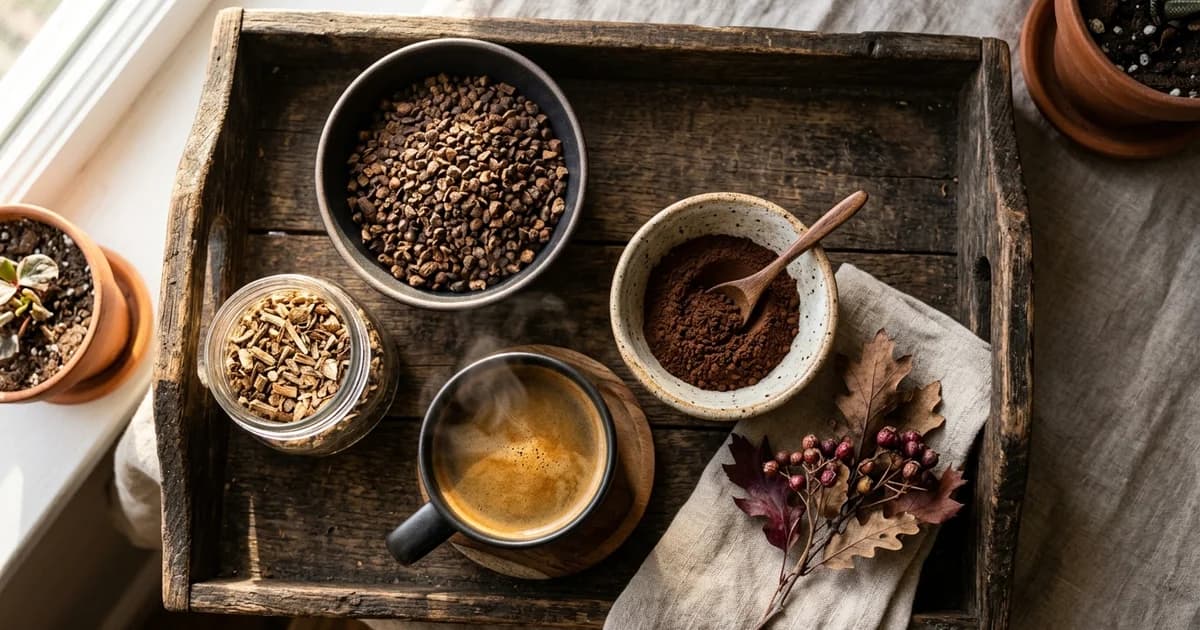
If you want a coffee replacement no caffeine can touch in terms of taste, start here. Chicory root has been used as a coffee substitute since at least the Napoleonic era, when French blockades made real coffee scarce. Roasted and ground, it produces a dark, bitter brew that's close enough to fool your taste buds.
The real selling point is inulin, a prebiotic fiber that makes up about 40-50% of chicory root by dry weight. According to Medical News Today, research suggests chicory root may help control blood sugar and improve digestive health. A 2025 paper indexed on PubMed reviewed the properties of coffee-chicory blends and confirmed the nutritional value of the combination.
Best for: People who miss the taste of coffee and want gut health benefits. Among coffee alternatives without caffeine, chicory is the most familiar-tasting option.
Brands to try: Dandy Blend, Teeccino, Café du Monde (chicory blend, though this one contains some coffee).
2. Mushroom Elixirs (Reishi, Chaga, Lion's Mane)
Mushroom coffee is a misnomer when it's caffeine-free, so let's call these what they are: mushroom elixirs, though if you want a best mushroom coffee replacement with caffeine, options exist for that too. As caffeine free alternatives to coffee, the most common varieties use reishi, chaga, and lion's mane, either alone or blended.
According to Blend Mushroom, adaptogenic mushroom beverages are one of the fastest-growing segments in the functional beverage space. Lion's mane is linked to cognitive clarity and memory support, while reishi and chaga are valued for immune and calming properties.
Here's the honest assessment: these don't taste like coffee. They taste earthy, sometimes slightly bitter, sometimes like drinking a forest floor in the best possible way. You'll need to adjust your expectations if you're coming from traditional coffee.
| Mushroom | Primary Benefit | Flavor Profile |
|---|---|---|
| Lion's Mane | Cognitive support, memory | Mild, slightly sweet |
| Reishi | Stress support, immune function | Bitter, woody |
| Chaga | Antioxidant-rich, immune support | Earthy, vanilla-like |
Best for: People who care more about functional benefits than mimicking coffee's taste. These rank among the best caffeine free coffee alternatives for brain and immune support.
3. Ceremonial Cacao
This is not Swiss Miss. Ceremonial-grade cacao is minimally processed, ground from whole cacao beans, and contains theobromine, a xanthine compound structurally related to caffeine but with a very different effect profile.
Theobromine's effects are more subtle and longer-lasting than caffeine, providing sustained cognitive support without the sharp spike. According to Keith's Cacao, the alertness from theobromine can last 6 to 10 hours because the liver metabolizes it slowly.
A small note: ceremonial cacao does contain trace amounts of caffeine (roughly 10-15mg per serving), so it's not completely caffeine-free. But it's a fraction of what you'd get from coffee, and the theobromine does most of the heavy lifting. For people exploring coffee alternatives without caffeine, cacao sits in a useful middle ground.
Best for: People who want a mild mood and focus lift without coffee-level stimulation.
4. Rooibos Tea (Red Bush Tea)
Rooibos is naturally caffeine-free, full stop. No decaffeination process needed. It comes from the Aspalathus linearis plant, native to South Africa, and it's been consumed there for centuries, making it one of the most established caffeine free alternatives to coffee.
A scoping review published in PMC found that rooibos has been shown to enhance lipid profiles, boost antioxidant status, and lower blood glucose levels in both healthy and at-risk individuals. Healthline notes that rooibos is rich in antioxidants and there is evidence it can increase antioxidant levels in your body.
The flavor is naturally sweet with a slight nuttiness. No bitterness. If you take your coffee with cream and sugar, rooibos might be the easiest transition because it needs neither. As a coffee replacement no caffeine required, rooibos is hard to beat for simplicity.
Best for: People who want a zero-caffeine option with strong antioxidant content and a naturally sweet flavor.
5. Dandelion Root Coffee
Yes, from the weed in your yard. Roasted dandelion root produces a dark, coffee-like brew that's been used in traditional medicine for centuries. According to Tea-and-Coffee.com, dandelion coffee is caffeine-free and packed with vitamins and minerals, and it may support liver health.
The taste is roasty and slightly bitter, closer to a dark roast than chicory. It's less acidic than coffee, which makes dandelion root one of the best coffee alternatives without caffeine if acid reflux is part of why you're making the switch.
Best for: People with digestive sensitivity who want a dark, roasty flavor.
6. Golden Milk (Turmeric Latte)
Golden milk is a turmeric-based drink with roots in Ayurvedic tradition, typically made with turmeric, black pepper (to increase curcumin absorption), ginger, and a milk of your choice.
Healthline reports that a 2022 review of 29 randomized clinical trials found participants given curcumin or turmeric extract experienced lower levels of inflammation and pain. WebMD confirms that curcumin has been linked to lower inflammation levels, which can help reduce the risk of chronic diseases.
This isn't a coffee mimic. It's its own thing entirely. Warm, spicy, slightly sweet if you add honey. Think of it as the evening counterpart to your morning ritual, and one of the more unique coffee alternatives without caffeine on this list.
Best for: People looking for anti-inflammatory support and a calming evening drink.
Quick Comparison: Coffee Alternatives Without Caffeine
| Alternative | Caffeine | Closest to Coffee? | Key Benefit | Price Range |
|---|---|---|---|---|
| Chicory Root | Zero | Yes | Gut health (inulin) | $8-15/bag |
| Mushroom Elixir | Zero | No | Cognitive and immune support | $15-30/bag |
| Ceremonial Cacao | Trace (~10-15mg) | No | Mood, sustained alertness | $20-40/bag |
| Rooibos Tea | Zero | No | Antioxidants | $5-12/box |
| Dandelion Root | Zero | Somewhat | Liver support | $8-15/bag |
| Golden Milk | Zero | No | Anti-inflammatory | $10-20/mix |
How to Actually Make the Switch to Coffee Alternatives Without Caffeine
Going from three cups of coffee a day to zero caffeine overnight is a bad idea. Caffeine withdrawal is real, and the headaches peak around 24 to 48 hours after your last dose.
A smarter approach:
- Week 1: Replace your afternoon coffee with one of the coffee alternatives without caffeine listed above. Keep your morning cup.
- Week 2: Cut your morning coffee to half-caf or switch to a smaller serving.
- Week 3: Replace the morning coffee entirely with your preferred caffeine free alternative.
- Ongoing: Keep a caffeine-free option as your default and use low-dose caffeine strategically when you actually need it.
That last point matters. The problem with coffee was never caffeine itself. It was the dose, the frequency, and the delivery method. Three hundred milligrams dumped into your bloodstream through your gut, three times a day, every day, with no off-ramp. That's the pattern that causes tolerance buildup, sleep disruption, and afternoon crashes.
When You Want Clean Energy Without the Chaos
Sometimes you don't need zero caffeine. You need the right amount of caffeine, delivered the right way. Not everyone searching for coffee alternatives without caffeine needs to go fully stimulant-free.
Roon takes a different approach to the caffeine question. At 80 mg of caffeine, it delivers roughly the same amount as a standard cup of coffee, but pairs it with L-Theanine, Theacrine, and Methylliberine in a sublingual pouch. Those supporting compounds smooth the edge, extend the effect, and prevent the crash. A study published on PubMed found that the combination of L-theanine and caffeine improved accuracy during task switching and self-reported alertness while reducing tiredness. The sublingual delivery means it absorbs through the tissue under your tongue, bypassing the gut entirely.
The result is 6 to 8 hours of sustained focus. No jitters. No crash. No tolerance buildup. Zero nicotine.
If you've been searching for the best caffeine free coffee alternatives because you're tired of caffeine's side effects, you might not need to quit caffeine entirely. You might just need better caffeine: the same amount as a cup of coffee, but paired with ingredients that smooth and extend it. That's a smarter path than most coffee alternatives without caffeine can offer on their own.
Clean energy, zero crash. Try Roon.