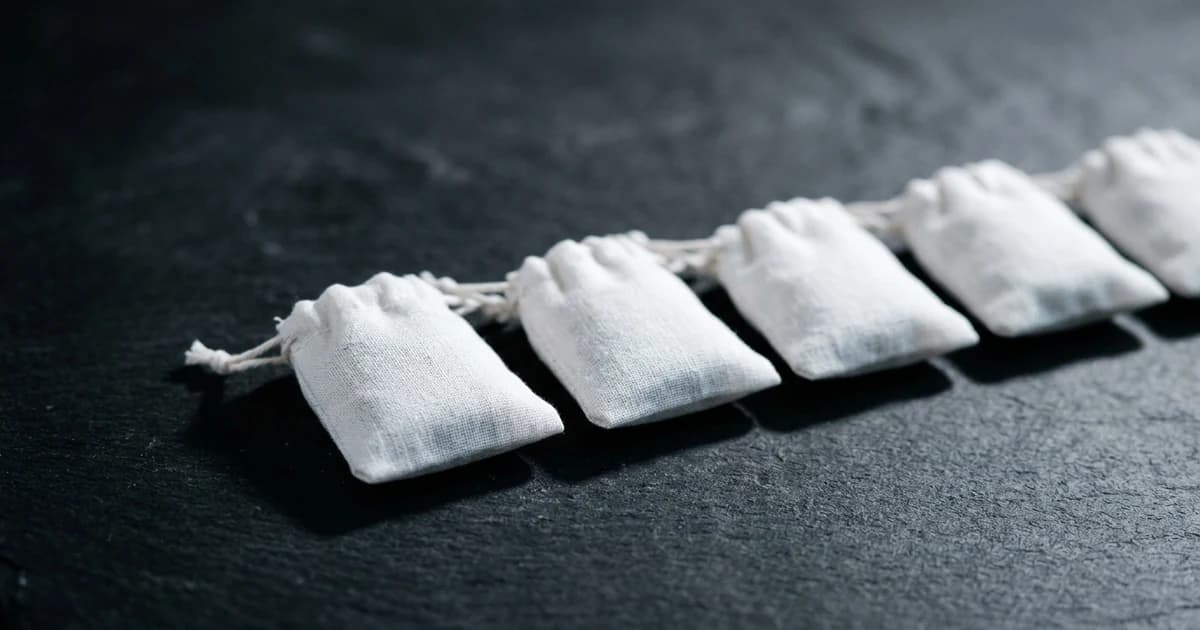
Quitting Nicotine Pouches: The 30-Day Recovery Guide
Roon Team

Quitting Nicotine Pouches: The 30-Day Recovery Guide (And What to Use Instead)
Short answer: When you quit nicotine pouches, acute physical withdrawal peaks around days 2-3 and largely fades within 3-4 weeks, per the Cleveland Clinic, while cue-driven cravings can linger for several months. Dopamine signaling in the brain's reward center drops during the first week and returns to baseline by roughly day 10, as a 2011 study in Biological Psychiatry measured directly. The hardest stretch for most pouch users is the focus gap in weeks one through three. For that focus use case specifically, a zero-nicotine option like Roon pairs 80mg caffeine, 60mg L-theanine, 25mg methylliberine (Dynamine), and 5mg theacrine (TeaCrine) in the same sublingual format, with no nicotine to taper off afterward.
Most guides about quitting nicotine pouches give you the same recycled advice: drink water, chew gum, call a friend. None of them tell you what's actually happening inside your brain on day 4 versus day 14, or why you still feel mentally sluggish two weeks after your last pouch. This is the guide that does.
Below is a day-by-day breakdown of nicotine pouch withdrawal, the neuroscience behind each phase, and a set of evidence-based strategies for every use case that kept you reaching for a Zyn in the first place.
Key Takeaways:
- Physical nicotine withdrawal peaks around days 2-3 and largely resolves within 3-4 weeks, but cue-driven cravings can persist for months.
- Dopamine signaling in the brain's reward center drops measurably during the first week, then recovers to baseline by approximately day 10.
- Replacing the reason you used nicotine pouches (focus, oral fixation, stress relief, ritual) matters more than white-knuckling through cravings.
Nicotine Pouch vs. Nicotine-Free Alternatives: Quick Comparison
If you're already scanning for replacement options and want a deeper look at [top Zyn alternatives this year](https://www.takeroon.com/blog/zyn-alternatives-worth-trying-2026), here's how the main categories stack up:
| Product | Key Actives (per serving) | Format | Price/Serving | Best For |
|---|---|---|---|---|
| Zyn | 3 mg or 6 mg nicotine | Sublingual pouch | ~$0.28-$0.38 | Users who still want nicotine (not quitting) |
| Nicotine Gum (NRT) | 2 mg or 4 mg nicotine | Chewing gum | ~$0.50-$0.75 | Tapering off nicotine with medical support |
| Nicotine Patch (NRT) | 7-21 mg nicotine (transdermal) | Adhesive patch | ~$1.00-$2.00 | Steady-state nicotine reduction without oral habit |
| Roon | 80 mg caffeine, 60 mg L-theanine, 25 mg Dynamine, 5 mg TeaCrine | Sublingual pouch | $0.61 to $1.00 | Focus replacement without nicotine; same pouch ritual |
| Sugar-Free Gum | 0 mg active nootropics | Chewing gum | ~$0.05-$0.10 | Pure oral fixation relief on a budget |
Now, the full 30-day breakdown.
Quitting Nicotine Pouches: The 30-Day Withdrawal Timeline
Before we get into strategies, here's what to expect. This timeline synthesizes data from a 2007 review by Hughes in Nicotine & Tobacco Research and clinical guidance from the Cleveland Clinic:
| Phase | Days | What's Happening Physiologically | Common Symptoms | Severity (1-10) |
|---|---|---|---|---|
| Acute Withdrawal | 1-3 | Nicotine cleared from body; dopamine drops below baseline in nucleus accumbens | Intense cravings, irritability, brain fog, oral fixation, headaches | 8-10 |
| Peak Adjustment | 4-10 | Nicotinic receptors begin downregulating; sleep architecture disrupted | Cravings ebb and flow, insomnia peaks, difficulty concentrating, mood swings | 6-8 |
| Stabilization | 11-21 | Dopamine signaling normalizes; receptor density approaching pre-nicotine levels | Cravings spaced further apart, energy returning, focus dip still present | 3-5 |
| New Baseline | 22-30 | Neurochemistry largely restored; conditioned cue responses still active | Occasional trigger-based cravings, full cognitive recovery underway | 1-3 |
The pattern is consistent across nicotine delivery methods, including those quitting smokeless tobacco habits, but pouch users face a specific challenge: the oral fixation component is deeply conditioned. You've trained your brain to associate the physical sensation of a pouch under your lip with a dopamine hit. That association doesn't disappear when the nicotine does.
Days 1-3: The Neurochemistry of Acute Withdrawal
Chronic nicotine exposure causes your brain to upregulate nicotinic acetylcholine receptors (nAChRs). Your brain grows extra receptors to accommodate the constant nicotine supply. When you stop, those receptors have nothing to bind to. The result is a sharp drop in dopamine release in the nucleus accumbens, the brain's primary reward center.
A 2011 study published in Biological Psychiatry measured this directly: basal dopamine concentrations in the nucleus accumbens dropped below control levels within the first day of nicotine withdrawal and remained suppressed for up to 5 days in subjects with 4 weeks of prior exposure.
This dopamine deficit is why days 1-3 feel so awful. Your brain is running on a reward-system deficit.
What to do:
- Expect it. Knowing the timeline helps. The worst is over by day 3 or 4.
- Move your body. Exercise triggers natural dopamine release. Even a 20-minute walk helps.
- Address the oral fixation immediately. Sugar-free gum, sunflower seeds, or toothpicks. The mouth needs something.
Days 4-10: When Sleep Falls Apart and Focus Disappears
According to the Cleveland Clinic, withdrawal symptoms peak on days 2-3 and then begin to fade, but that doesn't mean days 4-10 are easy. This is the phase where sleep disruption hits hardest.
Nicotine influences your circadian rhythm through its action on acetylcholine receptors in the basal forebrain. Remove it, and your sleep architecture scrambles. You might fall asleep fine but wake at 3 a.m., or sleep 10 hours and still feel exhausted.
The cognitive dip is real, too. Hughes's 2007 review identified difficulty concentrating as a valid withdrawal symptom that peaks within the first week and can persist for 2-4 weeks. If you used Zyn pouches specifically to focus at work (and most regular users did), this is the phase where you'll feel the loss most acutely.
What to do:
- Protect your sleep. No caffeine after 2 p.m. Keep the room cool and dark. Melatonin (0.5-1 mg) can help reset your cycle.
- Don't rely on willpower alone for focus. This is where a legitimate cognitive support tool matters (more on that below).
- Ride the craving waves. Individual cravings typically last 15-20 minutes. Set a timer. Distract yourself. It will pass.
Days 11-21: The Focus Gap Persists
Energy starts coming back around the two-week mark. Irritability fades. Sleep normalizes for most people. But the focus gap lingers.
This makes sense physiologically. Research on nicotinic receptor upregulation shows that the extra nAChR receptors your brain built during chronic nicotine use take weeks to fully downregulate. Until they do, your cholinergic signaling remains off-kilter, affecting attention and working memory.
The good news: the Biological Psychiatry study found that dopamine levels returned to control levels by day 10. Your reward system is back online. The residual focus issues are a receptor-density problem, not a dopamine problem, and they resolve with time.
What to do:
- Break tasks into smaller blocks. Your sustained attention isn't fully back yet. Work in 25-minute sprints.
- Use caffeine strategically. 80-100 mg of caffeine paired with L-theanine can partially compensate for the cholinergic deficit without creating a new dependency.
- Track your wins. By day 14, you've cleared the hardest part. Acknowledge it.
Days 22-30: New Normal (With a Catch)
Physical withdrawal is essentially over. Your neurochemistry has largely normalized. But you'll still get hit with random cravings, and here's why.
Research on cue-induced nicotine seeking shows that conditioned craving responses persist for at least 42 days after cessation in animal models, and clinical observation suggests they can continue for 3-6 months in humans. These aren't physical withdrawal. They're Pavlovian. Your brain associated specific contexts (morning coffee, post-meal, stressful meeting) with nicotine, and those associations take time to extinguish.
The practical implication: don't mistake a cue-driven craving at week 4 for a sign that you "still need nicotine." You don't. Your brain is just pattern-matching.
How Long Does Each Nicotine Pouch Withdrawal Symptom Last?
Withdrawal is usually worst in the first week and peaks during the first three days, according to the National Cancer Institute. Most mood, sleep, and concentration symptoms settle within two to four weeks, per Hughes 2007 in Nicotine & Tobacco Research. Cravings and appetite run longest. This reflects the literature and federal quit-line guidance, not a prognosis.
| Symptom | Commonly starts | Commonly peaks | How long people report it | What quit-line guidance suggests |
|---|---|---|---|---|
| Cravings and urges | 1 to 2 hours after the last pouch (NCI) | First few days | Frequent for days to weeks, then farther apart; mild cravings possible months later (NCI) | Know your triggers, distract, and do 10 slow nose-in, mouth-out breaths (NCI) |
| Irritability, anger, frustration | Day 1 | Within week 1 | 2 to 4 weeks (NCI, Hughes) | Physical activity, less caffeine, relaxation techniques (NCI) |
| Anxiety | First day | Builds over the first 3 days | Several weeks (NCI) | Quiet time, regular exercise, limit caffeine (NCI) |
| Low or depressed mood | Within the first day | Weeks 1 to 2 | Usually resolves within a month (NCI) | Reach out, positive activity, 988 if distress is severe (Smokefree.gov) |
| Trouble concentrating | First few days | Within week 1 | 2 to 4 weeks (Hughes) | Lighter cognitive load; ask a clinician about quit medication (Smokefree.gov) |
| Trouble sleeping | First 1 to 2 days | Within week 1 | 2 to 4 weeks (Hughes); one trial found quit medications did not mitigate it | Consistent schedule, no bedroom screens, limit caffeine and alcohol at night (Smokefree.gov) |
| Restlessness, impatience | Day 1 | Within week 1 | 2 to 4 weeks (Hughes) | Walking or other physical activity, fewer caffeinated drinks (Smokefree.gov) |
| Increased hunger | First days | Varies | No firm duration given; framed as ongoing management (Smokefree.gov) | Healthy snacks on hand; crunchy foods keep hands and mouth busy (Smokefree.gov) |
| Mouth ulcers, cough, dizziness, constipation | Varies | Varies | Less common effects, no firm time course (NCI, Hughes) | Raise with a clinician if they persist |
Severe symptoms, or a low mood that deepens instead of lifting, warrant a call to a doctor.
Replacement Strategies for the Four Nicotine Pouch Use Cases
Most people used nicotine pouches for one (or more) of four reasons. Each one needs its own replacement strategy.
1. Oral Fixation
The physical sensation of a pouch between your lip and gum is deeply habitual. Options:
- Sugar-free gum (look for xylitol-based options for dental benefits)
- Sunflower seeds or toothpicks
- Nicotine-free pouches that replicate the format without the active ingredient
2. Focus and Cognitive Performance
This is the big one. A large percentage of regular Zyn users report that they started using pouches for the focus benefits, not the buzz. And the focus benefits of nicotine are real: it's a genuine cognitive enhancer that improves attention and working memory through nAChR activation.
The question is whether you can get comparable cognitive support without the addiction.
The most evidence-backed non-nicotine approach is the caffeine + L-theanine stack. A 2008 study published in Nutritional Neuroscience found that 50 mg of caffeine combined with 100 mg of L-theanine improved attention and task-switching accuracy compared to caffeine alone. L-theanine promotes alpha brain wave activity, which smooths out the jittery edge of caffeine and supports calm focus.
Adding theacrine (TeaCrine) and methylliberine (Dynamine) extends the duration and smoothness of the effect. A randomized crossover study of 50 male esports athletes found that a combination of caffeine (125 mg), Dynamine (75 mg), and TeaCrine (50 mg) improved cognitive performance and reaction time without increasing anxiety. And an 8-week safety study published in JISSN found no evidence of tolerance (habituation) to TeaCrine at doses up to 300 mg/day, a meaningful distinction from caffeine, which builds tolerance within days.
3. Stress Relief
Nicotine feels like it reduces stress, but the mechanism is circular: it relieves the stress caused by nicotine withdrawal. Once you're past the first 2-3 weeks, your baseline stress levels will actually be lower than they were while using.
In the meantime:
- Box breathing (4 seconds in, 4 hold, 4 out, 4 hold). Simple, portable, and backed by research on vagal tone.
- Exercise. Even 20 minutes of moderate cardio reduces cortisol and increases endorphins.
- Cold exposure. A cold shower or face splash activates the dive reflex and shifts your nervous system into parasympathetic mode.
4. Ritual and Social Habit
The 15-minute pouch break is a ritual. You don't need to eliminate the break; you need to replace what fills it.
- 5-minute walk outside (sunlight exposure also supports circadian rhythm recovery)
- A non-nicotine pouch to maintain the physical ritual
- A specific drink (tea, sparkling water) paired with the break to create a new association
Zyn vs. Roon: A Side-by-Side Comparison
For the focus-replacement use case specifically, here's how a typical Zyn pouch compares to a zero-nicotine cognitive pouch like Roon:
| Zyn | Roon | |
|---|---|---|
| Format | Sublingual pouch | Sublingual pouch |
| Active Ingredients | 3 mg or 6 mg nicotine | 80 mg caffeine, 60 mg L-theanine, 25 mg methylliberine (Dynamine), 5 mg theacrine (TeaCrine) |
| Primary Mechanism | nAChR agonist; dopamine release | Adenosine antagonism + alpha wave promotion + dopamine modulation (no nicotine receptor activity) |
| Focus Duration | 30-60 min per pouch | 6-8 hours per pouch |
| Tolerance Buildup | Yes; receptor upregulation with chronic use | No; theacrine shows no habituation over 8 weeks of daily use |
| Addictive | Yes | No |
| Price Per Pouch | ~$0.22-$0.38 (15-20 per can, ~$5.64 MSRP) | $0.61 to $1.00 (from $9.16 per 15-pouch tin subscribed, $15.00 one-time) |
| Best For | Users who want nicotine specifically | Users who want sustained focus without nicotine dependency |
This isn't an apples-to-apples comparison. Zyn delivers nicotine. Roon delivers cognitive support through a different set of compounds. If your reason for using Zyn was the nicotine itself, Roon won't scratch that itch. But if your reason was focus, a pouch that delivers 80 mg of caffeine with L-theanine, methylliberine, and theacrine in the same sublingual format is a practical bridge.
Frequently Asked Questions
How long does nicotine pouch withdrawal last?
Physical withdrawal symptoms typically peak on days 2-3 and resolve within 3-4 weeks, according to the Cleveland Clinic. Cue-driven psychological cravings can persist for 3-6 months but decrease in frequency and intensity over time. Most people report feeling "back to normal" between weeks 3 and 6.
What is the worst day of quitting nicotine pouches?
For most people, days 2 and 3 are the hardest. This is when nicotine has fully cleared your system and dopamine levels in the nucleus accumbens are at their lowest. By day 4 or 5, the acute intensity starts to decline.
Can I taper off nicotine pouches instead of quitting cold turkey?
Yes. Tapering (gradually reducing the number of pouches per day or switching to a lower-strength option like Zyn 3 mg) is a valid strategy. Some research suggests that tapering reduces the severity of peak withdrawal symptoms, though it extends the overall timeline. Either approach can work; choose the one you're more likely to stick with.
Will I gain weight after quitting nicotine pouches?
Possibly. Nicotine suppresses appetite and slightly increases metabolic rate. MedlinePlus reports that people gain an average of 5-10 pounds in the months after quitting nicotine. Regular exercise and mindful eating can minimize this. The weight gain typically levels off after 6-12 months.
Is a nicotine-free pouch a real substitute for Zyn?
It depends on what you were getting from Zyn. If the primary draw was the oral ritual and the focus boost, a nicotine-free pouch with cognitive-support ingredients (caffeine, L-theanine, theacrine, methylliberine) can fill that gap effectively. If the draw was the nicotine buzz itself, no pouch without nicotine will replicate that sensation.
Should I use NRT (nicotine replacement therapy) like patches or gum?
NRT, or approaches like switching from vaping to Zyn, can help manage withdrawal by providing controlled, lower doses of nicotine while you break the behavioral habit. It's a well-studied approach, and your doctor can help you decide if it's right for your situation. The key is to have an exit plan from NRT too, since it still delivers nicotine, and exiting nicotine gum dependence follows many of the same steps as quitting pouches.
Why do I still get cravings at week 4?
These are cue-driven cravings, not physical withdrawal. Your brain built strong associations between specific situations (post-meal, work stress, driving) and nicotine. Research shows these conditioned responses persist well beyond physical withdrawal. They fade with time and repeated exposure to the cue without the reward.
How can I stay focused at work without nicotine pouches?
The focus dip during weeks 1-3 is real. Strategies that help: breaking work into shorter blocks, strategic caffeine use (80-100 mg paired with L-theanine), regular exercise, and adequate sleep. A sublingual cognitive pouch like Roon can serve as a direct format replacement for the focus use case.
Related from Roon
- Does Nicotine Affect Muscle Growth? What 40 Years of Research Actually Says
- Zyn + Coffee: Why Stacking Them Backfires (And What to Use for Real Focus)
- Herbal Nicotine-Free Pouches: The 2026 Buyer's Guide
The Honest Close
Quitting nicotine pouches is hard. Not in a motivational-poster way. In a measurable, neurochemical way. The first 72 hours are rough. The focus dip in weeks 1-3 is frustrating, especially if cognitive performance is part of your job.
But the timeline is on your side. By day 10, your dopamine is back to baseline. By day 21, most physical symptoms are gone. By day 30, you're operating on your own neurochemistry again.
It won't make quitting painless. Nothing will. But the timeline is working in your favor from the moment you stop, and the cognitive gap that feels permanent in week two is, by every measure, temporary.
The Pouch Format, Without the Dependency
If you used nicotine pouches primarily for focus, the hardest part of quitting isn't the first 72 hours. It's weeks two and three, when the acute withdrawal has passed but your cholinergic signaling is still off-kilter and the work still needs to get done. That's the gap this article has been building toward.
Roon is a zero-nicotine sublingual pouch built specifically for that gap. The formula combines 80mg caffeine, 60mg L-theanine, 25mg methylliberine (Dynamine), and 5mg theacrine (TeaCrine) in the same under-the-lip format you already know. It won't replicate the nicotine buzz, and it won't accelerate receptor downregulation. What it does is give your brain a steady, zero-nicotine cognitive input during the weeks when your own neurochemistry is still finding its footing. It is a caffeine product, so the usual caffeine rules apply: 80 mg per pouch, and the same timing and tolerance considerations you would give coffee.
If focus was your reason for the pouch, Roon is worth a tin.
By Roon Team