TeaCrine vs Creatine: Two Completely Different Supplements
Roon Team
TeaCrine vs Creatine: Two Completely Different Supplements
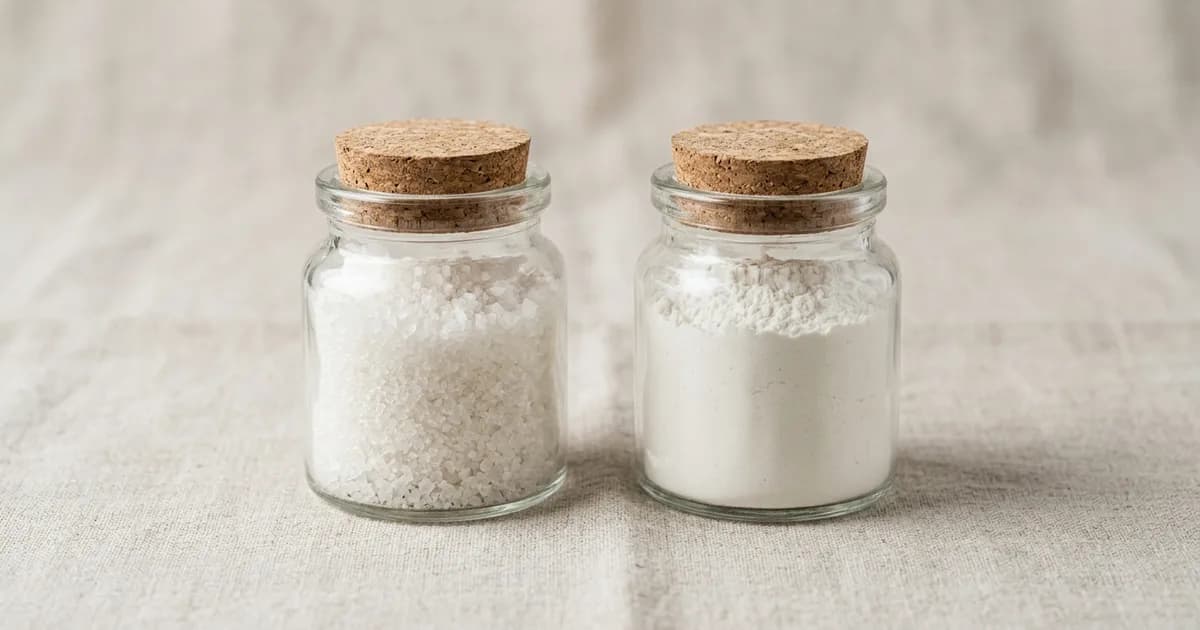
TeaCrine (theacrine) and creatine are not related. They share a syllable and nothing else: different molecules, different chemical classes, different mechanisms, different purposes. Theacrine is a purine alkaloid (a methylurate) found in kucha tea that acts on adenosine receptors and dopamine-mediated pathways to support alertness and focus. Creatine is a nitrogenous organic acid that fuels the phosphocreatine energy system in muscle to improve strength and power output. If you came here wondering whether they're the same thing, the answer is no, and this article will explain exactly why.
Key Takeaways
- Theacrine and creatine are completely unrelated compounds with no overlapping chemistry, mechanism, or use case.
- Creatine has one of the strongest evidence bases of any sports supplement, specifically for strength and power. Theacrine has a much smaller literature focused on subjective energy and focus.
- Three independent exercise trials found theacrine does not improve athletic performance, so it is not a substitute for creatine if performance is your goal.
- The names sound similar only by accident. "Thea" comes from the tea genus (Thea/Camellia). The "creatine" in creatine comes from the Greek kreas, meaning meat.
How Does Theacrine Compare to Creatine?
They don't really "compare" because they serve different purposes entirely. But the question gets searched, so here is the honest side-by-side.
| Axis | Theacrine (TeaCrine) | Creatine |
|---|---|---|
| Chemical class | Purine alkaloid, methylurate (1,3,7,9-tetramethyluric acid) | Nitrogenous organic acid (synthesized from glycine, arginine, methionine) |
| Natural source | Kucha tea, Camellia assamica var. kucha | Made in the liver, kidneys, and pancreas; also found in red meat and fish |
| Primary mechanism | Adenosine receptors; dopamine-mediated pathways | Phosphocreatine energy system in skeletal muscle |
| Main use | Subjective energy, alertness, focus | Strength, power output, muscle performance |
| Half-life | 16.5 h (25 mg) to 26.1 h (125 mg), dose-dependent | Not applicable in the same pharmacokinetic sense; muscle saturation model |
| Loading phase | No | Commonly loaded at ~20 g/day for 5 to 7 days, then maintained at 3 to 5 g/day |
| Related to caffeine? | Yes. Biosynthesized from caffeine in the plant, structurally adjacent | No |
| Exercise performance evidence | Three independent trials: null | Hundreds of trials; ISSN calls it the most effective ergogenic supplement available |
| Human study sample sizes | Small (n = 8 to 60) | Large; meta-analyses with thousands of subjects |
Sources: theacrine identity and kucha tea origin (Zheng et al. 2002); theacrine mechanism in rats (Feduccia et al. 2012); theacrine half-life in 8 healthy adults (He et al. 2017); creatine position stand (Kreider et al. 2017, ISSN).
Why Do People Confuse Theacrine and Creatine?
The confusion is purely a naming collision. "TeaCrine" is a trademark owned by Compound Solutions for their synthetic theacrine ingredient. The "-crine" ending sounds like "creatine" to anyone scanning a supplement label quickly. Google's own search suggestions confirm the problem: autocomplete returns "is TeaCrine the same as creatine," "is TeaCrine creatine," and several other variants. People Also Ask boxes on theacrine queries surface creatine questions. The confusion is widespread, and it's not the reader's fault.
There is a third layer worth clearing up. People also confuse theacrine with L-theanine, which is a completely different compound again. L-theanine is an amino acid found in tea leaves that promotes relaxation without sedation. Theacrine is a purine alkaloid found in kucha tea that promotes alertness. They come from related plants, they sound similar, and they are not the same molecule.
| Compound | Class | Source | What it does |
|---|---|---|---|
| Theacrine (TeaCrine) | Purine alkaloid (methylurate) | Kucha tea (Camellia assamica var. kucha) | Subjective energy, alertness, focus |
| L-Theanine | Amino acid | Tea leaves (Camellia sinensis) | Relaxation, attention modulation, pairs with caffeine |
| Creatine | Nitrogenous organic acid | Endogenous synthesis; red meat, fish | Strength, power, muscle performance |
Three compounds, three classes, three mechanisms. If your supplement label lists any of these, now you know which is which.
What Is Theacrine Actually Good For?
Theacrine supports subjective energy, alertness, and focus. A study by Kuhman et al. (2015, n=20) found that theacrine improved self-reported energy, focus, and concentration compared to placebo in young men and women. Objective cognitive test scores, however, did not improve. The distinction matters: people feel more alert, but measurable reaction time and accuracy stay about the same.
Theacrine's half-life is long and dose-dependent. He et al. (2017, n=8) measured 16.5 hours at 25 mg and 26.1 hours at 125 mg in healthy adults, compared to 6.2 hours for caffeine in the same subjects. Do not round this to "20 hours," as no study reports that figure, despite it appearing on many supplement sites.
The most distinctive claim about theacrine is its tolerance profile. Taylor et al. (2016, n=60) found no habituation over 8 weeks of daily use at 200 to 300 mg per day, measuring responses before each dose to detect tolerance buildup. This is a real finding, but it has limits: the study tested tolerance only, not dependency or withdrawal, so claims that theacrine is "non-addictive" go beyond what the data show. The study was also funded by Compound Solutions, the company that sells TeaCrine. Independently funded studies on theacrine tend to report more modest results, and that pattern is worth noting.
For a deeper look at this tolerance data, see our full breakdown in Why Theacrine Doesn't Build Tolerance Like Caffeine.
What Is Creatine Actually Good For?
Creatine is one of the best-evidenced sports supplements in existence. Full stop. The International Society of Sports Nutrition (Kreider et al. 2017) called creatine monohydrate "the most effective ergogenic nutritional supplement currently available to athletes for increasing high-intensity exercise capacity and lean body mass during training." That is not a hedge; it is the consensus of the field's governing body after reviewing hundreds of studies.
Creatine works by replenishing phosphocreatine in muscle cells, which regenerates ATP during short, intense efforts: sprints, heavy lifts, explosive movements. A standard protocol is 20 g per day for 5 to 7 days (loading), followed by 3 to 5 g per day for maintenance. It is inexpensive, well-tolerated, and has decades of safety data in healthy populations.
If you are looking for a supplement to improve strength, power output, or muscle performance, creatine is the right answer. Theacrine is not.
Does Theacrine Improve Exercise Performance? (No.)
This section exists because it is the most important thing a confused reader needs to hear. If you arrived here thinking theacrine might be a creatine alternative for the gym, three independent trials say otherwise:
- Resistance exercise: Cesareo et al. (2019) tested theacrine in resistance-trained men and found no improvement in exercise performance.
- Field-test battery: Cerqueira et al. (2022) found theacrine did not enhance physical performance or training status over 8 weeks.
- 4 km cycling time trial: Vieira-Cavalcante et al. (2025) found no ergogenic effect.
Three studies, three different exercise modalities, three null results. These were not funded by the ingredient manufacturer. Theacrine may make you feel more alert during a workout, but it does not improve the work you actually produce. Creatine does. They solve different problems, and pretending otherwise would waste your money and your training time.
For context on how theacrine and other nootropics relate to traditional performance supplements, see Creatine vs Pre-Workout: Do Nootropics Belong in Your Stack?.
What the Evidence Does Not Show
Honesty demands a section like this. Here is what you should not conclude from the current literature:
- No study has tested theacrine and creatine together. The two act on entirely separate systems (adenosine/dopamine vs. phosphocreatine), so there is no obvious mechanistic conflict, and Cesareo 2019 gave theacrine to resistance-trained men without incident. But "no known conflict" is not the same as "studied and validated." If you want to take both, that is your call; just know the combination itself has no data behind it.
- Theacrine's human evidence base is small. Sample sizes range from n=8 (pharmacokinetics) to n=60 (the tolerance study). Most positive human findings come from research funded by Compound Solutions. The independently funded exercise trials are the ones that came back null. That funding pattern does not prove bias, but it's a pattern worth knowing.
- The theacrine mechanism data is from rats. Feduccia et al. (2012) showed that theacrine's locomotor effects in rats were attenuated by D1 and D2 dopamine receptor antagonists, indicating the response is dopamine-mediated. That is not the same as theacrine "stimulating dopamine receptors" directly, and it has not been replicated in humans.
- Creatine's cognitive benefits are still emerging. Some studies suggest creatine may support brain function, especially under stress or sleep deprivation, but the ISSN notes this research is less mature than the exercise performance literature.
What This Means for You Practically
If you want to get stronger or improve power output, take creatine. The evidence is deep, the cost is low, and the protocol is simple. Theacrine will not help you here.
If you want sustained mental energy and alertness without the tolerance buildup that comes with escalating caffeine doses, theacrine is the more relevant compound. Its long half-life and apparent resistance to habituation make it interesting for cognitive support over a workday or study session, not for a gym PR.
You can, in principle, take both. They do not compete for the same receptors or the same metabolic pathways. But respect the limits of what has been studied: no trial has measured the combination, so you are extrapolating, not following a protocol.
The simplest framing: creatine is a body supplement. Theacrine is a brain supplement. They are not alternatives, competitors, or substitutes. They are tools for different jobs. For more on how theacrine compares to methylliberine, another compound it is genuinely related to, or on the kucha tea plant where theacrine originates, those guides go deeper.
Frequently Asked Questions
Is TeaCrine the same as creatine?
No. TeaCrine is a branded form of theacrine, a purine alkaloid (methylurate) that acts on adenosine and dopamine pathways to support alertness and focus. Creatine is a nitrogenous organic acid that fuels the phosphocreatine system in muscle. Different molecules, different classes, different mechanisms. The names share a syllable by coincidence, not chemistry.
Can theacrine replace creatine for workouts?
No. Three independent human trials tested theacrine for exercise performance and all three found no ergogenic effect (Cesareo 2019, Cerqueira 2022, Vieira-Cavalcante 2025). Creatine, by contrast, has hundreds of positive trials and is considered the most effective legal ergogenic supplement by the ISSN. They are not interchangeable.
Is theacrine the same as theanine?
No. Theacrine (1,3,7,9-tetramethyluric acid) is a purine alkaloid from kucha tea that supports alertness. L-theanine is an amino acid from regular tea (Camellia sinensis) that promotes calm focus. They come from related plants but have different structures, mechanisms, and effects. The similar names cause real confusion, but they are distinct compounds.
Can you take theacrine and creatine together?
There is no known mechanistic conflict since they act on completely separate systems. Cesareo et al. (2019) gave theacrine to resistance-trained men without safety issues. However, no study has tested the specific combination, so the pairing is untested rather than validated. Consult a healthcare provider if you have concerns.
Does theacrine build tolerance like caffeine?
Taylor et al. (2016, n=60, funded by Compound Solutions) found no habituation over 8 weeks of daily theacrine at 200 to 300 mg. That is a real and notable finding. However, the study measured tolerance only, not dependency or withdrawal, so it does not support broader claims about theacrine being "non-addictive." For more detail, see our full article on theacrine tolerance.
What is theacrine's half-life?
In 8 healthy adults, He et al. (2017) measured theacrine's half-life as 16.5 hours at 25 mg and 26.1 hours at 125 mg, compared to 6.2 hours for caffeine in the same subjects. The half-life is dose-dependent. Many supplement sites incorrectly state "20 hours," but that specific number does not appear in any published study.
Is creatine better than theacrine?
"Better" depends entirely on your goal. For strength, power, and muscle performance, creatine is overwhelmingly better supported. For sustained mental alertness and focus without rapid tolerance buildup, theacrine is the more relevant compound. They do not compete with each other because they target different systems.
A Focus Compound, Not a Gym Supplement
If this article did its job, you now know theacrine is not creatine, not a creatine alternative, and not going to improve your deadlift. What theacrine does well is support sustained mental alertness with a tolerance profile that caffeine alone cannot match.
Roon is a zero-nicotine, zero-sugar oral pouch built around that idea. It combines caffeine, L-theanine, methylliberine (Dynamine), and theacrine (TeaCrine) in a sublingual format designed for 5 to 10 minute onset and a 6 to 8 hour focus window. The rationale is pharmacological: a crossover PK study (n=12) found methylliberine slowed caffeine's clearance, cutting oral clearance from 41.9 to 17.1 L/hr and extending its half-life from 7.2 to 15 hours, a CYP1A2 interaction finding rather than a demonstrated benefit, while theacrine contributes the tolerance resistance that caffeine lacks. That study used 100 mg methylliberine with 150 mg caffeine, and its magnitude at other doses has not been measured. L-theanine smooths the subjective response.
Roon is not a substitute for creatine. It will not make you stronger, and it does not contain creatine. If your goal is gym performance, take creatine separately. If your goal is staying sharp for hours without chasing escalating caffeine doses, Roon is built for that. Because Roon contains caffeine, it builds tolerance like any caffeine source; stop at least 8 hours before bed.
Written by Roon Team