Why Theacrine Does Not Build Tolerance When Caffeine Does
Roon Team
Why Theacrine Does Not Build Tolerance When Caffeine Does: The Receptor Science
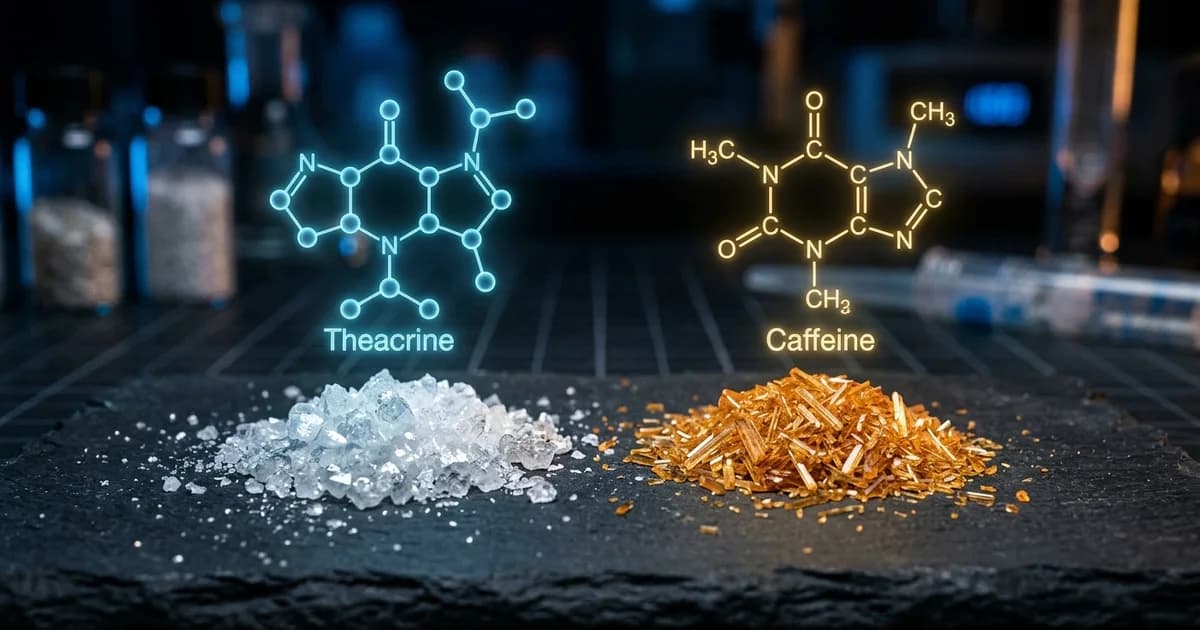
Drink coffee every morning for two weeks and the third cup stops doing what the first one used to. That fade is the reason why theacrine no tolerance has become one of the most interesting questions in stimulant science. Theacrine looks almost identical to caffeine on paper, yet your brain treats the two molecules very differently over time.
The short version: caffeine forces your brain to rebuild its receptors against you, and theacrine does not. The longer version is a story about adenosine, dopamine, and what your neurons do when you keep knocking on the same door.
This is mechanism, not marketing. Let's get into the receptors.
Key Takeaways
- Caffeine tolerance is structural. Daily use prompts your brain to grow more adenosine receptors, so you need a bigger dose for the same lift.
- Theacrine works on two systems at once. It blocks adenosine receptors like caffeine, but it also acts through the dopamine pathway, which changes the math.
- The human data backs it up. An 8-week study found no habituation to theacrine, the response that defines caffeine use.
- Scope matters. The strongest non-habituation evidence comes from doses higher than what most pouches deliver. The mechanism is the point, not a specific dose claim.
Why Caffeine Builds Tolerance: The Adenosine Problem
Caffeine works by blocking adenosine, the molecule that makes you feel tired. Adenosine builds up in your brain across the day and slots into A1 and A2A receptors, dialing your alertness down. Caffeine is shaped enough like adenosine to sit in those receptors without activating them, which is why a cup of coffee feels like the fog lifting.
Here is the catch. Your brain wants to feel adenosine. When caffeine keeps the doors blocked, your neurons respond by building more doors.
This is receptor upregulation, and it is the core of the theacrine tolerance mechanism debate because it is exactly what theacrine seems to avoid. Research summarized by Dr. Kumar Discovery describes how chronic caffeine use leads to upregulation of adenosine receptors, which explains both tolerance and the withdrawal headache you get when you skip a day.
More receptors means more adenosine signal getting through. So your old dose of caffeine now blocks a smaller fraction of a larger pool. You feel less, you drink more, and the cycle tightens. The classic pharmacology literature on PubMed has documented the role of adenosine receptors in caffeine tolerance for decades.
That is the trap in plain terms. Caffeine's effect depends entirely on one mechanism, and that one mechanism is the thing your brain adapts to.
Why Theacrine Behaves Differently: Two Doors, Not One
Theacrine does not build tolerance the way caffeine does because it engages two separate systems, adenosine and dopamine, instead of leaning on adenosine alone. That dual action is the heart of the theacrine adenosine dopamine story.
Theacrine is a purine alkaloid found naturally in the kucha tea plant, and its structure is close to caffeine. Close enough that it does act as an adenosine receptor antagonist. A foundational study published on ScienceDirect confirmed this by showing that theacrine reversed the motor-slowing effects of adenosine A1 and A2A agonists in rats.
But that same study found something caffeine does not do as cleanly. When the researchers blocked dopamine D1 and D2 receptors, theacrine's stimulant effect dropped sharply. That means a real share of theacrine's lift runs through the dopamine pathway, the same circuitry tied to motivation and drive.
The dopamine angle matters for the tolerance question. When a compound spreads its action across two systems, no single receptor population takes the full hit. So the brute-force upregulation that defines caffeine tolerance has less to push against.
And here is the part that makes the theacrine vs caffeine tolerance comparison concrete. In that same animal work, chronic theacrine administration did not produce sensitization or tolerance. The effect held steady across repeated dosing, which is precisely what caffeine fails to do.
What the Human Data Actually Shows
The strongest answer to "does theacrine build tolerance" comes from a human trial, not just rodent models. A 2016 paper in the Journal of the International Society of Sports Nutrition, hosted on PMC, followed healthy adults taking theacrine daily for eight weeks.
The researchers reported no evidence of a tachyphylactic or habituation response, the diminishing-returns pattern they explicitly note is typical of caffeine and other stimulants. The supplement also did not raise blood pressure or heart rate over the study window, and it did not alter blood markers tied to clinical safety.
Eight weeks is the relevant timescale here. Caffeine tolerance can set in within days to a couple of weeks, so a two-month window with a steady response is a meaningful contrast. This is where the phrase non-habituating stimulant comes from, and the science earns it rather than borrowing it.
One honest caveat. The trial ran for eight weeks, which the authors themselves flag as a relatively short duration. It tells us theacrine did not habituate across two months, not that it can never habituate under any condition.
Theacrine vs Caffeine: The Receptor Scorecard
Here is how the two molecules line up on the mechanisms that drive tolerance.
| Factor | Caffeine | Theacrine |
|---|---|---|
| Primary target | Adenosine A1 / A2A receptors | Adenosine A1 / A2A receptors |
| Secondary system | Minimal direct dopamine role | Acts through dopamine D1 / D2 pathway |
| Tolerance mechanism | Adenosine receptor upregulation | No clear upregulation pathway identified |
| Habituation over weeks | Builds within days to weeks | No habituation reported over 8 weeks |
| Half-life | Roughly 5 hours | Longer, contributing to a smoother curve |
| Withdrawal headache | Common | Not characteristic |
The table makes the asymmetry obvious. The molecules share a front door, but caffeine relies on it alone while theacrine spreads its weight. If you want the deeper dive on caffeine specifically, our guide on how to reset caffeine tolerance walks through the receptor reset in practical terms.
Does This Mean Theacrine Replaces Caffeine?
No, and that is the wrong way to read the science. Theacrine and caffeine are not rivals so much as different tools, and a growing body of formulation research pairs them on purpose.
Caffeine is fast, cheap, and well studied, with a clean alerting effect within 30 minutes. Theacrine is slower and longer, and it carries that dopamine-linked drive component caffeine lacks. Used together, the fast onset of one can cover the longer build of the other.
The non-tolerance property is also dose-dependent and context-dependent. The human study used daily doses in the hundreds of milligrams. Lower amounts found in many blends are there to complement caffeine, not to reproduce that exact trial.
So the takeaway is narrow and accurate. Theacrine behaves differently from caffeine at the receptor level, and that difference is real, measurable, and worth understanding before you build a stack.
Conclusion
Caffeine tolerance is not a willpower problem. It is a receptor problem. Your brain adapts to chronic blockade by growing more adenosine receptors, and that physical change is why your fourth week of coffee feels weaker than your first.
Theacrine sidesteps that trap by working through two systems instead of one. It blocks adenosine like caffeine, but it also recruits the dopamine pathway, and the human and animal data both show a steady response where caffeine would have faded. The honest scope is that the strongest non-habituation evidence comes from higher daily doses studied over eight weeks, so the lesson is mechanistic: theacrine and caffeine are not interchangeable, even though they look like twins.
Understand the receptors, and the whole tolerance question stops being mysterious. It is just biology doing what biology does when you keep knocking on the same door.
Frequently Asked Questions
Does theacrine build tolerance like caffeine?
Current evidence says no, at least not on the same timeline. An eight-week human study found no habituation response to daily theacrine, the diminishing-returns pattern that defines caffeine use. The likely reason is that theacrine works through both adenosine and dopamine systems, so it does not rely on the single mechanism that drives caffeine tolerance. That said, the longest published trial ran eight weeks, so we can speak to that window with confidence and no further.
What is the theacrine tolerance mechanism?
There is no clearly identified mechanism by which theacrine builds tolerance, which is the point. Caffeine tolerance comes from your brain growing more adenosine receptors in response to chronic blockade. Theacrine blocks adenosine too, but it also acts on dopamine D1 and D2 receptors, spreading its effect across two systems. Because no single receptor population absorbs the full pressure, the upregulation cycle that weakens caffeine has less to work against.
How does theacrine affect adenosine and dopamine?
Theacrine acts as an adenosine receptor antagonist, sitting in A1 and A2A receptors to reduce the tired signal, much like caffeine. The difference is dopamine. In animal studies, blocking dopamine D1 and D2 receptors sharply reduced theacrine's stimulant effect, showing that a meaningful share of its action runs through the dopamine pathway tied to motivation and drive.
Is theacrine a non-habituating stimulant?
The research supports that description within the studied range. The 2016 human safety trial explicitly described theacrine as non-habituating after eight weeks of daily use, in contrast to caffeine. It also reported no rise in blood pressure or heart rate over that period. The label is earned by data, though it reflects the doses and duration that were actually tested.
How is theacrine different from caffeine chemically?
They are structurally close. Both are purine alkaloids, and theacrine is essentially a methylated relative of caffeine. That similarity is why theacrine can block the same adenosine receptors. The functional differences come from theacrine's added dopamine activity and its longer-lasting curve, which together produce a smoother, steadier feel without the sharp tolerance ramp.
Can I take theacrine and caffeine together?
Yes, and many formulas combine them on purpose. Caffeine delivers fast onset within roughly 30 minutes, while theacrine builds slower and lasts longer. Pairing them lets the quick lift of one cover the longer arc of the other. As always, total stimulant load matters, so count your caffeine from all sources and adjust to your own sensitivity.
Why does my coffee stop working over time?
Because your brain physically adapts. Daily caffeine prompts your neurons to build more adenosine receptors, so your usual dose now blocks a smaller fraction of a larger pool. You feel less, you drink more, and tolerance tightens. The fix is usually a tolerance reset, lowering or pausing intake long enough for receptor counts to normalize.
Built for the Tolerance Problem, Not Around It
Most stimulant products dodge the tolerance question. The honest answer is the one this article just laid out at the receptor level: caffeine fades because your brain rebuilds against it, and theacrine behaves differently because it does not lean on a single door.
That mechanism is why Roon includes theacrine alongside caffeine rather than caffeine alone. Each sublingual pouch pairs 80 mg caffeine and 60 mg L-theanine with 25 mg methylliberine (Dynamine) and 5 mg theacrine (TeaCrine), formulated for a 5 to 10 minute onset and a 6 to 8 hour window with no jitters and no crash. The format absorbs under your lip, so the lift arrives without a drink or a pill.
One honest note on scope. The strongest non-habituation data sit at theacrine doses higher than the 5 mg in a Roon pouch, so this is a story about why theacrine and caffeine differ, not a Roon-specific tolerance claim. Roon is not a cure for poor sleep or a replacement for rest, and no formula is. If you want a stimulant stack built with the receptor science in mind, try Roon and judge it against your own afternoon.
Written by Roon Team