Sulbutiamine vs Caffeine: Two Routes to "Mental Energy" Compared
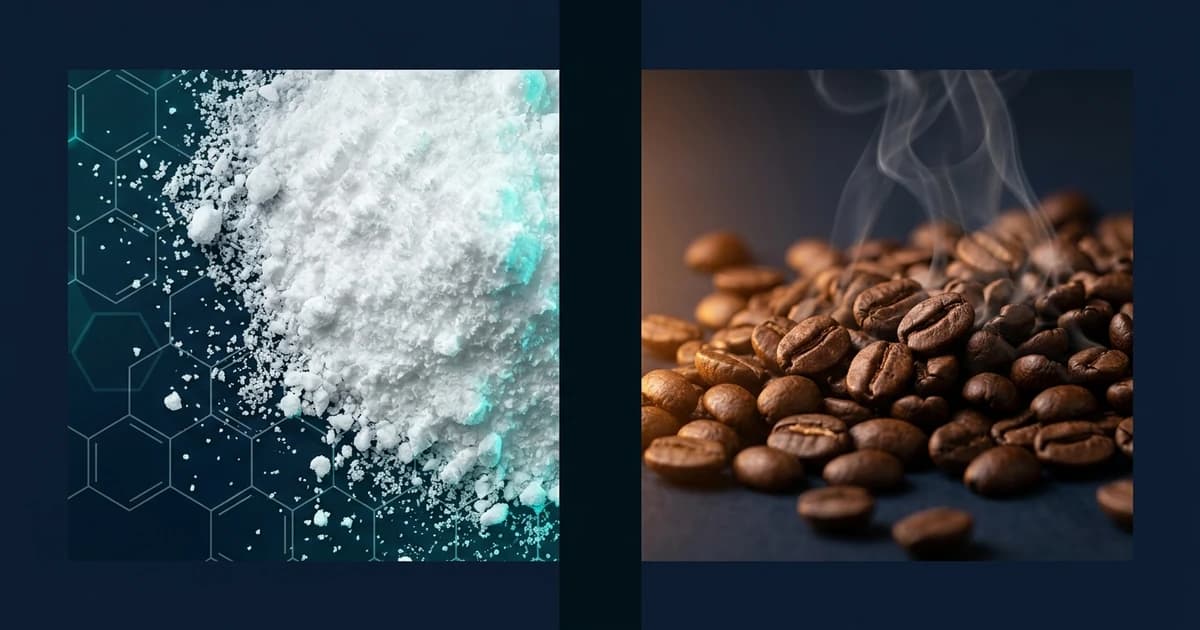
Mental energy has two very different chemical addresses. One is a synthetic vitamin B1 derivative that quietly tunes your brain chemistry. The other is the most-used psychoactive compound on earth. The sulbutiamine vs caffeine debate matters because these molecules feel similar in your head but work nothing alike under the hood.
If you are weighing sulbutiamine or caffeine for focus, the honest answer depends on what you mean by "energy" and how much human evidence you require before you trust a compound.
Here is the short version: caffeine has decades of rigorous human data behind it, while sulbutiamine has a promising mechanism and a thin clinical record. Let's separate the two cleanly.
Key Takeaways
- Caffeine is a stimulant. It blocks adenosine, the molecule that makes you feel tired, and its effects are backed by thousands of human trials.
- Sulbutiamine is not a classic stimulant. It is a fat-soluble form of vitamin B1 that crosses into the brain and supports cholinergic and dopaminergic activity.
- Sulbutiamine energy is subtle and slow, more "lifted mood and motivation" than "wired alertness."
- Sulbutiamine fatigue vs caffeine for raw alertness favors caffeine; the sulbutiamine fatigue research is limited to small, specific patient groups.
What Each Compound Actually Is
Caffeine is a natural alkaloid found in coffee, tea, and cacao. In the brain it works as an adenosine receptor antagonist. Adenosine builds up while you are awake and signals fatigue. Caffeine sits in those receptors and blocks the message, so you feel alert. That mechanism is settled pharmacology, with a typical half-life of roughly five hours in healthy adults.
Sulbutiamine is a different animal. It is a lab-made molecule built from two thiamine (vitamin B1) units bound together, which makes it fat-soluble. That structure lets it cross the blood-brain barrier far more easily than regular thiamine.
Once inside, sulbutiamine raises thiamine levels in the brain and appears to influence acetylcholine and dopamine signaling. According to Holistic Nootropics, research has shown sulbutiamine enhances acetylcholine-mediated neurotransmission, the cholinergic system tied to attention and memory.
Sulbutiamine vs Caffeine: The Core Difference in Mechanism
The simplest way to frame sulbutiamine vs caffeine is this: caffeine removes the brake on alertness, while sulbutiamine tries to support the underlying machinery of motivation and focus.
Caffeine gives you a fast, obvious lift. You feel it within 30 to 45 minutes when swallowed, and the alertness is hard to miss.
Sulbutiamine works on a slower timeline and a quieter register. Users tend to describe a gradual increase in drive, mood, and mental clarity rather than a sharp jolt. That is why people interested in non stimulant energy often look at it in the first place.
This also reframes the "sulbutiamine stimulant" question. Strictly speaking, sulbutiamine is not a stimulant in the pharmacological sense. It does not block adenosine or flood you with adrenaline. It nudges neurotransmitter systems instead.
Comparing the Two Head to Head
| Factor | Caffeine | Sulbutiamine |
|---|---|---|
| Class | Stimulant (adenosine antagonist) | Synthetic vitamin B1 derivative |
| Onset | 30–45 min (swallowed) | Gradual, often over days of use |
| Type of "energy" | Alert, wired, physical | Motivation, mood, mental clarity |
| Human evidence | Extensive, thousands of trials | Limited, small studies |
| Tolerance | Develops with daily use | Poorly characterized, reported anecdotally |
| Crash risk | Common as levels fall | Low, but effects are subtler |
The table makes the trade-off obvious. Caffeine wins on certainty and speed. Sulbutiamine offers a different feel that some people prefer, but the evidence base is shallow.
Sulbutiamine Fatigue vs Caffeine: What the Research Says
For raw fatigue and alertness, caffeine has the stronger human record. The sulbutiamine fatigue vs caffeine comparison is lopsided, mostly because so few quality trials on sulbutiamine exist.
The studies that do exist tend to focus on specific clinical populations rather than healthy adults chasing better focus. A small 2017 open-label study published in Multiple Sclerosis and Related Disorders found that sulbutiamine at 400 mg daily for two months reduced fatigue scores in 26 patients with multiple sclerosis, and the authors themselves called for larger placebo-controlled trials to confirm the result.
A separate 2003 observational study in The Journal of the Association of Physicians of India reported that sulbutiamine offered benefits as an add-on alongside anti-infective therapy in patients with infection-related asthenia.
Notice the pattern. These are patient groups dealing with disease-related fatigue, not students, founders, or athletes. That is a meaningful gap if you want to predict how sulbutiamine energy will feel for an otherwise healthy brain.
Caffeine, by contrast, has been tested in healthy adults for alertness, reaction time, and endurance more times than almost any compound in nutrition science. When you want predictable mental energy on a known timeline, that depth of evidence counts.
The Tolerance Problem on Both Sides
Caffeine tolerance is real and well documented. Use it daily and your brain makes more adenosine receptors, so you need more caffeine for the same effect. Skip a day and the withdrawal headache shows up.
Sulbutiamine tolerance is murkier. Many users report that its effects fade with continuous daily dosing, which is why cycling is a common recommendation in the community. The trouble is that this guidance comes from forums and anecdote, not controlled studies.
So neither compound is a clean answer to the tolerance question. Caffeine's downside is documented and manageable. Sulbutiamine's is poorly defined, which is its own kind of risk when you are deciding what to put in your body.
How to Think About Choosing
Choose caffeine when you want fast, reliable alertness backed by real human data, and you can manage your dose to limit tolerance and avoid an afternoon crash.
Consider sulbutiamine when you specifically want a subtler, mood-forward lift and you are comfortable experimenting with a compound that has limited evidence in healthy people.
The smartest move for most people is not picking one or the other in isolation. It is pairing a proven stimulant with compounds that smooth out its rough edges. That is where caffeine's well-studied partners earn their place.
Conclusion
Sulbutiamine and caffeine both promise mental energy, but they take opposite paths to get there. Caffeine is a fast, heavily studied stimulant that blocks fatigue signaling directly. Sulbutiamine is a quieter, slower vitamin derivative with an interesting mechanism and a thin clinical record, mostly in patients rather than healthy adults.
If your priority is predictable focus on a known timeline, caffeine remains the stronger bet. If you value a softer, motivation-style lift and accept the evidence is limited, sulbutiamine is worth a careful trial. Either way, dose and timing decide whether mental energy helps you or leaves you crashing later.
Frequently Asked Questions
Is sulbutiamine a stimulant like caffeine?
No. Sulbutiamine is a synthetic, fat-soluble form of vitamin B1, not a stimulant. It does not block adenosine or trigger the adrenaline-style response caffeine produces. Instead, it crosses into the brain and supports acetylcholine and dopamine signaling. People often explore it precisely because they want non stimulant energy that feels more like improved motivation and mood than a wired alertness.
Which gives faster energy, sulbutiamine or caffeine?
Caffeine, clearly. Swallowed caffeine produces noticeable alertness in about 30 to 45 minutes. Sulbutiamine works on a slower, more gradual timeline, and many users only notice its effects after several days of consistent use. If you need on-demand focus, caffeine is the faster route. Sulbutiamine is better suited to a slow-build approach rather than an immediate lift.
Can you take sulbutiamine and caffeine together?
Many people do, since they work through different mechanisms. Caffeine delivers the fast alertness while sulbutiamine adds its subtler, mood-forward effect. There is no strong human research on the specific combination, so start low and pay attention to how you respond. As always, check with a healthcare professional before combining supplements, especially if you take medication.
Does sulbutiamine cause tolerance like caffeine?
Possibly, but it is poorly defined. Caffeine tolerance is well documented: regular use prompts your brain to build more adenosine receptors. Sulbutiamine tolerance is reported widely in user communities, with many people cycling it to keep effects fresh, but controlled studies confirming this are lacking. That uncertainty is one reason the sulbutiamine fatigue vs caffeine comparison still favors the better-studied option.
Is sulbutiamine good for fatigue?
The evidence is limited and specific. Small studies suggest sulbutiamine reduced fatigue in particular patient groups, such as people with multiple sclerosis, when dosed around 400 mg daily. Those findings do not automatically transfer to healthy adults looking for everyday focus. For general fatigue with strong human data behind it, caffeine has the deeper, more reliable research record.
Why does caffeine cause a crash and sulbutiamine usually does not?
Caffeine's crash happens as its levels fall and the backed-up adenosine finally reaches your receptors, often producing an energy dip. Sulbutiamine does not work by blocking adenosine, so it lacks that same rebound mechanism. Its effects are gentler going in and coming out. The trade-off is that sulbutiamine's lift is far less pronounced than caffeine's in the first place.
Reliable Mental Energy Without the Tolerance Guesswork
The honest read on this comparison is that sulbutiamine's fatigue evidence stays thin and its tolerance behavior is poorly mapped, while caffeine's biggest weaknesses, tolerance buildup and the crash, are exactly the problems worth engineering around.
That is the thinking behind Roon. Each sublingual pouch pairs 80 mg of caffeine with 60 mg of L-theanine to take the edge off jitters, plus 25 mg of methylliberine (Dynamine) and 5 mg of theacrine (TeaCrine), an ingredient associated with low tolerance buildup in human research. The format absorbs in 5 to 10 minutes and is built for a 6 to 8 hour window of focus without the hard comedown. If you are curious how stimulants and their partners fit together, our breakdown of caffeine and L-theanine covers the pairing in depth.
Roon is not a cure for poor sleep, and it is not a replacement for sulbutiamine if you are specifically chasing its mood-forward feel. It is a way to get dependable mental energy from a well-studied stack rather than from a compound with limited human data. If you want focus you can count on, try Roon.
Written by Roon Team