L-Theanine for Anxiety: What the Science Actually Says
Roon Team
L-Theanine for Anxiety: What the Science Actually Says
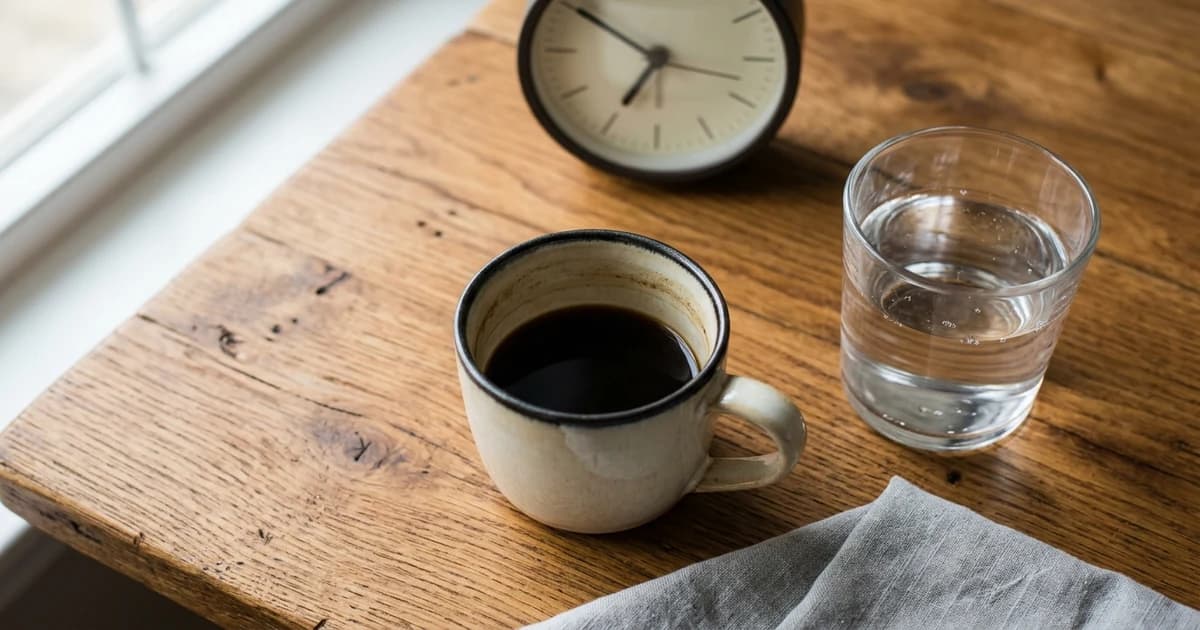
You took your morning coffee a little too far. Your chest is tight, your thoughts are racing, and the presentation you were supposed to crush is now crushing you. L theanine anxiety has become one of the most searched pairings in the supplement world for exactly this reason: millions of people want the focus without the freak-out.
But does l theanine anxiety relief actually hold up, or is it just another overhyped amino acid riding the wellness wave? The clinical evidence is surprisingly strong. And the mechanism behind l theanine anxiety reduction explains why this compound, found naturally in green tea, works differently from anything else on the market.
Key Takeaways:
- L-theanine promotes alpha brain wave activity within 30 to 40 minutes of ingestion, producing a state of calm alertness without sedation.
- Clinical trials using 200 to 400mg daily show measurable reductions in stress and trait anxiety scores.
- L theanine anxiety benefits work through multiple pathways: boosting GABA, modulating glutamate, and increasing serotonin and dopamine levels.
- L-theanine pairs exceptionally well with caffeine, smoothing out the stimulant's rough edges while preserving its cognitive benefits.
What Is L-Theanine, and Why Does It Affect Anxiety?
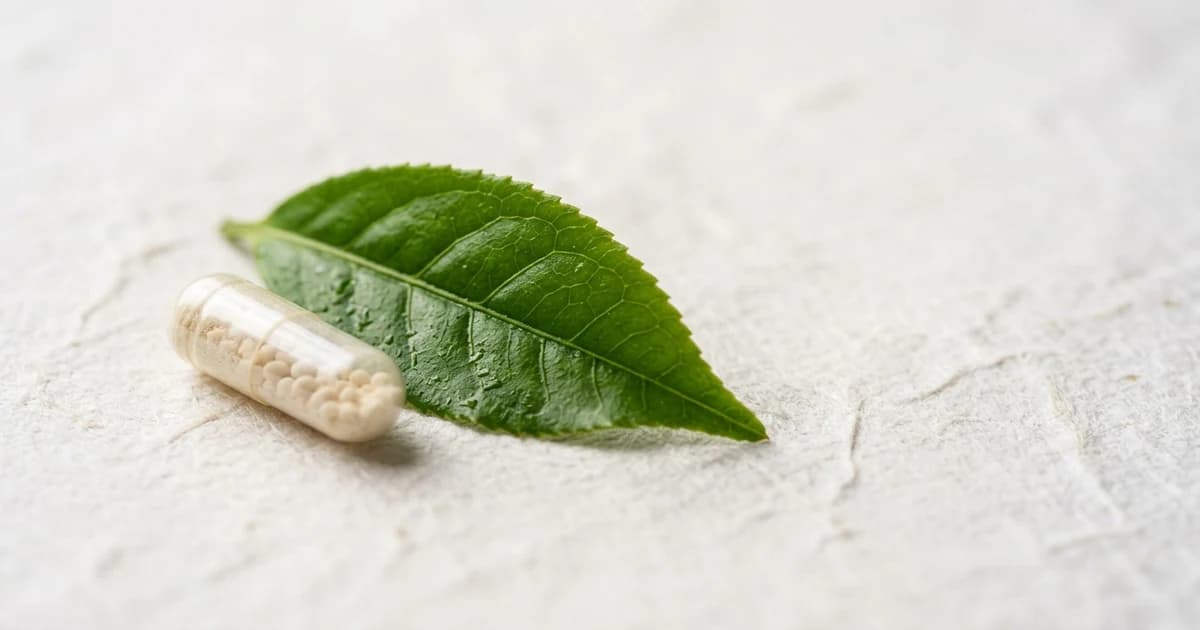
L-theanine is a non-protein amino acid found almost exclusively in the tea plant (Camellia sinensis). It crosses the blood-brain barrier efficiently, which is why you can feel its effects relatively quickly compared to most supplements.
The compound was first isolated from green tea leaves in 1949 by Japanese scientists. Since then, it's earned GRAS (Generally Recognized as Safe) status from the FDA, a designation that reflects its long history of safe consumption.
But what makes l theanine anxiety research interesting is how L-theanine affects the brain through multiple simultaneous targets. L-theanine doesn't just do one thing. It hits several neurochemical targets simultaneously.
The Neurochemistry: How L-Theanine Calms Your Brain
According to a 2025 randomized controlled study published in the Journal of Anaesthesiology Clinical Pharmacology, L-theanine causes relaxation within 30 to 40 minutes after ingestion through two primary mechanisms. First, it directly stimulates the production of alpha brain waves in the occipital, parietal, and frontal brain areas. Alpha waves are the electrical signature of a relaxed but alert mind, the same pattern seen during meditation.
Second, L-theanine modulates key neurotransmitters. It indirectly increases GABA levels, the brain's primary inhibitory neurotransmitter responsible for calming neural activity. But unlike benzodiazepines (which also target GABA), l theanine anxiety relief doesn't cause sedation or cognitive impairment. A review on its anxiolytic properties notes that while it boosts calming neurochemicals, it simultaneously reduces levels of excitatory brain chemicals linked to stress and anxiety.
L-theanine also increases dopamine and serotonin production. This dual action, calming the overactive stress response while supporting mood-regulating neurotransmitters, is what separates l theanine anxiety support from simple sedatives.
Does L-Theanine Help with Anxiety? The Clinical Evidence
The short answer: yes, across multiple well-designed trials. Here's what the data actually shows.
The 200mg Daily Trial
A randomized, placebo-controlled, crossover trial published in Nutrients tested 200mg of L-theanine daily for four weeks in 30 healthy adults. The results were clear. Trait anxiety scores on the State-Trait Anxiety Inventory dropped with statistical significance (p = 0.006). Depression scores decreased (p = 0.019). Sleep quality improved (p = 0.013).
These weren't subjective vibes. The researchers used validated psychometric instruments, and the crossover design meant each participant served as their own control, eliminating a huge source of variability.
The 400mg Stress Study
A 2024 double-blind, placebo-controlled trial published in Neurology and Therapy pushed the dose higher. Thirty adults with moderate stress received 400mg of L-theanine daily for 28 days. Perceived Stress Scale scores dropped by nearly 18% after four weeks. The study also measured salivary cortisol, sleep quality via actigraphy, and cognitive performance.
L-Theanine vs. Alprazolam: The Head-to-Head
Perhaps the most striking l theanine anxiety evidence comes from a 2025 study comparing L-theanine directly against alprazolam (a common benzodiazepine) for preoperative anxiety. In 168 surgical patients divided into three groups, 200mg of oral L-theanine, 500mg of oral GABA, and 0.25mg of alprazolam were administered 60 to 90 minutes before surgery.
The result: all three produced effective anxiety reduction. Alprazolam caused the most sedation, while L-theanine reduced anxiety with minimal sedation and actually improved cognitive performance. For anyone who wants to feel calmer without feeling foggy, that distinction matters.
The Broader Review
A review published in Pharmacological Research analyzed the full body of l theanine anxiety research and concluded that daily doses of 200 to 400mg produce anxiolytic and stress-reducing effects. Both acute (single-dose) and chronic (multi-week) benefits were observed.
| Study | Dose | Duration | Key Finding |
|---|---|---|---|
| Hidese et al., 2019 | 200mg/day | 4 weeks | Reduced trait anxiety (p = 0.006), improved sleep quality |
| Moulin et al., 2024 | 400mg/day | 28 days | ~18% reduction in perceived stress scores |
| Jain et al., 2025 | 200mg single dose | Acute | Effective anxiolysis with minimal sedation, improved cognition |
| Lopes Sakamoto et al., 2019 | 200-400mg/day | Various | Confirmed anxiolytic effects across acute and chronic use |
L Theanine Anxiety Reports: What Reddit Users Say
Clinical trials tell you what happens under controlled conditions. Reddit tells you what happens in the wild.
If you search "l theanine anxiety" on Reddit, you'll find thousands of threads across r/Nootropics, r/Supplements, and r/Anxiety. The general consensus tracks closely with the clinical data.
Most users report a noticeable calming effect within 30 to 60 minutes of taking 100 to 200mg. The most common descriptions: "takes the edge off," "quiets the mental chatter," and "like the calm from green tea but stronger." Many Reddit users specifically mention pairing L-theanine with caffeine to eliminate jitters while keeping focus sharp.
According to a 2025 study published in SAGE Journals that analyzed Reddit harm-reduction discussions, users on r/Nootropics frequently recommend L-theanine specifically to reduce anxiety brought on by stimulants. This aligns with a growing body of research on the L-theanine and caffeine combination.
A common dosing pattern reported on Reddit: 200mg in the morning with coffee, and another 200mg in the evening. Some users report improved sleep patterns at 400mg daily.
That said, not everyone responds the same way. A small number of users on Drugs.com reviews report paradoxical reactions, including increased anxiety or spaciness. Individual neurochemistry varies. But the overwhelming majority of anecdotal reports align with the clinical findings: l theanine anxiety reduction works without sedation.
Why L-Theanine and Caffeine Work Better Together for Anxiety
Here's where things get practical. Most people searching for l theanine anxiety solutions are also caffeine users. And the combination of these two compounds is one of the most well-studied stacks in cognitive science.
A double-blind, placebo-controlled study examining L-theanine and caffeine both alone and in combination found that L-theanine modulated the stimulant effects of caffeine on cerebral blood flow and cognition. A 250mg dose of L-theanine slowed reaction time on a visual probe task, which the researchers interpreted as an indicator of reduced anxiety.
A 2025 study published in the British Journal of Nutrition confirmed that the L-theanine and caffeine combination improved neurobehavioral and neurophysiological measures of selective attention in sleep-deprived adults. The combination outperformed either compound alone.
The logic is straightforward. Caffeine increases alertness and focus but can spike anxiety and jitteriness. L-theanine smooths out those rough edges by promoting alpha wave activity and boosting GABA. You get the energy without the anxiety. The focus without the fidgeting.
Optimal Dosing: How Much L-Theanine for Anxiety?
Based on the clinical evidence:
- For acute stress relief: 200mg as a single dose, effects within 30 to 40 minutes.
- For ongoing l theanine anxiety support: 200 to 400mg daily, split into one or two doses.
- Paired with caffeine: A 2:1 ratio of L-theanine to caffeine is commonly used in research (e.g., 200mg L-theanine with 100mg caffeine), though lower caffeine doses also work well.
L-theanine has a strong safety profile. The 2019 crossover trial found no adverse events at 200mg daily over four weeks. The 2024 trial reported no safety concerns at 400mg daily over 28 days.
One important note: L-theanine is a supplement, not a medication. If you're dealing with a diagnosed anxiety disorder, work with a healthcare provider. L theanine anxiety support promotes healthy stress responses, but it's not a replacement for professional treatment when you need it.
A Simpler Way to Get Your L-Theanine
Knowing the science is one thing. Actually building it into your routine is another.
Most L-theanine supplements come as capsules or powders that you have to measure, mix, or remember to swallow. And if you're pairing l theanine with caffeine for anxiety, that's another variable to manage.
Roon takes a different approach. Each sublingual pouch delivers L-theanine alongside 80mg of caffeine, theacrine, and methylliberine, a full cognitive performance stack absorbed directly through the lining of your mouth. No pills. No mixing. No guessing at ratios.
The L-theanine and caffeine work together exactly as the research suggests: sustained focus for six to eight hours, without the jitters or the crash. If the science on l theanine anxiety convinced you, this is the simplest way to put it to work.