Thiamine (B1) and Brain Energy: How One Vitamin Powers Your Focus
Your brain runs on glucose, but it cannot turn that glucose into usable fuel without thiamine. This is the link at the center of thiamine brain energy: vitamin B1 acts as the spark plug that lets your neurons convert sugar into the cellular energy they burn every second you think.
The brain is roughly 2% of your body weight and consumes about 20% of your energy. When B1 runs low, the wiring stays intact but the power supply dims. That is why early thiamine shortfalls often show up as cloudy thinking and fatigue long before anything dramatic happens.
This is a science explainer, not a quick fix. Let's get into what B1 actually does inside a neuron, what the research says about cognition, and who tends to run short.
Key Takeaways
- Thiamine (vitamin B1) is the cofactor your cells need to extract energy from glucose, the brain's primary fuel.
- Without enough B1, energy-hungry brain regions slow down, which can feel like thiamine deficiency brain fog, low motivation, and mental fatigue.
- The U.S. RDA is modest, 1.2 mg/day for men and 1.1 mg/day for women, and most diets meet it, but specific groups still run short.
- Benfotiamine, a fat-soluble form of B1, has been studied in mild Alzheimer's disease, with one trial pointing to slower cognitive decline.
- B1 is foundational, not a stimulant. It keeps the lights on; it does not flip a switch for instant focus.
What Thiamine Actually Does for Brain Energy
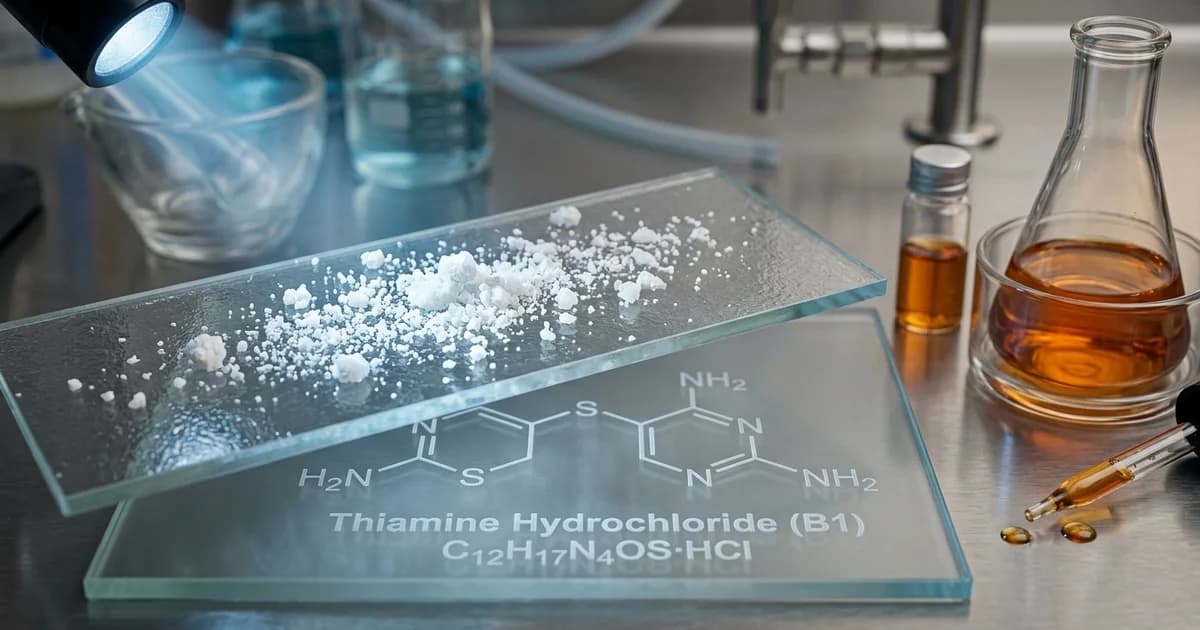
Thiamine's job is to help your cells turn food into ATP, the molecule that powers everything from muscle contraction to memory formation. Inside the body, B1 gets converted into its active form, thiamine pyrophosphate (TPP).
TPP is a cofactor for several enzymes that sit at critical junctions of energy metabolism. The most important is pyruvate dehydrogenase, the enzyme that connects glucose breakdown to the citric acid cycle. No TPP, no efficient ATP from glucose.
For a brain that relies almost entirely on glucose for fuel, this is not a minor detail. Skimp on B1, and the most metabolically demanding tissue you own loses output first.
Why neurons are the first to feel it
Neurons cannot store much energy. They produce ATP on demand, more or less in real time, which makes them unusually dependent on a steady metabolic supply line.
Thiamine also supports the production of neurotransmitters and helps maintain the structure of nerve cells. So a shortfall does not just lower energy. It nudges multiple systems at once, which is part of why the symptoms can feel vague and hard to pin down.
Vitamin B1 and Cognition: What the Research Shows
The clearest evidence for vitamin b1 cognition comes from what happens when it disappears. Severe, prolonged thiamine deficiency causes Wernicke-Korsakoff syndrome, a serious neurological condition marked by confusion and profound memory loss.
You do not need the extreme version to see the pattern. The same enzymes that fail in severe deficiency are the ones working at reduced capacity when levels are merely low. That is the mechanistic case for B1 mattering well before clinical disease.
According to the NIH Office of Dietary Supplements, up to 80% of people with chronic alcohol use disorder develop thiamine deficiency, because alcohol blocks B1 absorption, depletes liver stores, and interferes with its activation. That population gives clinicians a window into what low B1 does to the brain.
The benfotiamine question
Benfotiamine is a fat-soluble derivative of B1 that absorbs differently than standard thiamine. Researchers have been interested in whether it can reach tissues better and influence brain metabolism in disease states.
A randomized, placebo-controlled trial published in the National Library of Medicine's PMC archive tested benfotiamine brain effects in people with mild Alzheimer's disease and amnestic mild cognitive impairment over 12 months. The results pointed toward less cognitive decline in the treated group, though the authors framed it as early-stage and called for larger trials.
Read that carefully. One promising early trial in a clinical population is a reason to keep studying benfotiamine, not a reason to expect a memory boost in a healthy adult. The honest summary on thiamine memory is that B1 protects the machinery memory depends on; it is not a documented enhancer for people who already have enough.
Thiamine Deficiency and Brain Fog
Mild thiamine deficiency tends to announce itself quietly, with fatigue, irritability, poor concentration, and the cloudy, slow feeling people describe as brain fog. Because the brain loses metabolic output before it loses function, these symptoms can appear while standard lab work still looks unremarkable.
This is the realistic version of b1 mental fatigue. It is not a dramatic collapse. It is your most energy-demanding organ quietly operating below its ceiling.
The catch is that brain fog has dozens of causes, from sleep debt to thyroid issues to other nutrient gaps. B1 is one suspect on a long list, which is why self-diagnosis is a poor strategy and bloodwork through a clinician is the better one.
Who Actually Runs Low on B1?
Most people eating a varied diet hit the RDA without thinking about it. The NIH reports that average daily thiamine intake from food alone is about 1.95 mg in men and 1.39 mg in women aged 20 and older, comfortably above the requirement for the average person.
But averages hide the people at the edges. Several groups carry a higher risk of falling short:
- Heavy alcohol users, for the absorption and storage reasons above.
- Older adults, especially those in care settings, where appetite and absorption both decline. A cross-sectional study in PMC examined thiamine deficiency among elderly nursing home residents and found it was far from rare.
- People with poorly managed diabetes, who can lose more thiamine through urine.
- Anyone after bariatric surgery or with chronic GI conditions, where absorption is compromised.
- People on very restrictive or high-refined-carb diets, since processing strips B1 from grains.
If you are in one of these groups and feel persistently foggy, that is a conversation to have with a clinician, not a problem to guess your way through.
How Much Thiamine Do You Need?
The RDA is small, which tells you something important: this is a vitamin you need consistently, not in large doses. The numbers below come from U.S. dietary reference intakes.
| Group | Recommended Daily Intake (RDA) |
|---|---|
| Adult men | 1.2 mg |
| Adult women | 1.1 mg |
| Pregnant or lactating women | 1.4 mg |
| Average U.S. intake (men, food only) | ~1.95 mg |
| Average U.S. intake (women, food only) | ~1.39 mg |
There is no established Tolerable Upper Intake Level for thiamine, because excess is generally cleared in urine rather than stored to harmful levels. That makes it low-risk, but it also means there is no benefit to overshooting if your levels are already fine.
Food sources that cover it
You can hit your target with ordinary food. Strong sources include pork, fish, whole grains, legumes, sunflower seeds, and fortified cereals and breads.
The reason fortification exists is historical. Refining grains removes most of the natural B1, and widespread enrichment programs were created specifically to prevent deficiency at the population level.
Where B1 Fits in the Bigger Picture
Thiamine is foundational infrastructure. It keeps the energy-production line running so the rest of your cognition has fuel to work with, which is a different role than the one a stimulant plays.
Think of it as the floor, not the accelerator. Fixing a real deficiency can lift you back to baseline and clear the fog that came from running on empty. It will not push a well-nourished brain past its normal ceiling.
That distinction matters because the supplement aisle blurs it constantly. Correcting a shortfall and chasing peak performance are two separate problems with two separate solutions.
Conclusion
Thiamine earns its place in brain health by doing one essential job extremely well: it lets your cells turn glucose into the energy your neurons burn every moment you are awake. When B1 is adequate, you never think about it. When it dips, the most energy-hungry organ you have is the first to feel the slowdown.
For most people, a varied diet covers the need. For higher-risk groups, low B1 is a genuine and fixable contributor to fatigue and foggy thinking, best confirmed with a clinician rather than guessed at. Either way, the takeaway is the same. B1 keeps the lights on. It is the baseline that real focus is built on, not a stimulant you can feel kick in.
Frequently Asked Questions
Does thiamine give you energy like caffeine?
No, and the difference matters. Caffeine is a stimulant you feel within minutes. Thiamine is a metabolic cofactor that helps your cells convert glucose into ATP over the long term. If you are deficient, restoring B1 can lift fatigue back toward baseline, but a well-nourished person will not feel a thiamine pill the way they feel coffee. It supports the energy system rather than stimulating it.
Can low vitamin B1 cause brain fog?
It can contribute. Because the brain depends heavily on glucose metabolism, and thiamine is required for that process, low B1 can reduce the brain's energy output and produce fatigue and poor concentration. That said, brain fog has many possible causes, including poor sleep, stress, and other nutrient gaps. A clinician can test thiamine status rather than leaving you to guess.
What is the difference between thiamine and benfotiamine?
Thiamine is the standard water-soluble form of vitamin B1. Benfotiamine is a fat-soluble derivative that absorbs differently and has been studied for reaching tissues more effectively. Most research on cognition specifically, including a 12-month Alzheimer's trial, has used benfotiamine. For correcting an ordinary dietary shortfall, regular thiamine from food or a basic supplement is usually sufficient.
How much thiamine do I need per day?
The U.S. RDA is 1.2 mg per day for adult men and 1.1 mg for adult women, rising slightly during pregnancy and lactation. These are small amounts, and average U.S. food intake already exceeds them for most people. Because thiamine is water-soluble and excess is cleared in urine, there is no established upper limit, but megadosing offers no benefit if your levels are normal.
Which foods are highest in vitamin B1?
Pork is one of the richest sources, along with fish, whole grains, legumes, sunflower seeds, and fortified cereals and breads. Grain refining removes most natural B1, which is why many countries enrich flour and cereal products to prevent deficiency. A varied diet that includes whole grains and protein generally covers the requirement without supplementation.
Can thiamine improve memory in healthy people?
There is no strong evidence that extra thiamine sharpens memory in people who already have enough. The research linking B1 to memory mostly involves deficiency states, where restoring the vitamin protects the energy metabolism that memory relies on. The cleanest framing is that thiamine prevents a deficit from harming memory, rather than enhancing memory above normal.
Who is most at risk of thiamine deficiency?
The highest-risk groups include people with chronic alcohol use disorder, older adults in care settings, people with poorly managed diabetes, those who have had bariatric surgery or have GI absorption issues, and people on very restrictive diets. If you fall into one of these categories and have persistent fatigue or fog, ask a clinician to evaluate your B1 status.
B1 Keeps the Lights On. Focus Is a Different Layer.
If you have read this far, you understand the core point: thiamine is foundational fuel chemistry, not a focus switch. It keeps your brain's energy line running, and correcting a real deficiency can clear the fog that came from running low. It is not a stimulant, and it is not a substitute for sleep, a solid diet, or addressing other nutrient gaps.
That foundation is exactly why focus is a separate layer built on top of it. Roon is a zero-nicotine sublingual pouch designed for the focus layer, not the deficiency layer. Each pouch pairs 80 mg caffeine and 60 mg L-theanine with 25 mg methylliberine (Dynamine) and 5 mg theacrine (TeaCrine), formulated for a 5 to 10 minute onset and 6 to 8 hours of steady focus without the jitters or crash.
Roon is not a B-vitamin and not a fix for a nutrient shortfall, so handle the basics first. If your foundation is solid and you want clean, sustained focus on top of it, try Roon and read more in our deep dives on B vitamins and the nutrient gaps behind brain fog.
Written by Roon Team