Synephrine and Caffeine for Lifting
Roon Team
Synephrine and Caffeine for Lifting: What the Ratamess Resistance-Training Study Actually Found
A single squat session changed how a lot of pre-workout formulators think about bitter orange. In 2015, a team led by Nicholas Ratamess at The College of New Jersey put synephrine and caffeine under a barbell and measured what happened to reps, power, and effort. The headline: lifters did more total work without feeling like they worked harder.
That study still gets cited every time someone debates whether p-synephrine belongs in a stimulant stack. The problem is that most summaries online get the numbers wrong or oversell them.
Here is what the data says, why it matters for the gym, and where the hype outruns the evidence.
Key Takeaways
- In the Ratamess study, p-synephrine and the synephrine-plus-caffeine combo increased total squat repetitions and volume load versus placebo and a no-supplement control.
- Adding caffeine to synephrine raised mean power and bar velocity, but synephrine alone did not.
- Lifters did more work with no rise in perceived exertion or blood lactate, and the researchers reported no adverse side effects.
- The effects were modest, concentrated in the final sets, and measured in 12 trained men, so treat this as a useful signal, not a finished case.
What Synephrine and Caffeine Actually Are
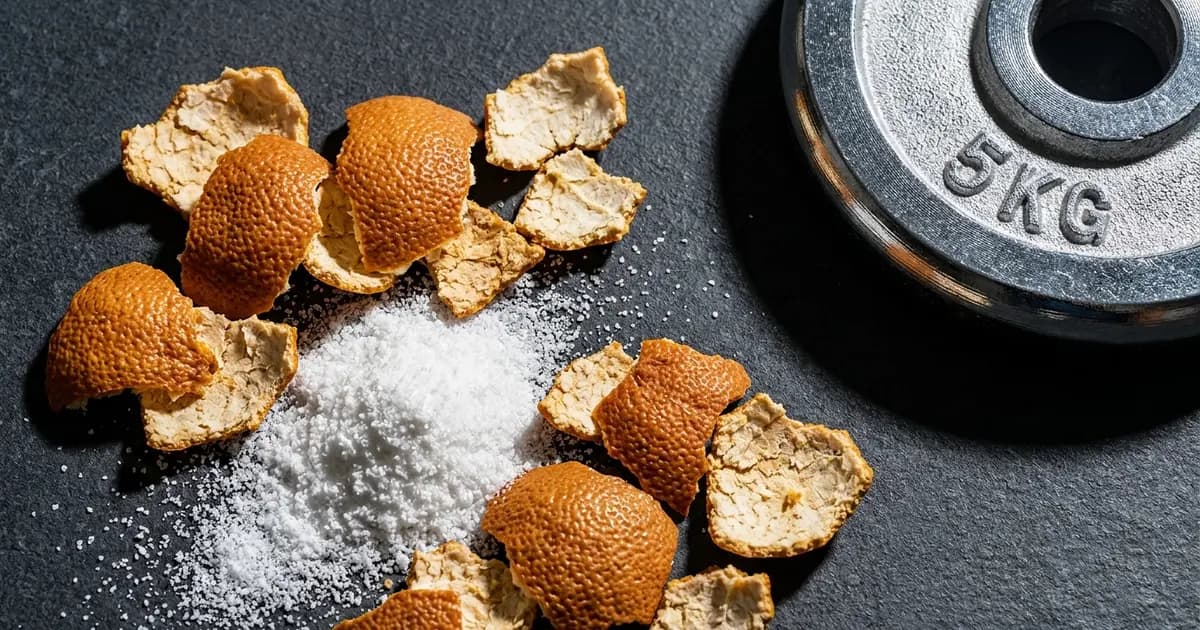
P-synephrine is a mild stimulant compound from bitter orange (Citrus aurantium), and it gained popularity as an ephedra replacement after ephedra was banned. It belongs to a family of compounds that act on adrenergic receptors, the same signaling system tied to the body's fight-or-flight response.
Caffeine works differently. It blocks adenosine receptors in the brain, which is why it pushes back fatigue and sharpens alertness.
Pairing them is the logic behind a lot of "thermogenic" pre-workouts. The theory is that one stimulant nudges energy expenditure and fat oxidation while the other drives central nervous system arousal. The Ratamess team set out to test whether that pairing does anything measurable when you actually pick up a heavy bar.
The Ratamess Synephrine Study, Explained
The study, published in 2015 in the Journal of the International Society of Sports Nutrition, used a double-blind, randomized crossover design with 12 healthy, college-aged men. You can read the full paper on PubMed Central.
Each man completed the same squat protocol under three conditions on separate weeks. According to the study, twelve healthy, college-aged men performed a control (CT) resistance exercise protocol consisting of 6 sets of squats for up to 10 repetitions per set using 80% of their one repetition-maximum (1RM) with 2 min of rest in between sets.
The three supplement conditions were:
| Condition | What they took |
|---|---|
| Placebo (P) | Inactive capsule |
| Synephrine alone (S) | 100 mg p-synephrine |
| Synephrine + caffeine (SCF) | 100 mg p-synephrine + 100 mg caffeine |
The dosing protocol mattered too. For each supplement treatment (separated by 1 week), subjects consumed the supplement for 3 days prior to each protocol and the morning of each protocol, and subsequently did not consume any supplements for 3 days following.
This was not a one-and-done dose. The lifters loaded for three days, trained, then washed out, which makes the design tighter than most gas-station pre-workout testimonials.
What the Synephrine Caffeine Reps Data Showed
Both synephrine conditions let lifters grind out more squat reps and move more total weight than placebo, with most of the gain showing up in the last three sets. That is the core finding on synephrine caffeine reps.
The specifics, straight from the results: supplements SCF and S produced a markedly greater number of repetitions performed than CT (by 11.0 ± 8.0%) and P (by 6.0 ± 7.0%) and a 10.6 ± 12.0% greater increase in volume load per protocol than CT and P. Most of the differences were seen during the last 3 sets.
Caffeine earned its spot in the stack on the power metrics. Mean power and velocity for all 6 sets were markedly higher in SCF compared to CT and P by ~6.2 ± 8.0%.
Synephrine alone boosted endurance. Adding caffeine made the reps faster and more forceful.
Here is the part most pre-workout marketing leaves out. No supplement effects were observed in RPE or blood lactate, and no adverse side effects were observed or reported. Lifters did more work without rating the sessions as harder and without extra lactate buildup.
How Synephrine Resistance Training Effects Are Supposed to Work
The proposed mechanism is adrenergic: p-synephrine appears to act mainly on beta-3 receptors, which is also why researchers argue it carries a lower cardiovascular load than ephedra. This is where you should read carefully, because the same scientists keep showing up.
Sidney Stohs, a co-author on the Ratamess study, has also written several safety reviews of bitter orange. In one review of human clinical studies, the argument is that approximately 30 human studies indicate that p-synephrine and bitter orange extracts do not result in cardiovascular effects and do not act as stimulants at commonly used doses.
The receptor logic runs like this. p-synephrine stimulation of β-3 adrenoreceptors in the cardiovascular system does not result in an increase in blood pressure or heart rate but may exhibit a modulating rather than a stimulatory effect.
Take that with appropriate skepticism. A favorable safety profile written partly by the same group that ran the performance trial is worth knowing about. Even those reviews concede that longer, independent human safety data is still needed.
So Should You Put Synephrine in Your Pre Workout?
The honest answer: the Ratamess synephrine study shows a real but small effect on muscular endurance, and the caffeine half of the stack is doing the heavy lifting on power. If you are choosing a synephrine pre workout, set your expectations at a few extra reps on your back sets, not a new max.
A few things to weigh:
- The sample was 12 trained young men doing squats. That is a narrow population and a single lift.
- Effect sizes were modest and variable, with wide standard deviations on every number.
- Synephrine is banned by some sport governing bodies and flagged on certain tested-athlete lists, so check your federation's rules before you touch it.
- The caffeine in the combo is responsible for the power and velocity bump, and caffeine's effects on resistance exercise are far better established on their own.
For a deeper look at the better-studied half of the stack, see our breakdown of how caffeine timing affects training and focus and our guide to building a clean caffeine and L-theanine routine.
Conclusion
The Ratamess study did something most supplement research never bothers to do: it put a compound under real load and counted real reps. What it found was honest and limited. Synephrine, with or without caffeine, helped trained lifters squeeze out a handful more repetitions and move more total weight, mostly when fatigue set in late in the session, and it did so without making the work feel harder.
Caffeine was the part that added speed and power. Synephrine added a small endurance edge through an adrenergic pathway that, at least in the available data, looks gentler than the ephedra it replaced.
That is a performance-stimulant story, built around arousal, thermogenesis, and grinding out the last set. It is a different goal than sitting down and thinking clearly for six hours, and the ingredients that serve those two goals are not the same.
Frequently Asked Questions
What did the Ratamess synephrine study find?
The 2015 study found that p-synephrine alone and combined with caffeine increased total squat repetitions and volume load versus placebo and a no-supplement control in 12 trained men. Repetitions rose by roughly 6 to 11 percent depending on the comparison, with most of the benefit in the final three sets. Adding caffeine also raised mean power and bar velocity. Lifters reported no extra perceived exertion, and researchers observed no adverse side effects.
How much synephrine and caffeine did the study use?
The synephrine-only condition used 100 mg of p-synephrine. The combined condition used 100 mg of p-synephrine plus 100 mg of caffeine. Subjects took the supplement for three days before each squat protocol and again the morning of testing, followed by a multi-day washout before the next condition.
Does synephrine actually build strength?
Not directly. The Ratamess data points to better local muscular endurance, meaning a few more reps before failure, rather than a higher one-rep max. The power and velocity gains came specifically from the added caffeine, not synephrine on its own. Treat synephrine as a modest endurance aid, not a strength builder.
Is p-synephrine safe in a pre workout?
Reviews of bitter orange argue that p-synephrine does not meaningfully raise blood pressure or heart rate at typical doses, partly because it binds weakly to the receptors tied to those effects. Some of that work was authored by researchers connected to the performance trials, and independent long-term human safety data is still limited. If you have any cardiovascular condition, talk to a doctor first.
Is synephrine banned in sports?
Synephrine sits on the monitoring or restricted lists of several sporting bodies, and policies change. If you compete in a tested sport, check your specific federation's current rules before using any synephrine pre workout. The fact that it is sold over the counter does not mean it is cleared for competition.
Why do pre-workouts combine synephrine with caffeine?
The pairing aims to stack two stimulant pathways. Caffeine drives central nervous system arousal and alertness by blocking adenosine, while synephrine acts on adrenergic receptors tied to energy expenditure and fat oxidation. In the Ratamess study, that combination produced both more reps and faster, more powerful reps, with caffeine accounting for the power side.
Does synephrine work for focus or just physical performance?
The evidence here is about physical output: reps, volume, power, and velocity during resistance exercise. It is an adrenergic, thermogenic performance angle, not a study of sustained mental focus or attention. For cognitive endurance, compounds like caffeine paired with L-theanine have the more relevant research base.
Why Roon Skips the Adrenergic-Thermogenic Route
Everything in the Ratamess study points one direction: arousal, thermogenesis, and squeezing out the last hard set. That is a useful goal in the gym. It is not the goal behind Roon.
Roon is built for sustained mental focus, the kind you need across a long workday or a deep study block, not a six-set squat finisher. So it deliberately leaves synephrine and the rest of the adrenergic-thermogenic family out of the formula. Chasing fight-or-flight signaling tends to bring the jitters and the crash that wreck concentration. Each sublingual pouch instead uses a 4-ingredient stack of 80 mg caffeine, 60 mg L-theanine, 25 mg methylliberine (Dynamine), and 5 mg theacrine (TeaCrine), designed to start working in 5 to 10 minutes and hold for 6 to 8 hours with no jitters, no crash, and no tolerance buildup.
Roon is not a pre-workout and not a substitute for sleep or training. If your aim is clear, steady focus rather than a thermogenic edge under the bar, try Roon and feel the difference in design.
Written by Roon Team