B Vitamins and the Brain: The Complete Science
Roon Team
B Vitamins and the Brain: The Complete Science
Most people treat the B vitamins like a single rumor on a supplement label. One word, eight molecules, zero understanding.
That gap matters. The case for B vitamins for brain function is real, but it is narrower and stranger than the marketing suggests. These nutrients do not sharpen a healthy brain like a stimulant. They keep the machinery running, and the machinery fails quietly when they run low.
This is the full picture: what each B vitamin does, what the recent trials actually found, and where the hype falls apart.
Key Takeaways
- B vitamins are cofactors, not stimulants. They build neurotransmitters and protect neurons, but they do not produce acute, in-the-moment focus.
- The strongest evidence links B6, B9 (folate), and B12 to brain health, mostly through homocysteine control.
- A 2025 meta-analysis found a real but very small cognitive benefit from B supplementation in older adults.
- B12 deficiency is common in older people and can mimic memory loss, and "normal" lab levels may still be too low.
- Correcting a deficiency restores a baseline. It does not push a well-fed brain past its ceiling.
What B Vitamins Actually Do in the Brain
B vitamins run the chemistry your neurons depend on. They are the cofactors that turn food into usable energy and raw amino acids into neurotransmitters.
There are eight of them, and they do not act alone. Think of them as a crew. When one is missing, the others cannot fully cover the shift.
Here is where each one earns its place in the conversation about b complex for cognition.
| B Vitamin | Brain-Relevant Role | Why It Matters |
|---|---|---|
| B1 (Thiamine) | Glucose metabolism for neural energy | The brain burns glucose constantly; severe deficiency causes serious neurological damage |
| B6 (Pyridoxine) | Synthesis of serotonin, dopamine, GABA | Directly involved in building mood and focus chemicals |
| B9 (Folate) | DNA repair, homocysteine recycling | Low levels linked to depression risk and cognitive decline |
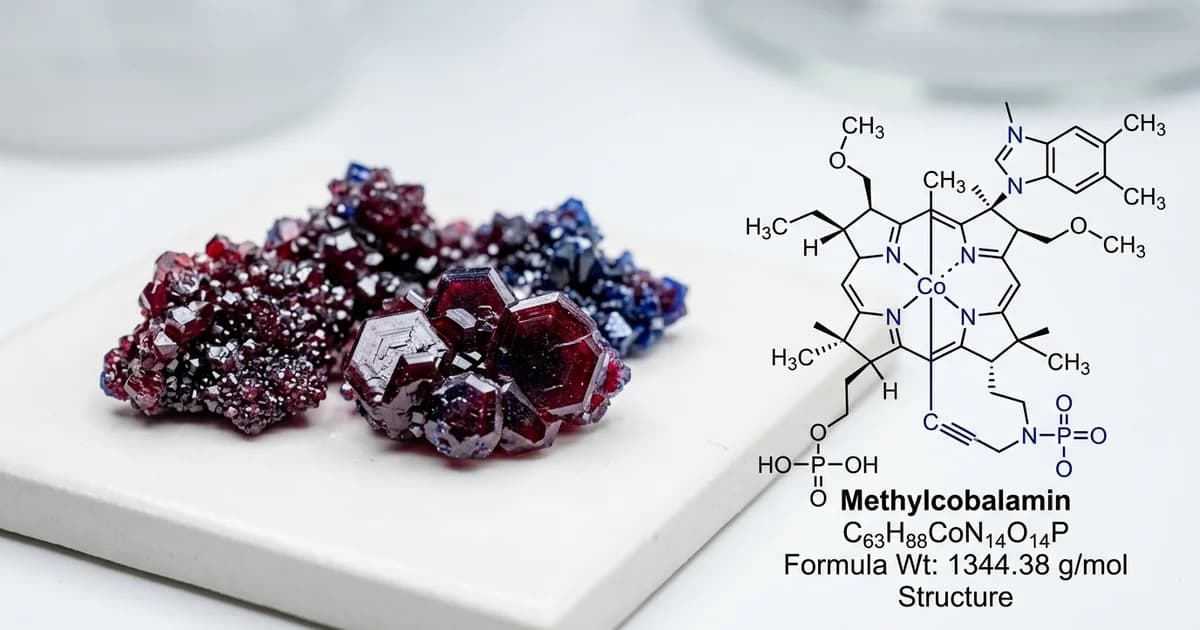
| B12 (Cobalamin) | Myelin maintenance, homocysteine recycling | Deficiency mimics memory loss and nerve damage |
| B2, B3, B5, B7 | Energy production, fatty acid synthesis | Support the metabolic base the brain runs on |
Notice the pattern. The vitamins that dominate the research, B6, B9, and B12, all share one job: recycling homocysteine.
The Homocysteine Connection: The Real Mechanism
Homocysteine is the link that explains most of the science on b vitamins memory and aging. It is an amino acid your body produces normally. The problem starts when it accumulates.
B6, B9, and B12 are the enzymes' partners that clear homocysteine and convert it back into useful molecules. When those vitamins run low, homocysteine climbs. Raised homocysteine is associated with brain atrophy and dementia, which is exactly why researchers have spent two decades testing whether B vitamins can slow that damage, according to the 2025 review published in Nutrition Reviews.
This is the difference between a vitamin and a stimulant. A stimulant changes how your brain works for a few hours. B vitamins change the biochemical conditions your brain operates in, over weeks and months.
What the Latest Research Actually Found
A 2025 meta-analysis is the most honest summary we have, and the headline is less exciting than supplement ads imply. After pooling the trials and removing statistical outliers, researchers found that vitamin B6, B9, or B12 supplementation has a very small benefit on global cognitive function in older adults, with high-certainty evidence.
Read that carefully. The benefit is real and the evidence is strong, but the effect is small. The same analysis noted that the benefit did not differ much between people with intact cognition, mild impairment, or dementia.
So B vitamins are not a memory drug. They are insurance against a deficit. That distinction is the whole article.
The B12 Threshold Problem
Here is the twist that changes how you should read your own bloodwork. In 2026, researchers at UC San Francisco reported that older adults with "normal" but lower levels of active B12 showed signs of subtle neurological and cognitive problems.
The implication is uncomfortable. Some people get told their B12 is fine when their brain would benefit from more. Current guidelines were built to prevent anemia, not to optimize aging neurons.
This does not mean megadosing is smart. The same body of B12 research suggests that very high levels from long-term high-dose supplements carry their own risks, so more is not automatically better.
B Vitamin Deficiency and the Brain
A genuine b vitamin deficiency brain effect looks like cognitive decline, and it is frequently misread as something else. Low B12 in particular can produce memory problems, confusion, fatigue, and nerve symptoms that resemble early dementia or depression.
That matters most for specific groups. Older adults absorb B12 less efficiently, and deficiency is common in that population, a pattern documented in European Geriatric Medicine.
Who is actually at risk:
- Vegans and strict vegetarians, since B12 comes almost entirely from animal foods
- Adults over 60, due to declining stomach acid and absorption
- People on metformin or long-term acid reducers, which blunt B12 uptake
- Heavy drinkers, who often run low on thiamine and folate
- Pregnant people, who need more folate for fetal neural development
If you fall into one of these groups and feel mentally foggy, that fog might be chemistry, not character. A blood test answers the question faster than any supplement guess.
B Vitamins and Mental Energy: Sorting Fact From Marketing
The phrase b vitamins mental energy sells a lot of products, and it is half true. B vitamins are essential for converting food into cellular energy, so a deficiency genuinely drains you. Correcting that deficiency restores normal energy.
What B vitamins do not do is add energy on top of a normal baseline. If your levels are already adequate, swallowing more does not make you sharper. The extra washes out in your urine.
This is why the "high-potency B complex for energy" pitch is misleading for most people. You are paying for a stimulating sensation that the vitamins themselves do not produce. The lift people feel from those products usually comes from something else in the formula, or from the placebo of finally doing something.
How to Choose the Best B Vitamins for Brain Health
The best b vitamins for brain health are the ones you actually lack, in forms your body can use. Blanket megadosing is not a strategy.
A few principles that hold up:
- Test before you guess. A simple panel for B12 and folate tells you whether you have a real problem to fix.
- Prefer active forms when supplementing. Methylcobalamin and methylfolate are usable directly, which helps people with common genetic variations in folate processing.
- Respect the ceiling. Once you are replete, more does not equal better, and it may carry risk.
- Food first when possible. Eggs, fish, leafy greens, legumes, and meat cover the spread without overshooting.
A balanced B complex is reasonable for at-risk groups. For everyone else, the smarter move is to confirm a need rather than treat a vitamin like a performance enhancer.
How B Vitamins Compare to Acute Focus Tools
This table reframes the whole category. B vitamins and fast-acting focus ingredients solve different problems, and people confuse them constantly.
| Approach | Mechanism | Timeline | What It Delivers |
|---|---|---|---|
| B vitamins (B6/B9/B12) | Cofactors, homocysteine control | Weeks to months | A restored nutritional baseline |
| Caffeine | Adenosine blockade | 15-45 min | Alertness, with a crash risk |
| L-theanine | Calming alpha-wave support | 30-60 min | Smooths caffeine's edge |
| Methylliberine (Dynamine) | Fast neuro-stimulation | 5-15 min | Quick, clean activation |
| Theacrine (TeaCrine) | Sustained energy signaling | 30-60 min | Long, even focus without tolerance buildup |
One column fixes a floor. The other raises a ceiling for a few hours. You can want both, but you should not expect either to do the other's job.
The Bottom Line on B Vitamins and the Brain
B vitamins are foundational, not stimulating. They keep neurotransmitter production, myelin repair, and homocysteine control running in the background, and when they run low, cognition suffers in ways that often get misdiagnosed.
The strongest evidence sits with B6, B9, and B12, and even there the cognitive benefit in well-nourished people is small. The big wins come from correcting a real deficiency, especially in older adults, vegans, and people on certain medications.
So the honest summary is this. Fix a deficit and you protect your baseline. Stay topped up and you remove a risk. Neither move turns a vitamin into the kind of acute focus you can feel within minutes, and pretending otherwise is where most of the marketing goes wrong.
Frequently Asked Questions
Do B vitamins improve memory in healthy people?
Mostly no. The 2025 meta-analysis found that B6, B9, and B12 supplementation produced only a very small cognitive benefit in older adults, and the strongest effects come from correcting an actual deficiency. If your levels are already adequate, more B vitamins will not measurably sharpen your memory. They protect the baseline rather than push it higher.
Which B vitamin is most important for the brain?
B12 gets the most attention because its deficiency directly damages nerves and mimics memory loss, but B6 and B9 (folate) work alongside it to control homocysteine. These three function as a unit. A shortage in any one can disrupt the others, which is why the research usually studies them together rather than in isolation.
Can B vitamin deficiency cause memory loss?
Yes. Low B12 in particular can cause confusion, fatigue, and memory problems that resemble early dementia or depression. This is most common in older adults, vegans, heavy drinkers, and people on metformin or acid-reducing drugs. The encouraging part is that deficiency-driven symptoms often improve once levels are restored, which is why testing matters.
Do B vitamins give you energy?
They support energy production, but they do not add energy above a normal baseline. B vitamins help convert food into usable cellular fuel, so a deficiency drains you and correcting it helps. If you are already replete, extra B vitamins simply pass out of your body without a noticeable lift.
Should I take a B complex every day?
It depends on your risk. If you are vegan, over 60, pregnant, or on medications that block B12 absorption, a daily complex or targeted supplement makes sense. For most well-fed people, food covers the need and a blood test is a smarter first step than routine high-dose supplementation.
Are "normal" B12 blood levels actually enough?
Maybe not. A 2026 UCSF study found that older adults with B12 in the low-normal range still showed subtle neurological and cognitive signs. Current guidelines were designed to prevent anemia, not to optimize the aging brain, so a "normal" result does not always mean optimal.
Can B vitamins replace coffee or a focus supplement?
No. B vitamins work over weeks by fixing nutritional status, while caffeine and related compounds act within minutes to produce alertness. They solve different problems. A B complex cannot deliver the acute focus you feel from a fast-acting stack, and a focus stack cannot repair a vitamin deficiency.
Foundation First, Then the Ceiling
This article drew one line clearly: B vitamins fix a floor, and they do it slowly. Over weeks, the right levels of B6, B9, and B12 protect the chemistry your brain runs on. That is foundational work, and it is worth doing.
But a corrected vitamin status is not the same as on-demand focus. That is the gap Roon is built for. Roon is a zero-nicotine sublingual pouch with a four-ingredient stack, 80 mg caffeine, 60 mg L-theanine, 25 mg methylliberine (Dynamine), and 5 mg theacrine (TeaCrine), tuned for a 5 to 10 minute onset and 6 to 8 hours of steady focus with no jitters, no crash, and no tolerance buildup.
Roon is not a multivitamin and not a substitute for fixing a real deficiency. Sort your nutritional status first with food and testing. Then, when you need focus you can feel during the deep-work block in front of you, try Roon as the acute layer a vitamin was never meant to provide.
Written by Roon Team