Is Red Bull Bad for You? Every Ingredient, Checked
Roon Team
Is Red Bull Bad for You? Every Ingredient, Checked
Is Red Bull bad for you? One 8.4 fl oz can is not harmful for most healthy adults. The 80 mg of caffeine is one fifth of the FDA's 400 mg daily figure. The sugar is the weak point: 27 g of added sugar already exceeds the American Heart Association's 25 g daily limit for women in a single can. Risk climbs with can size, cans per day, and mixing with alcohol.
Key Takeaways
- The caffeine in a small Red Bull (80 mg) is lower than a standard cup of coffee (about 95 mg). It is the sugar, not the caffeine, that crosses a health guideline first.
- A single 20 fl oz can contains 63 g of sugar, which is 252% of the AHA's daily limit for women and 175% for men.
- Sugar Free Red Bull and Red Bull Zero solve the sugar problem but carry the same caffeine dose per ounce.
- The heart study that made headlines tested 32 oz of energy drink consumed in one hour, nearly four small cans at once, and the brands were not named.
What Is in a Can of Red Bull?
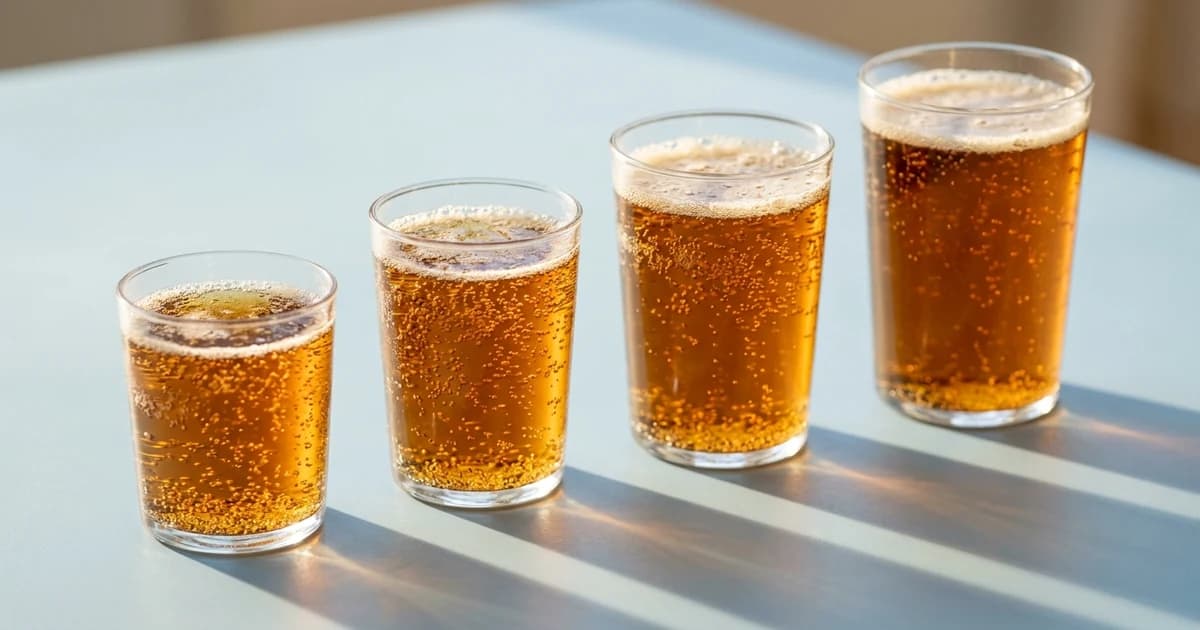
The Red Bull ingredients list is short: caffeine, taurine, B vitamins, sugar, and water, plus some smaller additions. The difference between can sizes is purely one of dose. Here is how much caffeine is in each Red Bull can and how much sugar, measured against federal and medical limits.
| Can Size | Caffeine (mg) | % of FDA 400 mg | Sugar (g) | % of AHA 25 g (women) | % of AHA 36 g (men) | Calories |
|---|---|---|---|---|---|---|
| 8.4 fl oz | 80 | 20% | 27 | 108% | 75% | 110 |
| 12 fl oz | 114 | 29% | 37 | 148% | 103% | ~157 |
| 16 fl oz | 151 | 38% | 51 | 204% | 142% | ~210 |
| 20 fl oz | 198 | 50% | 63 | 252% | 175% | ~262 |
Caffeine and sugar figures from Red Bull's product page. AHA limits: 25 g for women, 36 g for men. FDA caffeine ceiling: 400 mg/day for healthy adults. Calorie estimates for larger cans are proportional to the labeled 110 cal per 8.4 fl oz.
The B vitamins are substantial for one can, including significant percentages of the Daily Value for vitamin B6, niacin, B12, and pantothenic acid, per Red Bull's ingredient list. These are water-soluble, so your body excretes what it does not need.
Taurine is an amino acid your body makes on its own. Red Bull does not publish a milligram amount on its US page but states that "the human body (154 lb) contains 70 times more taurine than one 8.4 fl oz can." More on taurine safety below.
Is the Caffeine in Red Bull a Lot?
No. At 9.5 mg per fl oz, the small Red Bull delivers 80 mg, which Red Bull itself compares to "about the same amount as in a cup of home-brewed coffee." The USDA lists 8 fl oz of brewed coffee at roughly 95 to 96 mg. A 12 fl oz Coca-Cola has just 34 mg.
Where caffeine becomes a concern is stacking. Five small cans hit 400 mg, the FDA's upper bound. Two 20 fl oz cans reach 396 mg. The FDA estimates toxic effects like seizures can appear with rapid consumption of around 1,200 mg, so a single small can is nowhere near that. The question is how many follow.
If the caffeine is what you are after, an 80 mg pouch is one sugar-free way to get the same dose.
Is the Sugar in Red Bull Bad for You?
This is where Red Bull's numbers get uncomfortable. The AHA recommends no more than 25 g of added sugar per day for women and 36 g for men. One 8.4 fl oz Red Bull contains 27 g, which already puts a woman over the daily limit from a single drink.
Scale it up. A 16 fl oz can hits 51 g, more than double the women's limit. A 20 fl oz can reaches 63 g. If you drink one of those and eat anything else with added sugar that day, you are past every published guideline.
The sugar is sucrose and glucose, the same sugars in soda and juice. Chronic excess added sugar is linked to weight gain, type 2 diabetes risk, and cardiovascular disease, per the AHA. None of that is unique to Red Bull. The can is small, but the sugar density is high.
Is Sugar Free Red Bull Bad for You?
Sugar Free Red Bull replaces sucrose and glucose with sucralose and acesulfame K. The caffeine per ounce is the same. The sugar problem disappears. Calories drop to near zero.
Red Bull Zero uses a different sweetener blend: erythritol, sucralose, and monk fruit extract. It is also zero sugar and near zero calories. Zero currently comes in 8.4 and 12 fl oz sizes.
Are artificial sweeteners a health risk? The FDA has approved both sucralose and acesulfame K. Some observational studies have raised questions about gut microbiome effects, but no regulatory body has changed its position based on that data. If sugar is your concern, the sugar-free versions solve it.
Is Taurine Bad for You?
Taurine is an amino acid found in meat, fish, and dairy, and your body synthesizes it on its own. The European Food Safety Authority concluded in 2009 that exposure to taurine at the levels used in energy drinks was not a safety concern.
Red Bull does not publish a per-can taurine milligram figure on its US site. It does say a 154 lb human body contains about 70 times more taurine than one 8.4 fl oz can. The evidence does not point to harm at typical consumption levels.
Is Red Bull Bad for Your Heart?
The study that fueled most of these headlines is Shah et al. 2019, published in the Journal of the American Heart Association. It was a randomized, double-masked, placebo-controlled crossover trial with 34 healthy volunteers aged 18 to 40. Participants drank 32 fl oz of a commercial energy drink (containing 304 to 320 mg of caffeine) within 60 minutes.
That is almost four 8.4 fl oz Red Bulls consumed in one hour.
The findings: QT interval was 6 to 7.7 ms longer at 4 hours versus placebo, and blood pressure rose about 4 to 5 mm Hg. The authors noted the changes could not be attributed to caffeine alone, and the brands were not named. Extrapolating those results to a single small can sipped over a morning is a stretch.
If you have a heart condition, arrhythmia, or take medication affecting heart rhythm, talk to your clinician before drinking any energy drink. Those are the Red Bull side effects worth taking seriously; the rest of the ingredient list does not raise the same flags at normal doses.
Is One Red Bull a Day Bad for You?
Run the numbers from the table. One 8.4 fl oz can per day gives you 80 mg of caffeine (20% of the FDA ceiling) and 27 g of sugar (108% of the AHA women's limit, 75% of the men's). The caffeine is fine. The sugar is the problem, or at least the trade-off.
If you drink one a day and want to keep it, switching to Sugar Free or Zero removes the sugar issue. Read about how many energy drinks a day is too many for a broader look at stacking limits. Larger cans are harder to justify daily because the sugar climbs fast and the caffeine starts to eat into your remaining budget for coffee, tea, or anything else.
Who Should Skip Red Bull
Some groups should avoid Red Bull and energy drinks entirely:
- Children and adolescents. The American Academy of Pediatrics states that caffeine and other stimulants in energy drinks "have no place in the diet of children and adolescents."
- Pregnant or breastfeeding women. ACOG recommends limiting caffeine to less than 200 mg per day during pregnancy. One small Red Bull fits within that, but leaves little room for any other caffeine source. Talk to your clinician.
- Anyone mixing with alcohol. The CDC notes that caffeine does not reduce the effects of alcohol on your body. NCCIH data shows energy-drink-related emergency department visits doubled between 2007 and 2011, and drinkers aged 15 to 23 who mix alcohol with energy drinks are four times more likely to binge drink at high intensity.
- People with heart conditions or on medication affecting heart rhythm. Talk to your prescriber before adding any caffeinated product.
The Sugar Is the Story, Not the Caffeine
Red Bull's caffeine content is moderate. In a small can, it is less than a standard cup of coffee. The ingredient that pushes past published limits first is the sugar: 27 g in the smallest size, 63 g in the largest. The sugar-free version changes the math entirely. The regular version? One small can will not harm a healthy adult, but it is your full sugar allocation for the day. Everything after that stacks.
For the same ingredient check on Celsius or Ghost Energy measured the same way, those links walk through the identical dose-versus-limit framework.
Frequently Asked Questions
How much caffeine is in a Red Bull?
An 8.4 fl oz Red Bull has 80 mg of caffeine. A 12 fl oz has 114 mg, a 16 fl oz has 151 mg, and a 20 fl oz has 198 mg. All figures come from Red Bull's own product page. The caffeine concentration is about 9.5 mg per fl oz across all sizes.
Is Red Bull worse than coffee?
On caffeine alone, no. An 8 fl oz coffee contains roughly 95 mg of caffeine versus Red Bull's 80 mg in the same volume. The difference is sugar: black coffee has none, while a small Red Bull has 27 g. See a full energy drink vs coffee breakdown for more context.
Is sugar free Red Bull bad for you?
Sugar Free Red Bull eliminates the sugar and calories while keeping the same caffeine per ounce. It is sweetened with sucralose and acesulfame K, both FDA-approved. For most healthy adults, the sugar-free version removes the most problematic ingredient.
Can you drink Red Bull every day?
One 8.4 fl oz can a day keeps caffeine at 20% of the FDA's 400 mg limit. The sugar (27 g) exceeds the AHA's daily added sugar recommendation for women. Daily use of the sugar-free version avoids that issue. Larger cans or multiple cans per day make both caffeine and sugar harder to manage.
Is Red Bull bad for your kidneys or liver?
There is no strong human evidence that one Red Bull a day harms kidney or liver function in healthy adults. Most case reports involve extreme consumption, often multiple large cans daily for extended periods. If you have an existing kidney or liver condition, consult your clinician.
How many Red Bulls a day is too many?
From a caffeine standpoint, five 8.4 fl oz cans would hit 400 mg, the FDA's daily ceiling. Two 20 fl oz cans reach 396 mg. From a sugar standpoint, a single regular can is already over the AHA women's limit. Read more about how long an energy drink lasts and Red Bull alternatives without the sugar.
If You Drink Red Bull for the 80 mg, Here Is the Same Dose Without the 27 g
The table above makes the case: the caffeine in a small Red Bull is modest, and the sugar is the part that crosses a line. If you reach for a second can because the first wore off after a couple of hours, you have doubled the sugar to 54 g without gaining anything new.
Roon is a zero-nicotine, zero-sugar oral pouch that delivers the same 80 mg of caffeine without the 27 g of sugar. It pairs that caffeine with 60 mg of L-theanine, 25 mg of methylliberine (Dynamine), and 5 mg of theacrine (TeaCrine). It does contain sucralose, so it is not sweetener-free. The methylliberine is what extends the window: in a randomized, double-blind crossover PK study (n=12), co-administration of methylliberine with caffeine cut caffeine's oral clearance from 41.9 to 17.1 L/hr and extended its half-life from 7.2 to 15 hours, with no increase in peak concentration (Mondal et al. 2022). That study used 100 mg methylliberine with 150 mg caffeine, roughly 4x and 1.9x Roon's doses respectively, so the effect at Roon's lower dose is directionally the same, not identical. The felt window is 6 to 8 hours. Because the half-life extends, stop at least 8 hours before bed.
Tins start at $9.16 on a 12-tin subscription ($0.61 per pouch) and $15.00 for a one-time 4-tin order ($1.00 per pouch). It is not a health drink and it is not a Red Bull replacement in every sense. It is the caffeine part, without the sugar math.
Related from Roon
- How Much Caffeine Is in Red Bull?
- Is Celsius Bad for You? Every Ingredient, Checked
- Healthy Red Bull Alternatives Without the Sugar Crash
- How Many Energy Drinks a Day Is Too Many?
Written by Roon Team