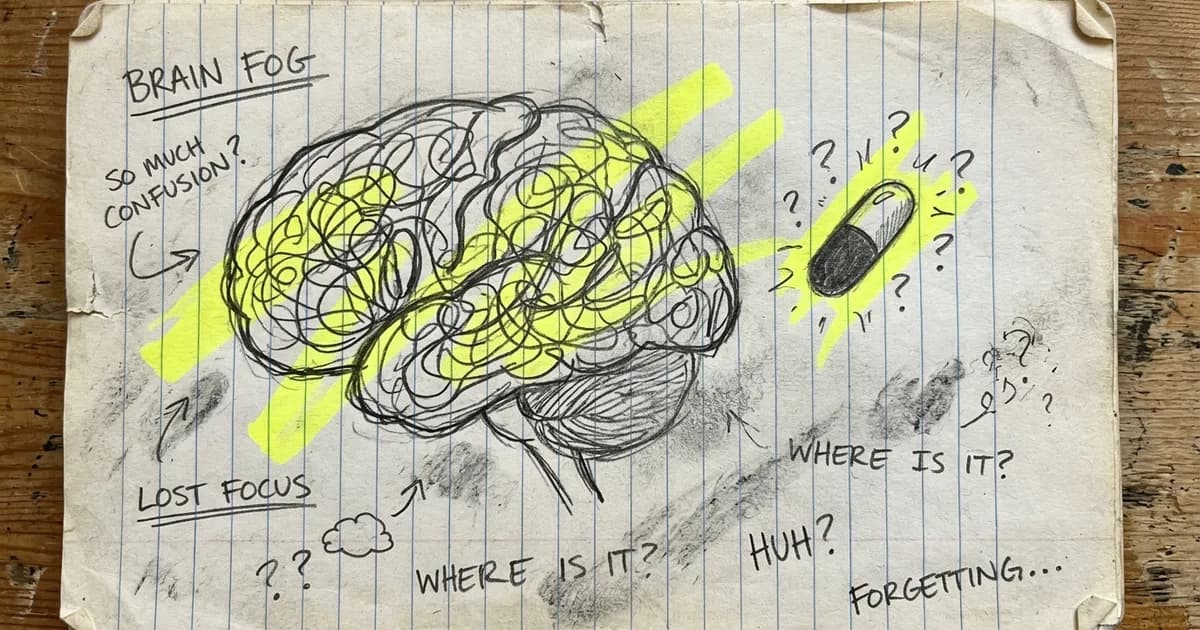
Food Noise and ADHD: Why the Chatter Is Louder and What Turns It Down

Food Noise and ADHD: Why the Chatter Is Louder and What Turns It Down
Yes, food noise is a documented ADHD pattern, not a personal failing. Adults with ADHD have 55% higher odds of obesity and over four times the odds of binge eating disorder. The persistent, intrusive loop of food thoughts that people call "food noise" has a neurological basis in ADHD brains, rooted in how dopamine, reward, and body-signal processing all work differently.
If you have ADHD and the mental chatter about food feels louder than it does for everyone else, you are not imagining it.
Key Takeaways
- ADHD brains have lower dopamine receptor and transporter activity in the reward pathway, making food a go-to source of quick stimulation.
- Interoception, the ability to read body signals, is weaker in ADHD, making it harder to distinguish real hunger from boredom or understimulation.
- ADHD stimulant medications can suppress appetite by day and trigger rebound hunger at night, creating a separate food-noise cycle.
- Food noise is not the same as binge eating disorder, though both are more common in ADHD populations.
The Dopamine Problem: Why Food Talks So Loud
The ADHD brain does not just "want" food more. It processes reward differently at the molecular level.
A 2009 PET imaging study by Volkow et al. scanned 53 unmedicated adults with ADHD and 44 controls. Dopamine transporter binding in the nucleus accumbens, a core reward region, was 0.63 in the ADHD group versus 0.71 in controls (p = .004). D2/D3 receptor availability was also lower across reward regions.
The ADHD brain has a quieter baseline reward signal. When that signal is low, the brain searches for anything that will push dopamine up quickly. Food is the fastest, most available hit. You do not need to leave the house or finish a task. You just open the fridge.
ADHD food noise is not a signal that your body needs fuel. It is a signal that your brain needs stimulation.
| ADHD-Related Finding | Statistic | Source |
|---|---|---|
| Obesity odds, adults with ADHD vs. without | OR 1.55 (95% CI 1.32-1.81) | Cortese et al. 2016 |
| Obesity prevalence, adults with ADHD | 28.2% vs. 16.4% without ADHD | Cortese et al. 2016 |
| Binge eating disorder odds in ADHD | OR 4.13 (95% CI 3.00-5.67) | Nazar et al. 2016 |
| Any eating disorder odds in ADHD | OR 3.82 (95% CI 2.34-6.24) | Nazar et al. 2016 |
| Dopamine transporter in nucleus accumbens | 0.63 (ADHD) vs. 0.71 (controls), p = .004 | Volkow et al. 2009 |
| Interoceptive accuracy (heartbeat tracking) | 0.55 (ADHD) vs. 0.71 (controls), p = .025 | Kutscheidt et al. 2019 |
Interoception: When You Cannot Tell Hungry From Bored
Interoception is the brain's ability to read signals from inside the body: heart rate, temperature, bladder fullness, hunger. In ADHD, this system is less accurate.
Kutscheidt et al. (2019) tested 14 adults with ADHD and 16 controls on a heartbeat-tracking task, a standard measure of interoceptive accuracy. The ADHD group scored 0.55 versus 0.71 for controls (p = .025), meaning they were worse at detecting what was happening in their own bodies.
Apply that to hunger. If your brain cannot tell the difference between "I need food" and "I need stimulation," many internal signals get read as hunger. Clinicians call this "mouth hunger versus stomach hunger." The ADHD brain defaults to mouth hunger because the interoceptive signal is genuinely blurry.
The result: you think about food constantly. You open the pantry, stand there, close it, open it again five minutes later. You hyperfixate on a specific food until you eat it. Not a character flaw. A processing difference.
The Medication Paradox: Appetite Suppression by Day, Rebound by Night
ADHD stimulant medications (methylphenidate, amphetamine-based drugs) increase dopamine in the reward pathway. One side effect: they suppress appetite while active, typically through morning and afternoon.
As the medication wears off in the evening, appetite does not just return to baseline. It rebounds. The dopamine support drops, and the brain's food-seeking signal comes back stronger than it would have been without medication. Many people on stimulants describe eating almost nothing all day, then struggling to stop after 6 PM.
This creates its own food-noise cycle: quiet during medicated hours, loud and urgent at night. If the pattern sounds familiar, it is worth discussing with your prescriber. We covered the evening rebound-hunger mechanism separately.
Is This the Same as Binge Eating Disorder?
No, but the two overlap more than you would expect.
Food noise is a feature of ADHD. Binge eating disorder (BED) is a clinical diagnosis: recurrent episodes of eating large amounts rapidly, with loss of control, at least weekly for three months. You can have loud food noise without meeting BED criteria.
ADHD does carry 4.13 times the odds of BED (Nazar et al. 2016). The FDA took the connection seriously enough to approve lisdexamfetamine (Vyvanse), originally an ADHD medication, as the first drug indicated for moderate-to-severe BED in adults in January 2015.
This does not mean you should self-diagnose either condition from an article. A clinician diagnoses both. But if your food noise feels qualitatively different from what non-ADHD friends describe, the research suggests you are probably right.
What Actually Helps an ADHD Brain Quiet Food Noise
A few approaches have evidence behind them. (Full tactical breakdown: how to quiet food noise without Ozempic.)
1. External Structure Over Internal Willpower
ADHD brains struggle with executive function, including meal planning and impulse regulation around food. Externalize the decision. Meal prepping, eating at consistent times, and removing ambiguity about "what is next" reduces the food decisions your brain faces. Fewer decisions, fewer openings for food noise.
2. Protein and Fiber at Every Meal
Both slow glucose absorption and extend satiety. This does not fix the dopamine gap, but it reduces blood-sugar swings that amplify food noise.
3. Oral Stimulation as a Redirect
A 2011 study by Hetherington and Regan found that chewing gum for at least 45 minutes across a three-hour window significantly suppressed rated hunger and snack cravings. Give the brain something to do with the mouth, and the food signal quiets down. ADHD brains respond especially well to oral input, for reasons we covered in why ADHD brains seek oral input.
4. A Dopamine Menu That Is Not Food
Build a short list of non-food activities that deliver quick stimulation: a cold shower, a two-minute walk, a song you like. The goal is to give the dopamine-seeking brain an alternative when food noise peaks. More on building a dopamine menu.
What the Research Supports vs. What Is Folklore
Well-supported: lower dopamine receptor availability in ADHD reward pathways (replicated imaging data), weaker interoceptive accuracy (smaller studies, consistent direction), and higher odds of obesity and eating disorders (large meta-analyses).
Not supported: that food hyperfixations are unique to ADHD (they occur across many conditions), that ADHD food noise is always about sugar (it is about stimulation broadly), and that eliminating certain foods "cures" ADHD food noise. Be skeptical of dietary fixes for a complex neurodevelopmental condition.
Quieting the Signal Takes More Than Willpower
Food noise in ADHD is driven by dopamine reward differences, weaker interoceptive accuracy, and for those on stimulants, a medication cycle that suppresses appetite by day and amplifies it at night. A neurological pattern, not a discipline problem. The tactics that work bypass willpower: external meal structure, protein-first eating, oral redirection, non-food dopamine sources. If your food noise is severe or feels like BED, talk to a clinician.
Frequently Asked Questions
Is food noise an ADHD thing?
Yes. ADHD is associated with lower dopamine signaling in the brain's reward pathway, which drives the brain to seek quick stimulation from food. Adults with ADHD have 55% higher odds of obesity and over four times the odds of binge eating disorder. The persistent mental preoccupation with food is a recognized feature of the condition.
Why do I hyperfixate on a specific food with ADHD?
ADHD hyperfixation on food works like hyperfixation on anything else: the brain locks onto a stimulation source and has difficulty disengaging. Food is especially effective because it combines novelty, sensory input, and a dopamine reward. The fixation usually breaks once the brain finds a different source or the novelty fades.
Is ADHD binge eating the same as binge eating disorder?
Not always. ADHD can cause impulsive overeating without meeting BED criteria, which requires recurrent large-quantity episodes with loss of control at least weekly for three months. ADHD does carry 4.13 times the odds of BED, so the overlap is real. A clinician can distinguish between the two.
Why does my ADHD medication make me binge eat at night?
Stimulant medications suppress appetite while active by increasing dopamine. When they wear off in the evening, appetite rebounds, often strongly. This is worth raising with your prescriber to discuss timing or formulation adjustments.
Can ADHD cause weight gain?
Population data says yes. A meta-analysis of over 700,000 people found obesity prevalence was 28.2% in adults with ADHD versus 16.4% without. The mechanisms include dopamine-driven food seeking, poor interoceptive accuracy, and medication-related appetite cycles.
Does protein help with ADHD food noise?
Protein slows glucose absorption and extends satiety, reducing blood-sugar swings that amplify food-seeking behavior. It does not fix the dopamine deficit, but it removes one trigger. Pairing protein with consistent meal timing produces the most noticeable reduction in between-meal food noise.
Should I talk to a doctor about ADHD and food noise?
If food noise is interfering with daily life or leading to eating patterns that feel out of control, yes. A clinician can evaluate whether you meet criteria for ADHD, BED, or both, and discuss treatment options. Self-diagnosis from online content is not a substitute for clinical evaluation.
Related from Roon
- What Is Food Noise?
- How to Quiet Food Noise Without Ozempic
- Oral Fixation and ADHD
- L-Theanine and ADHD Focus
Written by Roon Team