Oral Fixation ADHD

Oral Fixation ADHD: Why Your Brain Craves Something in Your Mouth
You're in a meeting, and you've already chewed through two pen caps. The cuticles on your left hand are wrecked. There's a wad of gum in your mouth that lost its flavor twenty minutes ago, but you keep chewing anyway. If this sounds familiar, and you have ADHD, it's not a coincidence. Oral fixation ADHD behaviors are closely linked, and the connection runs deeper than a simple bad habit.
About 6% of U.S. adults, roughly 15.5 million people, currently have an ADHD diagnosis, per a 2024 CDC survey analysis. Many of them share this same oral fixation ADHD pattern: a persistent, sometimes unconscious need to chew, bite, suck, or gnaw on something. Understanding why your brain drives this behavior is the first step toward managing it, rather than fighting it.
Key Takeaways
- ADHD oral fixation is a form of self-stimulatory behavior (stimming) driven by dopamine regulation.
- Chewing and oral stimulation can genuinely improve alertness and sustained attention.
- Oral fixation ADHD adults are more likely to turn to nicotine products to satisfy this oral need, which creates its own set of problems.
- Healthier oral alternatives exist that work with your neurochemistry instead of against it.
What Is Oral Fixation ADHD, and Is It a Sign of ADHD?
Oral fixation refers to a repetitive, compulsive need to stimulate the mouth. It shows up as nail-biting, pen-chewing, lip-biting, cheek-chewing, hair-chewing, excessive snacking, or constantly having gum, mints, or a toothpick going. In clinical terms, it falls under the umbrella of self-stimulatory behavior, or "stimming".
Is oral fixation a sign of ADHD specifically? Not on its own. Oral stimming also appears in autism spectrum conditions, anxiety disorders, and even in people with no diagnosis at all. But the frequency and intensity of oral fixation ADHD behaviors in adults is distinct. According to Access Therapy, ADHD oral fixation often serves as a coping mechanism or a form of sensory stimulation, and these behaviors tend to spike during periods of stress, boredom, or cognitive demand.
So while oral fixation alone doesn't confirm ADHD, it's a common companion. If you find yourself destroying pen caps during every Zoom call, it's worth paying attention to the pattern.
The Neuroscience: Why Oral Fixation ADHD Behaviors Happen
Here's what's actually happening in your head.
ADHD brains operate with lower baseline levels of dopamine in the prefrontal cortex, the region responsible for attention, motivation, and impulse control. Research from multiple sources confirms that stimming provides mild, steady stimulation that increases dopamine to improve focus. Your brain isn't being weird. It's self-correcting.
Chewing, specifically, is one of the most accessible forms of stimming because it's rhythmic, repetitive, and socially invisible (mostly). A systematic review published in BioMed Research International found that chewing elevates both attention and alertness, leading to measurable improvements in cognitive performance. The act of chewing increases blood flow to the brain and activates neural circuits tied to arousal and vigilance.
This explains why so many people dealing with oral fixation ADHD instinctively reach for something to chew during demanding tasks. Your brain figured out a performance hack before you consciously understood the problem.
The Dopamine Loop
The cycle behind ADHD and oral fixation works like this:
- Low stimulation triggers restlessness or inattention.
- Your brain seeks sensory input to raise dopamine levels.
- Oral stimulation (chewing, biting, sucking) provides that input.
- Focus temporarily improves.
- The stimulation fades, and the cycle restarts.
This loop is why you can burn through a pack of gum during a single work session. It's also why oral fixation ADHD behavior feels automatic. You're not choosing to chew your pen. Your prefrontal cortex is placing an order, and your jaw is filling it.
The pattern intensifies under specific conditions. Boring tasks, high-stakes deadlines, emotionally charged conversations, and sleep deprivation all widen the dopamine gap. Your oral fixation doesn't stay constant throughout the day. It tracks with cognitive demand. Pay attention to when the chewing spikes, and you'll have a reliable map of when your brain is working hardest to stay regulated.
Oral Fixation ADHD Adults: Why It Gets Worse, Not Better
There's a common misconception that oral fixation is a childhood thing, something kids grow out of. For oral fixation ADHD adults, the opposite is often true.
Children with ADHD who chew on shirt collars and pencils face relatively low stakes. Adults with ADHD oral fixation face professional environments where chewing on objects looks unprofessional, social settings where nail-biting draws judgment, and a marketplace full of nicotine products designed to exploit exactly this need.
The pressure to suppress stimming in adult life doesn't eliminate the drive. It redirects it. And that redirection often lands on nicotine.
The Nicotine Trap
Adults with ADHD smoke at roughly 1.5 times the rate of the general population. In a clinic sample of 71 adults with ADHD, 42% of men and 38% of women smoked, compared with about 28% and 24% of the general population at the time (Pomerleau 1995). A 2014 meta-analysis in Pediatrics of 14 studies found that people with ADHD have a higher smoking risk and that consistent stimulant treatment was linked to lower smoking rates. Nicotine acts on the same dopaminergic pathways as ADHD medications, improving attention in the short term.
This is the self-medication hypothesis in action. Nicotine genuinely does help ADHD symptoms in the short term. It boosts dopamine. It satisfies the oral fixation. It provides the rhythmic, repetitive sensory input the brain craves. And it does all of this while creating a dependency that's harder for people with ADHD to break than for the general population.
The problem isn't that people with ADHD and oral fixation are making bad choices. The problem is that nicotine products are an almost perfect (and perfectly destructive) fit for the oral fixation ADHD profile. They check every box: dopamine boost, oral stimulation, rhythmic ritual, portable format. That's what makes them so hard to quit, especially for ADHD brains that feel the cognitive benefit disappear the moment they stop. More in quit nicotine pouches without losing focus.
Healthier Ways to Manage Oral Fixation and ADHD
If your brain needs oral stimulation, the goal isn't to stop the behavior. It's to find options that serve the same neurological function without the downsides. Here's what actually works for oral fixation ADHD adults:
1. Chew With Purpose
Gum isn't just a placeholder. Research published in Nutritional Neuroscience found that chewing gum led to improved sustained attention, measured by a reduction in false alarms on a digit vigilance task. The key is choosing gum or chewable products that last long enough to sustain the effect, not the sugary kind that dissolves in three minutes.
2. Functional Oral Products
The supplement industry has caught on to the idea that oral delivery isn't just about convenience. It's about function. Sublingual pouches and functional gums are absorbed through the oral mucosa while also giving your mouth something to do.
The logic is straightforward: if your brain is looking for both a chemical boost and a sensory one, the same channel can carry both.
3. Structured Stimming
Keep dedicated chew tools at your desk, including adult oral fixation toys like silicone chew necklaces designed for adults, stainless steel toothpicks, or hard mints. The point is to make the behavior intentional rather than unconscious. When you choose your stim tool, you take control of the ADHD oral fixation loop instead of letting it control you.
4. Caffeine and L-Theanine
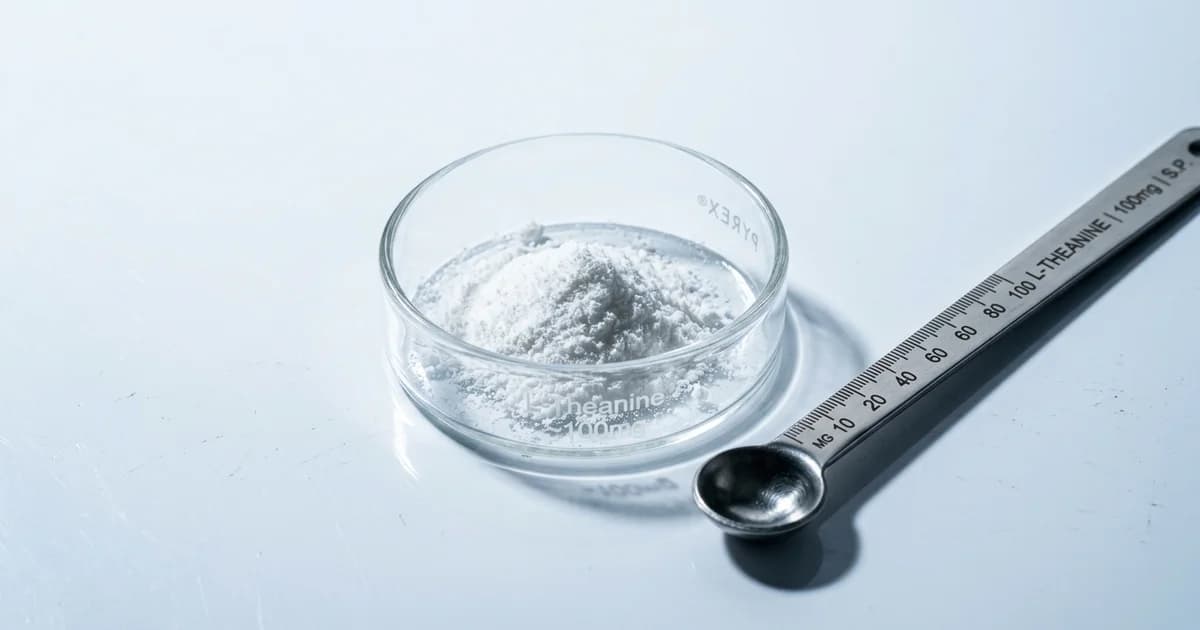
The combination of L-theanine and caffeine is the most studied pairing in this space. A study published on PubMed found that 97 mg of L-theanine combined with 40 mg of caffeine helped participants focus attention during demanding cognitive tasks. L-theanine paired with caffeine improves attention-switching accuracy and promotes the alpha-wave activity linked to calm, sustained alertness.
Keep the scope of that research in view. It was run in healthy volunteers performing laboratory attention tasks, not in clinical trials of any diagnosis. Caffeine also brings its own trade-offs: it disrupts sleep, and tolerance builds with daily use. See does caffeine help ADHD, and if you take a prescription stimulant, ask your prescriber before adding caffeine.
What Is Self-Pocketing?
Self-pocketing means holding food in the cheeks instead of chewing and swallowing it. It is usually a sensory or feeding issue in children rather than an ADHD symptom, though it can show up alongside ADHD or autism. If a child pockets food often, or it causes choking, weight loss or very long meals, ask a pediatrician about a referral to a speech or feeding therapist.
What Doesn't Work
A few common suggestions that sound good but miss the point for people managing ADHD and oral fixation:
| Approach | Why It Falls Short |
|---|---|
| "Just stop chewing things" | Ignores the neurological drive. Willpower doesn't fix a dopamine deficit. |
| Fidget spinners alone | Addresses the hands, not the mouth. Different sensory channel. |
| Caffeine pills | Delivers the stimulant but skips the oral stimulation entirely. |
| Sugary snacks | Provides oral input but causes energy crashes that worsen ADHD symptoms. |
The most effective strategies for oral fixation ADHD give the mouth something deliberate to do rather than trying to shut the urge down. Fighting it forces your brain to solve two problems at once instead of one.
A Better Use for the Oral Fixation ADHD Urge
Oral fixation ADHD isn't a flaw. It's your brain's attempt to regulate itself using the tools available. The research is clear: chewing improves attention, rhythmic oral stimulation raises dopamine, and the mouth is a legitimate sensory channel for focus enhancement.
The question isn't whether to satisfy the fixation. It's whether what you're putting in your mouth is working for you or against you.
Gum, a chew tool, a stainless toothpick, and some awareness of when the urge spikes all answer that question better than a shredded pen cap or a nicotine pouch does. The urge itself is not the problem. What you hand it is.
If Your Oral Habit Is a Nicotine Pouch
If your oral habit is a nicotine pouch, a zero-nicotine pouch keeps the ritual. Ready to quit nicotine pouches without losing the habit that works for you? Roon is a caffeine-only pouch with L-theanine, methylliberine and theacrine. It is not a nicotine replacement or a quit aid, and it is not a treatment for ADHD; talk to your prescriber, especially if you take stimulant medication, since Roon contains caffeine. Roon is for adults 18+. For free help quitting nicotine, call 1-800-QUIT-NOW.
Sources
- Pomerleau OF et al. Journal of Substance Abuse, 1995. Smoking in 71 adults with ADHD. PubMed
- Schoenfelder EN et al. Pediatrics, 2014. Meta-analysis of stimulant treatment and smoking. PubMed
- CDC MMWR, 2024. ADHD diagnosis and treatment in US adults. cdc.gov
- Giesbrecht T et al. Nutritional Neuroscience, 2010. L-theanine + caffeine vs placebo. PubMed
- Chewing and attention systematic review, BioMed Research International. PMC