Why Runners and Cyclists Are Already Using Caffeine Pouches
Roon Team
Why Runners and Cyclists Are Already Using Caffeine Pouches
Caffeine pouches for runners and cyclists solve a problem gels and chews have never fully addressed: how do you get caffeine into your system mid-effort without water, without unwrapping anything, and without your stomach turning on you at mile 18? A small, nicotine-free pouch sits between your lip and gum, delivers caffeine through the oral mucosa, and stays put while you keep moving. At least one brand, Long Run Co, already sells a pouch built explicitly for endurance athletes. The category is small but real, and if you race or train long, it is worth understanding what is on the market.
Key Takeaways
- The caffeine pouch format is already validated in endurance sport. Long Run Co's CAFFYNE pouches are a live, operating product marketed specifically to runners and cyclists, with 100 mg caffeine, 100 mg L-theanine, and Vitamin B12 per pouch.
- Cyclists arguably need hands-free fueling more than runners do. Opening a gel packet one-handed at 40 km/h is a genuine safety risk; a pouch placed before a climb or sprint needs zero hand work after insertion.
- Caffeine's ergogenic effect on endurance is well established. A 2023 meta-analysis found caffeine improved running time to exhaustion by a medium effect size (g = 0.392, p < 0.001), and a 2025 meta-analysis confirmed it reduces cycling time-trial completion time (SMD = −0.36, p = 0.0017).
- Not all pouches are the same formula. Some deliver caffeine plus L-theanine only; others add compounds like methylliberine and theacrine to shape the duration and tolerance profile of the caffeine response.
Who Is Already Selling Caffeine Pouches to Endurance Athletes?
This is not a theoretical product category. At least one brand has built its business around it.
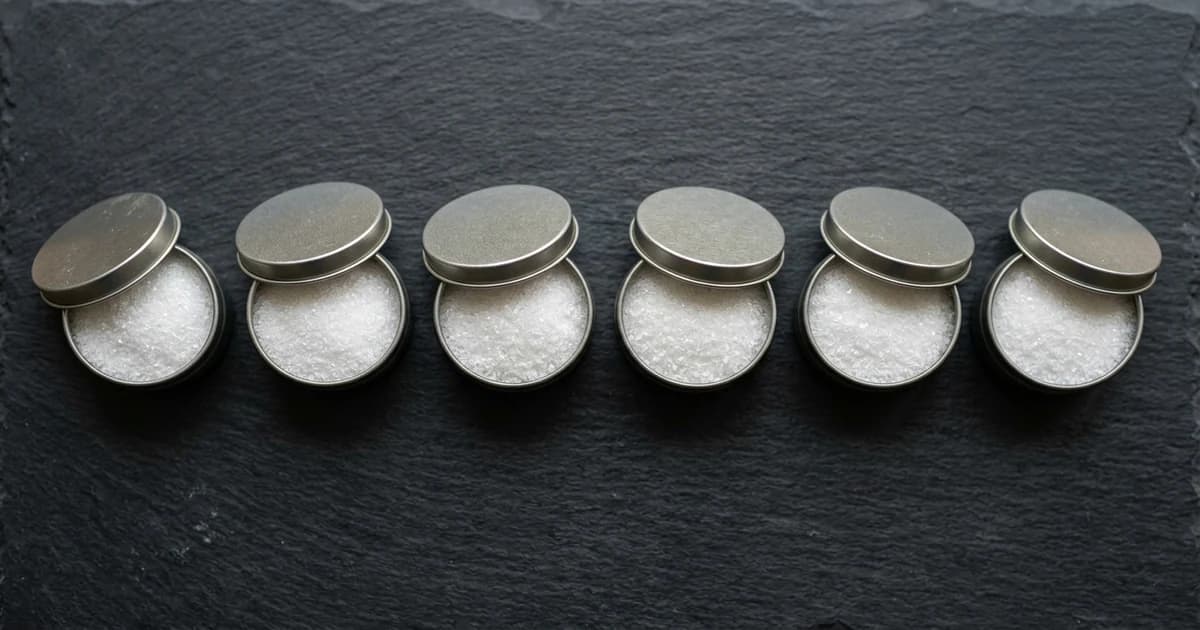
Long Run Co (longrun.co) sells CAFFYNE Energy Pouches: 100 mg natural caffeine, 100 mg L-theanine, and 100 mcg Vitamin B12 per pouch, nicotine-free, 15 per tin, five flavors (Backcountry Coffee, Marathon Mango, Alpine French Vanilla, Summit Mint, Canyon Citrus) plus a variety pack. The brand describes the effect as noticeable within 5 minutes, flavor lasting up to 90 minutes, and recommends keeping the pouch in for 30 to 60 minutes. The site lists $7.99 at checkout with 1-Pack, 2-Pack, and 5-Pack options and a 25% Subscribe and Save discount; the page's own per-pouch unit price is rendered dynamically in a way we could not pin down with certainty, so treat $7.99 as the listed price point rather than a confirmed per-pouch figure.
The formula is clean: caffeine for the ergogenic effect, L-theanine to smooth the stimulant edge, B12 as a supporting micronutrient. The broader zero-nicotine caffeine pouch category is growing, but Long Run Co is the clearest example of a product designed from the ground up for endurance athletes.
Does Caffeine Actually Help Endurance Performance?
Yes. A 2023 meta-analysis found caffeine improved running time to exhaustion with a medium effect size (Hedges' g = 0.392, p < 0.001). For cycling, a 2024 meta-analysis found moderate doses (4 to 6 mg/kg) improved time-trial performance (SMD = −0.55, p < 0.01) and mean power output (SMD = 0.44, p < 0.05). A 2025 Frontiers in Nutrition meta-analysis of 20 studies and 226 participants confirmed the cycling effect: reduced completion time (SMD = −0.36, p = 0.0017) and increased power output (SMD = 0.29).
Most positive findings come from doses of 3 to 6 mg/kg. For a 70 kg athlete, that is 210 to 420 mg total. A single pouch (80 to 100 mg) sits at the lower end, which is part of the case for a formula that extends duration rather than just increasing the dose.
Why Cyclists Might Need This Format More Than Runners
The gut problem is real for both sports, but the logistics problem tilts toward cycling.
A 2024 study in the European Journal of Applied Physiology found that 38.4% of non-professional cyclists reported GI symptoms during a cycling race, with training-session prevalence at 22 to 26%. A review in Sports Medicine estimated that 30 to 50% of endurance athletes experience GI complaints during competition. The foundational Peters et al. (1999) study surveying 606 runners, cyclists, and triathletes confirmed high prevalence across all three populations.
For a deeper look at why sublingual delivery bypasses the gut entirely, see our breakdown of energy pouches for running and what actually works.
The cycling-specific case goes beyond digestion. Consider fueling on a bike at race pace:
- One hand must stay on the bars. Reaching into a jersey pocket, tearing open a gel, and squeezing it into your mouth takes a hand off the handlebar for several seconds. In a group ride or criterium, that is a crash risk.
- Gels need water. Most concentrated caffeine gels recommend chasing with water, meaning two sequential hand operations.
- Timing windows are tight. Technical descents, crosswinds, tight packs: there are long stretches where you cannot take your attention off the road.
A pouch placed before a climb or a technical section stays put and delivers caffeine through the oral lining. No unwrapping, no water, no hands off the bars after insertion. For time trialists in an aero position, the advantage is even clearer: you do not have to sit up, break your position, and reach for a gel.
CAFFYNE vs. Roon: What Is Actually Different?
Both are zero-nicotine, 15-pouch tins delivering caffeine with L-theanine. The formulas diverge from there.
| Feature | Long Run Co CAFFYNE | Roon |
|---|---|---|
| Caffeine per pouch | 100 mg | 80 mg |
| L-Theanine per pouch | 100 mg | 60 mg |
| Additional actives | 100 mcg Vitamin B12 | 25 mg methylliberine (Dynamine), 5 mg theacrine (TeaCrine) |
| Nicotine | None | None |
| Pouches per tin | 15 | 15 |
| Listed price | $7.99 (unit not confirmed; see note) | $15.00 / tin (one-time), $9.16 / tin on subscription |
| Price per pouch | Not confidently derivable from the brand site (see note below) | $1.00 (one-time), $0.61 (subscription) |
| Flavors | 5 + variety pack | Cool Mint |
| Stated onset | ~5 minutes | 5 to 10 minutes |
A pricing note: Long Run Co's product page shows $7.99 at checkout with 1-Pack, 2-Pack, and 5-Pack options, plus a "per pouch" unit price that renders dynamically and could not be confirmed with certainty. We are not going to guess whether that means roughly $0.53 a pouch or something closer to Roon's price point; check the live listing before treating either number as settled. What is confirmed is the formula: CAFFYNE carries more caffeine per pouch (100 mg vs. 80 mg), a simpler ingredient list, and more flavor options. If you want a clean caffeine-and-theanine hit in pouch form, it is a solid, purpose-built product.
Roon costs more because the formula is doing something different. Methylliberine (Dynamine) extends the active window of the caffeine. In a randomized, double-blind, crossover PK study (n = 12), co-administration of methylliberine with caffeine cut oral clearance from 41.9 to 17.1 L/hr and extended half-life from 7.2 to 15 hours, with no increase in peak concentration. Same peak, longer tail. That is the mechanism behind Roon's stated 6 to 8 hour felt window. Theacrine (TeaCrine) plays a separate role: it does not change caffeine's pharmacokinetics, but theacrine itself resists the tolerance pattern that caffeine alone produces over repeated daily use.
For a 5K or a one-hour crit, a single caffeine-and-theanine pouch is probably all you need. For a century ride, a marathon, or a full day of training, the question of how long a single dose lasts becomes more relevant.
What About Fueling and Carbohydrates?
This needs to be said plainly: a caffeine pouch is not fuel. Zero calories, zero carbohydrates, zero electrolytes. Caffeine's ergogenic effect operates through the central nervous system (adenosine receptor antagonism), not through energy substrate delivery. You still need actual calories to sustain muscular output over hours. The pouch handles the stimulant layer; your bottles, gels, and real food handle the fuel layer.
If you are interested in what else depletes during long efforts beyond glycogen, our article on why endurance athletes' brains run low on choline covers a lesser-discussed substrate that matters for late-race cognitive function.
How to Use a Caffeine Pouch During a Race or Long Training Session
- Pre-race or pre-ride: Place a pouch 5 to 10 minutes before the start. By the time you are rolling or running, the caffeine is absorbing.
- Mid-event (cycling): Place during a neutral zone, a feed zone, or a less technical section. Once it is in, forget about it.
- Mid-event (running): Place at an aid station or during a flat section. No need to coordinate with water intake.
- Dose management: At 80 to 100 mg per pouch, you can space multiple pouches across a long event without overshooting into jittery, GI-unfriendly territory. A pouch every 2 to 3 hours is a reasonable cadence for events lasting 4+ hours.
- Late-day caution: A pouch with methylliberine (like Roon) extends caffeine's half-life. Do not take it within 8 hours of bedtime. For morning races, this is a non-issue. For afternoon training rides, time it carefully.
For a broader look at clean pre-workout options for endurance athletes that avoid bloating and GI distress, see our guide to the best clean pre-workout for runners and endurance athletes.
The Format Is Validated. The Formula Is the Variable.
The argument for caffeine pouches in endurance sport does not require speculation. At least one brand has built and shipped a product specifically for this use case, the ergogenic research on caffeine for runners and cyclists is deep, and the practical advantages of a hands-free, gut-friendly delivery format are obvious for both sports.
What separates products is not the format but what is inside the pouch. A caffeine-and-theanine formula delivers a clean, straightforward stimulant effect. A four-ingredient formula that adds methylliberine and theacrine bets that duration and tolerance management matter as much as onset, particularly for athletes whose events last hours, not minutes. Neither approach is wrong. They are built for different durations and different priorities.
Frequently Asked Questions
Are caffeine pouches legal in competition?
Caffeine is permitted by WADA. It was removed from the prohibited list in 2004 and sits on the monitoring program only, meaning it is tracked but not banned. A nicotine-free caffeine pouch contains no prohibited substances under standard anti-doping rules.
How much caffeine should a runner or cyclist use per event?
Most research uses 3 to 6 mg/kg body weight. For a 70 kg athlete, that is 210 to 420 mg total. A single pouch (80 to 100 mg) falls at the lower end, so spacing two or three across a long event brings you into the effective range without a large bolus that risks GI distress.
Do caffeine pouches cause stomach problems?
The pouch format delivers caffeine through the oral mucosa, bypassing the digestive tract. Traditional sources like gels, pills, and coffee pass through the GI system, where they contribute to nausea, cramping, and urgency that affect 30 to 50% of endurance athletes during competition. Bypassing the gut is a primary reason athletes are adopting this format.
Can I use a caffeine pouch and a gel at the same time?
Yes. The pouch handles the stimulant; the gel handles carbohydrate delivery. They serve different functions. Account for any caffeine in your gel (some contain 25 to 50 mg) when calculating total intake.
How long does a caffeine pouch last in your mouth?
Long Run Co recommends 30 to 60 minutes. Most pouches deliver the bulk of their active ingredients within 15 to 30 minutes. The pouch will not dissolve during normal running or cycling.
Is 80 mg of caffeine enough for endurance performance?
80 mg is roughly a small cup of coffee and sits at the lower end of the effective range for larger athletes. In a formula like Roon's, methylliberine extends caffeine's active window, so you get more total exposure from a smaller dose. For lighter athletes (under 60 kg), 80 mg per kilogram is proportionally higher.
Will caffeine pouches help me run or ride faster?
Caffeine has consistent evidence of improving endurance performance in both running and cycling. Whether that translates to a personal time improvement depends on your caffeine tolerance, the dose relative to your body weight, and event duration. The pouch format changes delivery, not pharmacology.
Built for the Long Effort, Not Just the Start Line
If you are racing or training for events that last two, four, or six hours, the question is not just whether caffeine works. It does. The question is how long a single dose keeps working, and whether you can take it without involving your hands, your stomach, or your water bottle.
Roon is a zero-nicotine oral pouch with 80 mg caffeine, 60 mg L-theanine, 25 mg methylliberine (Dynamine), and 5 mg theacrine (TeaCrine). Methylliberine is the ingredient that extends caffeine's duration: in a randomized crossover PK study (n = 12), it cut caffeine's oral clearance from 41.9 to 17.1 L/hr and extended its half-life from 7.2 to 15 hours, with no increase in peak concentration. That is why the felt window is 6 to 8 hours instead of coffee's 3 to 4, and why 80 mg is enough. One caution: a longer half-life means you should not take it within 8 hours of bedtime.
Roon is not a substitute for fueling. Zero calories, zero carbs, zero electrolytes. Your gels, drink mix, and jersey-pocket rice cakes still do the work of keeping your muscles fed. Roon handles the cognitive and perceptual layer that keeps you sharp when the race is deep and the effort is high. Tins start at $15.00 one-time (4-tin bundle) or as low as $9.16 on subscription, 15 pouches each.
If your current caffeine strategy involves swallowing something your gut does not want during hour three of a hard ride, try a format that skips the gut entirely.
Related from Roon
- NCAA Caffeine Limit: How Many Milligrams Is 15 mcg/mL?
- Caffeine for Cycling: Dose, Timing, and Mid-Ride Top-Ups
- Caffeine Before a Marathon: 5K, Half, Full, and Ultra Doses
Written by Roon Team