Energy Pouches for Running: What Actually Works
Roon Team
Energy Pouches for Running: What Actually Works
You're 18 miles into a marathon and your gel packet just turned your stomach into a washing machine. Your hands are sticky, your throat is coated in artificial sweetness, and the caffeine you needed ten minutes ago is still sitting in your gut waiting to be digested.
Energy pouches for running are gaining traction for exactly this reason. They bypass the stomach entirely. And for runners who have spent years wrestling with GI distress, sticky wrappers, and sugar crashes mid-race, that matters more than most people realize.
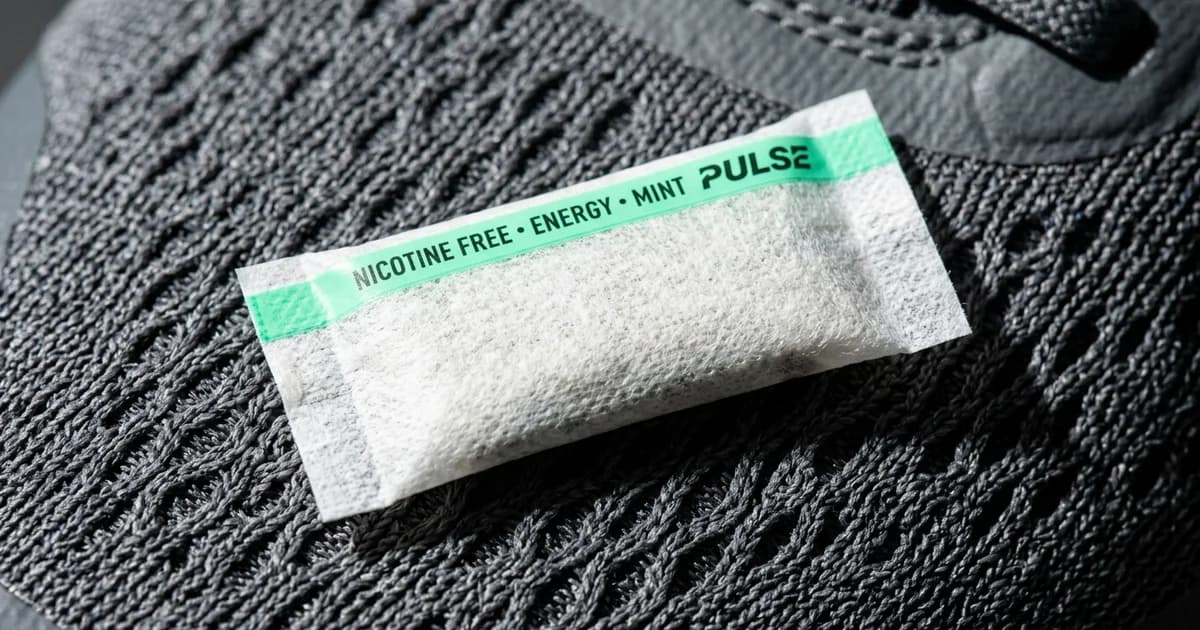
But not all energy pouches for running are built the same. Some contain nicotine. Some are just caffeine bombs. And some are designed with the specific demands of endurance performance in mind. Here's how to tell the difference.
Key Takeaways
- Sublingual energy pouches for running deliver caffeine through the lining of your mouth, skipping digestion and reducing the GI problems that plague distance runners.
- Caffeine improves endurance running performance by roughly 2-3% at doses of 3-6 mg/kg body mass, according to the International Society of Sports Nutrition.
- Nicotine pouches are popular among athletes but carry real addiction risk and show minimal endurance benefits in research.
- The best energy pouches for running combine low-dose caffeine with complementary compounds like L-Theanine and theacrine for sustained, jitter-free focus.
The Stomach Problem No One Talks About Enough
GI distress is the silent performance killer in distance running, and it's a major reason runners are turning to energy pouches for running instead of traditional gels. Research published in the Journal of the International Society of Sports Nutrition puts the prevalence of exercise-induced gastrointestinal disturbances at 30 to 90% among endurance runners. That's not a fringe issue. That's the majority of the field.
The causes are well understood. When you run, blood diverts away from your digestive system and toward your working muscles. Your gut slows down. Now dump a concentrated sugar gel into that sluggish system and you get bloating, nausea, cramping, or worse.
Energy gels work for some runners. But if you've ever had to choose between fueling and finding a porta-potty at mile 20, you already know the tradeoff isn't always worth it.
This is where sublingual delivery, the mechanism behind most energy pouches for running, gets interesting. A pouch placed under your lip absorbs active ingredients through the buccal mucosa, the thin membrane lining your mouth. Research on buccal caffeine absorption shows that this route can deliver caffeine to the bloodstream faster than traditional oral ingestion, because it bypasses the digestive tract entirely. Your stomach never has to process it.
For runners with sensitive guts, that's not a minor upgrade. It changes the entire fueling equation.
What the Science Says About Caffeine and Running
Caffeine is the most studied ergogenic aid in sports nutrition. And the data on endurance running is clear, which is why caffeine-based energy pouches for running have a strong scientific foundation.
A 2023 meta-analysis published in Nutrients reviewed 21 studies with 254 participants and found that caffeine improved time to exhaustion in running trials with a medium effect size. The overall increase in time to exhaustion was 16.97% across the included studies, with doses ranging from 3 to 9 mg per kg of body mass.
The International Society of Sports Nutrition's position stand on caffeine confirms that caffeine has "consistently been shown to improve exercise performance when consumed in doses of 3-6 mg/kg body mass." For a 150-pound runner, that works out to roughly 200-400 mg of caffeine.
But here's what the dose-response curve actually looks like in practice: more is not better. Higher doses increase the risk of jitters, anxiety, elevated heart rate, and GI distress. Research from the Wu Tsai Human Performance Alliance recommends starting with around 3 mg/kg and finding the lowest effective dose for your needs rather than loading up.
For most recreational runners, 40-100 mg of caffeine timed correctly provides a noticeable boost without the side effects that come from slamming a 300 mg pre-workout. That's the dose range where energy pouches for running tend to perform best.
Energy Pouches for Running: Comparing Your Options
Not every pouch on the market is designed for athletic performance. Here's how the main categories of energy pouches for running break down.
Nicotine Pouches
Brands like Zyn and On! have become visible in athletic circles. A 2024 study in Tobacco Control documented how some nicotine pouch brands are now directly marketing to athletes and "health-conscious individuals."
The appeal is obvious: nicotine is a stimulant. It sharpens attention and can improve fine motor skills in the short term. But research from Mountain Tactical Institute notes that nicotine has minimal impact on endurance and strength. Once the substance clears your system, cognitive benefits disappear, and you're left with a dependency that builds fast.
For runners, the risk-reward calculation doesn't add up. You get a brief cognitive bump at the cost of addiction, vasoconstriction (which reduces blood flow to muscles), and zero endurance benefit. Nicotine pouches simply aren't effective energy pouches for running, which is why zero-nicotine pouch options have become the better alternative for athletes.
Caffeine-Only Pouches
Several brands offer simple caffeine pouches. These solve the GI problem and deliver a quick hit of energy. But caffeine alone, especially at higher doses, comes with a familiar set of drawbacks: jitters, anxiety, a sharp crash when it wears off, and tolerance buildup that makes you need more over time.
If you're using a caffeine-only pouch with 100+ mg per serving before a run, you're essentially putting a concentrated espresso under your lip. It works. But it's blunt.
Nootropic Stacks in Pouch Form
This is the newer category of energy pouches for running, and the one worth paying attention to. These pouches combine low-dose caffeine with other compounds that modify how the caffeine hits your system.
The most studied combination is caffeine plus L-Theanine. A 2025 study on elite wrestlers found that the caffeine and L-Theanine combination enhanced cognitive performance to a greater extent than either compound alone, with faster reaction times and better accuracy even after fatiguing exercise.
L-Theanine doesn't blunt the caffeine. It smooths it out. You get the alertness without the anxious edge. For a runner holding pace at lactate threshold, that difference between "focused" and "wired" can determine whether you hold your splits or blow up.
Then there are compounds like theacrine and methylliberine, two purine alkaloids structurally related to caffeine. Research published on medRxiv shows that theacrine acts on the same adenosine and dopamine pathways as caffeine but does not appear to be associated with tolerance. That means the effect doesn't diminish with daily use, a problem every regular coffee drinker knows well.
A study on methylliberine published in Nutrients found that it improved energy, sustained energy, and mood at both 1-hour and 3-hour marks compared to placebo. The combination of these compounds with caffeine creates a longer, flatter energy curve instead of a sharp spike and crash, which is exactly what you want from energy pouches for running long distances.
| Feature | Nicotine Pouches | Caffeine-Only Pouches | Nootropic Stack Pouches |
|---|---|---|---|
| Energy Boost | Mild, short-lived | Strong, sharp spike | Moderate, sustained |
| Focus Enhancement | Brief cognitive bump | Yes, with jitter risk | Yes, smooth and sustained |
| GI Friendly | Yes | Yes | Yes |
| Addiction Risk | High | Low-moderate (tolerance) | Low (no tolerance with theacrine) |
| Crash | Yes | Often | Minimal |
| Endurance Benefit | Minimal | Yes | Yes |
How to Use Energy Pouches for Running on Race Day
Timing matters as much as the product itself. Here's a practical framework for using energy pouches for running effectively.
Before the run (15-30 minutes out): Place a pouch under your upper lip. Sublingual absorption means you'll start feeling the effects within 15-20 minutes, faster than a gel or capsule that needs to pass through your stomach.
During long runs (90+ minutes): If you're using energy pouches for running with 40-50 mg of caffeine, you can re-dose at the halfway point without risking the GI distress that comes from swallowing another gel. The Frontiers in Sports and Active Living review notes that up to 90% of endurance athletes use caffeine as an ergogenic aid, with many splitting their dose across the event rather than front-loading.
What to avoid: Don't stack a pouch on top of a caffeinated gel on top of a pre-workout. More stimulants don't create more performance. They create more side effects. Pick one delivery system and dose it correctly.
A Note on Training vs. Racing
Save your highest caffeine intake for race day. If you use caffeine daily in training at the same dose you plan to race with, you'll build tolerance and blunt the effect when it counts. Some coaches recommend reducing caffeine intake for 3-5 days before a goal race to resensitize your adenosine receptors.
This is another area where theacrine-containing energy pouches for running have an edge. Because theacrine doesn't produce the same tolerance pattern as caffeine, you can use it in training without worrying about diminishing returns on race day.
What to Look for in Energy Pouches for Running
If you're shopping for energy pouches for running, or want to see top-ranked energy pouches across categories, here's a quick checklist:
- Zero nicotine. The addiction risk isn't worth the negligible performance benefit.
- Low-dose caffeine (40-100 mg). Enough to work, not enough to make your heart rate spike before you've even started.
- L-Theanine. Smooths out the caffeine response and supports focus under physical stress.
- Theacrine or methylliberine. Extends the energy curve and reduces tolerance buildup.
- No sugar. You don't need another source of simple carbs sitting against your gums.
- Clean label. You should be able to pronounce every ingredient.
Meet Roon
Roon is a zero-nicotine sublingual pouch built around exactly this formula: 80 mg of caffeine, L-Theanine, theacrine, and methylliberine. It delivers 6-8 hours of sustained focus without the jitters, without the crash, and without the tolerance buildup that makes caffeine-only products less effective over time. For anyone looking for energy pouches for running that actually deliver clean performance, Roon checks every box.
No sticky gel packets. No stomach issues. No addiction. Just clean, sustained cognitive performance in a format that works whether you're grinding through mile 22 or sitting down to work after your morning run.
Try it at takeroon.com.