Brain Fog Thyroid Issues
Roon Team
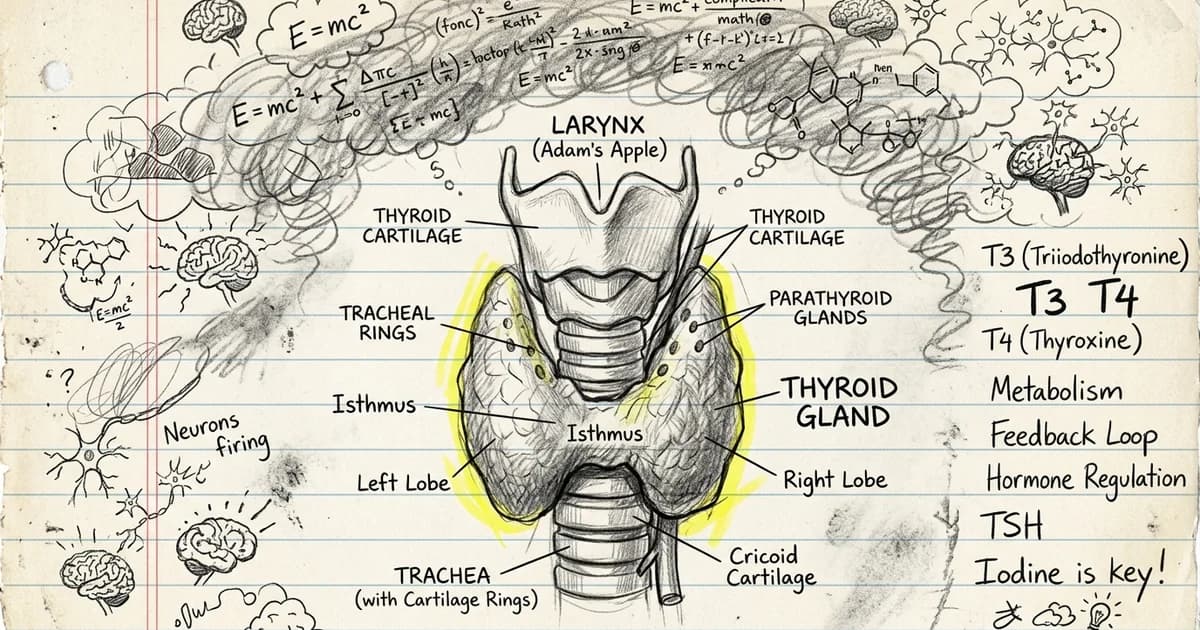
Brain Fog Thyroid Issues: Why Your Thyroid Might Be Sabotaging Your Focus
You forgot the word. It was right there, on the edge of your tongue, and then it vanished. You re-read the same email three times. You walked into a room and couldn't remember why. If brain fog thyroid problems have never crossed your mind as connected, they should. That cloudy, sluggish feeling in your head might not be stress or bad sleep. It might be your thyroid.
Your thyroid gland, that small butterfly-shaped organ at the base of your neck, controls far more of your mental performance than most people realize. And when it misfires, your brain is one of the first things to suffer.
Key Takeaways
- Brain fog thyroid symptoms are among the most common complaints in people with hypothyroidism, affecting memory, attention, and processing speed.
- Thyroid hormones directly regulate neurotransmitters like serotonin, dopamine, and norepinephrine, all of which drive cognitive function.
- Even "treated" hypothyroidism can leave brain fog thyroid symptoms behind. Normal lab numbers don't always mean normal brain function.
- Targeted nutritional strategies can support mental clarity while you work with your doctor on thyroid management.
What Brain Fog Thyroid Dysfunction Actually Feels Like (According to 5,000+ Patients)
Brain fog isn't a clinical diagnosis, and understanding what brain fog actually is helps put the thyroid connection in context. You won't find it in a medical textbook with a neat definition and a diagnostic code. But the experience is painfully real.
A large study published in the journal Thyroid reviewed brain fog thyroid patients experience and found that symptoms commonly include fatigue, depressed mood, and cognitive difficulties in the areas of memory and executive function. The severity ranges from mild to severe, and symptoms often show up before the hypothyroidism diagnosis itself.
The American Thyroid Association reported on a survey of over 5,000 people with hypothyroidism who described their brain fog. The average participant was around 50 years old, almost all were women, and about half had Hashimoto's thyroiditis. Most reported experiencing brain fog very frequently.
Here's what patients typically describe:
- Forgetting common words mid-sentence
- Losing track of conversations
- Difficulty planning or organizing tasks (executive function)
- Slower processing speed, like thinking through mud
- A persistent sense of mental "heaviness"
This isn't laziness. It isn't aging. It's neurochemistry.
The Brain Fog Thyroid Connection: What the Science Says
Your thyroid produces two main hormones: T4 (thyroxine) and T3 (triiodothyronine). T4 is the storage form. T3 is the active form, the one that actually does the work inside your cells. An enzyme called type 2 deiodinase (D2) converts T4 into T3 inside the brain.
According to research from HUN-REN, this conversion process is essential for proper brain function, and disruptions to it may explain why some patients still experience brain fog thyroid symptoms even when their blood levels of thyroid hormone appear normal.
When T3 levels drop in the brain, several things go wrong at once.
1. Neurotransmitter Disruption
Thyroid hormones directly influence the production and activity of your brain's key chemical messengers. According to ThyForLife Health, thyroid hormones influence the production and activity of neurotransmitters such as serotonin, dopamine, and norepinephrine, all of which regulate mood and cognition.
A paper published in Molecular Psychiatry examined the relationship between thyroid hormones and serotonin, confirming that the use of thyroid hormones as an effective adjunct treatment for affective disorders has been studied over three decades. The interaction between thyroid and monoamine neurotransmitter systems appears to be a key mechanism.
Low dopamine means poor motivation and focus. Low serotonin means mood disturbances and mental fatigue. Low norepinephrine means reduced alertness. When your thyroid underperforms, all three can drop simultaneously.
2. Reduced Cerebral Blood Flow
Your brain needs oxygen and glucose delivered by blood. When thyroid hormone levels fall, blood flow to the brain decreases. LIV Hospital reports that studies show hypothyroid patients often have reduced cerebral blood flow, which directly contributes to brain fog thyroid patients report.
Less blood flow means less fuel for your neurons. The result is slower thinking, weaker recall, and that frustrating feeling of mental "lag."
3. Neuroinflammation
Many hypothyroid cases stem from Hashimoto's thyroiditis, an autoimmune condition where the immune system attacks the thyroid gland. That autoimmune activity doesn't always stay contained to the thyroid.
Research reviewed by SelfDecode Health suggests that brain fog thyroid patients describe may involve inflammation and free radicals damaging the brain regions responsible for emotions, cognitive function, and executive function, particularly the limbic system. When your immune system is chronically activated, your brain pays a tax.
Why "Normal" Lab Results Don't Always Mean Normal Thinking
This is where things get frustrating for patients.
You go to your doctor. You describe the fog, the forgetfulness, the feeling that your brain is running at 60%. They run a TSH test. It comes back "within normal range." And you're told everything is fine.
But everything doesn't feel fine.
A review in the Journal of Clinical Medicine explored this disconnect. For some patients, brain fog thyroid dysfunction causes may be a byproduct of the shift in hypothyroidism treatment that occurred in the 1970s, when the TSH assay was developed and T4 monotherapy became standard. The assumption was that T4 would convert to enough T3 in the body. For many patients, it does. For some, it doesn't.
The British Thyroid Foundation found that over one third of hypothyroid patients considered the internet and other media sources to be a better source of information than their primary doctors. That statistic reflects a real gap between what patients experience and what standard lab panels capture.
If your TSH is "normal" but you still feel foggy, it's worth discussing with your doctor whether:
- Your free T3 levels have been tested (not just TSH and T4)
- You might benefit from combination T4/T3 therapy
- Other factors like nutrient deficiencies, sleep quality, or inflammation could be contributing
How Common Is Brain Fog Thyroid Dysfunction?
More common than you'd think.
A retrospective study published in the Journal of the Endocrine Society combining NHANES and claims data found that hypothyroidism prevalence in the United States grew from 9.5% in 2012 to 11.7% in 2019. That's roughly 1 in 9 Americans. And these are just the diagnosed cases.
Earlier population-based studies estimated that about 5% of the US population was affected by overt hypothyroidism, but the true number including subclinical cases is much higher. Women are 5 to 9 times more likely than men to develop the condition, and Hashimoto's thyroiditis accounts for more than 70% of cases.
A study published in Neuropsychiatric Disease and Treatment found that the prevalence of cognitive impairment among hypothyroid patients was 27.3%, with risk increasing alongside age and duration of illness. That means more than 1 in 4 hypothyroid patients experience measurable cognitive decline.
| Factor | Impact on Brain Fog Thyroid Risk |
|---|---|
| Female sex | 5-9x higher hypothyroid risk |
| Hashimoto's thyroiditis | Added neuroinflammation component |
| Age | Cognitive impairment risk increases with age |
| Duration of illness | Longer duration = higher cognitive risk |
| T4-only treatment | May not fully restore brain T3 levels |
What You Can Do About Brain Fog Thyroid Problems
If you suspect your thyroid is behind your brain fog, understanding how to test for brain fog can help you frame the right conversation with your doctor. Get a full thyroid panel, not just TSH. Ask for free T4, free T3, and thyroid antibodies (TPO and TgAb) to check for Hashimoto's.
Beyond medical treatment, several evidence-backed strategies can support cognitive function while you manage the underlying thyroid issue.
Optimize Your Nutrient Intake
Your thyroid needs specific nutrients to function. Selenium, zinc, iodine, and iron all play roles in thyroid hormone production and conversion. Paloma Health notes that your thyroid's health depends on the availability of essential nutrients.
Deficiencies in any of these can worsen both thyroid function and brain fog independently.
Prioritize Sleep
Sleep deprivation compounds cognitive impairment from any cause. If your thyroid is already limiting your brain's resources, poor sleep makes the deficit worse. Aim for 7-9 hours of consistent, quality sleep.
Manage Inflammation
Since autoimmune inflammation is a driver of both thyroid damage and brain fog, reducing systemic inflammation matters. An anti-inflammatory diet rich in omega-3 fatty acids, leafy greens, and antioxidant-rich foods can help. Regular moderate exercise also reduces inflammatory markers.
Support Your Neurotransmitters Directly
Since brain fog thyroid dysfunction disrupts serotonin, dopamine, and norepinephrine, supporting these pathways through other means can help fill the gap. This is where targeted supplementation becomes relevant.
L-Theanine, an amino acid found in green tea, promotes alpha brain wave activity and supports calm focus. A study published in Nutritional Neuroscience found that 97 mg of L-theanine combined with 40 mg of caffeine helped participants focus attention during demanding cognitive tasks. Another study from the same research group showed the combination improved both speed and accuracy of attention-switching and reduced susceptibility to distracting information.
The key finding across this research: L-theanine and caffeine together perform better than either one alone. The caffeine provides alertness; the L-theanine smooths out the jittery edges and promotes sustained attention.
Clearing the Brain Fog Thyroid Patients Experience
Brain fog from thyroid issues is real, measurable, and far more common than most people realize, and it shares overlapping brain fog causes and symptoms with several other conditions. It stems from disrupted neurotransmitters, reduced blood flow to the brain, and chronic inflammation. And brain fog thyroid sufferers deal with doesn't always resolve with standard medication alone.
The good news: you're not stuck with it. Medical optimization of your thyroid hormones, combined with smart lifestyle and nutritional strategies, can make a real difference in how clearly you think.
If you're looking for a clean, daily way to support focus and mental clarity, Roon was built for exactly this. Its sublingual pouch delivers a precise stack of Caffeine (80 mg), L-Theanine (60 mg), Methylliberine (25 mg), and Theacrine (5 mg), the same compounds shown in research to promote sustained attention without the jitters or crash. Zero nicotine, no tolerance buildup, and 6-8 hours of clean cognitive performance. Whether your brain fog thyroid condition causes it, your schedule worsens it, or just a rough Tuesday triggers it, Roon helps you think like yourself again.