Brain Fog High Blood Pressure
Roon Team
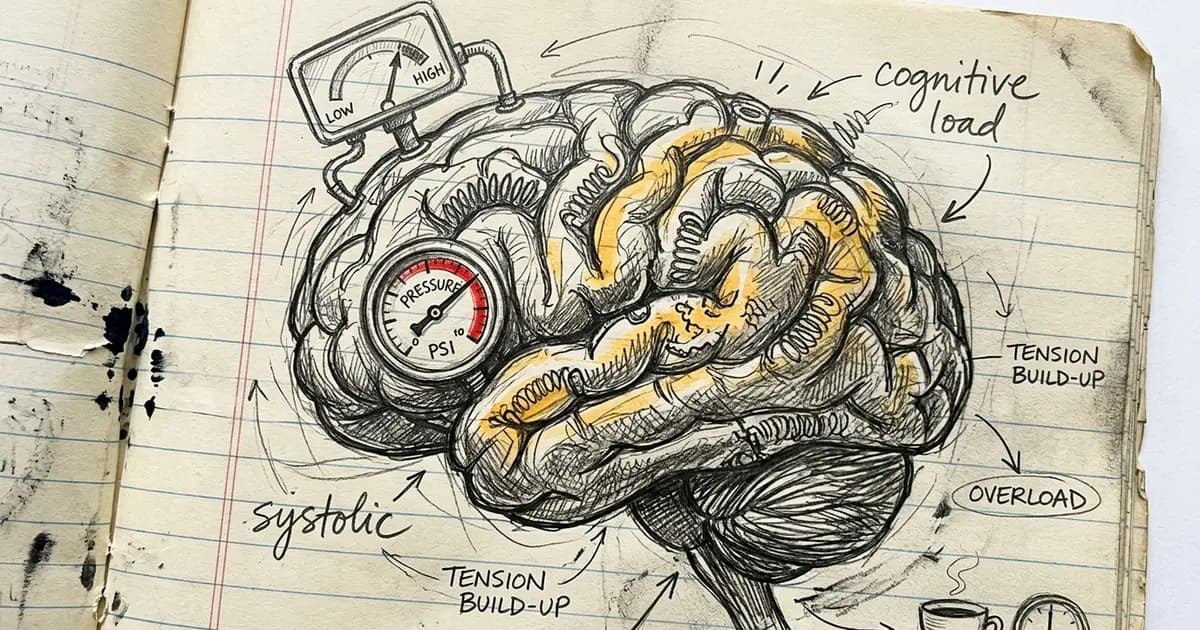
Brain Fog High Blood Pressure: Why Hypertension Is Quietly Wrecking Your Focus
Your brain runs on blood. Every thought you have, every decision you make, every word you read right now depends on a steady supply of oxygen-rich blood reaching billions of neurons. So when brain fog high blood pressure symptoms collide, the explanation is more mechanical than mysterious: your brain's plumbing is failing.
Nearly half of U.S. adults have hypertension, according to CDC data. And the vast majority don't know it's already affecting their ability to think clearly.
This guide breaks down exactly how elevated blood pressure clouds your cognition, what the latest research says about the damage it causes, and what you can do about it before the fog gets worse.
Key Takeaways
- High blood pressure damages the small blood vessels that feed your brain, reducing oxygen delivery and impairing cognition.
- A 2025 study from Weill Cornell Medicine found that brain damage from hypertension begins before blood pressure even measurably rises.
- The SPRINT MIND trial showed that intensive blood pressure control reduced the risk of mild cognitive impairment.
- Brain fog high blood pressure is not "just stress." The connection has a biological mechanism, and addressing it requires targeting both blood pressure and brain performance.
What Brain Fog High Blood Pressure Feels Like (and Why It's Easy to Ignore)
Brain fog causes and symptoms span a wide range, and it is not a clinical diagnosis but a shorthand for a cluster of cognitive symptoms that most people write off as being tired or getting older.
Cleveland Clinic defines it as difficulty concentrating, forgetfulness, losing your train of thought, and a general sense that your thinking is slower than it should be. You might reread the same email three times, walk into a room and forget why, or struggle to find a word that was on the tip of your tongue five seconds ago, and there are ways to test for brain fog if these patterns feel familiar.
Here's the problem: these symptoms creep in gradually. You don't wake up one morning unable to think. Instead, your cognitive baseline shifts downward over months or years, and you adjust to the new normal without realizing what you've lost.
When brain fog high blood pressure is the underlying pattern, most people never connect the dots. Hypertension is famously silent. No pain, no obvious symptoms. Just a slow erosion of the vascular infrastructure your brain depends on, a pattern closely tied to brain fog and head pressure.
How Brain Fog High Blood Pressure Develops
The link between hypertension and cognitive decline is well established in the medical literature. An American Heart Association scientific statement puts it plainly: hypertension disrupts the structure and function of cerebral blood vessels, leads to ischemic damage of white matter regions critical for cognitive function, and may promote Alzheimer pathology.
That's a dense sentence. Let's unpack it.
Your Brain's Blood Vessels Take the First Hit
Your brain is fed by a network of tiny blood vessels, many of them thinner than a human hair. When blood pressure stays elevated, the walls of these vessels thicken and stiffen. Blood flow decreases. The areas farthest from the major arteries, particularly the deep white matter of the brain, get starved of oxygen first.
White matter is the wiring that connects different brain regions. It's what allows your prefrontal cortex (planning, focus, decision-making) to communicate with your memory centers and motor areas. When white matter deteriorates, the signals between brain regions slow down or get lost entirely.
This is why brain fog high blood pressure doesn't feel like a single broken function. It feels like everything is slightly off. Your focus is fuzzy. Your recall is slower. Your processing speed drops. The whole system is degraded because the wiring itself is damaged.
The Damage Starts Earlier Than Anyone Thought
A 2025 preclinical study from Weill Cornell Medicine, published in the journal Neuron, found something alarming: hypertension impairs blood vessels, neurons, and white matter in the brain before blood pressure even rises to detectable levels.
The researchers found that just three days after inducing hypertension in mice, gene expression changed dramatically in endothelial cells (the cells lining blood vessels), interneurons, and oligodendrocytes (the cells that produce white matter). These changes occurred before any measurable increase in blood pressure.
The implication is stark. By the time your doctor tells you your blood pressure is high, the damage to your brain may already be underway. Waiting for a diagnosis before taking action means you're already behind.
Chronic Hypertension and the Dementia Connection
The long-term stakes go beyond brain fog high blood pressure symptoms. Research published in PMC describes hypertension as the most important modifiable vascular risk factor for development and progression of both cognitive decline and dementia. High blood pressure contributes to cerebral small and large vessel disease, resulting in structural brain damage over time.
Understanding what brain fog actually is matters here, because it is often the earliest warning sign on this continuum. It sits at the mild end of a spectrum that runs from occasional forgetfulness all the way to vascular dementia. Treating it seriously now is how you avoid the severe end later.
Can Blood Pressure Medications Cause Brain Fog?
This is a legitimate question, and the answer is nuanced.
Some antihypertensive medications can contribute to cognitive symptoms, particularly in the early weeks of treatment. A review published in PMC notes that antihypertensives, especially in cases of polypharmacy or inappropriate dosing, can lead to hypotension and decreased cerebral perfusion, which may cause mental and cognitive status changes.
In other words, if your blood pressure drops too low or too fast, your brain doesn't get enough blood, and you feel foggy.
But here's the critical nuance: uncontrolled hypertension causes far more cognitive damage than the medications used to treat it. The SPRINT MIND trial, one of the largest studies on this topic, found that intensive blood pressure control (targeting systolic pressure below 120 mmHg) reduced the combined rate of mild cognitive impairment and probable dementia compared to standard treatment.
If you're experiencing brain fog high blood pressure medication side effects, talk to your doctor about adjusting the dose or switching to a different class. Don't stop taking it. The cognitive cost of uncontrolled hypertension is far higher than the temporary side effects of treatment.
Brain Fog High Blood Pressure: A Comparison of Contributing Factors
| Factor | How It Affects Cognition | Reversible? |
|---|---|---|
| Chronic hypertension | Damages small blood vessels, reduces white matter integrity | Partially, with sustained BP control |
| Acute blood pressure spikes | Temporary reduction in cerebral blood flow | Yes, once BP stabilizes |
| Antihypertensive side effects | May cause hypotension, reducing brain perfusion | Yes, with medication adjustment |
| Sleep disruption (common with hypertension) | Impairs memory consolidation and focus | Yes, with improved sleep hygiene |
| Sedentary lifestyle | Reduces cerebrovascular fitness and BDNF production | Yes, with regular exercise |
| Chronic stress | Elevates cortisol, which impairs hippocampal function | Yes, with stress management |
What You Can Do About Brain Fog High Blood Pressure
Addressing brain fog high blood pressure requires working on both sides of the equation: reduce the vascular damage and support the cognitive function that's been compromised.
1. Get Your Blood Pressure Under Control
This is non-negotiable. If you haven't had your blood pressure checked recently, do it. The WHO reports that an estimated 1.4 billion adults worldwide had hypertension in 2024, with a large proportion undiagnosed and untreated.
Work with your doctor to find the right treatment plan. Whether that's medication, lifestyle changes, or both, the goal is sustained control, not occasional dips.
2. Move Your Body
Exercise is one of the few interventions that simultaneously lowers blood pressure and improves cognitive function. Aerobic exercise increases cerebral blood flow, promotes the growth of new blood vessels in the brain, and boosts production of brain-derived neurotrophic factor (BDNF), a protein essential for learning and memory.
You don't need to train for a marathon. Thirty minutes of brisk walking, five days a week, is enough to see measurable benefits on both blood pressure and cognition.
3. Fix Your Sleep
Hypertension and poor sleep feed each other in a vicious cycle. Elevated blood pressure disrupts sleep architecture, and poor sleep raises blood pressure. If you're waking up feeling unrested, that alone can account for a significant portion of your brain fog high blood pressure symptoms.
Prioritize 7 to 9 hours per night. Keep your bedroom cool and dark. Limit caffeine after early afternoon.
4. Manage Stress Deliberately
Chronic stress keeps your sympathetic nervous system in overdrive, which elevates blood pressure and floods your brain with cortisol. Over time, excess cortisol shrinks the hippocampus, the brain region most responsible for memory formation.
Find a stress management practice that you'll actually stick with. Meditation, deep breathing, time in nature, or even a consistent exercise routine all work. The best method is the one you do consistently.
5. Support Your Cognitive Performance Directly
Even after you address brain fog high blood pressure through lifestyle changes, you may still want sharper focus and clearer thinking during your workday. This is where targeted cognitive support can help.
Research on PubMed shows that the combination of L-theanine and caffeine improves accuracy during task switching and increases subjective alertness. L-theanine has also been shown to inhibit stress-related blood pressure increases in high-response individuals, making it a particularly smart choice for people dealing with brain fog high blood pressure concerns.
Compounds like theacrine and methylliberine extend these benefits further. A study published in PMC found that a combination of caffeine, theacrine, and methylliberine increased cognitive performance and reaction time without interfering with mood, and the effects held up after seven days of continuous use without tolerance buildup.
Clear the Fog
Brain fog high blood pressure is not something you have to accept. The connection has a clear biological mechanism, and it responds to targeted intervention.
The first step is getting your blood pressure checked and under control. The second is building the lifestyle habits (exercise, sleep, stress management) that protect your brain's vascular health over time.
And for the daily cognitive demands that don't wait for long-term interventions to kick in, Roon was built for exactly this purpose. Roon's nootropic pouches combine caffeine (80 mg), L-theanine, theacrine, and methylliberine in a zero-nicotine sublingual pouch designed to deliver 6 to 8 hours of sustained focus without jitters, crashes, or tolerance buildup. It's the same stack the research supports, delivered in a format that fits your life.
Your brain deserves better than fog. Give it what it needs.