Brain Fog Head Pressure
Roon Team
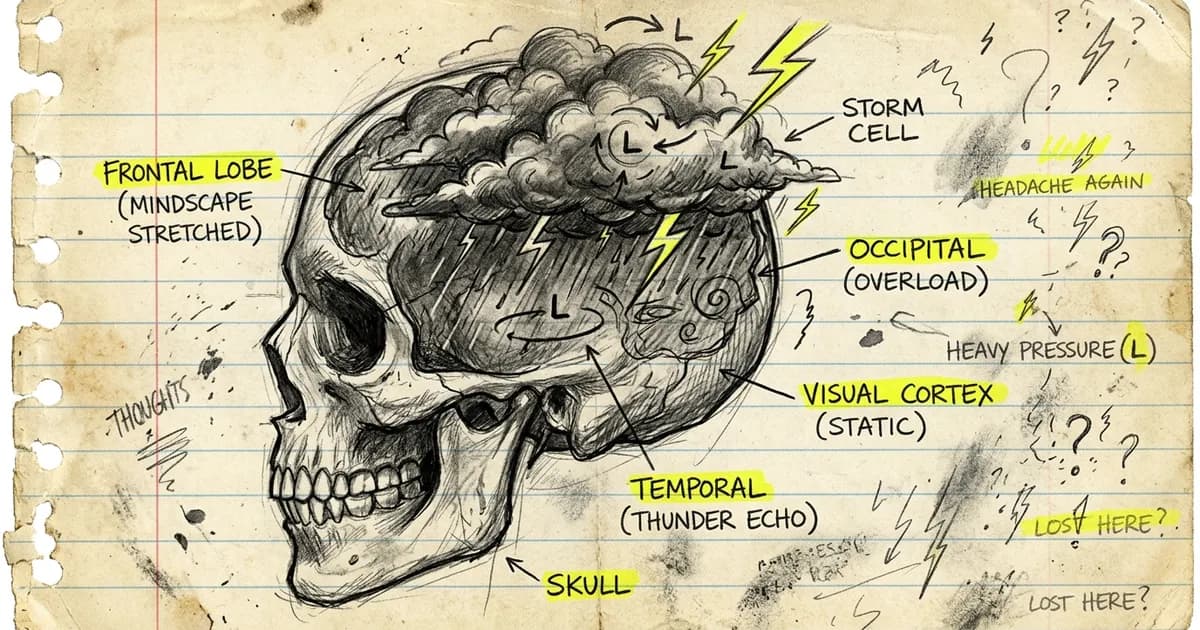
Brain Fog Head Pressure: What's Actually Happening Inside Your Skull
That dull, heavy feeling behind your forehead. The sense that your thoughts are moving through wet concrete. You sit down to work and realize you've read the same sentence four times without absorbing a word.
Brain fog head pressure is one of the most common cognitive complaints doctors hear, and one of the least understood. It's not a formal diagnosis. You won't find it in any medical textbook. But the experience is real, measurable, and far more common than most people think.
Here's what the science actually says about why brain fog head pressure happens, what drives it, and what you can do about it.
Key Takeaways:
- Brain fog head pressure often stems from shared root causes: inflammation, poor sleep, chronic stress, and dehydration.
- The "pressure" sensation usually stems from muscle tension, sinus inflammation, or changes in intracranial pressure, not from a structural brain problem.
- Fixing brain fog head pressure requires addressing the underlying cause, not just masking symptoms with more caffeine.
- A targeted combination of lifestyle changes and the right compounds can restore mental clarity faster than any single fix.
What Brain Fog Head Pressure Actually Feels Like
If you've experienced it, you know it's more than just "feeling tired." People describe brain fog head pressure as a tight band around the head, a heaviness behind the eyes, or a cloud sitting on top of their thoughts. Some feel it as a constant low-grade pressure that never quite becomes a headache but never fully goes away either.
According to Cleveland Clinic, brain fog isn't a medical condition itself but rather a symptom of other underlying conditions. It shows up as difficulty concentrating, trouble finding words, forgetfulness, and mental fatigue.
The head pressure component adds a physical dimension. Patient.info reports that patients frequently describe a "constant cloud" over the brain with a persistent mild pressure in the head, sometimes lasting years without a clear diagnosis.
What makes brain fog head pressure so frustrating is that standard tests often come back normal. Blood work looks fine. MRIs are clean. Yet the fog and the pressure remain.
Why Brain Fog and Head Pressure Travel Together
These two symptoms aren't random companions. They share overlapping biological mechanisms, which is why they tend to show up at the same time.
Neuroinflammation: The Common Thread Behind Brain Fog Head Pressure
Low-grade inflammation in the central nervous system affects both cognitive processing and physical sensation. Research published in PMC has explored how elevated levels of inflammatory cytokines like IL-1β reduce long-term potentiation in the hippocampus, the brain region responsible for memory formation. Overexpression of IL-6 has been linked to reduced neurogenesis, meaning your brain literally produces fewer new neurons under chronic inflammatory conditions.
This same inflammatory response can sensitize pain pathways and create the sensation of pressure, tightness, or fullness in the head.
Intracranial Pressure Changes
The fluid surrounding your brain, cerebrospinal fluid (CSF), maintains a delicate pressure balance. When that balance shifts, even slightly, you feel it. Research on ScienceDirect describes how intracranial venous congestion can produce chronic pressure headaches alongside brain fog, dizziness, and visual symptoms. These symptoms worsen with any activity that increases intracranial pressure, like bending over or straining.
The Sinus Connection
Not every case of brain fog head pressure involves the brain directly. LifeCare Primary Medical notes that sinus inflammation and infections create localized pressure that mimics deeper neurological symptoms. When your sinuses are inflamed, the pressure radiates across the forehead and behind the eyes, and the resulting discomfort alone is enough to tank your concentration.
The Six Root Causes of Brain Fog Head Pressure You Need to Rule Out
Brain fog with head pressure is a downstream symptom. Something upstream is driving it. Here are the most common culprits, ranked by how frequently they appear in clinical literature.
1. Sleep Deprivation
This is the single most common cause of brain fog head pressure. A review published in PMC found that consistently restricting sleep over time is more harmful to cognitive function than a single night of total sleep deprivation. The damage is cumulative. Chronic short sleep increases neuroinflammation, impairs memory consolidation, and accelerates oxidative stress in brain tissue.
You don't need to pull an all-nighter to feel the effects. Losing just 1.5 hours per night below your baseline, according to research in Sleep Health Journal, is enough to measurably impair working memory and response inhibition in otherwise healthy adults.
2. Chronic Stress and Elevated Cortisol
Stress doesn't just feel bad. It physically reshapes your brain. Aviv Clinics reports that the amygdala, hippocampus, and prefrontal cortex are the brain regions most affected by chronically elevated cortisol. You may notice challenges with attention, slowed processing, and poor decision-making.
The prefrontal cortex, the part of your brain responsible for focus, planning, and executive function, is especially vulnerable. According to Medical Daily, a CDC study found that chronic stress correlates with prefrontal cortex thinning, which directly impairs decision-making. Cortisol exposure for just three weeks can shrink dendritic spines by as much as 20%, reducing the brain's ability to form new connections.
That foggy, pressurized feeling during a stressful week? Your prefrontal cortex is running at reduced capacity. Literally.
3. Dehydration
Your brain is roughly 75% water by mass, according to a study in PMC. Even mild dehydration changes how it functions.
Research published in PubMed found that being dehydrated by just 2% of body mass impairs performance in tasks requiring attention, psychomotor skills, and immediate memory. Cleveland Clinic's Dr. Albers has noted that people consistently underestimate the link between brain fog head pressure and dehydration, and that the brain needs adequate fluid for nerve connections to run efficiently.
The head pressure component? Dehydration reduces CSF volume and blood volume, which changes intracranial pressure dynamics. The result is that familiar tight, heavy sensation.
4. Poor Diet and Blood Sugar Instability
Your brain consumes about 20% of your total caloric intake despite being only 2% of your body weight. When blood sugar spikes and crashes, so does your cognitive output. Cleveland Clinic lists diabetes and low blood sugar (hypoglycemia) among the conditions that directly cause brain fog.
Skipping meals, relying on simple carbohydrates, or cycling between sugar highs and crashes keeps your brain in a state of metabolic instability. The fog is your brain's way of telling you it's running on fumes.
5. Chronic Inflammation and Autoimmune Conditions
Conditions like lupus, multiple sclerosis, and fibromyalgia are listed by Cleveland Clinic as direct causes of brain fog. The shared mechanism is systemic inflammation that crosses into the central nervous system.
Ubie Health notes that conditions like fibromyalgia and chronic fatigue syndrome commonly produce both brain fog head pressure simultaneously, because changes in the nervous system affect both cognitive processing and physical sensation.
6. Post-Viral Syndromes
COVID-19 put brain fog head pressure on the map. Yale School of Medicine research examined the neuropsychiatric symptoms of Long COVID, including brain fog, inability to concentrate, and headaches. The Lancet's eClinicalMedicine reports that cognitive dysfunction impairs daily functioning in up to 88% of patients with post-COVID-19 condition.
If your brain fog head pressure started after a viral illness, this is a strong lead worth discussing with your doctor.
Brain Fog Head Pressure: What Actually Helps
Knowing the causes is step one, and understanding what actually helps clear the fog is step two. Here's what the evidence supports for clearing the fog and relieving the pressure.
Fix Your Sleep First
This is non-negotiable. Seven to nine hours of consistent sleep is the baseline. Not "time in bed." Actual sleep. Research confirms that maintaining a regular sleep pattern of at least 7 hours per night enhances working memory and response inhibition. If you're sleeping 5.5 hours and wondering why you can't think straight, you have your answer.
Hydrate Before You Caffeinate
Drink water before your morning coffee. Most people wake up mildly dehydrated after 7-8 hours without fluid intake. Starting the day with caffeine before water compounds the problem, since caffeine is a mild diuretic.
Manage Stress at the Physiological Level
Meditation, controlled breathing, and regular exercise all lower baseline cortisol. This isn't wellness fluff. It's damage control for your prefrontal cortex. Even 20 minutes of moderate exercise increases blood flow to the brain and promotes the release of brain-derived neurotrophic factor (BDNF), which supports new neural connections.
Address Sinus and Tension Issues
If your brain fog head pressure is localized around the forehead, temples, or behind the eyes, consider whether sinus inflammation or muscle tension is the driver. Nasal irrigation, antihistamines, or simply reducing screen time (which causes sustained contraction of the muscles around the eyes and forehead) can make a measurable difference.
Choose Smarter Stimulants for Brain Fog Head Pressure
Here's where most people go wrong. The default response to brain fog head pressure is more coffee. But caffeine alone is a blunt instrument. It increases alertness, sure, but it also raises cortisol, can increase anxiety, and wears off with a crash that often makes the fog worse.
The science points toward more targeted approaches. A randomized controlled study published in PMC found that L-theanine, an amino acid found in green tea, contributes to improving attention, working memory, and executive function. Cleveland Clinic notes that L-theanine's benefits are heightened when taken with caffeine, improving verbal fluency and the ability to stay focused.
The combination of L-theanine and caffeine has been studied extensively. Research published in The Journal of Nutrition found that the two compounds together improved target discriminability and attention task performance beyond what either compound achieved alone.
Then there are the purine alkaloids theacrine and methylliberine. A study in Scientific Reports examined theacrine's dose-response effects on cognitive performance, finding that 200mg increased energy and reduced fatigue. A PubMed-indexed study on the combination of caffeine, theacrine, and methylliberine found that the stack increased cognitive performance and reaction time without interfering with mood.
The key insight from this research: combining these compounds produces a smoother, longer-lasting cognitive effect than caffeine alone, without the jitters, crash, or tolerance buildup that comes with simply drinking more coffee.
Clear the Fog, Lose the Pressure
Brain fog head pressure isn't something you just push through. It's a signal. Your brain is telling you that something in its operating environment, whether sleep, hydration, stress, or inflammation, is off.
The fix starts with the fundamentals: sleep, water, stress management, and nutrition. But when you need your brain to perform right now, the compounds you choose matter.
Roon was built around this exact problem. Roon's zero-nicotine focus pouches combine 80 mg of caffeine with L-theanine, theacrine, and methylliberine in a sublingual pouch, delivering the same ingredient stack that research links to sustained focus without the crash. No jitters. No tolerance buildup. Just 6-8 hours of clean mental clarity, absorbed in seconds.
If brain fog head pressure has been running your days, fix the foundations first. Then give your brain the support it actually needs.