Does Music Help You Focus? The Science of Focus Playlists, Lyrics, and Tempo
Roon Team
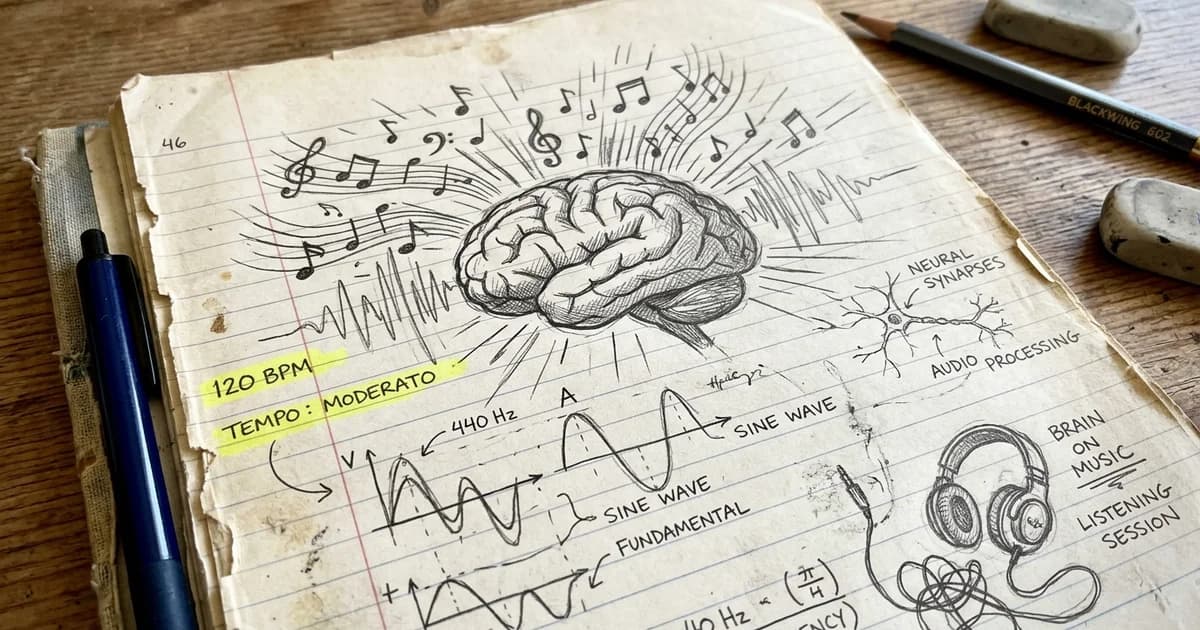
Does Music Help You Focus? The Science of Focus Playlists, Lyrics, and Tempo
You press play on a study playlist, slip in your earbuds, and tell yourself the next two hours belong to deep work. Twenty minutes later you are humming the chorus and rereading the same paragraph for the third time.
So does music help you focus, or does it just feel productive? The honest answer is that it depends on the song, the task, and your own brain. Music can sharpen attention for some people on some jobs, and quietly wreck it on others. The research is messier than the "study with me" videos suggest, and a lot more useful once you understand the rules.
This is the cognitive science of focus music, broken into the three variables that actually move the needle: lyrics, tempo, and the kind of work you are doing.
Key Takeaways
- Lyrics are the main saboteur. Words in a song compete for the same brain resources you use to read and write.
- The task decides everything. Music helps repetitive or boring work more than it helps demanding verbal work.
- Tempo and volume matter more than genre. Steady, moderate, low-volume tracks beat loud, dramatic ones.
- Personality changes the math. The same playlist can help one person and distract the next.
Does Music Help You Focus? What the Research Actually Shows
Music helps focus when it lifts a boring task and hurts focus when it competes with a demanding one. That single sentence explains most of the contradictory headlines.
The popular "Mozart effect," the idea that classical music makes you smarter, never held up to scrutiny. What researchers actually found was a small, short-lived bump in spatial reasoning right after listening, driven by mood and arousal rather than anything magical about Mozart. It was an arousal effect wearing a tuxedo.
That reframes the real question. Music does not directly upgrade your intelligence. It nudges your arousal (how alert you feel) and your mood (how willing you are to keep going). On a dull, repetitive task, a little extra arousal helps. On a hard task that already maxes out your attention, the same input becomes noise.
A cross-sectional study of medical students, indexed on ResearchGate, explored how listening habits relate to concentration and academic performance, and the picture is far from a simple "music = better grades." Overview pieces from Healthline and Medical News Today land in the same place: helpful in some conditions, counterproductive in others.
Lyrics and Distraction: Why Words Are the Real Problem
Lyrics are the single biggest reason music breaks concentration, especially when you are reading or writing. Your brain processes language with limited bandwidth, and a song with words forces it to handle two streams of language at once.
This is the core of lyrics and distraction. When you read a sentence and a singer delivers a different sentence into your ear, both compete for the same verbal processing system. Comprehension drops, rereading climbs, and the work takes longer than it should.
A 2024 study in Frontiers in Psychology examined how background music with lyrics affects reading comprehension, looking at the language of the lyrics and individual study habits. The takeaway for anyone doing verbal work is straightforward: words you can understand are the most disruptive kind of background sound, because your brain cannot help but decode them.
The practical rule writes itself:
- Reading, writing, editing, coding with heavy documentation: kill the lyrics. Go instrumental or go silent.
- Spreadsheets, data entry, sorting, light email, repetitive tasks: lyrics are usually fine and can even make the grind feel shorter.
This is also why lofi works. It keeps the groove and removes the words.
Lofi for Concentration: Why the Internet's Study Soundtrack Took Over
Lofi for concentration works because it delivers steady, low-stakes, lyric-free sound that fades into the background instead of demanding your attention. It is engineered, almost by accident, to be ignorable.
The cultural proof is hard to miss. The Lofi Girl channel turned an endless instrumental stream into one of the most recognizable study soundtracks on YouTube, watched by millions who use it as background for studying and working.
Why it works as music while studying comes down to a few features:
- No lyrics, so it spares your verbal processing system.
- Mellow, consistent tempo with little dynamic surprise, so nothing yanks your attention away.
- Mild, pleasant texture that masks sudden environmental noise like a slamming door or a chatty coworker.
That last point matters. Part of the benefit is not the music itself but what it covers. A steady audio bed smooths over the unpredictable sounds that actually break concentration.
Music Tempo, Volume, and Genre: What to Actually Put On
Tempo and volume shape focus more than genre does. A calm, moderate-tempo track at low volume supports sustained attention, while fast, loud, dramatic music tends to pull you out of the work.
Higher tempo and volume raise arousal. A little is useful when you are sluggish. Too much tips you past the sweet spot, where you feel keyed up instead of locked in. Think of arousal as a dial, not a switch. You want it parked in the middle for most knowledge work.
For the best music for productivity, the variables stack up like this:
| Variable | Focus-friendly | Focus-killing |
|---|---|---|
| Lyrics | None (instrumental) | Clear, understandable words |
| Tempo | Steady, moderate | Fast, abrupt, unpredictable |
| Volume | Low to moderate | Loud |
| Familiarity | Familiar or neutral | Brand-new tracks you want to study |
| Emotion | Calm, even | Highly emotional, dramatic |
Genre is mostly a proxy for those traits. Classical, ambient, lofi, and film scores tend to fit the left column. The genre label is not the point. A frantic orchestral climax and a thumping club track break focus for the same reason.
It Is Not the Same for Everyone
Your personality changes whether music helps at all. Research on focus music science has repeatedly found that the same background sound affects different people in opposite ways.
A classic study by Cassidy and MacDonald in Psychology of Music tested background music and noise on introverts and extraverts during cognitive tasks. Introverts tended to suffer more from distracting background sound than extraverts did, a pattern that fits the idea that introverts already run at higher baseline arousal and have less room for extra stimulation.
There is also encouraging work on attention difficulties. Reporting from Northeastern University describes how music may help some people with ADHD focus, likely tied to how rhythmic sound supports arousal and motivation. Brains that struggle to stay engaged sometimes use a steady beat as an anchor.
The lesson is to test yourself instead of trusting a viral playlist. Run the same task twice, once in silence and once with your chosen track, and notice which one leaves you with better work and less rereading.
What Music Cannot Do
Music modulates how you feel about your work. It does not manufacture the underlying attention. This is where many "perfect study playlist" promises quietly overreach.
A playlist can mask noise, lift a flat mood, and make a boring task tolerable. It will not fix poor sleep, a scattered task list, or a phone buzzing every ninety seconds. A study on background music and memory for spoken words is a useful reminder that sound interacts with memory in specific, limited ways rather than acting as a general performance booster.
Treat music as one input among several. Sleep, hydration, task structure, and your stimulant timing all sit upstream of whatever is playing in your ears.
The Bottom Line on Music and Focus
Music helps you focus when it raises a flagging mood or covers distracting noise, and it hurts when its lyrics or intensity compete with the work in front of you. The decision is not "music or silence." It is the right music, for the right task, at the right volume.
Drop the lyrics for anything verbal. Keep the tempo steady and the volume low. Match the soundtrack to whether the task is boring or demanding, and test it on yourself rather than borrowing someone else's playlist. Do that, and music stops being a guilty distraction and starts being a tool you actually control.
Frequently Asked Questions
Does music with lyrics hurt concentration?
For verbal work like reading, writing, and editing, yes. Lyrics force your brain to process two streams of language at once, which competes for the same resources you need to understand text. A 2024 study in Frontiers in Psychology examined how lyric-based background music affects reading comprehension. For repetitive or non-verbal tasks, lyrics matter far less and can even make the work feel easier.
Is silence better than music for studying?
Sometimes. Silence wins for demanding verbal tasks where any sound competes for attention, and for people who are easily distracted by background noise. Music wins when the task is dull, when you need a mood lift, or when steady sound masks an unpredictable environment. The smart move is to test both on the same task and compare the quality of your output.
Why does lofi work so well for focus?
Lofi for concentration works because it is lyric-free, steady in tempo, and mellow enough to fade into the background. It supplies enough sound to mask sudden noises without demanding your attention. The hugely popular Lofi Girl stream built a global audience on exactly this formula: pleasant, predictable, ignorable instrumental music that supports studying without competing with it.
What tempo of music is best for productivity?
A steady, moderate tempo at low to moderate volume tends to support sustained attention best. Fast, loud, or unpredictable music raises arousal too high and pulls you out of the work. Think of arousal as a dial you want parked in the middle. Calm, even tracks keep you alert without tipping you into restlessness.
Does music help everyone focus the same way?
No. Personality matters. Research by Cassidy and MacDonald found introverts tend to be more disrupted by background sound than extraverts, likely because they already run at higher baseline arousal. There is also evidence that some people with attention difficulties benefit from rhythmic music. The only reliable way to know your own response is to test it.
Can music actually improve memory and learning?
Music affects memory in specific, limited ways rather than acting as a general booster. It can shape mood and arousal during study, which indirectly influences how well you encode information. But it will not substitute for active recall, spacing, and sleep. Use it to set the conditions for learning, not as a shortcut around the work itself.
Sound Sets the Stage. Your Chemistry Runs the Show.
A good playlist solves an environment problem. It masks noise, lifts your mood, and makes a long session feel shorter. What it cannot do is generate the underlying alertness that focus is built on. That part comes from inside.
This is the gap Roon is built for. Roon is a zero-nicotine sublingual pouch with four ingredients: 80 mg caffeine, 60 mg L-theanine, 25 mg methylliberine (Dynamine), and 5 mg theacrine (TeaCrine). It is designed to support a clean window of focus that holds for 6 to 8 hours, with no jitters, no crash, and no tolerance creep. Onset lands in about 5 to 10 minutes, roughly the length of a lofi track or two.
Roon is not a replacement for sleep, structure, or a sane task list, and no pouch will make a distracting playlist work. Think of it as the chemistry layer under the soundtrack. Get the music right, then try Roon when you want the focus itself to last.
Written by Roon Team