Brain Fog COVID: What's Actually Happening in Your Brain
Roon Team
Brain Fog COVID: What's Actually Happening in Your Brain (and How to Fix It)
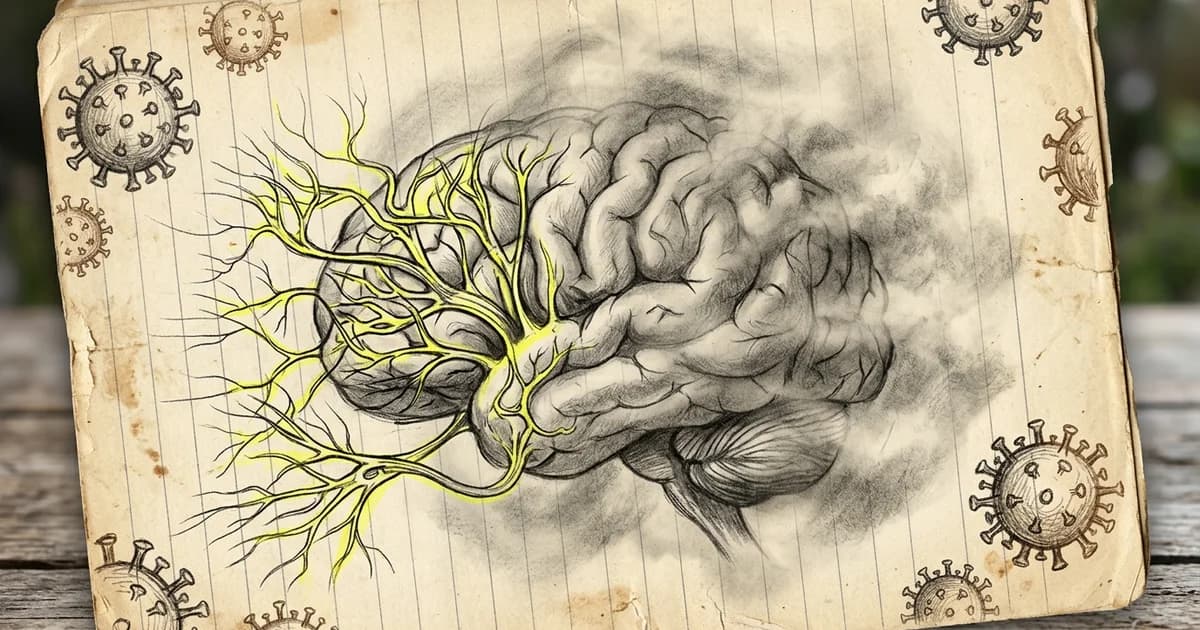
You survived COVID. The fever broke, the cough faded, and your test came back negative. But something still isn't right. You lose your train of thought mid-sentence. You reread the same paragraph three times. You walk into a room and stand there, blank. Brain fog covid is not in your head, at least not in the way people mean when they say that. It's a measurable, biological disruption in how your brain processes information.
And it's far more common than most people realize.
A systematic review and meta-analysis published in General Hospital Psychiatry found the combined prevalence of brain fog covid and mental health conditions in people with long COVID was roughly 20.4% across timepoints ranging from 3 to 24 months post-infection. According to Yale Medicine, close to half of long COVID patients in one study reported poor memory or brain fog covid symptoms. These aren't small numbers. Millions of people are walking around with a brain that doesn't feel like theirs anymore.
Key Takeaways:
- Brain fog covid stems from real biological changes: neuroinflammation, blood-brain barrier disruption, and serotonin depletion.
- Recovery is possible, but it requires a targeted approach across sleep, movement, nutrition, and cognitive training.
- Certain nootropic compounds, including caffeine paired with L-theanine, have strong clinical evidence for restoring focus and mental clarity.
What Brain Fog COVID Actually Looks Like
Brain fog isn't a clinical diagnosis, and understanding what brain fog actually is starts with separating myth from measurable biology. It's a catch-all term patients use to describe a cluster of cognitive symptoms that showed up after infection and refused to leave. The most common complaints include:
- Difficulty concentrating on tasks that used to be automatic
- Short-term memory lapses, like forgetting names or losing track of conversations
- Slower processing speed, where your brain feels like it's running on dial-up
- Word-finding problems, where the right word hovers just out of reach
- Mental fatigue that sets in after even light cognitive effort
A multicenter study published in Frontiers in Human Neuroscience tracked hospitalized COVID survivors over time and found brain fog covid prevalence at 8.37% at the first follow-up, with memory loss affecting 14.9%. The numbers dipped slightly over the following years but never disappeared entirely. For many people, brain fog covid is not a phase. It's a condition that demands active management.
Why COVID Causes Brain Fog: The Neuroscience
This isn't just "feeling tired." Multiple biological mechanisms are driving the cognitive decline you're experiencing.
Neuroinflammation: Your Immune System Won't Stand Down
When SARS-CoV-2 enters your body, your immune system mounts a massive inflammatory response, a pattern of illness-driven cognitive disruption also seen with influenza and other infections. In some people, that response doesn't fully shut off after the virus clears. A 2025 editorial in Frontiers in Immunology describes how long COVID symptoms, including brain fog covid, mood changes, and dizziness, are "likely driven by neuroinflammation even after the virus is cleared."
The result is a brain bathed in inflammatory cytokines. These signaling molecules interfere with neurotransmitter function, disrupt synaptic plasticity, and impair the neural circuits responsible for attention and working memory.
Blood-Brain Barrier Disruption
Your blood-brain barrier (BBB) is a tightly regulated filter that controls what enters your brain from your bloodstream. COVID can punch holes in it. A 2024 study published in Nature Neuroscience used dynamic contrast-enhanced MRI to show that BBB disruption is present both during acute infection and in patients with long COVID who report cognitive impairment.
When the BBB leaks, proteins, immune cells, and other molecules that don't belong in the brain flood in, a mechanism also central to blood-brain barrier damage after injury such as concussion. This triggers further inflammation and damages the delicate neural environment your cognition depends on.
Serotonin Depletion
Serotonin does far more than regulate mood. It plays a direct role in memory, sleep regulation, and cognitive processing. Research reported by STAT News showed that serotonin levels are depleted in long COVID patients, pointing to a potential biological cause for brain fog covid. The mechanism involves persistent viral remnants in the gut triggering interferon activity, which in turn reduces serotonin production.
Less serotonin means worse memory consolidation, disrupted sleep architecture, and impaired focus. It's a downstream cascade that explains why brain fog covid feels so different from ordinary tiredness.
How Long Does Brain Fog COVID Last?
The honest answer: it varies. Some people recover within weeks. Others report brain fog covid symptoms lasting well over a year.
The Frontiers in Human Neuroscience study found that while prevalence of brain fog covid and memory loss decreased during the first two years after hospital discharge, a subset of patients developed new cognitive symptoms over time, even when they hadn't experienced them initially. This suggests the underlying biology can shift, and recovery isn't always linear.
The good news: the brain is remarkably adaptable. With the right interventions, you can accelerate the process.
A Science-Backed Recovery Protocol for Brain Fog COVID
There is no single fix, but the evidence-backed strategies to clear brain fog share common principles that stack well together. But there is a stack of evidence-backed strategies that, combined, give your brain the best shot at recovery.
1. Prioritize Sleep Architecture, Not Just Sleep Duration
You don't just need more sleep. You need better sleep. Deep slow-wave sleep is when your brain clears metabolic waste through the glymphatic system, consolidates memories, and repairs neural tissue. COVID disrupts sleep architecture, often reducing the amount of time spent in these restorative stages.
What to do:
- Keep a fixed wake time, even on weekends. Your circadian rhythm needs consistency.
- Cut caffeine after 1 PM. (Yes, even if you "handle caffeine well.")
- Keep your bedroom cool, between 65 and 68°F.
- Avoid screens for 60 minutes before bed, or use blue-light blocking glasses as a minimum.
2. Graded Aerobic Exercise
Exercise is one of the most potent tools for brain recovery. It increases brain-derived neurotrophic factor (BDNF), a protein that supports the growth and survival of neurons. It also reduces systemic inflammation and improves cerebral blood flow.
But if you have brain fog covid, you can't just jump into high-intensity training. Post-exertional malaise is real, and pushing too hard can set you back weeks.
What to do:
- Start with 10 to 15 minutes of low-intensity walking or cycling.
- Increase duration by no more than 10% per week.
- Monitor your symptoms for 24 to 48 hours after each session. If you crash, scale back.
- Aim for a target of 150 minutes per week of moderate aerobic activity once you've built up tolerance.
3. Anti-Inflammatory Nutrition
Your diet directly affects neuroinflammation. Processed foods, refined sugars, and seed oils promote inflammatory pathways. Whole foods rich in omega-3 fatty acids, polyphenols, and antioxidants do the opposite.
Key additions to your plate:
- Fatty fish (salmon, sardines, mackerel) for EPA and DHA
- Blueberries and dark leafy greens for polyphenols
- Turmeric with black pepper for curcumin absorption
- Extra virgin olive oil as your primary cooking fat
4. Cognitive Training and Stimulation
Your brain recovers faster when it's challenged, but not overwhelmed. Think of it like physical rehab after a knee injury: controlled, progressive loading.
What to do:
- Read for 20 to 30 minutes daily (physical books, not social media feeds).
- Practice active recall: after reading a chapter or article, close it and write down what you remember.
- Learn something new. A language, an instrument, a skill. Novelty drives neuroplasticity.
- Limit passive content consumption. Scrolling TikTok is not cognitive stimulation.
5. Targeted Supplementation for Brain Fog COVID Focus
This is where most people get it wrong, and separating remedies that actually work from noise makes a real difference in recovery. They reach for more coffee, slam an energy drink, or try a random nootropic stack they found on Reddit. The result is jitters, a crash, and no real improvement in sustained focus.
The science points to specific compounds that work together.
Caffeine + L-Theanine is the most well-studied nootropic pairing in existence. A study published in Nutritional Neuroscience found that 97 mg of L-theanine combined with 40 mg of caffeine improved focus during demanding cognitive tasks in young adults. L-theanine smooths out caffeine's stimulatory effects, promoting calm alertness instead of anxious energy.
Theacrine and Methylliberine extend the benefits further. A randomized crossover study published in Cureus found that combining caffeine with theacrine and methylliberine increased cognitive performance and reaction time without negatively affecting mood. A separate double-blind, placebo-controlled trial in tactical personnel found that the caffeine-methylliberine-theacrine combination provided similar vigilance benefits to caffeine alone, but with better hemodynamic responses, meaning less cardiovascular stress.
The key insight from the research: these compounds don't just stack effects. They complement each other's pharmacokinetics, extending the duration of cognitive benefit while reducing side effects like jitters and tolerance buildup.
When to See a Doctor About Brain Fog COVID
Self-management works for many people, but some cases of brain fog covid require professional evaluation. See a physician if:
- Your symptoms are getting worse, not better, after three months
- You experience new neurological symptoms like numbness, vision changes, or severe headaches
- Brain fog covid is accompanied by chest pain or shortness of breath
- Your cognitive decline is affecting your ability to work or maintain relationships
A neurologist can run imaging and cognitive assessments to rule out other conditions and tailor a treatment plan.
Building Your Daily Cognitive Stack for Brain Fog COVID
Recovery from brain fog covid isn't about finding one simple solution. It's about consistent, daily habits that reduce inflammation, support neural repair, and give your brain the raw materials it needs to perform.
Sleep. Move. Eat well. Challenge your mind. And give your neurochemistry the right inputs.
That last piece is exactly why Roon exists. Roon's nootropic focus pouches combine all four compounds the research highlights, caffeine (80 mg), L-theanine, theacrine, and methylliberine, into a single sublingual pouch. No nicotine, no sugar, no crash. Just a clean, sustained 6 to 8 hours of focus designed to work with your brain, not against it.
If you're rebuilding your cognitive performance after brain fog covid, your daily stack matters. Make Roon part of it.