Spermidine and Memory: What the SmartAge Trial Actually Found
Roon Team
Spermidine and Memory: What the SmartAge Trial Actually Found
For about a decade, spermidine has been one of the more exciting molecules in longevity research. It clears cellular junk through autophagy, it extends lifespan in yeast, flies, and mice, and people who eat more of it tend to live longer. So when a German team ran a rigorous, 12-month trial to test whether spermidine could protect memory in aging adults, the field paid close attention.
The trial was called SmartAge. The result surprised a lot of people.
The short version: spermidine did not beat placebo. Here is what that means, why it matters, and what it tells you about reading supplement science honestly.
Key Takeaways
- The SmartAge trial was a 12-month, double-blind, placebo-controlled study of spermidine in older adults with subjective cognitive decline.
- Spermidine showed no marked benefit on memory or brain biomarkers versus placebo.
- An earlier 3-month pilot from the same group had hinted at a benefit, which the larger trial failed to confirm.
- Population studies still link dietary spermidine to lower dementia and mortality risk, but eating spermidine-rich food is different from taking a supplement.
- This is a case study in why replication matters more than any single promising result.
What Spermidine Is and Why Researchers Cared
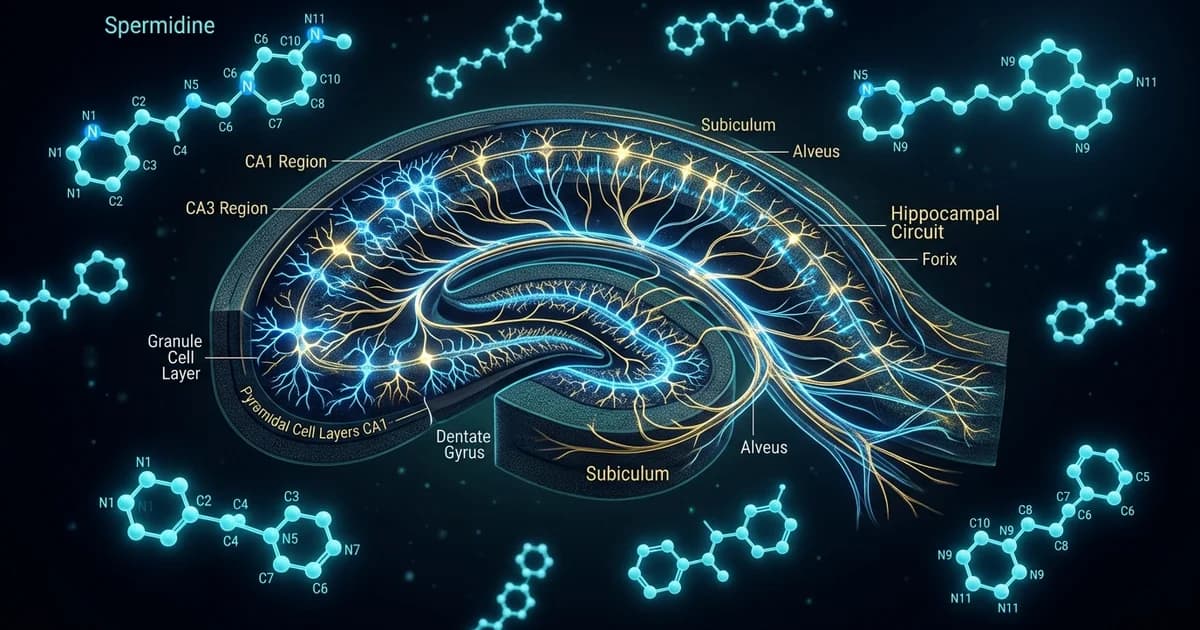
Spermidine is a natural polyamine found in your cells and in foods like wheat germ, aged cheese, soybeans, and mushrooms. Its headline function is triggering autophagy, the process by which cells recycle damaged components. Autophagy declines with age, and that decline is tied to neurodegeneration.
In lab organisms, the evidence is strong. Feeding animals spermidine improves memory and extends life. The question was always whether that would carry over to humans.
Observational data looked promising too. In the Bruneck study, a 20-year population project in Italy, higher dietary spermidine intake was linked to lower all-cause mortality, with people in the highest intake group showing risk roughly equivalent to being several years younger. Separate population work has connected polyamine intake to dementia risk. That set the stage for a real test.
The SmartAge Trial: Design and Results
The SmartAge trial found that 12 months of spermidine supplementation produced no measurable advantage over placebo for memory in older adults at risk of cognitive decline. That is the core finding, stated plainly.
Here are the details. The study was a 12-month randomized, double-masked, placebo-controlled phase 2b trial run at the NeuroCure Clinical Research Center in Berlin between 2017 and 2020. Researchers enrolled 100 adults aged 60 to 90 with subjective cognitive decline, the stage where people notice their own memory slipping before tests catch it.
Participants were randomized 1:1 to either a wheat germ extract delivering about 0.9 mg of spermidine per day or a matched placebo. Eighty-nine percent finished the full year. This was a well-run study, not a sloppy one.
The primary outcome was change in memory, measured by a sensitive task called mnemonic discrimination, which probes the hippocampus directly. The result: no marked difference between groups, with a between-group difference of 0.03. Secondary measures, including blood biomarkers and other cognitive tests, also showed nothing.
The Pilot That Pointed the Other Way
The interesting part is what came before. The same research group had earlier run a 3-month pilot in older adults at risk for dementia and reported a moderate memory improvement, with a Cohen's d around 0.77.
That is a respectable effect size. It justified building a bigger, longer, more rigorous trial. And when that larger trial ran, the signal vanished.
This pattern is common in science. Small early studies often overestimate effects, partly by chance and partly because positive results get published more readily. SmartAge was the better test, and it overruled the pilot.
Pilot vs. Full Trial: Side by Side
| Feature | 2018 Pilot Study | SmartAge Trial (2022) |
|---|---|---|
| Participants | 30 older adults | 100 older adults |
| Duration | 3 months | 12 months |
| Design | Randomized, controlled | Randomized, double-masked, placebo-controlled phase 2b |
| Primary memory result | Moderate improvement (d ≈ 0.77) | No marked difference |
| Biomarker effects | Limited | None |
| Confidence level | Hypothesis-generating | Confirmatory |
The takeaway from this table is simple. Bigger and longer beats smaller and shorter, even when the smaller study told a more exciting story.
So Is Spermidine Useless for the Brain?
No, and this is where honesty matters. SmartAge tested one dose, one form, one population, over one year. A null result narrows the possibilities; it does not close the book.
A few real caveats apply. The 0.9 mg daily dose was modest, far below what some animal studies used relative to body weight. The participants had only subjective decline, meaning their brains were still largely healthy, which leaves less room to show improvement. And a year may be too short to catch a slow, protective effect on aging.
The dietary evidence also still stands. People who eat more spermidine-rich food tend to do better on long-term health outcomes. But that association could reflect overall diet quality rather than spermidine itself, and a recent review of the spermidine and cognition literature notes that interventional trials have not yet matched the optimism of the observational data.
That gap, between what population studies suggest and what controlled trials confirm, is the whole story here.
Why This Matters for How You Read Supplement Claims
The spermidine story is a clean lesson in evidence hierarchy. A molecule can have a beautiful mechanism, glowing animal data, and supportive population studies, and still fail the one test that counts: a large, blinded, placebo-controlled human trial.
When a brand sells you a single-study miracle, ask which study. Was it a 30-person pilot or a 100-person confirmatory trial? Was there a placebo group? Did anyone try to replicate it?
Spermidine may still earn its place with better-designed trials, different doses, or higher-risk populations. For now, the honest verdict is that the spermidine cognition study evidence is mixed and the strongest human trial came up empty.
Conclusion
Spermidine remains a genuinely interesting molecule for aging biology, but the best memory trial to date did not support the hype. The SmartAge result reminds us that promising mechanisms and encouraging pilot data are starting points, not conclusions. The molecules worth trusting are the ones that survive replication in large, controlled human studies, and spermidine has not cleared that bar for cognition yet.
Read the evidence, weight it by quality, and let the strongest trials lead.
Frequently Asked Questions
What was the main finding of the SmartAge trial?
The SmartAge trial found that 12 months of spermidine supplementation did not improve memory more than placebo in older adults with subjective cognitive decline. Researchers measured memory using mnemonic discrimination, a sensitive hippocampus-linked task, and saw a between-group difference of just 0.03. Blood biomarkers and secondary cognitive tests also showed no benefit, making this one of the most rigorous null results in the spermidine field.
Does spermidine help with dementia risk?
The evidence is mixed. Population studies link higher dietary spermidine intake to lower dementia and mortality risk, but these associations cannot prove cause and effect. The strongest controlled trial, SmartAge, found no memory benefit from supplementation. Eating spermidine-rich foods as part of a healthy diet is reasonable, but taking it specifically to lower dementia risk is not yet supported by confirmatory clinical trial data.
Why did the earlier pilot study show a benefit but SmartAge did not?
The 2018 pilot included only 30 people over 3 months and reported a moderate memory improvement. SmartAge included 100 people over 12 months with a stronger placebo-controlled design and found nothing. Small early studies frequently overestimate effects by chance, and larger confirmatory trials often shrink or erase them. SmartAge was the better-powered test, so its null result carries more weight.
How much spermidine was used in the SmartAge trial?
Participants took a wheat germ extract supplement delivering roughly 0.9 mg of spermidine per day for 12 months. Some researchers argue this dose was relatively modest and that higher amounts, or longer durations, might produce different results. That open question is one reason the field has not abandoned spermidine despite the disappointing memory outcome.
Should I stop eating spermidine-rich foods?
Not at all. Foods high in spermidine, such as wheat germ, aged cheese, soybeans, mushrooms, and legumes, are nutritious on their own and part of generally healthy eating patterns. The SmartAge result questions concentrated supplementation for memory, not the value of these whole foods. There is no reason to avoid them, and the broader dietary evidence remains encouraging.
Is spermidine the same as a focus or nootropic supplement?
No. Spermidine is studied for long-term cellular aging and autophagy, a slow background process. It is not a same-day focus or alertness compound. Ingredients studied for acute mental performance, like caffeine and L-theanine, work on a timescale of minutes, while spermidine's proposed benefits would unfold over months or years. They address very different goals.
What the SmartAge Story Tells You About the Ingredients We Trust
The reason we wrote this breakdown is the same reason we built Roon the way we did. A molecule can look brilliant on paper and still fall apart in a real trial. Spermidine is a useful reminder to weight replicated human data over mechanism and hype.
That standard shapes what goes into Roon. Our sublingual pouch uses four actives with consistent human evidence behind them: 80 mg caffeine, 60 mg L-theanine, 25 mg methylliberine (Dynamine), and 5 mg theacrine (TeaCrine), designed for a 5 to 10 minute onset and 6 to 8 hours of focus without the jitters or crash. To be clear, Roon is a same-day focus tool, not a longevity or memory-protection product, and nothing here is a substitute for sleep, exercise, or a good diet.
If you want a focus stack built on ingredients that have actually held up in human studies, see what's inside Roon.
Written by Roon Team