Zyn vs Chewing Tobacco: What the Carcinogen Data Actually Says
Zyn vs Chewing Tobacco: What the Carcinogen Data Actually Says
Chewing tobacco is a confirmed human carcinogen. It contains dozens of cancer-causing chemicals and is causally linked to oral, esophageal, and pancreatic cancer. Zyn and other tobacco-free nicotine pouches remove the tobacco leaf and most of the tobacco-specific nitrosamines that drive that risk, which makes the comparison of zyn vs chewing tobacco lopsided on carcinogen load. But "lower carcinogens" is not "safe." Zyn still delivers addictive nicotine, has almost no long-term human data, and switching to it is not the same as quitting.
That is the honest answer. The rest of this article shows you the data behind it.
This article is for informational purposes only and is not medical advice. If you have health concerns, are pregnant or breastfeeding, or are trying to cut down on caffeine or quit nicotine, talk to a healthcare provider.
Key Takeaways
- Chewing tobacco carries a clear oral-cancer signal. It is a known human carcinogen with a long, well-documented disease record.
- Zyn is tobacco-free, so it eliminates the leaf and carries far lower levels of tobacco-specific nitrosamines (TSNAs) than traditional smokeless tobacco.
- Lower risk is not zero risk. Zyn still contains nicotine, which is addictive, and the long-term human safety data does not yet exist.
- Switching is not quitting. Many pouch users came from cigarettes, but full cessation rates remain modest.
- Only a zero-nicotine option removes the addiction question entirely. Roon is one such product, built for focus rather than tobacco harm reduction.
Zyn vs Chewing Tobacco: The Carcinogen Comparison at a Glance
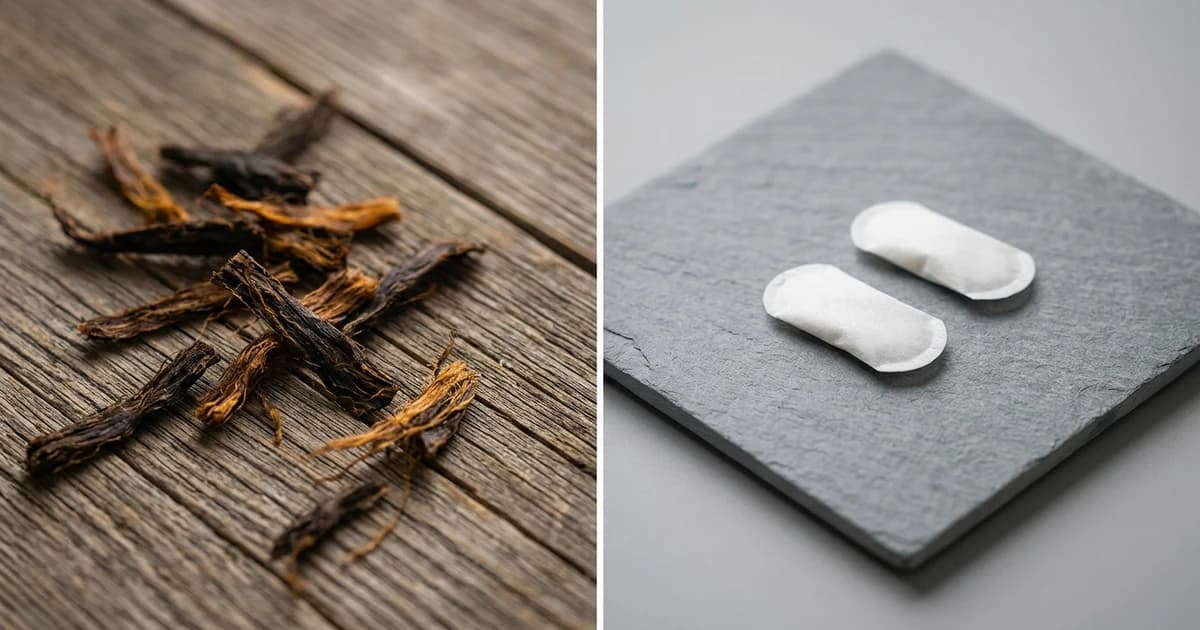
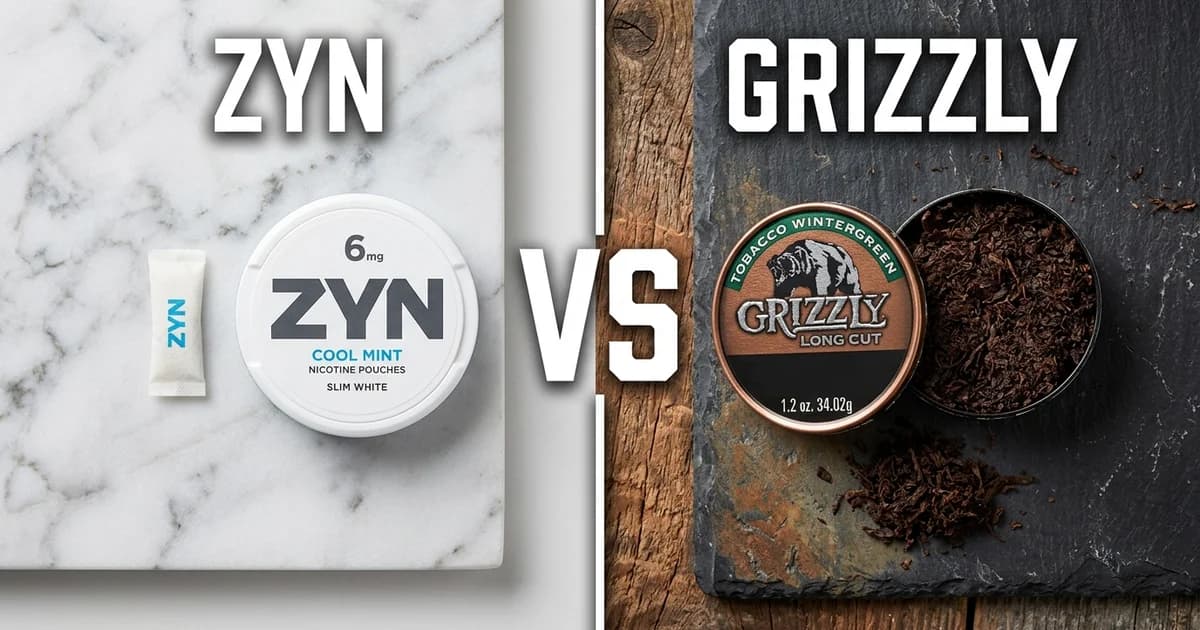
On carcinogen content, the gap between chewing tobacco and Zyn is large and real. Traditional smokeless tobacco is made from cured tobacco leaf, which generates tobacco-specific nitrosamines during processing. Tobacco-free pouches like Zyn still use nicotine taken from tobacco (FDA's review of the ZYN applications describes tobacco-derived nicotine in a salt formulation), but it sits in a non-tobacco matrix with no whole, cut, or ground tobacco, so the most studied carcinogens are present at much lower levels or absent. A PMC scoping review on tobacco-free nicotine pouches concluded that these products contain substantially fewer toxicants and carcinogens than combustible cigarettes and conventional smokeless tobacco, while cautioning that this does not make them harmless and that long-term evidence is limited.
Here is how the products stack up, including a zero-nicotine row for context.
| Product | Tobacco-derived? | TSNAs / carcinogens | Oral-cancer evidence | Nicotine per use (mg) | Long-term data? | Addiction risk | Zero-nicotine option? |
|---|---|---|---|---|---|---|---|
| Chewing tobacco (smokeless) | Yes | High; multiple known carcinogens including TSNAs | Strong, established causal link | ~3 to 5+ (varies widely) | Yes, decades | High | No |
| Zyn / oral nicotine pouch | Nicotine yes (tobacco-derived); no tobacco leaf | Much lower TSNAs than smokeless tobacco; not zero | Insufficient; no long-term human data | ~3 to 6 (by strength) | No, product is new | High | No |
| Roon (cognitive pouch) | No | None claimed; contains no tobacco and no nicotine | Not applicable | 0 (zero nicotine) | N/A for nicotine risk | None (no nicotine) | Yes |
Roon belongs in this table for one narrow reason: it is a sublingual pouch that contains neither tobacco nor nicotine. It is not a smoking-cessation product and makes no harm-reduction claim. Its purpose is cognitive performance, with 80 mg caffeine, 60 mg L-theanine, 25 mg methylliberine (Dynamine), and 5 mg theacrine (TeaCrine) per pouch.
Chewing Tobacco Is a Confirmed Carcinogen, Not a Debatable One
The cancer risk of chewing tobacco is settled science, not an open question. Smokeless tobacco is classified as carcinogenic to humans, and the disease record spans cancers of the mouth, esophagus, and pancreas, along with gum disease, tooth loss, and precancerous oral lesions. The mechanism is the tobacco leaf itself.
The key culprits are tobacco-specific nitrosamines, formed when tobacco is cured and processed. A PMC analysis comparing toxicant and carcinogen levels in smokeless tobacco products documented that these products carry measurable levels of TSNAs such as NNN and NNK, both of which are potent animal carcinogens. The presence of these compounds is the core reason smokeless tobacco is treated as a cancer hazard rather than a benign alternative to smoking.
This matters for the comparison. When people ask whether Zyn is "safer" than dip, the honest baseline is that they are measuring against a product with a confirmed, decades-long cancer record.
Zyn Removes the Leaf and Most of the Worst Carcinogens
Zyn's main safety advantage is structural: no tobacco leaf means far fewer tobacco-specific nitrosamines. Because oral nicotine pouches use nicotine in a non-tobacco base of fillers, flavoring, and pH adjusters, they sidestep the leaf-derived TSNA load that defines smokeless tobacco. That is the single biggest difference in the carcinogen comparison.
Independent reviews support this direction. The tobacco-free nicotine pouch scoping review found that these products generally contain lower levels of harmful constituents than cigarettes and smokeless tobacco, positioning them as a potentially less harmful nicotine source for adults who already use tobacco. The authors were explicit that "less harmful" is a relative term and that the absence of long-term studies is a real limitation.
So the carcinogen story favors Zyn over dip. The full safety story does not stop there.
Lower Carcinogens Still Leaves Nicotine, and Nicotine Is the Catch
Zyn's biggest health liability is not a carcinogen at all. It is the nicotine. Each pouch delivers a meaningful dose of an addictive stimulant, and the American Lung Association's ZYN 101 explainer describes these products as a fast-growing source of nicotine addiction, particularly among young people who never used tobacco before. Removing carcinogens does nothing to remove dependence.
Nicotine carries its own physiological effects. It raises heart rate and blood pressure, and the long-term cardiovascular and oral consequences of chronic pouch use have not been studied over a meaningful timeframe because the product category is new. The CDC's nicotine pouch overview notes that the health effects of long-term use are still not well understood.
That gap is the heart of the matter. A product can be lower in carcinogens than chewing tobacco and still be addictive, still raise blood pressure, and still lack the decades of data we have for older tobacco products.
Switching to Zyn Is Not the Same as Quitting
Trading dip for Zyn changes your carcinogen exposure, but it does not end your nicotine use. This distinction gets lost in marketing language about "tobacco-free." A study using the ITC Smoking and Vaping Surveys examined nicotine pouch use among adults who currently or formerly smoked or vaped, underlining that many pouch users arrive from a history of other nicotine products rather than starting clean.
Harm reduction is real, and for an established adult tobacco user, moving from a high-carcinogen product to a lower-carcinogen one can lower exposure. The problem is that "switching" often becomes permanent dual use or a lateral move that keeps the addiction intact. Full cessation, the outcome that actually removes nicotine's risks, remains the minority result.
If the goal is to stop using nicotine entirely, a lower-carcinogen pouch is a step sideways, not a finish line.
A Brand-Neutral Verdict on the Carcinogen Question
On carcinogens alone, the data is clear: chewing tobacco is a confirmed human carcinogen with a strong oral-cancer link, and tobacco-free pouches like Zyn carry far lower levels of the tobacco-specific nitrosamines that drive that risk. For an adult who already uses smokeless tobacco, that difference is meaningful and worth taking seriously.
But carcinogens are only one axis of harm. Zyn still delivers addictive nicotine, still affects the cardiovascular system, and still lacks the long-term human data that would let anyone call it safe. "Lower risk than dip" is an accurate claim. "Safe" is not. And switching from one nicotine product to another is not the same as quitting nicotine. The only way to remove the nicotine question entirely is to remove the nicotine.
Frequently Asked Questions
When to See a Doctor
If you are trying to quit nicotine or have health concerns about pouch or tobacco use, talk to a healthcare provider or a cessation service about an evidence-based plan. This article does not replace personalized medical guidance.
Is Zyn safer than chewing tobacco?
On carcinogen content, yes, Zyn is lower risk. It is tobacco-free, so it lacks the tobacco leaf and carries far lower levels of tobacco-specific nitrosamines than smokeless tobacco. That said, "lower risk than chewing tobacco" is not the same as "safe." Zyn still contains addictive nicotine, can raise heart rate and blood pressure, and has no long-term human safety data because the product is new.
Does Zyn cause oral cancer?
There is no long-term human evidence answering this question yet, because oral nicotine pouches are recent products. They contain much lower levels of the carcinogens linked to oral cancer in chewing tobacco. The absence of evidence is not evidence of safety. The honest position is that Zyn's oral-cancer risk appears lower than dip's, but it has not been studied over the decades needed to confirm it.
How much nicotine is in one Zyn pouch?
Zyn pouches are sold in different strengths, commonly delivering roughly 3 to 6 mg of nicotine per pouch depending on the product. This is enough to create and maintain dependence. The American Lung Association flags these pouches as a meaningful source of nicotine addiction, especially among younger users who had no prior tobacco history.
Can Zyn help me quit chewing tobacco?
Some adults use pouches to move away from higher-carcinogen products, which can lower exposure. The catch is that switching products is not quitting nicotine. Many users end up in long-term pouch use or dual use rather than full cessation. If quitting nicotine is your actual goal, talk to a clinician about evidence-based cessation methods rather than assuming a lateral switch solves the problem.
Are tobacco-free nicotine pouches risk-free?
No. Tobacco-free pouches remove the leaf and most tobacco-specific nitrosamines, which lowers carcinogen exposure relative to smokeless tobacco. They still contain nicotine, which is addictive and physiologically active, and the long-term effects of daily use are unstudied. "Tobacco-free" describes the ingredient, not the risk profile. The nicotine itself remains the central concern.
What is the difference between a nicotine pouch and a zero-nicotine pouch?
A nicotine pouch like Zyn delivers nicotine for that stimulant and dependence-driven effect. A zero-nicotine pouch contains no nicotine at all and is not a tobacco product. Roon, for example, is a sublingual pouch built for cognitive performance using caffeine, L-theanine, methylliberine, and theacrine, with no nicotine and no tobacco. It is not a cessation aid and makes no harm-reduction claim.
If You Want a Pouch With No Tobacco and No Nicotine
This article is about a carcinogen comparison, and the cleanest answer to the nicotine question is to remove nicotine from the equation. That is the lane Roon occupies. Roon is a sublingual pouch with no tobacco and no nicotine, built for focus rather than for tobacco harm reduction.
What it actually is: a cognitive-performance pouch with 80 mg caffeine, 60 mg L-theanine, 25 mg methylliberine (Dynamine), and 5 mg theacrine (TeaCrine), designed for several hours of steady focus without the jitters or crash of a heavy coffee habit. What it is not: a nicotine product, a smoking-cessation tool, or a treatment for nicotine dependence. If you are trying to quit nicotine, that is a conversation for a clinician.
If you simply want the ritual of a pouch without nicotine in it, Roon was built for exactly that use case. Worth a look if focus, not nicotine, is what you are after.
By Roon Team