Writing Sprints: How to Run a 25-Minute Sprint That Works
Roon Team
Writing Sprints: How to Run a 25-Minute Sprint That Works
A writing sprint is a timed burst of nonstop drafting, usually 15 to 30 minutes, where you write as many words as possible without editing, researching, or touching your phone until the timer ends. The most common default is 25 minutes. The most common goal format is 1k1h: 1,000 words in one hour. Below is the protocol, a timing table, and the pre-sprint checklist no other guide gives you.
| Sprint length | Typical use | Who it suits |
|---|---|---|
| 15 minutes | Warm-up or new habit | Beginners, blocked drafters |
| 25 minutes | Standard sprint | Most fiction and nonfiction writers |
| 45 minutes | Extended deep draft | Experienced sprinters with an outline |
| 60 minutes (1k1h) | Full-hour push | Veterans, thesis writers |
Key takeaways:
- Two rules: no editing until the timer stops, report your word count at the end.
- 25 minutes is the default because it fits the Pomodoro convention and stacks into four-sprint blocks.
- Four sprints in two hours yields roughly 1,600 to 2,800 words, enough for a NaNoWriMo daily target.
- Everything that competes with the cursor (phone, mug, open tabs) leaves the desk before the timer starts.
What Are Writing Sprints?
A writing sprint is a timed, nonstop writing session. MasterClass defines it as "a nonstop writing session constrained to a limited amount of time," typically five to sixty minutes, where you draft without stopping to edit.
Two rules are universal. No stopping to edit, reword, or fact-check (brackets are fine). And report your word count when the timer ends, even if the number is low.
Sprints run solo or in groups. Group sprints happen on Discord (Sprinto runs on thousands of servers), on X under #WritingSprint and #1k1h, and through ProWritingAid's Novel November. The NaNoWordSprints account historically ran volunteer-led sprints, though the NaNoWriMo nonprofit announced its closure on March 31, 2025. Solo sprints follow the same rules.
How Long Should a Writing Sprint Be?
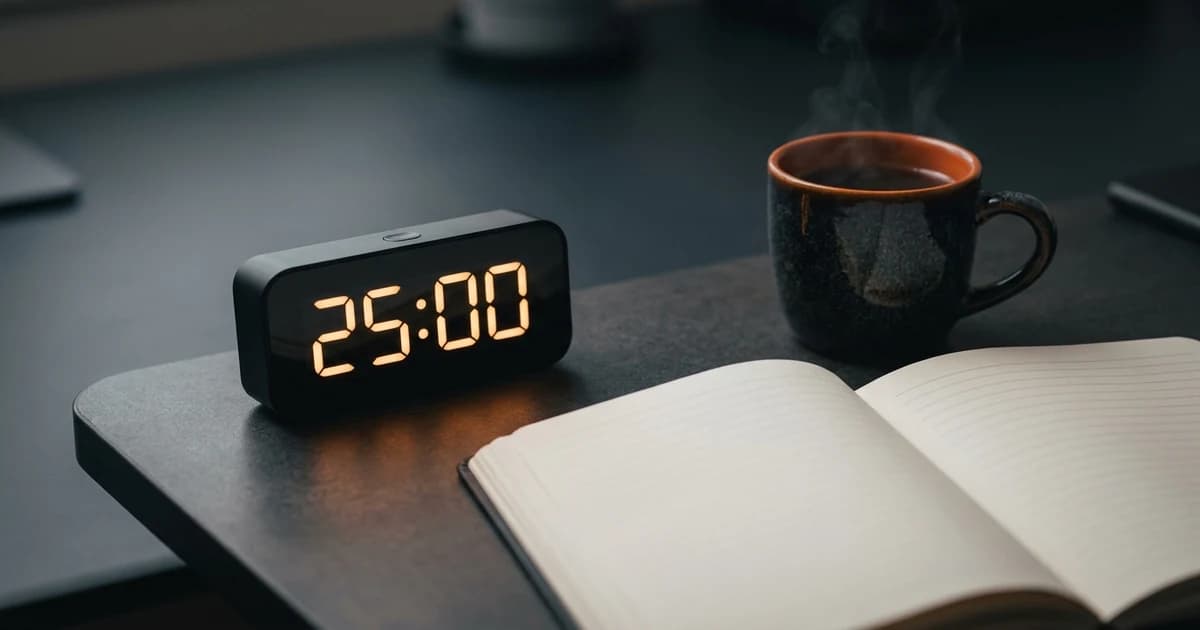
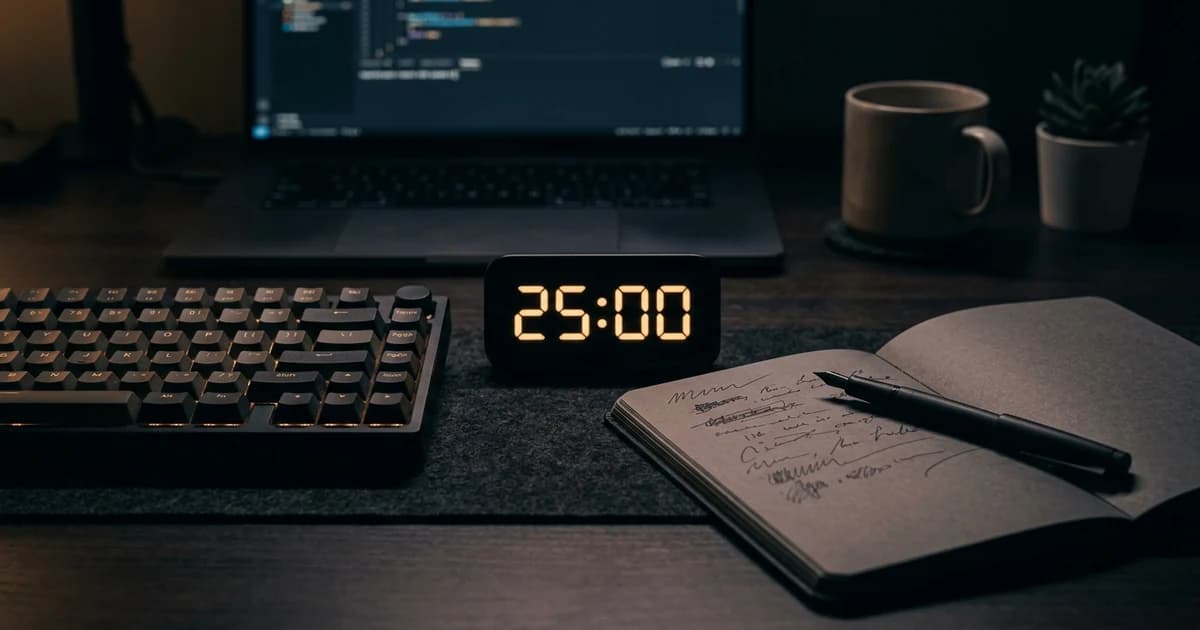
Twenty-five minutes is the standard, borrowed from the Pomodoro Technique (Francesco Cirillo, late 1980s): 25 minutes of work, 5-minute break, longer break after four rounds. Four sprints plus breaks fit inside two hours.
A 2023 study (Biwer et al., British Journal of Educational Psychology, 87 students) found that systematic break-takers reported better concentration and less fatigue than self-regulated ones, and completed similar work in less time. Fixed blocks beat "I'll just write until I feel tired."
Building the habit? Start at 15 minutes. Can hold a scene for an hour? Try 1k1h. For more on the 25/5 structure and break science, that guide covers both.
How to Run a 25-Minute Writing Sprint
Five steps, each solving a specific failure mode.
Step 1: Write tomorrow's first line today
The most common sprint failure is a blank cursor for the first two minutes. Fix it the night before: type the opening line of tomorrow's scene, even if it is bad. Tomorrow you start mid-sentence.
Step 2: Set a scene card and a count target
On a sticky note, write what happens in this sprint. "Elena finds the letter. Argument with Cal." Not an outline, a compass heading. For most drafters, 400 to 700 words per 25-minute sprint is a realistic range (a community rule of thumb, not measured data).
Step 3: Clear the desk and the tabs
Close every browser tab except the document. Put the phone in another room. If you use a writing sprint timer, pick one that does not live inside a browser. A kitchen timer works better.
Step 4: Start the timer and the dose together
Hit start. If you use caffeine, take one dose as the timer begins. Caffeine reaches peak plasma concentration in 30 to 60 minutes, so it lands around sprint two. One dose covers the block.
Step 5: Log the count before you read anything back
Note the word count. Do not reread. Do not edit. Stand up, take the five-minute break, come back for sprint two.
A Four-Sprint Writing Block
Four sprints in a block turns sprint writing into a daily output system.
| Time | Action | Notes |
|---|---|---|
| 0:00 | Sprint 1 starts (25 min) | Caffeine dose goes in now |
| 0:25 | Break (5 min) | Stand up, walk, no screens |
| 0:30 | Sprint 2 starts (25 min) | Caffeine is peaking |
| 0:55 | Break (5 min) | Refill water, not caffeine |
| 1:00 | Sprint 3 starts (25 min) | |
| 1:25 | Break (5 min) | |
| 1:30 | Sprint 4 starts (25 min) | |
| 1:55 | Long break (15-20 min) | Review counts, stretch |
At 400 to 700 words per sprint, a four-sprint block yields roughly 1,600 to 2,800 words. The NaNoWriMo daily target was 1,667 words. One block per day covers it. For a 30-day sprint calendar, see November Novel Challenge Energy Schedule.
What to Have Ready Before the Timer Starts
Everything that competes with the cursor has to leave the desk before you sit down.
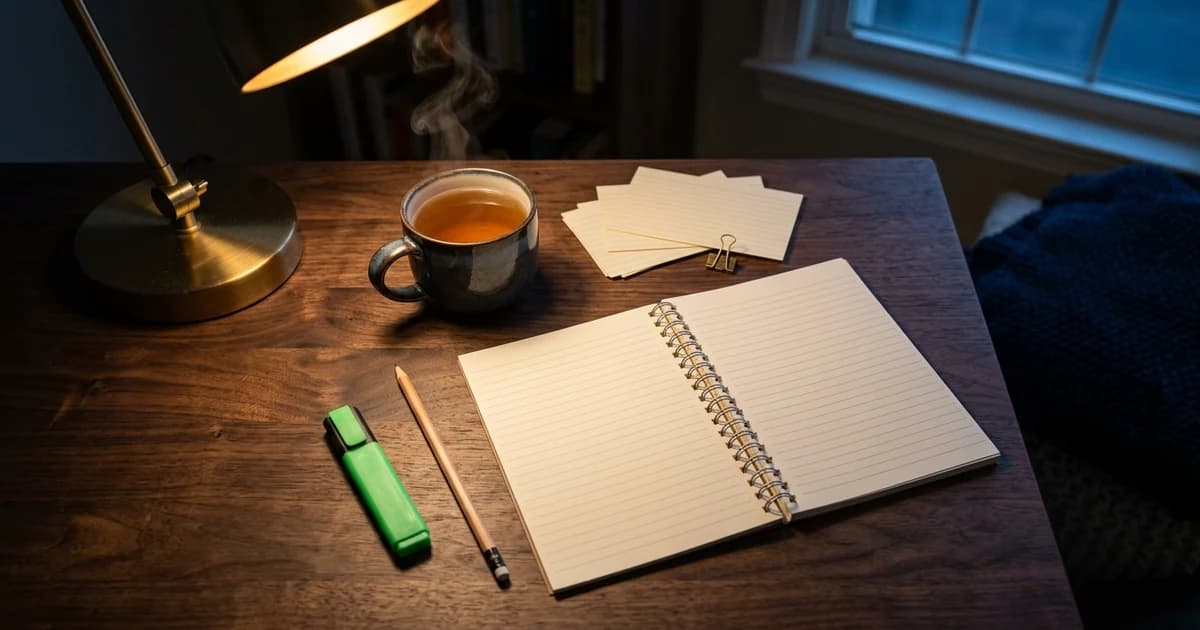
Pre-sprint checklist: water in a sealed bottle, the scene card visible without switching windows, the phone in another room, the document open at the cursor, and one caffeine dose taken as sprint one starts.
Why only one dose? Caffeine's average adult half-life is about 5 hours, so a dose at 9 a.m. still has half its effect at 2 p.m. A second dose at sprint three stacks on the first, and that is how the afternoon crash cycle starts. Evening sprinters: a meta-analysis of 24 studies (Gardiner et al., 2023, Sleep Medicine Reviews) found that caffeine consumed in the hours before bed increased sleep onset latency and disrupted sleep architecture. As a general guideline, stop caffeine at least 8 hours before bed. Check your cutoff.
How to Stay Focused While Writing When the Sprint Stalls
The stall almost always hits around minute two. You finished the opening line you planted yesterday, and now you do not know what comes next.
Fix 1: Type the stall. Write "and then she" or "the next thing that happens is" and keep going. Bad words on the page beat good words in your head.
Fix 2: Bracket and skip. Need a name or a date? Type [NAME] or [CHECK DATE] and keep writing. Research is for revision.
Hit 200 words and feel terrible? Log it. A bad sprint is data, not a failure. A 2011 study (Ariga and Lleras, 84 participants, Cognition) showed that brief task switches prevented the vigilance decrement over a 50-minute task. The break works even when the sprint did not. For more on the stall, see How to Get Into Flow State Faster.
Group Sprints and Word Wars
A word war is a competitive sprint: same timer, highest count wins. Group sprints are cooperative. Etiquette: announce the length, mute during the sprint, report your count at the bell, no critique.
Where to find them: Sprinto on Discord, ProWritingAid's Novel November every November, and X hashtags (#WritingSprint, #1k1h, #AmWriting) year-round. Community sprints do not increase your words per minute. They make you show up.
The Protocol, Not the Motivation
Writing sprints work because they replace "find the inspiration" with "start the timer." A 25-minute sprint with a scene card, a clear desk, and one caffeine dose removes every decision except the next sentence. Four sprints is a daily draft. Revision is a different session.
Frequently Asked Questions
What is a writing sprint?
A timed drafting session, usually 15 to 60 minutes, where you write as many words as possible without stopping to edit or research. Two rules: no editing, and report the count when the timer ends.
How long is a writing sprint?
The most common length is 25 minutes, matching the Pomodoro convention. Beginners start at 15. Experienced writers use 45 or 60. Match the length to your ability to sustain attention without a break.
What is 1k1h?
1k1h stands for 1,000 words in 1 hour. It is a sprint format used on X and in author communities, best suited to writers with a detailed outline who can hold focus for a full hour.
How many words should I write in a 25-minute sprint?
Most drafters produce 400 to 700 words. That is a community rule of thumb, not clinical data. Consistent 700-word sprints are fast. Consistent 300-word sprints are still productive.
Can you edit during a writing sprint?
No. Use bracket placeholders ([NAME], [FIXLATER]) for anything you need to look up. Editing mid-sprint breaks the count and pulls you out of drafting mode. Save it for a separate session.
Where can I find writing sprints online?
Sprinto on Discord (thousands of servers), ProWritingAid's Novel November every November, and X hashtags like #WritingSprint, #1k1h, and #AmWriting year-round.
The Dose That Starts With Sprint One and Outlasts Sprint Four
The whole protocol is about removing what competes with the cursor. The phone leaves. The tabs close. The mug never arrives, because a mug means sipping, refilling, and the sprint-three kitchen trip that becomes a second coffee and an afternoon crash.
Roon is a zero-nicotine oral pouch (80 mg caffeine, 60 mg L-theanine, 25 mg methylliberine, 5 mg theacrine). It goes in as sprint one starts, onset 5 to 10 minutes, felt duration 6 to 8 hours. The duration comes from methylliberine (Dynamine) slowing caffeine clearance. A randomized, double-blind, crossover PK study of 12 adults found co-administration cut caffeine's oral clearance from 41.9 to 17.1 L/hr and extended its half-life from 7.2 to 15 hours, with no increase in peak concentration. That study used 100 mg methylliberine and 150 mg caffeine (roughly 4x and 1.9x Roon's doses), so the mechanism is directionally the same, not a direct measurement of the pouch.
Roon is not a creativity supplement. It keeps the caffeine curve flat so you skip the refill. From $9.16 per tin on a 12-tin subscription, 15 pouches, one per block. Stop at least 8 hours before bed.
Related from Roon
- November Novel Challenge Energy Schedule
- Pomodoro Technique for Studying: Where Caffeine Fits
- How to Get Into Flow State Faster
- The Caffeine Crash Cycle
Written by Roon Team